
Views: 222 Author: Lake Publish Time: 2026-01-12 Origin: Site


Content Menu
● Introduction: A Revolution in a Tube
● Core Components and Optical Principles
>> 2. The Fiberoptic Imaging System: The Core Innovation
>> 5. The Working (Instrument) Channel
● The Supporting Ecosystem: The Bronchoscopy Workstation
● Clinical Applications: Diagnostic and Therapeutic
● Advantages and Inherent Limitations
● The Evolution: From Fiberoptic to Digital Video Bronchoscopy
● The Contemporary Role of the Flexible Fiberoptic Bronchoscope
● Frequently Asked Questions (FAQ)
>> 1. What is the difference between a flexible fiberoptic bronchoscope and a video bronchoscope?
>> 2. Can a flexible fiberoptic bronchoscope be used for a biopsy?
>> 3. Why are there sometimes black spots in the image from a fiberoptic scope?
>> 4. Is a flexible fiberoptic bronchoscope disposable?
>> 5. How is a flexible fiberoptic bronchoscope cleaned after use?
The human respiratory system, with its complex, branching architecture, long presented a significant diagnostic challenge. Direct visualization of the trachea and bronchi was historically limited, invasive, and hazardous. We stand on the shoulders of a transformative invention: the flexible fiberoptic bronchoscope,this instrument, which emerged in the late 1960s, fundamentally reshaped pulmonary medicine by providing safe, minimally invasive access to the lower airways. This article delves into the anatomy, function, clinical utility, and enduring legacy of the flexible fiberoptic bronchoscope, the pioneering device that laid the groundwork for modern bronchoscopic practice.

A flexible fiberoptic bronchoscope is a specialized endoscopic instrument designed for examining the interior of the tracheobronchial tree. Its defining characteristics are its flexibility, allowing it to navigate the natural curves of the airways, and its fiberoptic imaging system, which transmits light and images through bundles of hair-thin glass fibers. Before its invention, bronchoscopy was performed with rigid metal tubes, requiring general anesthesia and offering limited reach. The flexible fiberoptic bronchoscope, by contrast, could be performed under conscious sedation, access subsegmental bronchi, and became an indispensable tool for pulmonologists, intensivists, and thoracic surgeons worldwide.
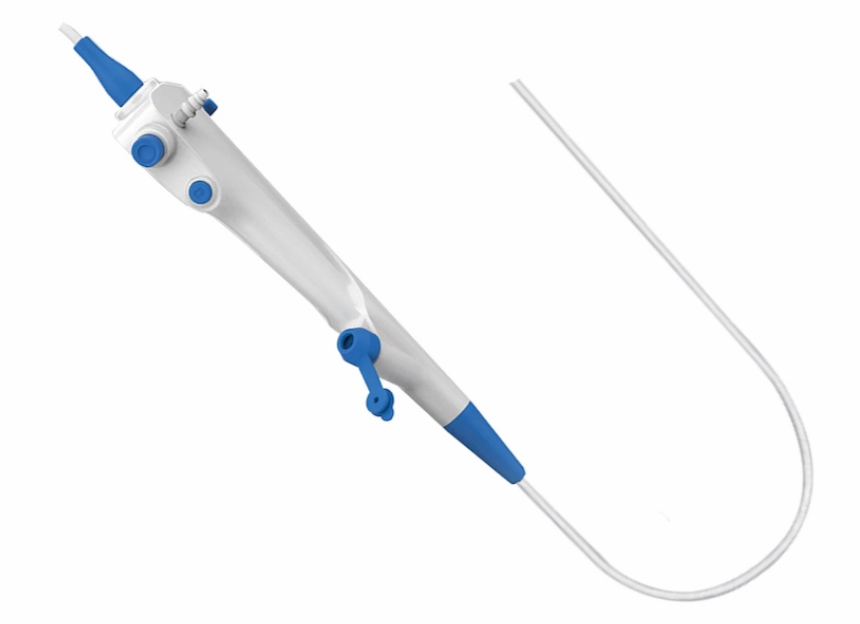
The flexible fiberoptic bronchoscope is an engineering marvel, integrating multiple functional systems into a slender, maneuverable probe.
This is the long, flexible section that enters the patient. Its flexibility is derived from a spirally wound steel band or mesh, encased in a smooth, waterproof plastic sheath. This construction allows it to bend significantly without kinking, essential for following bronchial branches.
This system consists of two distinct types of optical fiber bundles:
- Incoherent Illumination Bundle: This bundle carries bright, "cold" light from an external light source housed in a bronchoscopy workstation down to the distal tip of the scope. The fibers are randomly arranged, as their sole purpose is to illuminate the airway.
- Coherent Image Bundle: This is the revolutionary component. It contains thousands (typically 10,000 to over 50,000) of precisely aligned, ultra-pure glass fibers. Each fiber acts as an individual pixel. The spatial arrangement of fibers at the distal (objective) end is exactly mirrored at the proximal (eyepiece) end. Light reflected from the bronchial wall enters the distal face of each fiber. Through the principle of total internal reflection, this light travels along the fiber with minimal loss. At the eyepiece, the clinician sees a mosaic image composed of the light points from each fiber, creating a coherent picture of the airway. The resolution depends on the number and density of fibers.
Held by the operator, this handle contains:
- Eyepiece: For direct visualization of the fiberoptic image, often with a diopter adjustment.
- Angulation Control Lever(s): Connected to wires running the length of the insertion tube, these allow the operator to deflect the distal tip up and down (and often left/right), providing active articulation for steering.
- Working Channel Port: The entry point for the instrument/suction channel.
This cable connects the bronchoscope to the bronchoscopy workstation, delivering light via the illumination bundle and often providing a conduit for suction.
A small channel running the length of the scope allows for:
- Suction: To clear secretions, blood, or lavage fluid.
- Instrument Passage: Biopsy forceps, cytology brushes, needles for transbronchial needle aspiration (TBNA), and balloon catheters can be advanced under direct vision.
- Instillation: Of local anesthetic or saline for bronchoalveolar lavage (BAL).
A flexible fiberoptic bronchoscope is part of a larger system. A standard bronchoscopy workstation includes:
- Light Source: A high-intensity lamp (often xenon) to generate the light for the illumination bundle.
- Suction Unit: Regulated suction for the working channel.
- Monitoring Equipment: For patient oxygen saturation, heart rate, and blood pressure.
- Ancillary Tools: Organized storage for biopsy instruments, specimen traps, and sometimes an attachable video camera.
The advent of the flexible fiberoptic bronchoscope unlocked a vast range of pulmonary procedures.
- Direct Visual Inspection: Evaluation of tumors, inflammation, infections, strictures, foreign bodies, and anatomical variations.
- Tissue Sampling:
- Endobronchial Biopsy: Forceps biopsy of visible airway lesions.
- Transbronchial Biopsy (TBBx): Forceps biopsy of lung parenchyma, guided by fluoroscopy.
- Transbronchial Needle Aspiration (TBNA): Needle biopsy of peribronchial lymph nodes or masses.
- Cellular and Microbiological Sampling:
- Bronchial Brushing: For cytology.
- Bronchoalveolar Lavage (BAL): Washing segments with saline to retrieve cells and pathogens from the alveolar space.
- Airway Clearance: Removal of thick secretions or blood clots in conditions like atelectasis or hemoptysis.
- Foreign Body Removal: Using specialized baskets or graspers (though rigid bronchoscopy is often preferred for large/sharp objects).
- Airway Stent Placement: For malignant or benign strictures.
- Assisted Intubation: In difficult airway scenarios.
- Localized Drug Delivery: Instilling chemotherapeutic agents or antibiotics.
Advantages (Why It Became the Standard):
- Superior Maneuverability and Reach: Could access airways as far as the 4th to 6th generation bronchi.
- Patient Tolerance: Possible under topical anesthesia and conscious sedation, reducing procedural risk.
- Integrated Intervention: Real-time visualization combined with biopsy or therapy via the working channel.
- Durability: With proper care, a flexible fiberoptic bronchoscope could last for thousands of procedures.
Limitations (Driving Further Innovation):
- Image Quality: The fiberoptic image is inherently pixelated (the "honeycomb" effect), with lower resolution and contrast compared to modern digital sensors.
- Fragility of Image Bundle: Individual fibers can break from mishandling, causing permanent black dots or lines in the image.
- Ergonomic Strain: Operators must maintain an awkward posture to look into the eyepiece, leading to neck and back strain.
- Limited Documentation & Teaching: Sharing the view required additional cameras, and recording was cumbersome and of poor quality.
The limitations of fiberoptic technology catalyzed the next leap: the video bronchoscope. This device replaces the coherent image bundle with a miniaturized digital charge-coupled device (CCD) or complementary metal-oxide-semiconductor (CMOS) sensor at the distal tip. The electronic image signal is transmitted to a medical image processor and displayed on a high-definition monitor.
This evolution brought transformative improvements:
- Image Fidelity: Dramatically higher resolution, better color reproduction, and digital zoom.
- Improved Ergonomics: Operators view a monitor in a natural position.
- Enhanced Collaboration & Training: The entire team can see the procedure live.
- Advanced Imaging: Compatibility with narrow-band imaging (NBI), autofluorescence bronchoscopy (AFB), and confocal microscopy.
- Seamless Integration: Easy connection to medical image processors for recording, storage, and network transmission.
While digital video bronchoscopy is the current standard for new acquisitions, the flexible fiberoptic bronchoscope retains relevance:
- Cost-Effective Platform: In resource-limited settings, it remains a viable, lower-cost option for essential diagnostic work.
- Backup and Niche Use: Its thinner profile (no distal camera electronics) can sometimes allow access tighter spaces than some video scopes. Many units maintain them as reliable backups.
- Foundation for Disposables: The basic optical principle informs the design of some single-use, disposable bronchoscopes used in ICUs for infection control, though many disposables are now fully digital.
The flexible fiberoptic bronchoscope is a seminal invention in the history of medical technology. It democratized access to the lungs, transforming pulmonary medicine from a largely speculative field into one guided by direct visual and histologic evidence. Its clever use of fiberoptic bundles to achieve flexible imaging established the procedural paradigm still followed today. While its technological baton has been passed to superior digital video systems integrated with sophisticated bronchoscopy workstations and medical image processors, the flexible fiberoptic bronchoscope defined an era. For companies like ours, engaged in the continuous advancement of medical visualization, it stands as a powerful reminder of how core engineering principles—flexibility, light transmission, and precise control—can unlock new frontiers in patient care, paving the way for the next generation of endoscope systems and diagnostic tools.
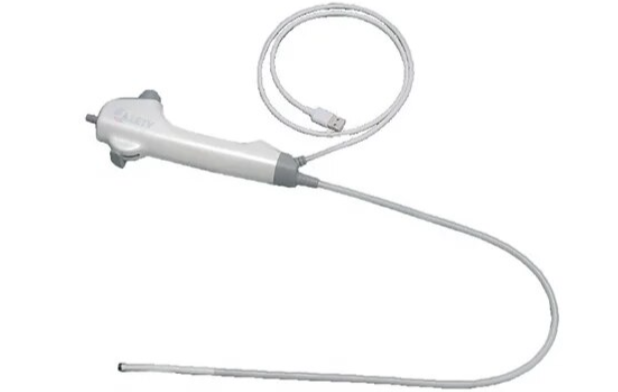
The key difference is in image capture and transmission. A flexible fiberoptic bronchoscope uses a coherent bundle of optical glass fibers to transmit a mosaic image from the tip to an eyepiece. A video bronchoscope has a tiny digital camera sensor (CCD/CMOS) at its tip that captures an electronic image, sent to a medical image processor and displayed on a monitor. Video scopes provide higher resolution, better ergonomics, and advanced digital features.
Yes, absolutely. One of its major advantages is the integrated working channel. Through this channel, the operator can pass biopsy forceps, needles, or brushes under direct visual guidance (viewed through the eyepiece) to obtain tissue or cell samples from the airways or lung parenchyma. This capability made it a powerhouse for diagnosing lung cancer and infections.
Black spots or lines are permanent artifacts caused by broken individual glass fibers within the coherent image bundle. Each fiber is a pixel; when it fractures, it stops transmitting light. This damage typically results from mishandling—sharp bending, crushing, or impact. Unlike a digital sensor, this damage is irreversible and necessitates costly bundle replacement or scope retirement.
Traditional flexible fiberoptic bronchoscopes are complex, reusable instruments. However, the fundamental form factor and concept led to the development of single-use (disposable) flexible bronchoscopes. Some early disposable models used fiberoptic bundles to keep costs low, though most modern disposable scopes now incorporate miniaturized digital cameras. Disposables are favored in high-infection-risk scenarios (e.g., ICU) to eliminate cross-contamination and reprocessing costs.
Reprocessing a reusable flexible fiberoptic bronchoscope is a critical, multi-step procedure to prevent infection transmission:
1. Bedside Pre-cleaning: Immediate wiping and suction of enzymatic detergent.
2. Leak Testing: To check for breaches in the waterproof sheath.
3. Manual Cleaning: Brushing and flushing all channels.
4. High-Level Disinfection (HLD): Immersion in a disinfectant chemical like ortho-phthalaldehyde (OPA) or peracetic acid.
5. Rinsing and Drying: Thorough rinsing with sterile or filtered water to remove toxic disinfectant residue, followed by forced-air drying of all channels.
The complexity of this process is a significant driver for the adoption of disposable alternatives.
[1] https://www.ncbi.nlm.nih.gov/books/NBK448152/
[2] https://www.thoracic.org/patients/patient-resources/resources/fiberoptic-bronchoscopy.pdf
[3] https://journals.lww.com/borc/Fulltext/2018/01000/The_History_of_Bronchoscopy.1.aspx
[4] https://www.chestnet.org/Guidelines-and-Resources/Guidelines-and-Consensus-Statements/Bronchoscopy
[5] https://www.fda.gov/medical-devices/reprocessing-reusable-medical-devices/information-assured-reprocessing-reusable-medical-devices-health-care-facilities
[6] https://www.aabr.org/education/bronchoscopy-education/
[7] https://www.cdc.gov/infectioncontrol/guidelines/disinfection/index.html
[8] https://www.rirc.org/resources/bronchoscopy/
[9] https://www.iso.org/standard/36404.html


