Content Menu
● The Fundamental Principle: Creating a Visual Pathway
● Anatomy of a Standard Direct Laryngoscope
>> Core Components and Their Functions
>> The Light Source: Illumination of the Field
● The Mechanics of Direct Laryngoscopy
>> Challenges and Limitations of Direct Line-of-Sight
● The Technological Leap: How Video Laryngoscopes Work
>> Core Design and Optical Principle
>> The Ergonomic and Clinical Advantage
● Specialized Laryngoscope Types and Their Mechanisms
>> Channeled Video Laryngoscopes
>> Flexible and Semi-Rigid Optical Styles (Video Stylet)
>> Disposable Single-Use Laryngoscopes
● The Integration of Physiology and Device Function
>> Interaction with Patient Anatomy
>> The Role of Patient Positioning
● Maintenance and Factors Affecting Function
>> Ensuring Operational Readiness
>> The Impact of Environmental Factors
● Frequently Asked Questions (FAQ)
>> 1. What is the main functional difference between a direct and a video laryngoscope?
>> 2. Why do laryngoscope blades have different shapes (like Macintosh vs. Miller)?
>> 3. Can a video laryngoscope fail, and what are common reasons?
>> 4. How does the light source in a laryngoscope stay clean and functional during a procedure?
>> 5. Is it harder to learn to use a video laryngoscope compared to a direct one?
The laryngoscope stands as one of the most fundamental and critical tools in airway management, enabling healthcare providers to visualize the larynx and facilitate endotracheal intubation. From its origins as a simple metal blade and handle to the modern video laryngoscope with integrated high-definition cameras, the core function of this device has remained constant: to provide a clear line of sight to the glottis. Understanding how a laryngoscope works requires an exploration of its physical principles, its mechanical design, and the technological advancements that have transformed its clinical application. This article provides a comprehensive examination of the operational mechanics of both direct and video laryngoscopes, detailing the interplay of optics, ergonomics, and physiology that allows this instrument to secure a patient's airway effectively.

At its most basic level, a laryngoscope works by mechanically displacing anatomical structures within the upper airway to create an unobstructed visual path from the operator's eye (or camera) to the laryngeal inlet. The primary obstacle to this view is the tongue, which rests against the hard and soft palate. The curved blade of a standard laryngoscope is designed to press the tongue anteriorly and downward into the mandibular space, effectively moving it out of the line of sight. Simultaneously, proper technique involves lifting the entire laryngoscope handle in a vector approximately 45 degrees upward and away from the patient, which applies tension to the hyoepiglottic ligament. This action lifts the epiglottis, the leaf-like cartilage that protects the larynx during swallowing, revealing the underlying vocal cords and glottic opening. This mechanical revelation is the foundational action upon which all laryngoscope designs, from the simplest to the most advanced, are built.
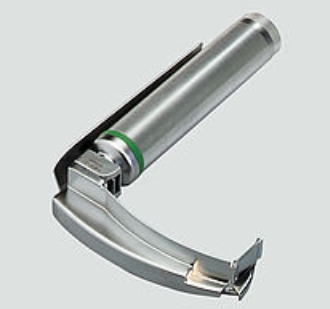
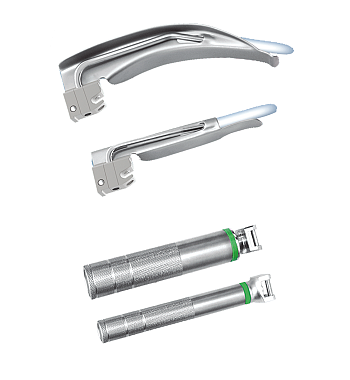
A traditional direct laryngoscope is a deceptively simple device consisting of two main parts:
The Handle: This component serves multiple purposes. Primarily, it is the grip that allows the operator to apply the necessary lifting force. It also houses the power source, typically batteries, which provide energy to the light source. The handle contains a switch to activate the light and features a standardized connector (often a fitting based on the Miller or Macintosh design) that securely locks the blade in place.
The Blade: This is the working end of the laryngoscope that enters the patient's mouth. Blades come in various shapes (curved like the Macintosh or straight like the Miller) and sizes, designed to accommodate different patient anatomies and operator preferences. The distal tip of the blade is designed to either fit into the vallecula (the space between the base of the tongue and the epiglottis, for curved blades) or to directly lift the epiglottis (for straight blades). A critical feature is the integrated light source, traditionally a small bulb at the distal end, which illuminates the otherwise dark oropharyngeal cavity. The blade's shape and curve are engineered to maximize tongue displacement while minimizing dental trauma.
Effective illumination is non-negotiable for a laryngoscope to function. In direct laryngoscopes, this was historically provided by a small incandescent bulb at the blade's tip, powered by batteries in the handle. Modern direct laryngoscopes often use brighter, cooler, and more reliable light-emitting diodes (LEDs). The light must be bright enough to overcome the ambient darkness of the mouth and pharynx, yet diffuse enough to avoid creating glare on wet mucosal surfaces. The positioning of the light at the very tip of the blade ensures that the area being examined—the epiglottis and vocal cords—is directly illuminated, casting minimal shadows. Any failure of this light source renders the laryngoscope virtually non-functional, highlighting its integral role.
The functional operation of a direct laryngoscope during intubation follows a deliberate sequence:
1. Insertion and Positioning: With the patient's head in the "sniffing position" (neck flexed, head extended), the laryngoscope blade is inserted into the right side of the mouth, sweeping the tongue to the left. The blade is advanced along the anatomical curve until its tip reaches either the vallecula (for curved blades) or passes beneath the epiglottis (for straight blades).
2. Lifting and Visual Exposure: The critical maneuver is the application of force. The operator lifts the entire laryngoscope handle along the axis of its shaft, not using the teeth as a pivot. This lifting action transmits force through the blade to the hyoid bone and hyoepiglottic ligament, which in turn elevates the epiglottis. This reveals the target: the arytenoid cartilages, the vocal cords, and the glottic opening.
3. Visualization and Tube Passage: With a direct line of sight established, the operator visualizes the vocal cords and passes the endotracheal tube through them under direct vision. The entire procedure relies on maintaining this sight line, which requires continuous appropriate lifting force and precise blade positioning.
The direct laryngoscope has a significant limitation: it requires a straight, uninterrupted line of sight from the operator's eye, past the teeth, and down to the larynx. This "line-of-sight" restriction is why the procedure is called direct laryngoscopy. It can be obstructed by several factors: a large tongue, limited mouth opening, prominent upper teeth, a recessed larynx, or excessive soft tissue in the pharynx. These anatomical challenges can make obtaining a grade I view (full visualization of the glottis) difficult or impossible, leading to failed or traumatic intubation attempts. It was the need to overcome this fundamental limitation that drove the development of the video laryngoscope.
The video laryngoscope represents a paradigm shift by decoupling the operator's eye from the anatomical target. Instead of requiring a direct line of sight, it uses digital technology to transmit an image.
The Camera and Optics: At the heart of a video laryngoscope is a miniature digital camera, typically a CMOS or CCD sensor, positioned at the distal tip of the blade. This is often paired with one or more high-intensity LEDs for illumination. The camera's lens is designed to have a wide field of view, often between 60 to 90 degrees, which captures a broad panorama of the pharynx and larynx. Some video laryngoscope blades are hyperangulated (sharply curved), as the camera can "look around the corner," eliminating the need to align the oral, pharyngeal, and laryngeal axes for a direct view.
Image Processing and Transmission: The camera captures real-time video, which is processed by a small onboard computer. This processing can enhance the image by adjusting contrast, reducing glare, and applying anti-fog algorithms. The video signal is then transmitted. In wired models, a cable runs from the blade to a separate monitor. In wireless models, the signal is sent via Bluetooth or Wi-Fi to a tablet, smartphone, or dedicated display.
The Display Monitor: This screen presents the magnified, high-resolution view from the camera tip. It allows the operator and assisting team to see the anatomy without contorting their position. The screen can be mounted on the laryngoscope handle or be entirely separate.
The operational principle of a video laryngoscope changes the intubation mechanics. Because the operator is looking at a screen rather than trying to peer down the blade, they can maintain a more natural, upright posture. The lifting force required is often different; with a hyperangulated blade, the technique shifts from lifting to more of a "lever and sweep" motion to position the camera view optimally. The primary functional advantage is that it provides an indirect view, successfully visualizing the glottis in many patients where direct line-of-sight is impossible. Furthermore, the screen allows for shared visualization, aiding in team communication and training.
Some video laryngoscope designs incorporate a built-in channel or guide that holds and directs the endotracheal tube. This mechanism works by providing a pre-determined path from the mouth to a point just proximal to the glottic opening as seen on the screen. The operator advances the tube through this channel while watching the monitor, simplifying the process of guiding the tube through the vocal cords, especially with hyperangulated views where the tube's path is not straight.
While not a laryngoscope in the traditional sense, devices like the video stylet operate on a related principle. They consist of a flexible or semi-rigid stylet with a distal camera and a proximal screen. The device is inserted into an endotracheal tube and then steered like a "video game controller" through the mouth and pharynx, using the real-time camera view on the handle to navigate toward and through the glottis. This represents a highly mobile, tube-centered visualization system rather than a tissue-retracting one.
The fundamental mechanics of a disposable laryngoscope—either direct or video—are identical to their reusable counterparts. However, their design prioritizes cost-effective, integrated manufacturing. A disposable video laryngoscope, for example, might have a blade, camera, battery, and small integrated screen all molded into a single, sterile unit. After use, the entire device is discarded. This mechanism eliminates reprocessing and guarantees a sterile, functional device every time, addressing infection control concerns.
A laryngoscope does not work in isolation; its function is entirely dependent on its interaction with living anatomy. The success of the blade in displacing tissue hinges on understanding the mandibular space's capacity to accept the tongue. The effectiveness of epiglottic elevation relies on proper engagement with the hyoepiglottic ligament. An operator must understand these anatomical relationships to apply the laryngoscope correctly. Poor technique, such as using a rocking motion or excessive force, can lead to tissue damage, dental injury, or still fail to provide a view because the fundamental biomechanics were incorrect.
The laryngoscope's function is significantly enhanced or hindered by patient positioning. The classic "sniffing position" for direct laryngoscopy aligns the oral, pharyngeal, and laryngeal axes into a more direct line, making the mechanical task of the laryngoscope blade easier. For some video laryngoscopes, especially those with hyperangulated blades, a neutral head position may be preferable. Thus, the laryngoscope's design dictates, and is optimized for, a specific physiological setup to function at its best.
For a laryngoscope to work when needed, it must be properly maintained. For reusable direct laryngoscopes, this involves checking and replacing batteries, ensuring the light bulb or LED is functional, and verifying that the blade locks securely to the handle without wobbling. Blades must be free of debris and damage. For video laryngoscopes, maintenance is more complex: batteries must be charged, camera lenses must be clean and unscratched, cables must be intact, and software/firmware should be up to date. A failure in any of these subsystems—power, optics, or electronics—can cause the entire device to fail.
Clinical conditions can affect how well a laryngoscope functions. The warm, humid environment of the airway can cause fogging on the lens of a video laryngoscope, which is why many incorporate anti-fog technology, warming elements, or lens coatings. The presence of blood, vomit, or secretions can obscure both the blade's light and the camera's view, necessitating suction before or during laryngoscopy. These factors are integral to the real-world operational challenge of the device.
The laryngoscope works through a sophisticated interplay of simple mechanics and advanced technology, all directed toward the singular goal of revealing the human larynx. The direct laryngoscope operates on timeless mechanical principles of leverage and illumination, requiring skill to create a direct line of sight. The video laryngoscope, a transformative evolution, uses digital imaging to bypass anatomical limitations, providing an indirect view that has revolutionized airway management. Understanding how a laryngoscope works—from the pressure of its blade on the tongue to the transmission of a pixelated image to a screen—is fundamental for any practitioner involved in securing an airway. It demystifies the procedure, underscores the importance of proper technique and maintenance, and highlights the remarkable engineering that has gone into refining this essential tool over generations. As technology progresses, the core function of the laryngoscope will remain, but the mechanisms by which it achieves that function will continue to become more reliable, accessible, and integrated into the digital ecosystem of modern medicine.
Contact us to get more information!
The main functional difference lies in the pathway of visualization. A direct laryngoscope requires the operator to have a direct, uninterrupted line of sight from their eye down the blade to the vocal cords. It works primarily through mechanical tissue displacement. A video laryngoscope uses a camera at the blade's tip to capture an image, which is then displayed on a screen. This allows for an indirect view, eliminating the need for a direct sightline and often providing visualization even when anatomical obstacles are present.
Different blade shapes are designed to work with varying patient anatomy and operator techniques. The curved Macintosh blade is designed to fit into the vallecula; lifting it indirectly elevates the epiglottis via the hyoepiglottic ligament. The straight Miller blade is designed to be inserted past the epiglottis to lift it directly. The choice affects the mechanical interaction with the patient's tissues. Pediatric and specialized blades have further variations to safely accommodate smaller airways or unique anatomical challenges.
Yes, a video laryngoscope can fail. Common reasons include a depleted or faulty battery, a fogged or soiled camera lens (blocked by secretions or blood), damage to the camera or fiber optics, a broken or disconnected cable in wired models, software glitches, or wireless connectivity issues. Unlike a direct laryngoscope, which has very few points of failure (mainly the light), a video laryngoscope is a complex electronic device with more potential components that can malfunction, which is why having a backup direct laryngoscope is a standard safety practice.
In direct laryngoscopes, the bulb or LED is recessed or has a clear protective cover to minimize contact with secretions. Proper cleaning and disinfection after each use are crucial. In video laryngoscopes, the camera and LED assembly is sealed within a waterproof housing at the blade's tip. It is designed to be wiped clean during use if soiled and undergoes thorough reprocessing according to manufacturer guidelines afterward. Single-use/disposable laryngoscopes avoid this issue entirely, as the sterile light/camera unit is used once and discarded.
The learning curve differs. Direct laryngoscopy requires the development of specific hand-eye coordination and the ability to interpret a sometimes-limited direct view. Video laryngoscopy often provides a better view initially, which can be encouraging for novices. However, it introduces a new cognitive-motor challenge: learning to manipulate the endotracheal tube while watching a 2D screen, which can distort depth perception and spatial relationships. The blade insertion and positioning technique may also differ, especially with hyperangulated blades. Proficiency with both tools is ideal, as they are complementary skills in airway management.