


Content Menu
● The Fundamental Principles of Laryngoscope Grip
>> The Primary Objective: Control and Leverage
>> Hand Dominance and Positioning
● Deconstructing the Classic Direct Laryngoscope Grip
>> The "Pen-Hold" or "Pencil Grip" Technique
>> The Role of the "Lift" vs. the "Rock"
● Adapting the Grip for Video Laryngoscopy
>> Similarities and Key Differences
>> Screen Awareness and Grip Stability
● Special Considerations and Patient Factors
>> The Difficult Airway: Adjusting Grip and Force
● Step-by-Step Procedural Integration: From Pickup to Intubation
● Common Errors in Laryngoscope Handling and Their Consequences
● Training and Muscle Memory Development
● Frequently Asked Questions (FAQ)
>> 1. Why must I hold the laryngoscope in my left hand if I am right-handed?
>> 2. Should my grip change when using a video laryngoscope compared to a direct laryngoscope?
>> 3. How much force should I use when lifting with the laryngoscope?
>> 4. What is the "rocking" motion, and why is it dangerous?
>> 5. How can I practice and improve my laryngoscope grip outside of the clinical setting?
The seemingly simple act of holding a laryngoscope is, in reality, a foundational skill that determines the success or failure of endotracheal intubation. Proper laryngoscope grip and handling technique directly influence the quality of glottic visualization, the risk of patient injury, and the efficiency of the airway management procedure. Whether utilizing a traditional direct laryngoscope or a modern video laryngoscope, the principles of ergonomics, leverage, and precision remain paramount. This comprehensive guide deconstructs the anatomy of the correct laryngoscope grip, explores the biomechanics of effective blade manipulation, and examines how technique must adapt between different laryngoscope types. Mastering this fundamental skill is essential for any clinician involved in airway management, from student to seasoned practitioner.
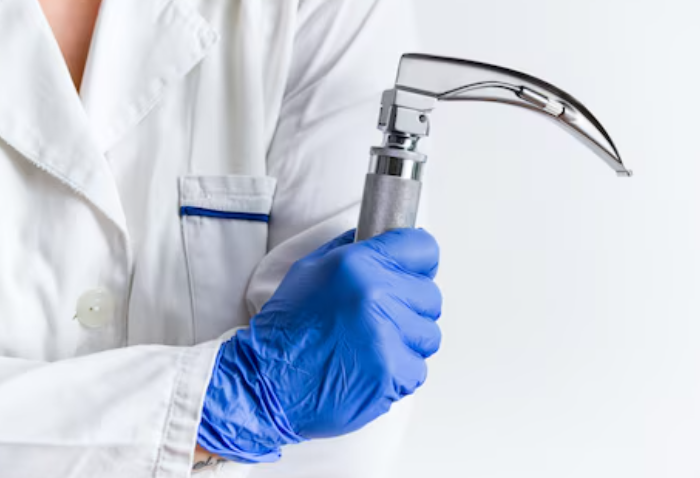
The primary objective when holding a laryngoscope is to establish maximum control over the blade tip with minimal exertion. A proper grip transforms the laryngoscope from a mere tool into an extension of the operator's hand, allowing for fine adjustments and the application of directed force. The grip must enable the operator to lift the mandible and tongue efficiently without using the patient's teeth as a fulcrum, which is a common and injurious error. This requires an understanding of leverage; the laryngoscope handle acts as a lever, with the operator's hand applying force at one end and the blade tip exerting controlled pressure on tissue at the other. A poor grip compromises this mechanical advantage, leading to inadequate visualization, rapid fatigue, and tissue trauma.
For the vast majority of clinicians, the laryngoscope is held in the left hand, regardless of the operator's natural handedness. This standardized practice is driven by anatomical and procedural logic: the laryngoscope is inserted from the right side of the patient's mouth to sweep the tongue to the left, leaving the right hand free to hold and manipulate the endotracheal tube. Therefore, proficiency with the left hand is a non-negotiable aspect of laryngoscope technique. The grip must be firm yet relaxed, avoiding a "white-knuckle" clutch that reduces tactile sensitivity and promotes tremor.
The most widely taught and effective grip for a direct laryngoscope is often described as a modified pen-hold. Here is a step-by-step breakdown:
1. Handle Orientation: Hold the laryngoscope handle in your left hand, with the blade connector facing away from you (toward the patient) and the light switch typically positioned so it can be activated by the thumb.
2. Finger Placement: The base of the handle should rest in the palm of your hand, near the hypothenar eminence. The index finger is extended along the handle, pointing toward the blade. This placement provides stability and a "sighting" line.
3. Thumb and Remaining Fingers: The thumb is placed on the opposite side of the handle from the index finger, often near or on the light switch. The remaining fingers (middle, ring, and little) curl around the handle to secure it. The grip is primarily between the thumb on one side and the middle/ring fingers on the other, with the index finger acting as a guide.
4. Wrist Position: The wrist should be kept in a neutral, straight alignment. A flexed or hyperextended wrist reduces control and power.
This grip provides excellent axial control, allowing the operator to direct the blade tip with precision. The extended index finger can sometimes be used to gently press on the thyroid cartilage (cricoid pressure or "BURP" maneuver) if needed, though this is an advanced technique.
The critical action in direct laryngoscopy is the *lift*. With the blade correctly positioned (in the vallecula for a Macintosh blade or under the epiglottis for a Miller blade), the operator lifts the entire laryngoscope along the axis of the handle, approximately at a 45-degree angle to the patient's body. The force should be directed from the shoulder and arm, with the elbow acting as a pivot. The wrist remains locked.
The erroneous action is the *rock*, where the laryngoscope is pivoted on the patient's upper teeth or gum, using them as a fulcrum. This "rocking" motion is a fundamental mistake that fails to effectively lift the tongue and epiglottis, often obscures the view, and carries a high risk of dental damage. A proper grip and lifting technique make rocking biomechanically difficult, which is why grip training is so vital.
While the fundamental left-handed hold remains, using a video laryngoscope introduces nuances. The primary difference is the shift in visual focus: the operator looks at a screen, not down the blade. This can affect proprioception and hand-eye coordination initially.
For Integrated-Screen Video Laryngoscopes (e.g., many portable models):
- The grip is often similar to the traditional pen-hold, but the hand must accommodate the integrated monitor. The weight distribution is different, usually heavier in the head. The grip may need to be slightly more palmar to balance the device comfortably. The lifting force required is often less, as the primary goal is optimal camera positioning rather than creating a direct line of sight.
For Hyperangulated Blade Video Laryngoscopes (e.g., GlideScope® hyperangulated blades):
- The technique shifts from a "lift" to more of a "guide and sweep" motion. The grip must allow for finer, more delicate movements to navigate the sharply curved blade around the tongue without causing trauma. The wrist may need to be slightly more flexed to achieve the correct blade angle during insertion. Excessive force with a hyperangulated blade is counterproductive and dangerous.
When using a video laryngoscope, the operator must avoid the instinct to move the entire device toward the screen to "get a better look." The grip must remain stable, with movements deliberate and focused on what the camera sees. A common error is a shaky grip caused by the cognitive load of interpreting the 2D screen image; this underscores the need for practice to develop a steady, confident hold even when the visual feedback is indirect.
Holding a laryngoscope for pediatric patients requires heightened precision. The grip must be even more controlled to accommodate smaller anatomical spaces. The choice of blade (straight, like a Miller, is often preferred for infants) influences the grip and lifting vector. The force applied must be meticulously scaled—excessive lift can easily injure delicate oropharyngeal structures. The handle itself may be smaller, requiring a more fingertip-oriented grip.
In anticipated or unanticipated difficult airways, laryngoscope technique becomes even more critical.
- Limited Mouth Opening: May require a different blade choice (e.g., a smaller blade or one with a thinner profile) and a grip that allows for careful "crawling" of the blade tip over the teeth.
- Anterior Larynx: Often requires more vigorous lifting and sometimes external laryngeal manipulation (ELM) with the right hand. The laryngoscope grip must be powerful enough to sustain this lift without faltering.
- Poor Neck Mobility: Eliminates the benefit of optimal patient positioning, placing greater demand on the laryngoscope technique to achieve visualization. The grip and lift must be optimized to compensate.
In all difficult scenarios, a firm, controlled, and adaptable grip is the foundation upon which advanced maneuvers are built.

1. Preparation and Grip Establishment: Before approaching the patient, pick up the laryngoscope with your left hand and establish the correct grip. Activate the light to check function. This should be a deliberate, practiced motion.
2. Insertion and Blade Advancement: With the patient properly positioned, use your right hand to open the mouth (scissor technique). The left hand, holding the laryngoscope, then inserts the blade from the right corner of the mouth, sweeping the tongue to the left. The grip at this stage guides the blade along the anatomical contour without snagging.
3. Positioning and the Critical Lift: Once the blade tip is in the vallecula or under the epiglottis, the focus shifts to the lift. The grip tightens slightly as force is applied from the arm and shoulder, lifting along the handle's axis. The right hand is now free to pick up the endotracheal tube.
4. Visualization and Tube Delivery: While maintaining the lift with a steady left-hand grip, the operator visualizes the cords (directly or on screen) and passes the tube with the right hand.
5. Blade Removal: After tube placement and confirmation, the laryngoscope is carefully withdrawn along the path of insertion, maintaining control via the grip until it is fully clear of the mouth.
1. The "Fist Grip": Clutching the entire handle in a fist. This reduces fine control, makes precise blade tip placement difficult, and often leads to a rocking motion.
2. Incorrect Finger Placement: Allowing the fingers (especially the index finger) to splay out or rest on the blade itself. This can interfere with the line of sight in direct laryngoscopy and reduces control.
3. Wrist Flexion ("Pumping the Handle"): Flexing the wrist during the lift instead of keeping it straight and using arm/shoulder strength. This is inefficient and often results in a rocking motion against the teeth.
4. Inadequate Lift Due to Poor Grip Biomechanics: A weak or misaligned grip fails to generate sufficient force to lift the tongue and epiglottis, resulting in a poor glottic view (e.g., only seeing the epiglottis or arytenoids).
5. Lack of Adaptability: Using the exact same rigid grip and force for every patient, regardless of anatomy or laryngoscope type. Technique must be patient- and tool-specific.
Mastering the laryngoscope grip is not an intellectual exercise but a psychomotor skill. It requires deliberate practice to build muscle memory.
- Manikin Practice: Essential for beginners to learn the basic mechanics of insertion, sweep, and lift without risk.
- Use of Video Feedback: Recording one's own technique on manikins or using video laryngoscopes with recording playback allows for self-analysis of grip, wrist position, and lifting vector.
- Supervised Clinical Practice: There is no substitute for supervised, real-patient experience where tissue compliance, secretions, and anatomical variation provide authentic feedback.
- Hand Strengthening: While finesse is more important than brute strength, some forearm and grip strengthening can be beneficial for maintaining control during prolonged or difficult laryngoscopy.
How you hold a laryngoscope is far more than a procedural detail; it is the cornerstone of successful and safe airway management. A proper, disciplined grip—whether for a direct or video laryngoscope—optimizes mechanical leverage, provides precise control over the blade tip, and minimizes the risk of iatrogenic injury. It enables the effective translation of force to lift the tongue and epiglottis, revealing the glottic opening for secure endotracheal tube placement. While the advent of video laryngoscopy has modified some aspects of technique, the principles of a stable, controlled, and purposeful left-handed grip remain universally essential. Continuous attention to this foundational skill, through ongoing training and critical self-reflection, is a hallmark of an expert clinician. In the high-stakes environment of intubation, confidence begins with the hand, and a masterful grip on the laryngoscope is the first step toward mastering the airway.
Contact us to get more information!
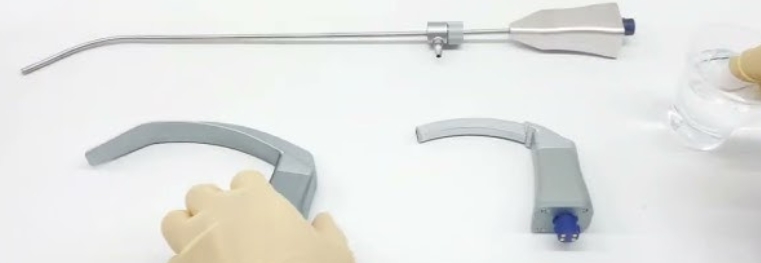
The standard practice of holding the laryngoscope in the left hand is based on procedural efficiency and anatomical access. The laryngoscope is inserted from the right side of the patient's mouth to sweep the tongue to the left. This maneuver is most naturally performed with the left hand. Holding it in the left hand leaves the dominant right hand free to perform the more dexterous task of manipulating the endotracheal tube—shaping it, holding it, and guiding it through the vocal cords under direct or indirect vision. This division of labor optimizes the procedure.
Yes, there are subtle but important adaptations. For a video laryngoscope, especially one with an integrated screen, the grip may need to be slightly more in the palm to balance the different weight distribution. The amount of lifting force required is often less, as the goal is camera positioning rather than creating a direct line of sight. Most importantly, with hyperangulated blades, the technique shifts from a powerful "lift" to a more delicate "guide and sweep" motion. The grip must facilitate this finer control. However, the fundamental left-handed, controlled pen-hold remains the starting point.
The force should be the minimum necessary to achieve an adequate glottic view. It is a directed, sustained lift from the arm and shoulder, not a sudden jerk or a rocking motion. Using excessive force is a common error that leads to dental trauma, soft tissue injury, and rapid operator fatigue. With proper blade positioning (correct depth and location), the required force is often less than anticipated. A video laryngoscope often requires significantly less lifting force than direct laryngoscopy. The key is to let the blade do the work through proper technique, not brute strength.
"Rocking" occurs when an operator uses the patient's upper teeth or gum as a fulcrum, pivoting the laryngoscope handle upward. This is a fundamental technical error. It is dangerous because it:
- Fails to effectively lift the tongue and epiglottis, often worsening the view.
- Directly damages teeth, potentially chipping, cracking, or avulsing them.
- Can injure the gums and lips.
- Represents inefficient technique that wastes energy.
Rocking is typically caused by a poor grip, improper wrist action (flexion instead of a straight-arm lift), or incorrect blade insertion depth. It must be rigorously avoided.
Effective practice methods include:
- Manikin Drills: Regularly practicing on an intubation manikin allows you to focus purely on the mechanics of your grip, insertion, and lift without pressure.
- Video Recording and Analysis: Use a video laryngoscope on a manikin and record your attempts. Playback allows you to critically analyze your hand position, wrist angle, and the smoothness of your movements.
- Grip Strength and Endurance Training: Simple exercises like squeezing a stress ball or using hand grippers can improve general hand and forearm strength, which supports control during prolonged procedures.
- Mental Rehearsal and Visualization: Visualizing the perfect grip and lift sequence can reinforce neural pathways and improve real-world performance.
- Seeking Expert Feedback: Having an experienced instructor observe and critique your grip during training sessions is invaluable.
[1] https://www.ncbi.nlm.nih.gov/books/NBK493224/
[2] https://www.thoracic.org/professionals/clinical-resources/critical-care/clinical-education/airway/direct-laryngoscopy.php
[3] https://www.apsf.org/article/evolution-of-airway-management-video-laryngoscopy/
[4] https://www.rcoa.ac.uk/safety-standards-quality/guidance-resources/airway-management-guidelines
[5] https://www.asahq.org/education-and-career/education-and-training-resources/publications-and-articles/anesthesia-equipment


