
Views: 222 Author: Lake Publish Time: 2025-12-29 Origin: Site


Content Menu
● Step 1: Define the Intended Use and Risk Assessment
>> A. Categorize by Procedure Type:
>> B. Identify Specific Hazards:
● Step 2: Evaluate Key Performance Characteristics
>> 1. Material Selection: The Primary Determinant
>> 2. Quality Standards and Certification
>> 3. Fit, Comfort, and Design Features
● Step 3: Consider Operational and Strategic Factors
● Step 4: The Procurement Process: Testing and Validation
● Conclusion: A Balanced, Evidence-Based Approach
● Frequently Asked Questions (FAQ)
>> 1. What is the single most important factor when choosing medical gloves for general patient care?
>> 2. Are thicker medical gloves always better?
>> 3. How can I verify the quality claims of a glove supplier?
>> 4. Why have most hospitals switched to powder-free, non-latex (nitrile) gloves?
>> 5. Can we use the same medical gloves for handling chemotherapy drugs and for patient examinations?
In the precise and high-stakes environment of modern healthcare, selecting the appropriate medical glove is a critical decision that impacts patient safety, clinician protection, and procedural efficacy. This choice extends far beyond a simple commodity purchase. For professionals utilizing sophisticated medical visualization technology—from navigating with a single-use ureteroscope to interpreting real-time feeds on a bronchoscopy workstation—the medical glove is a direct interface between human skill and clinical intervention. A suboptimal glove can impair tactile sensitivity, increase contamination risk, and hinder performance. This comprehensive guide provides a structured, multi-factorial framework for healthcare procurement specialists, safety officers, and clinicians to evaluate and select the best disposable medical glove for their specific needs, balancing protection, performance, and practicality.

The foundation of selection is a clear understanding of the procedure's requirements. The glove must be matched to the task's specific hazards and dexterity demands.
- High-Risk/ Sterile Procedures (Surgical & Interventional): This includes surgery, central line insertion, and complex endoscopic procedures. Requirements mandate sterile medical gloves with the highest barrier integrity (lowest Acceptable Quality Level or AQL), excellent tactile sensitivity, and precise anatomic fit.
- Moderate-Risk/ Medical Examination & Non-Sterile Procedures: This encompasses patient examinations, wound dressing, IV starts, and handling contaminated materials. Examination-grade medical gloves are appropriate, requiring reliable barrier protection but with a higher allowable defect rate than surgical gloves.
- Low-Risk/ Non-Medical Tasks: This includes equipment cleaning, handling non-infectious materials, or food service. While protection is needed, the stringent standards for a medical glove may not be required, though many institutions standardize on medical-grade for consistency.
- Biological Hazards: Blood, bodily fluids, pathogens. Standard for all patient care.
- Chemical Hazards: Disinfectants, chemotherapeutic drugs, solvents. Requires chemical-resistant materials like nitrile.
- Physical Hazards: Sharps, abrasive surfaces, extreme temperatures. Requires consideration of puncture/tear resistance and thickness.
Once the use case is defined, evaluate gloves against these core performance criteria.
The choice of polymer dictates fundamental properties.
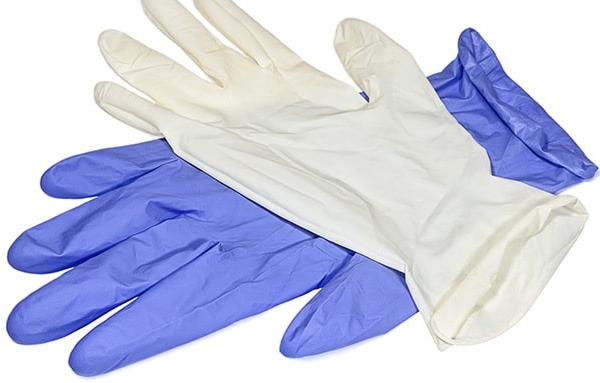
- Pros: Excellent puncture and chemical resistance (especially to oils, fats, and many solvents). Latex-free, minimizing allergy concerns. Generally durable with good shelf life. Performs consistently across users.
- Cons: Can be less elastic than latex, potentially affecting fit for some users. Historically more expensive, though costs have stabilized.
- Best For: Universal precaution settings, chemotherapy handling, laboratory work, and as the standard for healthcare systems avoiding latex.
- Pros: Superior elasticity, comfort, and tactile sensitivity (highly prized in surgical settings). Excellent fit and dexterity. Biodegradable.
- Cons: Risk of Type I (IgE-mediated) allergic reactions for both patients and staff. Can cause irritant contact dermatitis. Protein content varies.
- Best For: Environments with no latex allergies, where maximum sensitivity is critical (e.g., some surgical specialties), provided low-protein, powder-free options are chosen.
- Pros: Cost-effective. Latex-free. Loose fit can be comfortable for short-donning periods.
- Cons: Poor elasticity and durability. Higher risk of tears and leaks. Offers minimal chemical resistance. Plasticizers can migrate.
- Best For: Very short-duration, low-risk tasks where cost is the primary driver and barrier integrity is secondary. Not recommended for most clinical patient care.
A reputable medical glove must comply with relevant regional and international standards.
- FDA 510(k) Clearance: In the U.S., gloves must be cleared as Class I medical devices.
- ASTM International Standards: Key benchmarks.
- ASTM D3577: Standard specification for rubber examination gloves.
- ASTM D3578: Standard specification for rubber surgical gloves.
- ASTM D6319: Standard specification for nitrile examination gloves.
- These standards define requirements for physical dimensions, tensile strength, elongation, and barrier integrity (via water leak tests).
- Acceptable Quality Level (AQL): This is a critical statistical measure of defect tolerance. A lower AQL indicates higher quality.
- Surgical Gloves: Typically require an AQL of 1.5 or lower for pinholes (often 1.0 or 0.65).
- Examination Gloves: Common AQLs are 1.5, 2.5, or 4.0. For moderate-risk patient care, an AQL of 2.5 or lower is recommended.
- ISO 13485 Certification: Indicates the manufacturer has a certified quality management system for medical devices, ensuring consistency and traceability.
Performance is useless if the glove is not worn correctly or causes discomfort.
- Size Range and Consistency: The supplier must offer a full size range (XS-XL). Sizing should be consistent across production lots.
- Anatomic vs. Ambidextrous: Anatomically shaped (hand-specific) gloves reduce hand fatigue and improve fit for long procedures. Ambidextrous gloves are more versatile for stock keeping.
- Texture: Textured fingertips (micro-roughened or patterned) enhance grip on wet instruments, slippery tubing, or delicate devices like a video laryngoscope blade.
- Cuff Length: Extended cuffs (180mm+) provide better protection for the wrist and secure overlap with gown sleeves.
- Powdered vs. Powder-Free: Powder-free medical gloves are the modern standard. Powder (cornstarch) can aerosolize, potentially carrying latex proteins, causing granulomas, and interfering with sensitive equipment or wound sites. Powder-free gloves use chlorination or polymer coatings for donning ease.
Selection must align with the broader operational reality of the healthcare facility.
- Total Cost of Ownership (TCO): Look beyond price per box. Consider:
- Failure Rate: A cheaper glove with a higher AQL may have more tears, leading to wasted gloves, re-gowning time, and exposure risk.
- User Preference & Compliance: Uncomfortable gloves lead to non-compliance. Staff may double-glove unnecessarily, increasing costs.
- Allergy Management: The cost of managing latex allergies (testing, claims, staff turnover) can far outweigh the premium for synthetic gloves.
- Supply Chain Reliability: The pandemic highlighted the risk of single-source dependency. Evaluate the manufacturer's production capacity, geographic diversity, and distribution network.
- Sustainability: Growing consideration includes evaluating biodegradable options (for latex), recyclability programs, and manufacturers with environmental management systems (ISO 14001).
Never purchase based on specifications alone.
1. Request Samples: Obtain samples of shortlisted products for clinical user evaluation.
2. Conduct a Clinical Trial: Have staff from different roles (nursing, surgery, lab) use the gloves in real-world settings. Gather structured feedback on fit, comfort, donning ease, tear resistance, and tactile feel during specific tasks (e.g., "Can you palpate a vein easily?" or "Does the grip suffice when handling a wet endoscopy system component?").
3. Review Technical Documentation: Request and review the Certificate of Analysis (CoA) for recent lots, verifying AQL test results, tensile strength, and powder/protein levels (for latex).
4. Audit the Supplier: For large contracts, consider auditing the manufacturer or reviewing their quality audit reports to ensure sustainable quality practices.
Choosing the best disposable medical glove is a strategic process that synthesizes clinical need, material science, quality assurance, and operational wisdom. There is no single "best" glove for all situations. The optimal choice is the one that provides a reliable, impermeable barrier while feeling like a natural extension of the clinician's hand—enabling, not impeding, their expertise. In the context of advanced medical visualization, where procedures are guided by the enhanced sight provided by image processors and scopes, the sense of touch provided by the medical glove remains irreplaceable. Therefore, a rigorous, user-involved selection process is not an administrative task but a direct investment in clinical quality, staff safety, and ultimately, superior patient outcomes. By following this structured framework, healthcare organizations can make informed, defensible decisions that protect their most valuable assets: their people and their patients.
For general patient care under Standard Precautions, the most important factor is reliable barrier protection, which is best indicated by the glove's AQL (Acceptable Quality Level) and its material. A nitrile examination glove with an AQL of 2.5 or lower offers an excellent balance of puncture resistance, latex-free safety, and proven leak protection for most tasks like IV insertion, wound care, and patient examinations.
Not necessarily. Thickness (measured in mils) correlates with durability and puncture resistance but is inversely related to tactile sensitivity. A thicker medical glove (e.g., 6-8 mil) is ideal for high-risk handling of sharp instruments or hazardous chemicals. However, for procedures requiring fine dexterity—such as suturing, catheter placement, or manipulating a flexible laryngoscope—a thinner glove (4-5 mil) provides the necessary sensitivity without unduly compromising protection for moderate-risk tasks.
Always request a Certificate of Analysis (CoA) for a specific production lot. A legitimate CoA from an accredited laboratory will detail physical test results (tensile strength, elongation) and, crucially, the water leak test results stating the AQL achieved. Reputable suppliers provide these readily. For major contracts, third-party lab testing of procured samples is a prudent verification step.
The shift is driven by a triad of factors: safety, compliance, and operational efficiency.
- Safety: To eliminate the risks of latex protein allergies and the complications associated with powdered gloves (granulomas, respiratory irritation, wound contamination).
- Compliance: It simplifies protocols (no need for latex-safe zones) and aligns with OSHA and CDC recommendations to use powder-free, low-protein alternatives.
- Operational Efficiency: Standardizing on one primary, high-performance material (nitrile) simplifies procurement, storage, and training, while its chemical resistance makes it suitable for a wider range of tasks.
No. Chemotherapy/hazardous drug handling requires medical gloves that meet specific testing standards for permeation resistance to those particular chemicals (e.g., following ASTM D6978 or similar guidelines). Standard exam gloves, even nitrile, may not offer adequate protection against permeation by certain cytotoxic agents. Chemotherapy gloves are a specialized subset, often requiring double-gloving with tested gloves, and should never be substituted with general-purpose examination gloves.
[1] https://www.fda.gov/medical-devices/personal-protective-equipment-infection-control/gloves
[2] https://www.astm.org/d3577-19.html
[3] https://www.cdc.gov/niosh/npptl/topics/protectiveclothing/default.html


