
Views: 222 Author: Lake Publish Time: 2026-02-06 Origin: Site


Content Menu
● Understanding Autoclaving and Its Importance
● Precautions and Pre-autoclave Considerations
● Step-by-Step Autoclave Procedure
>> Phase 2: Inspection and Packaging
>> Phase 3: Autoclave Cycle Selection and Execution
>> Phase 4: Post-Sterilization Handling
● The Rise of Disposable Alternatives and the OEM Perspective
● Common Errors and How to Avoid Them
● Frequently Asked Questions (FAQs)
>> 1. Can I autoclave the entire laryngoscope, including the handle?
>> 3. How often should biological monitoring (spore testing) be performed?
>> 4. What does a "wet pack" mean, and why is it a problem?
>> 5. Are disposable video laryngoscopes sterilized?
In the realm of airway management, ensuring the sterility of equipment is paramount for patient safety. The laryngoscope, a critical tool for visualizing the glottis during intubation, must be free from all microbial life between uses to prevent healthcare-associated infections. For reusable metal laryngoscope blades, autoclaving—a process of steam sterilization under pressure—remains the gold standard. This guide provides a detailed, step-by-step protocol for properly autoclaving laryngoscope components, emphasizing best practices and contrasting this method with the growing prevalence of single-use alternatives. As a company deeply embedded in medical visualization technology, we recognize that whether dealing with complex bronchoscopy workstations or fundamental tools like laryngoscopes, stringent reprocessing protocols are the bedrock of safe clinical practice.

Autoclaving utilizes saturated steam at high temperature (typically 121°C or 134°C) and pressure to destroy all microorganisms, including bacterial spores. For semi-critical devices like laryngoscope blades that contact mucous membranes, this level of sterilization is essential. A single breach in protocol can compromise sterility, potentially leading to pathogen transmission. The rigorous, resource-intensive nature of this reprocessing cycle is a key driver behind the increasing adoption of disposable devices. However, for the vast installed base of reusable laryngoscopes, mastering autoclave procedures remains a critical competency for sterile processing departments (SPD) and clinical staff alike.
1. Manufacturer Instructions are Paramount: Always consult the device's specific Instructions for Use (IFU) before reprocessing. Not all laryngoscope components are autoclave-safe.
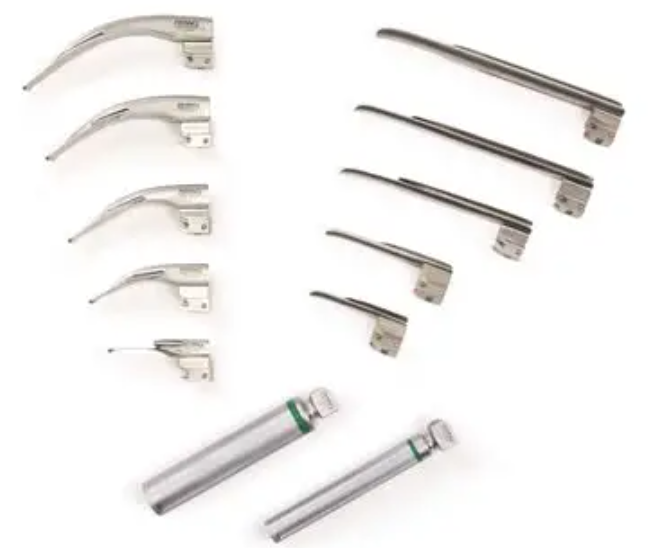
2. Identify Autoclavable Components: Typically, only the metal blade is designed for steam sterilization. The handle, which contains batteries and electronics, MUST NEVER be autoclaved. Handles require disinfection with approved wipes.
3. Point-of-Use Processing: Immediately after use, the blade should be wiped with a disinfectant cloth to remove gross contamination, disassembled from the handle, and placed in a designated container for transport to the SPD to prevent organic material from drying.
Sterilization cannot be achieved without prior meticulous cleaning. Residual soil can shield microorganisms from steam.
1. Disassembly: Fully disassemble the blade from any light source attachment (e.g., fiberoptic light carrier, bulb).
2. Cleaning: Immerse and thoroughly clean the blade using a neutral pH enzymatic detergent and a soft brush, paying close attention to hinges, crevices, and the light window. A lumen brush should be used for any channels.
3. Rinsing: Rinse thoroughly with purified or distilled water to remove all detergent residues, which can impede steam contact or damage the device.
4. Drying: Manually dry the component with a low-lint cloth. Inadequate drying leads to wet packs, which are considered non-sterile.
1. Visual Inspection: Examine the blade for damage, corrosion, pitting, or wear. Check fiberoptic strands for breaks. Discard or remove damaged items from service.
2. Packaging: Wrap the dry blade using an FDA-cleared sterilization wrap or place it in a validated sterilization pouch. Ensure the packaging allows for steam penetration. Include an internal chemical indicator inside the pack.
3. Loading: Place the packaged blade in the autoclave chamber, ensuring it does not touch the chamber walls or other items. Avoid overloading, as this prevents uniform steam circulation.
1. Cycle Type: For solid metal items like standard blades, a Gravity Displacement cycle is often sufficient. For blades with hinges or small lumens, a Pre-Vacuum (Dynamic Air Removal) cycle is preferable as it removes air more effectively from complex geometries.
2. Standard Parameters: Common effective parameters include:
- 121°C (250°F) for 30 minutes in a gravity cycle.
- 134°C (273°F) for 10-15 minutes in a pre-vacuum cycle.
* Always adhere to your facility's SPD policy and autoclave manufacturer's guidelines.
3. Quality Control: Use an external chemical indicator (autoclave tape) on the package. Routinely use a biological indicator (e.g., *Geobacillus stearothermophilus* spore strips) to validate the autoclave's microbial lethality.
1. Cooling: Allow sterilized packs to cool completely at room temperature in a clean, low-traffic area before handling to prevent condensation and contamination.
2. Storage: Store cooled packs in a clean, dry, enclosed cabinet. Implement a first-in, first-out (FIFO) inventory system. Note that event-related sterility (based on handling, not a fixed date) is the modern standard, provided the packaging remains intact and dry.
3. Final Check: Before use, the clinician must inspect the package for integrity, dryness, and a pass indication on both internal and external chemical indicators.

The complexity of this reprocessing lifecycle underscores a significant market trend: the shift towards single-use devices. This shift is fueled by several factors:
- Elimination of Reprocessing Risk: Disposables remove variability in human cleaning performance and autoclave function.
- Cost of Reprocessing: The hidden costs of labor, utilities, chemicals, and capital equipment for SPDs are substantial.
- Guaranteed Integrity: Each procedure uses a device with pristine optics and new components.
As an OEM service provider for medical visualization technology, we see this trend firsthand. The expertise required to manufacture a reliable, cost-effective disposable video laryngoscope parallels the engineering behind our other products, such as single-use ureteroscopes or flexible laryngoscopes. The market demand is for devices that integrate high-quality visualization with the absolute sterility and convenience of single-use design, a niche where OEM partnerships are crucial for brands looking to enter or expand in this space.
- Error: Autoclaving non-autoclavable parts (handles).
- Solution: Clear labeling, staff education, and separate processing protocols.
- Error: Inadequate cleaning before sterilization.
- Solution: Implement standardized cleaning checklists and competency validation.
- Error: Overloading the autoclave chamber.
- Solution: Follow manufacturer loading guidelines and use racks properly.
- Error: Using compromised or expired packaging.
- Solution: Regular inventory checks and staff training on package inspection.
- Error: Immediate use of a hot, wet pack.
- Solution: Enforce mandatory cooling times and proper storage protocols.
Properly autoclaving a laryngoscope blade is a meticulous but essential process for ensuring patient safety when using reusable equipment. It requires unwavering adherence to a multi-phase protocol encompassing cleaning, inspection, correct autoclave operation, and aseptic storage. Each step is a critical control point in the chain of infection prevention. However, the operational burden, cost, and inherent risks of reprocessing have undeniably accelerated the adoption of disposable video laryngoscopes. This evolution in airway management reflects a broader trend in medical visualization towards devices that guarantee performance and sterility while optimizing clinical workflow. Whether maintaining traditional reusable instruments or innovating in the disposable sphere, the ultimate goal remains the same: to provide clinicians with safe, effective tools for patient care.
Contact us to get more information!
No, absolutely not. The handle contains batteries, electronics, and seals that will be destroyed by the high heat, moisture, and pressure of an autoclave. This can cause battery leakage, electrical failure, and create a safety hazard. Handles must be cleaned and disinfected according to the manufacturer's IFU, typically using approved disinfectant wipes.
A Gravity Displacement cycle relies on steam being less dense than air to force air out of a drain at the bottom of the chamber. It is suitable for simple, solid items. A Pre-Vacuum cycle uses a pump to actively remove air from the chamber and the load before steam is introduced, making it more effective for sterilizing items with complex shapes, lumens, or hinges (like some laryngoscope blades), as it ensures better steam penetration.
Best practice and standards typically require biological indicator testing at least weekly, with every load containing implantable devices. Some high-volume facilities or state regulations may require daily testing. Always follow your facility's infection control policy and local regulatory requirements.
A "wet pack" refers to moisture remaining inside or on the surface of a sterilization package after the autoclave cycle is complete. This is a problem because moisture can wick microorganisms from a non-sterile surface into the sterile package, compromising the contents. Wet packs must be considered non-sterile, re-cleaned, re-packaged, and re-sterilized.
Yes. Disposable video laryngoscopes are terminally sterilized by the manufacturer using industrial methods such as Ethylene Oxide (EtO) gas or Gamma Irradiation. These methods are highly reliable and allow the device to be delivered in a sterile, ready-to-use package, eliminating the need for any facility-based reprocessing.
[1] https://www.cdc.gov/infectioncontrol/guidelines/disinfection/index.html
[2] https://www.fda.gov/medical-devices/general-hospital-devices-and-supplies/reprocessing-medical-devices-healthcare-settings-policy-and-considerations
[3] https://www.astm.org/f2098-01.html


