
Views: 222 Author: Lake Publish Time: 2026-02-03 Origin: Site


Content Menu
● The Critical Importance of Proper Technique
● Types of Isolation Gowns and Their Implications
● Step-by-Step Guide: How to Don (Put On) Isolation Gowns and Gloves
>> Step 1: Donning the Isolation Gown
>> Step 2: Donning Gloves (Closed Gloving Method - Recommended)
● Step-by-Step Guide: How to Doff (Remove) Isolation Gowns and Gloves
>> Step 1: Removing Gloves (First)
>> Step 2: Removing the Isolation Gown
● Common Errors and How to Avoid Them
● The Role of Training and Competency
● Frequently Asked Questions (FAQs)
>> 1. What is the single most important step in the doffing (removal) process?
>> 2. Should I re-use a disposable isolation gown?
>> 3. What if my isolation gown or glove tears during patient care?
>> 4. Is there a difference in the gowning technique for sterile vs. clean isolation gowns?
>> 5. How can I ensure my gloves are the right size and don't tear?
In the high-stakes world of healthcare, precision and protocol are paramount. Before any such procedure can begin, a fundamental and non-negotiable barrier must be established: proper personal protective equipment (PPE). Isolation gowns and gloves form the first and most critical layer of defense in infection prevention, protecting both healthcare workers and patients. Mastering the correct technique for donning (putting on) and doffing (removing) isolation gowns and gloves is not merely a procedural step; it is a vital clinical skill that prevents cross-contamination and upholds the highest standards of patient safety. This comprehensive guide details the evidence-based protocols for gowning and gloving for isolation precautions.
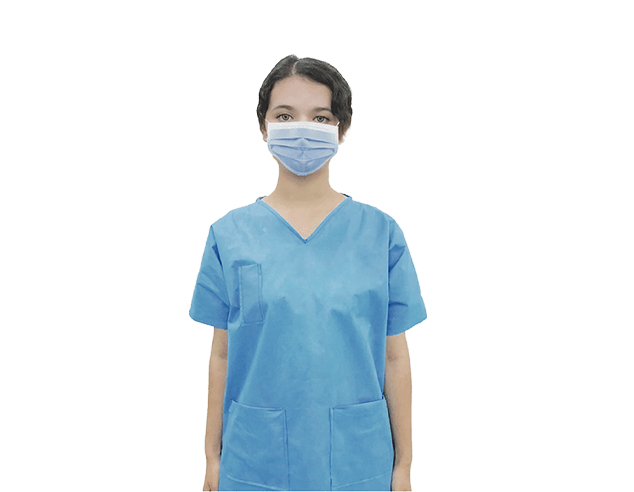
The purpose of donning isolation gowns and gloves is to create a sterile or clean barrier between the healthcare worker and the patient's environment. This is essential in Contact Precautions, Droplet Precautions, and during sterile procedures. However, studies consistently show that contamination during PPE removal is common. The outside surfaces of the isolation gown and gloves are considered contaminated immediately upon use. The core principle, therefore, is that the donning process moves from clean to contaminated (starting with clean hands, ending fully protected), while the doffing process must move from contaminated to clean (removing the most contaminated items first without touching clean skin or clothing). A single breach in technique can negate the protection entirely, potentially leading to healthcare-associated infections (HAIs). Just as our medical image processors require correct calibration for an accurate picture, PPE requires a meticulous, step-by-step protocol for effective protection.
Understanding the isolation gowns you are using informs the protocol. The two primary categories are:
- Clean Isolation Gowns: Used for standard and transmission-based precautions (e.g., Contact Precautions for MRSA). These are non-sterile and provide a fluid-resistant barrier.
- Sterile Surgical Gowns: Used in operating rooms and for sterile procedures. These are packaged sterile and require a more stringent, aseptic donning technique (often assisted) to maintain sterility of the front and sleeves.
This article focuses on the protocol for donning and doffing clean isolation gowns and gloves, which is the most common requirement for isolation scenarios outside the operating room.
Perform hand hygiene with alcohol-based hand rub or soap and water before starting. Ensure you have the correct size isolation gown and gloves in a clean, accessible area.
1. Identify: Hold the clean isolation gown at the neckline, allowing it to unfold fully without touching the floor or any surfaces. The opening should be in the back, with the inside facing you.
2. Insert Arms: Slide your arms into the sleeves, being careful not to contaminate the outside of the gown by over-extending your hands through the cuffs at this stage.
3. Secure the Neck: Pull the gown up over your shoulders so it fits comfortably.
4. Secure the Torso: Overlap the back flaps of the gown to fully cover your clothing. The gown should provide complete coverage from your neck to at least mid-calf.
5. Fasten: Tie all the ties securely. This typically includes ties at the neck and the waist. If using a gown with a thumb hook, secure it to help keep sleeves in place.
The closed method minimizes the risk of touching the glove's exterior with bare skin.
1. With the gown cuffs still covering your hands, pick up one glove from the cuff.
2. Place the glove on the opposite gown cuff, thumb-to-thumb, palm-down, with the glove's cuff facing up over the gown cuff.
3. Using your covered hand, grasp the upper edge of the glove's cuff and stretch it over the gown cuff and your enclosed hand. Pull it into place.
4. Repeat the process for the second glove using the now-gloved hand.
5. Adjust both gloves, ensuring a secure fit over the gown cuffs. The gown cuff must be completely covered by the glove to prevent exposure.
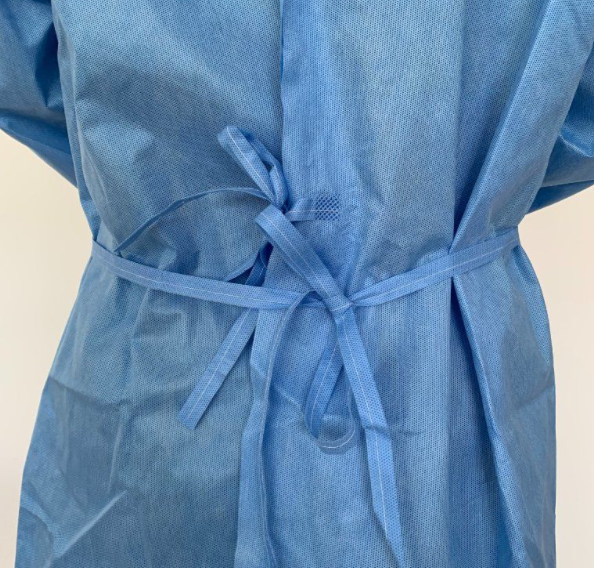
The doffing sequence is critical. The CDC recommends a specific order to prevent self-contamination. Perform this step in the patient's anteroom or immediately outside the room, if possible.
1. Grasp the outside of one glove near the wrist with your other gloved hand. Peel it off, turning it inside out as you pull. Hold the removed glove in your still-gloved hand.
2. Slide the fingers of your bare hand under the wrist edge of the remaining glove. Avoid touching the outside.
3. Peel the second glove off over the first glove, turning it inside out and encasing both gloves together.
4. Dispose of the glove bundle immediately into a waste container.
1. Unfasten: Untie or break the waist ties first, then the neck ties. Avoid touching the front of the gown, as it is the most contaminated area.
2. Peel Away: Pull the gown away from your neck and shoulders, turning it inside out as you remove it. This technique contains the contaminants inside the folded gown.
3. Fold: Continue to pull the gown off, holding it away from your body. Ball or fold it into a bundle with the contaminated side inward.
4. Dispose: Discard it immediately into a designated laundry or waste receptacle. If it is a reusable gown, place it in the appropriate soiled linen container.
1. Immediately after removing all PPE, perform hand hygiene thoroughly with alcohol-based hand rub or soap and water.
- Error: Adjusting glasses or touching your face after gloving but before the procedure.
- Avoidance: Complete all personal adjustments before donning PPE.
- Error: Allowing the glove cuff to roll up, exposing the gown sleeve.
- Avoidance: Use the closed gloving method and ensure a secure fit over the cuff.
- Error: Touching the outside front of the gown during doffing.
- Avoidance: Handle the gown only by the inside (neck and shoulder areas) or the ties.
- Error: Performing hand hygiene with gloves on, or failing to perform it immediately after doffing.
- Avoidance: Remember that hand hygiene is the bookend to the entire process: before donning and immediately after doffing.
Proficiency in gowning and gloving is a perishable skill. Regular, competency-based training using simulation and direct observation is essential. Facilities should provide clear visual aids at isolation room entrances. This commitment to training mirrors the support we provide for our visualization equipment; just as we ensure clinicians are trained to use our flexible laryngoscopes correctly for optimal outcomes, healthcare workers must be expertly trained in PPE protocols for safety.
The correct procedure for gowning and gloving for isolation is a disciplined sequence that protects the core of healthcare: the well-being of both the caregiver and the patient. It transforms isolation gowns and gloves from simple supplies into a dynamic, personal barrier system. By meticulously following the steps of donning—moving from clean to protected—and the equally crucial steps of doffing—moving from contaminated to clean—healthcare professionals fulfill their duty to "first, do no harm." In an era of evolving pathogens, this foundational practice, reinforced by continuous training and a culture of safety, remains one of the most powerful tools in infection prevention. Just as clear visualization leads to accurate diagnosis and treatment, clear and correct PPE protocols lead to a safer clinical environment for all.
Contact us to get more information!
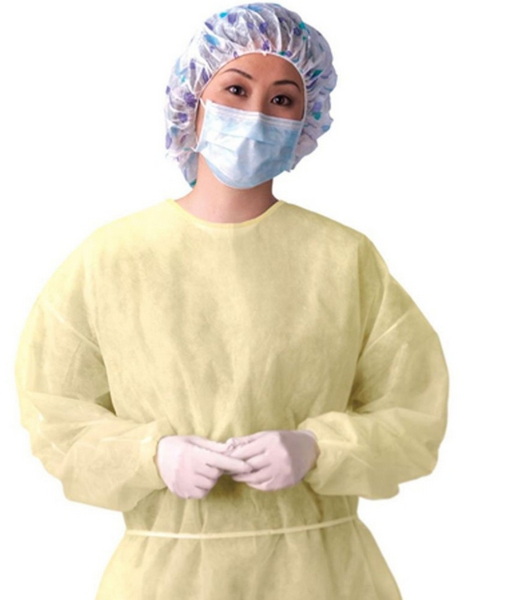
The most critical step is the immediate and proper removal of gloves first, using the correct technique to avoid touching the contaminated exterior with bare skin. This is because gloves are considered the most contaminated item and handling them correctly sets the stage for safe removal of the rest of the PPE, including the isolation gown.
No. Disposable isolation gowns are designed for single use and single patient encounter. Reusing them increases the risk of cross-contamination and compromises the integrity of the barrier. They should be doffed and discarded immediately after exiting the patient's care area.
If a breach in PPE integrity occurs, you should safely exit the patient's room or immediate care area as soon as it is clinically safe to do so. Perform the full doffing sequence carefully, dispose of the compromised items, perform hand hygiene, and then don a new set of PPE before returning to care.
Yes. Donning a sterile surgical gown for an aseptic procedure is more complex and usually requires an assistant to tie the back, ensuring the sterility of the gown's front and sleeves is maintained. The technique described in this article is for clean isolation gowns used for contact and transmission-based precautions, where maintaining front sterility is not the objective—creating a general fluid-resistant barrier is.
Select gloves that fit snugly without being overly tight. Conduct a visual and tactile check after donning. Ensure fingernails are short and smooth to prevent punctures. Using the correct donning technique (like the closed method) also reduces stress on the glove material during application.
[1] https://www.cdc.gov/infectioncontrol/guidelines/isolation/index.html
[2] https://www.cdc.gov/hai/pdfs/ppe/ppe-sequence.pdf
[3] https://www.who.int/publications/i/item/WHO-2019-nCoV-IPCPPE_use-2020.1
[4] https://www.fda.gov/medical-devices/personal-protective-equipment-infection-control/isolation-gowns
[5] https://www.astm.org/f2407-20.html
[6] https://www.ncbi.nlm.nih.gov/pmc/articles/PMC7108383/
[7] https://www.osha.gov/laws-regs/regulations/standardnumber/1910/1910.1030
[8] https://www.apic.org/resources/topic-specific-infection-prevention/isolation-precautions/
[9] https://www.cdc.gov/vhf/ebola/healthcare-us/ppe/guidance.html


