
Views: 222 Author: Lake Publish Time: 2026-02-03 Origin: Site


Content Menu
● Understanding Isolation Gowns: Types and Classifications
● The Fundamental Rule: Cleaning Frequency Protocol
● Factors Influencing Cleaning and Decontamination Rigor
● The Reprocessing Cycle: From Soiled to Sterile
● Key Considerations for Facility Management
● Frequently Asked Questions (FAQ)
>> 1. Can reusable isolation gowns be cleaned more than once a day if used for multiple short tasks?
>> 2. What is the main difference between cleaning reusable isolation gowns and regular hospital linen?
>> 3. How can I tell if a reusable isolation gown is no longer safe to use after multiple washes?
>> 4. Is it ever acceptable to clean an isolation gown using manual methods or at home?
>> 5. Are there situations where disposable isolation gowns are preferred over reusable ones?
In the critical landscape of healthcare infection control, isolation gowns serve as a fundamental barrier between healthcare personnel and potentially infectious materials. As a company deeply embedded in the medical device ecosystem, we understand that the efficacy of any protective equipment, including isolation gowns, hinges not just on its initial quality but on its meticulous maintenance. While our expertise lies in medical visualization technologies, the principles of device longevity, patient safety, and protocol adherence resonate across all medical equipment categories. A paramount question for facilities utilizing reusable protective apparel is: how often do reusable isolation gowns need to be cleaned? The answer is not a simple timetable but a multifaceted protocol grounded in risk assessment, regulatory standards, and material science. This article delves into the critical guidelines, influencing factors, and best practices that govern the cleaning frequency and lifecycle management of reusable isolation gowns.
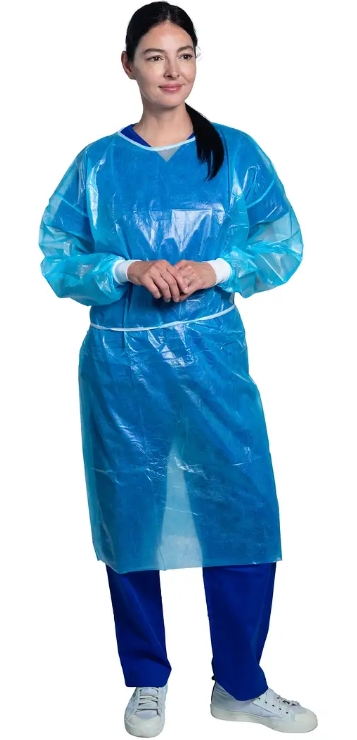
Not all isolation gowns are created equal, and their intended use directly dictates their care requirements. Isolation gowns are classified based on the level of barrier protection they offer, typically aligned with standards from organizations like the Association of the Advancement of Medical Instrumentation (AAMI).
- AAMI Level 1 (Minimal Risk): Used for basic care or standard isolation. These isolation gowns may undergo fewer high-stress contamination events but still require systematic cleaning.
- AAMI Level 2 (Low Risk): Used during procedures with minimal fluid exposure (e.g., suturing). Cleaning must address low-volume fluid contact.
- AAMI Level 3 (Moderate Risk): Used for arterial blood draws or inserting IV lines. These isolation gowns encounter moderate fluid exposure, demanding robust cleaning to ensure barrier integrity remains intact.
- AAMI Level 4 (High Risk): Used during long, fluid-intensive procedures or when pathogen resistance is needed. These isolation gowns face the highest contamination challenges, and their cleaning/decontamination process is most stringent.
The shift from single-use to reusable isolation gowns is often driven by cost, environmental sustainability, and comfort. However, the commitment to a reusable program necessitates a rigorous, unwavering reprocessing regimen. Every use of reusable isolation gowns in a contaminated or potentially contaminated environment triggers the need for subsequent reprocessing.
The cardinal rule for reusable isolation gowns is unequivocal: They must be cleaned after every single use. Unlike some hospital textiles that may be reused by the same patient, isolation gowns are personal protective equipment (PPE) designed to protect the wearer from cross-contamination. Each use constitutes a potential exposure event.
1. After Each Patient Encounter: Any time a healthcare worker dons an isolation gown for patient care or a procedure where contact with blood, bodily fluids, secretions, or excretions is anticipated, that gown must be removed and placed into the soiled linen/laundry system after the encounter. Reusing a gown between patients is a severe infection control breach.
2. During Single Patient Use: Even during extended care for a single patient, isolation gowns should be changed if they become visibly soiled, contaminated, or if the wearer moves from a contaminated body site to a clean one (e.g., from wound care to administering an IV).
3. Immediate Removal Post-Task: The moment the task requiring the isolation gown is completed, the gown should be carefully doffed (removed) using proper technique to avoid self-contamination and disposed of in the appropriate contaminated laundry receptacle.
Therefore, the cleaning frequency is directly tied to usage frequency. A busy isolation ward or operating room will generate a high volume of soiled isolation gowns daily, necessitating efficient and reliable laundry logistics.
While the frequency is "after every use," the *intensity* and *method* of cleaning can be influenced by several factors. Healthcare facilities must develop protocols that account for these variables to ensure the isolation gowns return to service with their protective qualities fully restored.
- Nature of Contamination: Were the isolation gowns exposed to multidrug-resistant organisms (MDROs) like MRSA or VRE, or Clostridioides difficile spores? C. diff spores require a sporicidal cleaning agent or a specific thermal disinfection cycle. Exposure to bloodborne pathogens necessitates protocols that ensure viral inactivation.
- Material Composition: Reusable isolation gowns are often made from polypropylene, polyester, or cotton-polyester blends, sometimes with liquid-resistant coatings or membranes. The cleaning process—chemicals, water temperature, and mechanical action—must be compatible with these materials to prevent degradation of the barrier, shrinkage, or loss of fabric strength.
- Manufacturer's Instructions for Use (IFU): This is the non-negotiable primary source. The IFU provided with the reusable isolation gowns specifies the maximum allowable wash temperature, compatible disinfectants, drying parameters, and the maximum number of wash cycles the product is validated to withstand. Deviating from the IFU can compromise the gown's safety and void any compliance claims.
- Laundry Facility Capabilities: Whether laundering is done on-site in a healthcare facility laundry (HLAC-accredited is ideal) or off-site at a commercial laundry, the facility must have processes validated to achieve hygienically clean isolation gowns. This includes defined wash formulas, disinfectant concentrations, and quality control checks.

The journey of a reusable isolation gown from a soiled item back to a ready-for-use protective barrier is a carefully controlled cycle.
1. Transport: Soiled isolation gowns must be placed in leak-proof, clearly labeled bags or containers at the point of use to prevent environmental contamination during transport to the laundry.
2. Sorting and Preparation: In the laundry, isolation gowns are sorted based on fabric type and contamination level. Heavy soil may trigger a pre-wash cycle.
3. Washing and Thermal/ Chemical Disinfection: This is the core step. A typical healthcare laundry cycle uses a combination of:
- Detergents to remove soils and fats.
- Disinfectants (like chlorine bleach or oxygen-activated bleach) or Thermal Disinfection (maintaining a specific water temperature for a defined time, e.g., 71°C/160°F for 25 minutes) to kill microorganisms.
- Mechanical agitation and flush cycles to remove contaminants.
4. Drying and Inspection: Isolation gowns are dried at a temperature specified in the IFU. After drying, each gown should be inspected for integrity: seams, ties, fastener function, and most importantly, for any holes, tears, or thin spots that compromise the barrier. Any faulty isolation gowns must be removed from circulation.
5. Packaging and Storage: Clean, dry, and inspected isolation gowns are stored in a clean, dry area to prevent recontamination before distribution back to clinical units.
Managing an inventory of reusable isolation gowns requires strategic planning.
- Inventory Sizing: The facility must have enough isolation gowns in rotation to meet clinical demand while accounting for those in transit, being washed, and under inspection. A common formula considers use rate, laundry turnaround time, and a safety stock.
- Tracking Wash Cycles: It is crucial to track the number of wash cycles each batch of isolation gowns has undergone. Once they reach the maximum number of cycles specified in the IFU, they must be retired, even if they look intact, as the material barrier may have degraded below the stated protection level.
- Quality Assurance: Regular testing should be part of the laundry protocol. This can include microbiological testing of processed isolation gowns and periodic integrity testing (e.g., water resistance tests) to validate the process.
- Staff Education: Healthcare workers must be trained on the appropriate use, doffing, and disposal of isolation gowns. Laundry staff require specific training on handling contaminated linen and operating the disinfection cycles.
The question of how often reusable isolation gowns need to be cleaned has a definitive answer: after every single use. This unwavering standard is the bedrock of their effectiveness as PPE. However, the operationalization of this rule is complex, requiring a systematic approach that integrates the manufacturer's IFU, the risk level of contamination, validated laundry processes, and diligent lifecycle management. Just as the performance of a surgical endoscope depends on perfect reprocessing, the protective integrity of reusable isolation gowns is wholly dependent on a rigorous, consistent, and monitored cleaning regimen. Investing in high-quality reusable isolation gowns is only half the solution; a commensurate investment in a compliant and reliable reprocessing system is essential to safeguard healthcare workers, patients, and the substantial investment in the equipment itself. Ultimately, consistent and correct cleaning is what transforms a soiled barrier back into a reliable shield, cycle after cycle.
Contact us to get more information!
No. The standard is contamination-based, not time-based. Even for multiple short tasks with the same patient, if the isolation gown becomes contaminated during any task, or if you move from a contaminated task to a clean task, it should be changed. The gown must enter the reprocessing cycle after its protective function is utilized. Wearing the same gown throughout a shift for different tasks or patients is a violation of infection control principles.
While both require hygienic cleaning, isolation gowns are classified as critical protective barriers. Their reprocessing often demands stricter adherence to disinfection parameters (specific temperature/time for thermal disinfection or precise chemical concentrations) to ensure pathogen elimination. Furthermore, each isolation gown must be individually inspected for barrier integrity post-cleaning—a step not typically required for standard bed linens. The tracking of wash cycles to predetermined retirement limits is also unique to reusable PPE like isolation gowns.
Follow the manufacturer's IFU for the maximum validated number of wash cycles. Physically, inspect every gown before use. Look for signs of wear: pilling or thinning of the fabric, faded or cracked coatings, compromised seams, loose or broken ties/fasteners, and any holes or tears (hold up to light to check). Any gown showing these defects must be removed from service immediately, regardless of its wash cycle count.
No. Reusable healthcare isolation gowns are medical devices that require industrial-scale, validated processes to achieve consistent thermal or chemical disinfection. Manual washing or home laundering cannot guarantee the precise, sustained temperatures or chemical concentrations needed to inactivate resilient pathogens. It also cannot provide the mechanical action necessary for proper soil removal from protective fabrics. This practice is strongly discouraged and would violate infection control standards in any professional healthcare setting.
Yes. Disposable isolation gowns are often preferred in outbreak situations, for patients with highly contagious diseases (e.g., Ebola, COVID-19 in high-risk settings), or when dealing with extensive, uncontrollable contamination where the logistics of handling heavily soiled reusable gowns pose a high risk. They are also used in settings without access to a certified healthcare laundry facility. The choice involves a risk assessment weighing infection control needs, supply chain reliability, environmental impact, and long-term cost.


