
Views: 222 Author: Lake Publish Time: 2026-02-03 Origin: Site


Content Menu
● The Critical Role of Isolation Gowns in Infection Control
● Key Factors Determining the Cost of Isolation Gowns
>> Level of Protection and Standards Compliance
>> Market Dynamics: Volume, Brand, and Supply Chain
● Cost Breakdown: A Price Range Analysis
● The Total Cost of Ownership (TCO) Perspective
● How to Make a Cost-Effective Procurement Decision
● Frequently Asked Questions (FAQs)
>> 1. What is the difference between isolation gowns and surgical gowns?
>> 2. Can isolation gowns be reused?
>> 3. How do I choose the correct level of isolation gown?
>> 4. Are there eco-friendly or sustainable isolation gown options?
>> 5. What should I look for when evaluating an isolation gown supplier?
In the intricate and highly regulated world of medical supplies, hospital isolation gowns stand as a critical line of defense. As a company specializing in medical visualization, we understand that protection and clarity go hand-in-hand in healthcare. While our expertise lies in devices like endoscopy systems and video laryngoscopes, the principle of creating barriers against contamination is universal. This article delves into a question fundamental for healthcare procurement and budgeting: How much do hospital isolation gowns cost? The answer is multifaceted, influenced by a complex interplay of quality, standards, market dynamics, and intended use. Understanding these factors is crucial for making informed purchasing decisions that ensure both safety and fiscal responsibility.
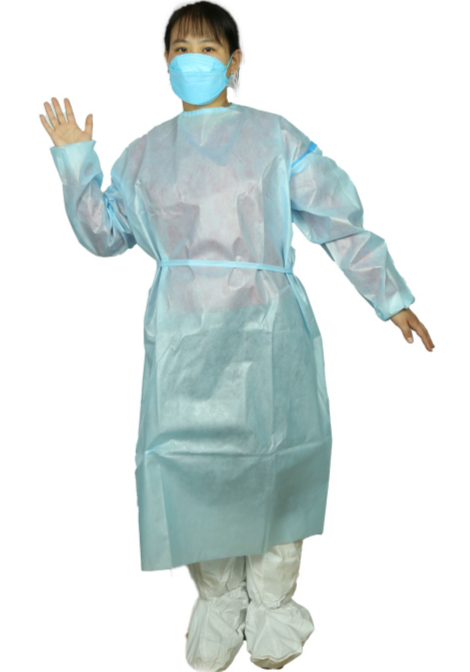
Hospital isolation gowns are not mere uniforms; they are designated Personal Protective Equipment (PPE). Their primary function is to shield healthcare workers' skin and clothing from contact with blood, bodily fluids, and other potentially infectious materials. Conversely, in certain scenarios, they protect highly vulnerable patients from pathogens carried by visitors and staff. This bidirectional barrier is a cornerstone of infection prevention and control protocols, helping to curb the spread of Healthcare-Associated Infections (HAIs) and multidrug-resistant organisms. The effectiveness of this barrier is directly tied to the gown's quality and appropriateness for the procedure at hand. Just as we engineer our bronchoscopy workstations and disposable ureteroscopes for specific clinical tasks with high reliability, isolation gowns must be matched to the anticipated level of exposure risk.
The price of hospital isolation gowns can range from less than a dollar to over twenty dollars per unit. This vast disparity is driven by several core factors.
This is the most significant cost driver. Isolation gowns are typically categorized by the barrier performance of their material.
- Disposable, Non-Woven Gowns: These are the most common. Made from polymers like polypropylene, their cost varies with fabric weight, strength, and the inclusion of liquid-repellent coatings. Basic, lightweight models for minimal risk are the least expensive.
- Reusable (Linen or Fabric) Gowns: Made from woven polyester or cotton-polyester blends, these require a significant initial investment but are designed for multiple uses (typically 50-100 wash cycles). Costs include the per-unit purchase price and the ongoing, substantial expenses of laundering, inspection, repair, and inventory management.
- Composite or High-Performance Materials: For critical situations, gowns may incorporate impervious plastic films (like polyethylene) or microporous laminates. These offer the highest level of fluid and pathogen resistance and command the highest prices, similar to how advanced visualization components in our medical image processors elevate system capability and value.
Regulatory standards classify isolation gowns based on their barrier performance. In the United States, the American National Standards Institute (ANSI) and the Association of the Advancement of Medical Instrumentation (AAMI) define four levels:
- Level 1 (Minimal Risk): For basic care or standard isolation. Lowest cost.
- Level 2 (Low Risk): For procedures with minimal fluid exposure (e.g., suturing). Moderately priced.
- Level 3 (Moderate Risk): For arterial blood draws, inserting IV lines. Higher barrier, higher cost.
- Level 4 (High Risk): For long, fluid-intensive procedures, surgery, or when pathogen resistance is crucial. Highest cost.
Compliance testing and certification add to manufacturing costs, which is reflected in the price. Non-compliant gowns may be cheaper but pose significant safety and liability risks.
Enhanced functionality increases cost. Features include:
- Closure Type: Tie-back gowns are cheaper; snap or zip closures are more convenient and costly.
- Fit and Coverage: Full-coverage, longer-length gowns with raglan sleeves (for better mobility) use more material and involve more complex patterning.
- Reinforcement: Critical zones like the front and sleeves may have extra layers.
- Sterility: Sterile-packaged surgical isolation gowns are far more expensive than non-sterile, clean gowns used for general isolation.

- Volume: Bulk purchases from manufacturers or large distributors yield significant per-unit discounts. Group purchasing organizations (GPOs) leverage collective buying power to reduce costs.
- Brand vs. Generic: Established brands often command a premium for perceived reliability, while OEM (Original Equipment Manufacturer) or private-label options can offer comparable quality at lower prices—a model familiar to our business, where we provide OEM services for global brands in visualization equipment.
- Supply and Demand: Geopolitical events, raw material shortages, and public health emergencies (like the COVID-19 pandemic) cause extreme price volatility. A resilient, diversified supply chain is a cost-stabilizing asset.
To provide concrete perspective, here is an approximate price range per gown (note: prices are highly volatile and for illustrative purposes only):
- Basic Disposable (Level 1): $0.50 - $2.00
- Standard Procedure (Level 2-3): $2.00 - $8.00
- Surgical/High-Performance (Level 3-4, sterile): $5.00 - $25.00+
- Reusable Gown (initial purchase): $15.00 - $35.00 (with added laundering cost of $0.50 - $2.00 per cycle)
Smart procurement looks beyond the unit price. The TCO for isolation gowns includes:
1. Acquisition Cost: The purchase price.
2. Storage and Inventory Costs: Warehousing, management, and risk of stockouts or expiration.
3. Usage Costs: Training staff on proper donning/doffing to avoid contamination and waste.
4. Disposal/Processing Costs: Landfill fees for disposables or energy, water, labor, and logistics for laundering reusables.
5. Cost of Failure: The immense financial and human cost of an HAI resulting from inadequate PPE.
A cheaper gown that tears easily or provides insufficient barrier can lead to far higher hidden costs. This principle mirrors our approach to medical devices: reliability and performance prevent costly clinical failures.
The environmental impact of disposable isolation gowns is a growing concern. While reusables have a higher upfront cost, lifecycle assessments often show they can be more cost-effective over time and generate less waste. The cost-benefit analysis depends heavily on local laundering infrastructure and utility costs. Hybrid strategies, using reusables for routine care and high-performance disposables for critical procedures, are becoming common.
1. Conduct a Risk Assessment: Match the gown to the task. Don't use a Level 4 surgical gown for visitor contact.
2. Calculate TCO: Compare disposables and reusables based on your actual usage, storage, and processing costs.
3. Audit Quality: Request test reports (AAMI levels, ASTM tear strength) from suppliers. Quality ensures value.
4. Explore OEM/Private Label Options: As in our field, working directly with a reputable manufacturer can reduce costs without sacrificing specifications.
5. Diversify Suppliers: Mitigate supply chain risk to avoid emergency purchases at inflated prices.
The question, "How much are hospital isolation gowns?" reveals the complexity of modern healthcare procurement. Prices span a wide spectrum, fundamentally dictated by the required level of protection, material quality, and design features. While disposable gowns can appear inexpensive upfront, a comprehensive Total Cost of Ownership analysis that includes storage, waste, and the potential cost of protection failure is essential for true fiscal stewardship. In the end, the "cost" of an isolation gown must be measured against its value in safeguarding human health. Investing in appropriate, reliable isolation gowns is not an expense but a critical investment in patient safety, staff protection, and overall healthcare system resilience, much like the investment in precise visualization technology that enables better clinical outcomes. Strategic, informed purchasing decisions ensure that this vital layer of defense remains both effective and sustainable.
Contact us to get more information!

While both are PPE, isolation gowns are designed for general patient isolation and low-to-moderate fluid exposure scenarios. They typically offer varying levels of barrier protection (AAMI Levels 1-3) and may have open backs. Surgical gowns are regulated as Class II medical devices, must meet stringent AAMI Level 3 or 4 standards for critical zones, and are sterile, providing full-back coverage and higher, more consistent protection during invasive procedures.
Disposable isolation gowns are designed for single use and should be discarded after one wearing to prevent cross-contamination. Reusable fabric isolation gowns are specifically designed and tested for multiple laundering cycles (following specific protocols) and can be reused until their integrity is compromised.
The choice is based on the anticipated risk of exposure:
- Level 1: Basic care, standard isolation (minimal fluid risk).
- Level 2: Blood draws, suturing, lab work (low fluid risk).
- Level 3: Arterial procedures, IV insertion, emergency room (moderate fluid risk).
- Level 4: Major surgery, when infectious disease is present (high fluid risk). Always refer to your facility's infection control policy.
Yes. Options include:
- Reusable gowns, which significantly reduce waste.
- Disposable gowns made from compostable or biodegradable materials (though industrial composting facilities are required).
- Gowns made from recycled content. The most sustainable choice often depends on your facility's waste and laundry infrastructure.
Key criteria include: proven compliance with relevant standards (ANSI/AAMI PB70, FDA registration), consistent quality with provided test reports, supply chain reliability and transparency, scalability of production, and the ability to provide product traceability. For cost-effectiveness, inquire about OEM or bulk purchase options.
[1] https://www.fda.gov/medical-devices/personal-protective-equipment-infection-control/isolation-gowns
[2] https://www.cdc.gov/infectioncontrol/guidelines/isolation/index.html
[3] https://www.aami.org/docs/default-source/standards-library/is0710064fda.pdf
[4] https://www.astm.org/f2407-20.html
[5] https://www.epa.gov/sites/default/files/2020-10/documents/guidance_for_ppe_in_non-healthcare_workplaces.pdf


