
Views: 222 Author: Lake Publish Time: 2026-02-03 Origin: Site


Content Menu
● The Foundational Principle: Breaking the Chain of Infection
● The Protective Role of Isolation Gowns
>> How Isolation Gowns Protect the Healthcare Worker
>> How Isolation Gowns Protect the Patient
● The Protective Role of Medical Gloves
>> How Medical Gloves Protect the Healthcare Worker
>> How Medical Gloves Protect the Patient
● The Integrated System: Synergy of Gowns and Gloves
● Special Considerations and Material Science
● Frequently Asked Questions (FAQ)
>> 1. Why is it so important to put gloves on OVER the cuffs of the isolation gown?
>> 2. Can I reuse an isolation gown between patients if it doesn't look dirty?
>> 3. What level of isolation gown do I need for routine patient care?
>> 4. What should I do if my isolation gown gets a tear or a large splash during a procedure?
In the intricate and high-stakes environment of modern healthcare, the symbiotic relationship between medical gloves and isolation gowns forms a critical, bidirectional barrier system. This personal protective equipment (PPE) duo is not merely worn for unilateral defense; it is a meticulously designed protocol to safeguard both the healthcare provider and the patient. The protection offered by isolation gowns and gloves is fundamental to infection prevention and control (IPC), operating on the principles of Standard and Transmission-Based Precautions. Understanding the distinct yet complementary roles of each component reveals how they work in concert to interrupt the chain of infection, minimize cross-contamination, and create a safer clinical environment for everyone involved. This article delves into the specific protective mechanisms of isolation gowns and gloves, explaining how their correct use forms an essential pact of safety between caregiver and patient.
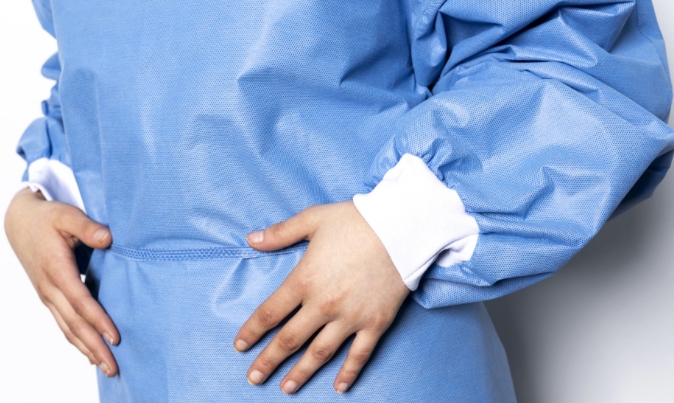
Pathogens spread through defined links in a chain: an infectious agent, a reservoir, a portal of exit, a mode of transmission, a portal of entry, and a susceptible host. Isolation gowns and gloves are engineered to break this chain at multiple points, primarily by acting as a barrier during the "mode of transmission"—specifically, contact transmission. Contact transmission, the most common route of healthcare-associated infections (HAIs), can be direct (body-to-body) or indirect (via a contaminated intermediate object). By covering the healthcare worker's skin and clothing—key reservoirs and vectors for microbes—these PPE items prevent pathogens from reaching a new host.
Isolation gowns serve as the primary barrier for the healthcare worker's torso, arms, and clothing. Their design and material are governed by standards like the ANSI/AAMI PB70, which classifies them by level of liquid barrier protection.
1. Barrier Against Fluid Penetration: The core function of an isolation gown is to repel liquids. During procedures involving splashes or sprays of blood, bodily fluids, secretions, or excretions, the gown material prevents these potentially infectious fluids from soaking through to the worker's skin or personal clothing. This is crucial in settings like the emergency room, operating room, or when handling patients with draining wounds.
2. Containment of Contaminants: Healthcare workers' uniforms can inadvertently become contaminated with pathogens throughout the day. An isolation gown acts as a removable, disposable layer that contains this contamination. Upon leaving the patient's environment, removing the gown prevents the worker from carrying pathogens on their clothing to other patients, common areas, or even their home.
3. Protection in High-Contact Scenarios: During patient handling, turning, or assisting with mobility, the front of the worker's body frequently contacts the patient's bed linens, skin, or other surfaces. The isolation gown provides a cleanable barrier that can be changed between patients, reducing the risk of the worker's clothing acting as a fomite.
The patient-protective role of isolation gowns is equally vital, though sometimes less direct.
1. Source Control and Contact Precautions: When a patient is placed on Contact Precautions due to a known or suspected infection (e.g., C. difficile, MRSA, RSV), healthcare workers don isolation gowns (and gloves) upon room entry. This practice is a form of source control. The gown prevents the worker's clothing and arms from picking up the patient's specific pathogens and mechanically transporting them out of the room to other vulnerable patients. The gown is discarded before exit, trapping the contaminants.
2. Preventing Exogenous Infection: For patients who are immunocompromised, such as those undergoing chemotherapy or organ transplantation, the risk of infection from environmental microbes is high. A fresh, clean isolation gown worn by every caregiver minimizes the introduction of new pathogens from the outside environment or from other patients onto the susceptible individual.
3. Maintaining a Sterile Field: In surgical and other sterile procedures, the surgical gown (a specialized type of isolation gown) is a cornerstone of asepsis. It prevents the release of skin cells and bacteria from the surgical team into the sterile operative field, thereby dramatically reducing the risk of surgical site infection (SSI).
Gloves are the direct-contact barrier, designed for fine motor tasks while preventing microbial transfer.
1. Preventing Hand Contamination: Gloves create an impermeable layer that blocks pathogens in blood, fluids, and contaminated surfaces from contacting the healthcare worker's skin. This is the primary defense against occupationally acquired infections, including bloodborne pathogens like HIV, HBV, and HCV.
2. Reducing Chemical Exposure: They protect against hazardous drugs (e.g., chemotherapy), harsh disinfectants, and other chemicals used in clinical settings.
1. Preventing Cross-Transmission: The most critical patient-protective function. Even after proper hand hygiene, hands harbor transient and resident flora. Gloves prevent the transfer of microorganisms from the healthcare worker's hands to the patient's mucous membranes, non-intact skin (e.g., surgical incisions, IV sites), or sterile body cavities during procedures.
2. Enabling Aseptic Technique: For any invasive procedure—from inserting a urinary catheter to placing a central venous line—sterile gloves are mandatory to maintain asepsis and prevent the introduction of pathogens.
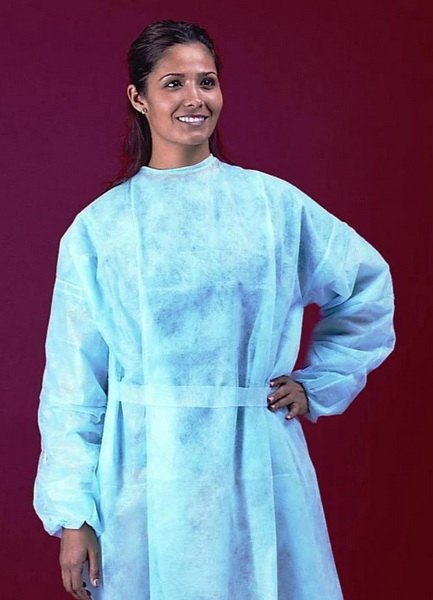
Maximum protection is not achieved by either item alone, but by their correct use as an integrated system. The protocol for donning and doffing is engineered to create a seamless barrier.
- The Correct Donning Sequence (Gown First, Then Gloves): The isolation gown is donned first and fully secured. Gloves are then donned second, with the cuff of each glove pulled over the sleeve of the gown. This creates a continuous, gapless barrier from the fingertips to the gown's torso. If gloves are donned under the gown cuff, a vulnerable gap at the wrist is exposed, allowing contaminants to wick onto the skin or sleeve.
- The Protective Synergy in Action: During patient care, the isolation gown protects the forearms and torso from gross splash and contact contamination, while the gloves allow for dexterous tasks with direct patient or fluid contact. Together, they ensure no skin or street clothing is exposed.
- The Critical Doffing Sequence (Gloves First, Then Gown): This sequence is designed to prevent self-contamination. Gloves, considered the most contaminated, are removed first using a technique that avoids touching the bare skin with the glove's exterior. Once gloves are off, the gown is carefully untied and removed by pulling it away from the body, turning it inside out to contain any contaminants. Hand hygiene is performed immediately after.
The effectiveness of this system depends on the quality of the materials.
- Gown Materials: Isolation gowns are made from non-woven fabrics like polypropylene or SMS (spunbond-meltblown-spunbond). The ANSI/AAMI PB70 Level (1-4) indicates the gown's resistance to liquid penetration under pressure, guiding selection based on anticipated exposure.
- Glove Materials: Nitrile is preferred for its strength, chemical resistance, and latex-free properties. Standards like ASTM D3578 (latex) and D6319 (nitrile) define minimum quality and performance benchmarks.
- Single-Use vs. Reusable: The trend strongly favors disposable isolation gowns and gloves to eliminate the risk of reprocessing failures. This mirrors the broader shift in medicine towards single-use devices to guarantee sterility and simplify logistics.
Isolation gowns and medical gloves are far more than simple articles of clothing; they are engineered components of a dynamic defense system. Their protection is resolutely bidirectional: isolation gowns shield the healthcare worker from contamination and, through protocols like Contact Precautions, prevent the worker from becoming a vector that endangers other patients. Gloves protect the worker's hands while simultaneously defending the patient from the microbial burden on those hands. The true efficacy of this system emerges from their synergistic use—the correct donning sequence to eliminate gaps, the mindful use during care, and the disciplined doffing sequence to safely contain contaminants. Adherence to these protocols, underpinned by an understanding of the science behind the materials, transforms isolation gowns and gloves from mere supplies into a powerful, mutual pact of safety. This pact is fundamental to ethical care, demonstrating that in the shared space of healing, the well-being of both parties is inextricably linked and vigilantly guarded.
Contact us to get more information!
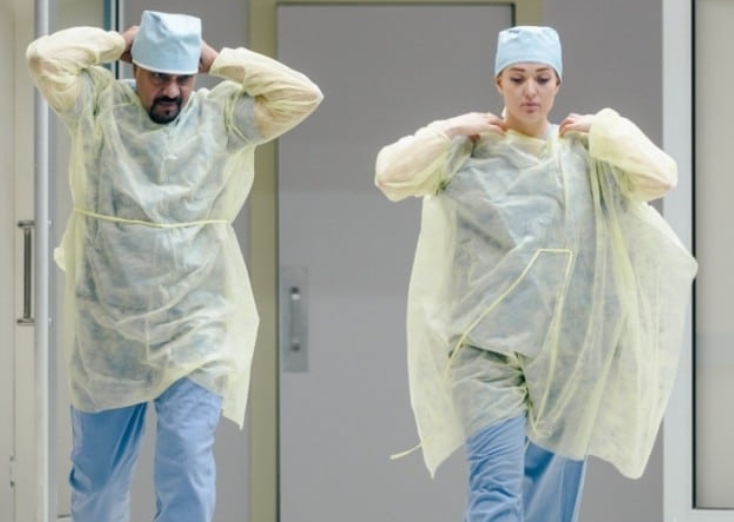
Creating a continuous barrier is the paramount goal. When gloves are donned over the cuffs of the isolation gown, the gown sleeve is completely covered, leaving no exposed skin or inner gown fabric at the wrist. If gloves are worn under the cuff, a gap exists where fluids can wick up the sleeve via capillary action or splash directly onto exposed skin or the gown's inner layer, completely compromising the protective system. The over-the-cuff method ensures a sealed transition from glove to gown.
No. Isolation gowns are designed for single use per patient encounter or per procedure. Microorganisms are microscopic; the absence of visible soiling does not indicate the absence of contamination. Reusing a gown risks cross-transmitting pathogens between patients. Furthermore, the gown's material integrity may be compromised in ways not visible to the naked eye. Always discard the isolation gown after doffing and before caring for another patient.
For routine care and standard precautions where only minimal fluid contact is anticipated (e.g., taking vital signs, most patient exams), a Level 1 or Level 2 isolation gown is typically sufficient. These provide a basic barrier against fluids and are appropriate for low-risk situations. The specific level should be determined by your facility's risk assessment and policy. Higher levels (3 & 4) are reserved for surgical or high-fluid-exposure procedures.
If the integrity of your PPE is breached, you should safely disengage from the patient-care task if possible. Exit the patient's immediate area. Carefully remove the compromised isolation gown and any potentially contaminated gloves using proper doffing technique in an anteroom or designated area. Perform hand hygiene thoroughly. Don a new, intact set of PPE (gown and gloves) before returning to complete the task or care for the patient. Report any significant exposure per your facility's protocol.
Isolation gowns and gloves protect against contact transmission (primary) and some droplet contact. They form the base layer of protection for the body and hands. Other PPE addresses different routes of transmission:
- Face Shields/Goggles: Protect the mucous membranes of the eyes, nose, and mouth from droplet and splash exposure.
- N95 Respirators: Protect the respiratory tract from airborne inhalation of small particles.
A comprehensive PPE ensemble is assembled based on the anticipated modes of transmission for a specific pathogen or procedure. Isolation gowns and gloves are almost always the foundation when contact with the patient or their environment is expected.
[1] https://www.cdc.gov/infection-control/hcp/isolation-precautions/index.html
[2] https://www.cdc.gov/infection-control/hcp/healthcare-personnel-ppe/index.html
[3] https://www.fda.gov/medical-devices/personal-protective-equipment-infection-control/isolation-gowns
[4] https://www.aami.org/docs/default-source/standards-library/ansi-aami-pb70-2012-r2020.pdf
[5] https://www.astm.org/Standards/D3578.htm


