


Content Menu
● Introduction: A Window into the Lungs
● Evolution: From Rigid to Flexible to Digital
● Core Components of a Modern Video Bronchoscope
● The Bronchoscopy Workstation: The Supporting Ecosystem
● Primary Clinical Applications
● Advanced Bronchoscopic Technologies
● The Rise of Disposable Bronchoscopes
● Integration with Broader Medical Visualization
● Frequently Asked Questions (FAQ)
>> 1. Is a bronchoscopy procedure painful?
>> 2. What is the difference between a bronchoscope and an endoscope?
>> 3. How are bronchoscopes cleaned and disinfected after use?
>> 4. Can a bronchoscope be used to treat lung cancer?
>> 5. What are the main risks or complications of bronchoscopy?
In the intricate landscape of modern medicine, the ability to visualize and interact with the body's internal systems has revolutionized diagnosis and treatment. Central to the field of pulmonary medicine is the bronchoscope, an indispensable instrument that serves as the eyes and hands of the pulmonologist within the tracheobronchial tree. This article provides a comprehensive exploration of the bronchoscope, detailing its definition, evolution, types, components, clinical applications, and its integration into the broader ecosystem of respiratory care.

A bronchoscope is a specialized endoscopic device designed for the direct visualization, diagnosis, and treatment of conditions within the airways—the trachea, bronchi, and bronchioles. It allows clinicians to navigate the complex, branching architecture of the lungs, inspect the airway lining, obtain tissue and fluid samples, and perform therapeutic interventions without the need for open surgery. The invention and refinement of the bronchoscope have made it a cornerstone procedure in pulmonology, critical care, and thoracic surgery, enabling minimally invasive access to the respiratory system.
The history of the bronchoscope mirrors the broader evolution of endoscopic technology:
1. The Rigid Bronchoscope: Developed in the late 19th century, this was a straight, hollow metal tube equipped with a light source. It required general anesthesia and provided a limited view of the central airways (trachea and main bronchi). Its primary use today is for specific therapeutic interventions, such as removing large foreign bodies, debulking large central tumors, or stent placement, where its wide working channel and rigidity are advantageous.
2. The Flexible Fiberoptic Bronchoscope: Introduced in the 1960s, this was a revolutionary leap. It used coherent bundles of flexible glass fibers to transmit light and an image, allowing the scope to bend. This flexibility enabled navigation into the subsegmental bronchi (4th to 6th generation) under conscious sedation. For decades, this was the standard diagnostic tool.
3. The Video Bronchoscope (Videoscope): The current technological standard. This device replaces the fiberoptic image bundle with a miniature digital charge-coupled device (CCD) or complementary metal-oxide-semiconductor (CMOS) camera chip at its distal tip. The electronic image is transmitted to a medical image processor and displayed on a high-resolution monitor. Video bronchoscopes offer superior image quality, better ergonomics, digital recording, and compatibility with advanced imaging modalities.
Understanding a contemporary bronchoscope requires familiarity with its integrated systems:
- Insertion Tube: The long, flexible portion that enters the patient. It contains the optical and mechanical components and is covered in a smooth, biocompatible polymer sheath. Its flexibility is derived from a spiral steel mesh.
Control Section (Handle): Held by the operator, it houses:
- Angulation control levers to deflect the distal tip up/down (and often left/right).
- A working channel port for instruments and suction.
- Buttons for image capture, video recording, and sometimes for special imaging modes.
- Universal Cord: Connects the control section to the bronchoscopy workstation, carrying data, light, and sometimes suction/water/air lines.
Distal Tip: The business end, containing:
- The digital camera lens.
- High-intensity LED light sources for illumination.
- The opening of the working channel.
- The nozzle for irrigation and lens cleaning.
- Working Channel: A small channel running the length of the scope that allows for the passage of biopsy tools (forceps, needles, brushes), suction catheters, laser fibers, balloon dilators, and the instillation of local anesthetic or saline.
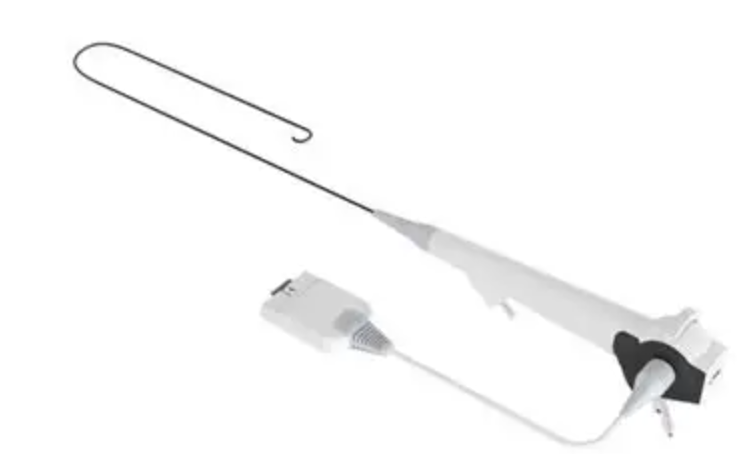
A bronchoscope does not operate in isolation. It is the central component of a bronchoscopy workstation, which typically integrates:
- Light Source and Image Processor: A combined unit that powers the scope's LEDs and processes the digital video signal.
- High-Resolution Monitor: For displaying the live and recorded images.
- Suction Unit: For clearing secretions.
- Documentation System: For saving still images and video clips to patient records.
- Ancillary Equipment: Organized storage for biopsy instruments, specimen traps, and sometimes advanced modules for Endobronchial Ultrasound (EBUS) or navigation.
The bronchoscope is a versatile tool used for a wide array of diagnostic and therapeutic purposes.
- Visual Inspection: Evaluating airways for tumors, inflammation, infection, strictures, foreign bodies, or bleeding sites.
- Bronchoalveolar Lavage (BAL): Instilling and retrieving sterile saline to collect cellular and microbial samples from the alveoli for laboratory analysis.
- Biopsy:
- Endobronchial Biopsy: Using forceps to sample visible lesions on the airway wall.
- Transbronchial Biopsy (TBBx): Passing forceps through the airway wall under fluoroscopic guidance to sample lung parenchyma.
- Transbronchial Needle Aspiration (TBNA): Using a needle to sample lymph nodes or masses adjacent to the airways (now often guided by EBUS).
- Microbiological Sampling: Using protected specimen brushes to obtain uncontaminated samples for culture.
- Airway Clearance: Removing thick secretions, mucus plugs, or blood clots causing atelectasis.
- Foreign Body Removal: Using specialized baskets or graspers.
- Tumor Debulking and Management: Using tools like laser, electrocautery, cryotherapy, or argon plasma coagulation to relieve central airway obstruction.
- Airway Stent Placement: To maintain patency in areas narrowed by tumors or strictures.
- Balloon Dilation: To widen narrowed airways.
- Assisted Intubation: Guiding endotracheal tube placement in difficult airways.
Modern bronchoscopy has expanded far beyond simple visualization:
- Endobronchial Ultrasound (EBUS): Integrates an ultrasound probe into the bronchoscope, allowing real-time imaging of structures *beyond* the airway wall, such as lymph nodes and blood vessels. This is crucial for lung cancer staging (EBUS-TBNA).
- Electromagnetic Navigation Bronchoscopy (ENB): A "GPS for the lungs." Uses pre-procedure CT scans to create a 3D map of the patient's airways. A sensor-tipped guide is steered through the bronchoscope to reach small, peripheral lung nodules for biopsy, guided by an electromagnetic field.
- Robotic Bronchoscopy: A newer platform offering enhanced stability and precision for navigating to peripheral lesions, potentially increasing diagnostic yield.
Mirroring trends in urology with disposable ureteroscopes, single-use bronchoscopes are gaining significant traction. These are pre-sterile, ready-to-use devices designed for one procedure. Their advantages include:
- Elimination of Cross-Contamination Risk: Critical in ICU settings for patients with multi-drug resistant organisms.
- Guaranteed Function and Image Quality: No degradation from repeated reprocessing.
- Elimination of Reprocessing Costs: No need for expensive cleaning, disinfection, repair, or quality control programs.
- Immediate Availability: Useful for emergency procedures.
The bronchoscope is part of a family of visualization tools. A complex airway case might involve:
1. Initial assessment with a video laryngoscope.
2. Diagnostic and therapeutic bronchoscopy at a dedicated workstation.
3. Use of a visual flexible laryngoscope for concurrent laryngeal evaluation.
The principles of image processing, display, and sterile technique are shared across these platforms, a synergy that informs our OEM development of integrated systems.
The bronchoscope is far more than a simple tube with a light; it is a sophisticated, adaptable platform that has evolved from a rigid metal speculum to a digital, navigational, and therapeutic powerhouse. As the central tool of interventional pulmonology, it fulfills a dual role as a diagnostic eye and a therapeutic hand within the lungs. Its continuous evolution—driven by digital imaging, miniaturization, navigation, and the shift toward disposability—ensures its enduring relevance in managing a vast spectrum of respiratory diseases. For clinicians, mastering the bronchoscope is essential. For innovators and OEM providers like us, advancing its technology in tandem with endoscope systems and medical image processors is key to unlocking the next chapter of precise, minimally invasive pulmonary care.
Contact us to get more information!

Patients typically do not experience significant pain. Bronchoscopy is performed under sedation (conscious sedation) and with topical anesthesia applied to the throat and airways. Patients are usually sleepy and comfortable during the procedure. They may feel pressure or a urge to cough, but not sharp pain. Afterward, a sore throat or hoarseness is common but temporary.
An endoscope is a general term for any instrument used to look inside the body. A bronchoscope is a specific type of endoscope designed for the airways (trachea and lungs). Other types include:
- Gastroscope for the upper GI tract.
- Colonoscope for the colon.
- Cystoscope for the bladder.
- Ureteroscope (like our disposable ureteroscope) for the ureters and kidneys.
Each is tailored in length, diameter, flexibility, and tip articulation for its specific anatomical target.
Reusable bronchoscopes undergo a meticulous, multi-step process called reprocessing:
1. Point-of-Care Cleaning: Immediate wiping and suction of enzymatic detergent.
2. Leak Testing: To check for damage.
3. Manual Cleaning: Brushing and flushing all channels.
4. High-Level Disinfection (HLD): Immersion in an FDA-approved disinfectant (e.g., peracetic acid) for a specific time.
5. Rinsing and Drying: Thorough rinsing with sterile water, followed by forced-air drying to prevent microbial growth.
This complexity is a major driver for the adoption of single-use disposable bronchoscopes.
Yes, a bronchoscope is a key tool in the interventional management of lung cancer. It can be used for:
- Diagnosis: Obtaining biopsies (forceps, needle) for tissue diagnosis and staging (via EBUS).
- Local Treatment: Debulking or ablating tumors obstructing central airways using laser, electrocautery, or cryotherapy delivered through the working channel.
- Palliation: Placing stents to keep airways open obstructed by tumor.
It is often part of a multi-modality treatment plan including surgery, radiation, and chemotherapy.
Bronchoscopy is very safe, but potential risks include:
- Bleeding: Especially after biopsy.
- Pneumothorax (collapsed lung): A risk after transbronchial biopsy.
- Hypoxia (low oxygen levels): During the procedure.
- Infection or Fever: Rare.
- Reaction to Sedation.
- Airway Spasm.
These risks are minimized by performing the procedure in a controlled setting by experienced personnel with appropriate monitoring.
[1] https://www.ncbi.nlm.nih.gov/books/NBK448152/
[2] https://www.thoracic.org/patients/patient-resources/resources/bronchoscopy.pdf
[3] https://www.lung.org/lung-health-diseases/lung-procedures-and-tests/bronchoscopy
[4] https://www.fda.gov/medical-devices/reprocessing-reusable-medical-devices/information-assured-reprocessing-reusable-medical-devices-health-care-facilities
[5] https://www.chestnet.org/Guidelines-and-Resources/Guidelines-and-Consensus-Statements/Bronchoscopy
[6] https://www.journalofhospitalmedicine.com/jhospmed/article/247691/hospital-medicine/rise-disposable-bronchoscopy
[7] https://www.iso.org/standard/28130.html


