


Content Menu
● Understanding Laryngoscope Components and Their Interface
>> Basic Anatomy of a Laryngoscope
● Selecting the Correct Laryngoscope Blade Size
>> Manufacturer Recommendations vs. Clinical Evidence
>> Video Laryngoscope Blade Options
● Preparing and Assembling the Laryngoscope
>> Tube Preparation and Stylet Shaping
● Specialized Fitting Considerations
>> Custom Solutions for Difficult Airways
● Verifying Proper Fit and Function
● Common Fitting Errors and Solutions
>> Inadequate Tube Securement in Channeled Devices
>> Poor Glottic Visualization with Oversized Blade
>> Fogged Lens
● Preparation Time Considerations
● Frequently Asked Questions (FAQs)
>> 1. How do I choose between a Macintosh blade size 3 and 4 for an adult patient?
>> 2. What is the correct way to fit an endotracheal tube to a channeled video laryngoscope?
>> 3. How do I select the correct laryngoscope blade size for a pediatric patient?
>> 4. What should I do if the laryngoscope light doesn't activate when I fit the blade?
>> 5. How can I prevent the video laryngoscope lens from fogging during intubation?
The laryngoscope is the cornerstone instrument for airway management, enabling clinicians to visualize the glottis and perform endotracheal intubation. However, the effectiveness of this critical tool depends entirely on proper fitting—selecting the correct blade size, assembling components correctly, and ensuring all elements function together seamlessly. "Fitting" a laryngoscope encompasses both the physical assembly of the device and the clinical selection of the appropriate blade for each patient. As a company specializing in medical visualization through devices like endoscopy systems and video laryngoscopes, we understand that precision in every component—from the light source to the blade curvature—determines clinical success. This comprehensive guide provides evidence-based protocols for properly fitting a laryngoscope, covering traditional direct laryngoscopes and modern video systems, with detailed attention to size selection, assembly procedures, and pre-use verification.
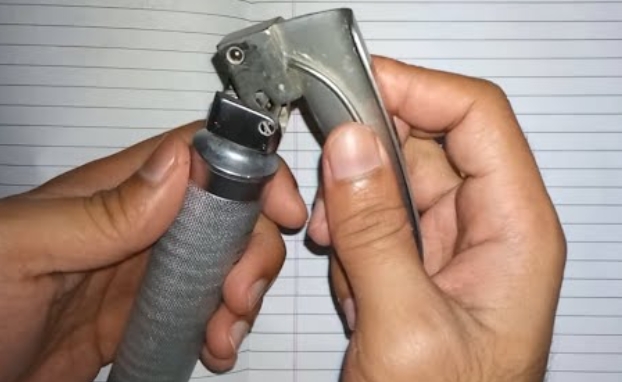
A standard laryngoscope consists of two primary components that must fit together precisely:
- The Handle: Contains the power source (batteries) and the electrical contacts that illuminate the blade
- The Blade: The component that enters the patient's airway, available in various sizes and configurations (curved Macintosh, straight Miller, etc.)
The connection between blade and handle is governed by international standards to ensure interchangeability. ISO 7376-1:1994 laid down critical dimensions for the junction of any blade and any handle of a hook-on type laryngoscope to allow engagement, lamp illumination, and disengagement through multiple cycles . This standardization means that blades from different manufacturers can often fit compatible handles, though verification of proper engagement and illumination is always required.
When fitting a blade to a handle, the hook-on mechanism must:
- Engage securely without wobbling or play
- Automatically activate the light source when the blade is opened to the operating position (typically 90 degrees)
- Disengage smoothly for blade removal and cleaning
- Maintain consistent electrical contact throughout the procedure
Proper blade sizing in pediatric patients is critical, as an incorrectly sized blade can obscure the view or cause trauma. The following table provides evidence-based guidelines for laryngoscope blade selection based on patient age and weight :
| Child's Age | Body Mass [kg] | Laryngoscope – Blade Size |
|---|---|---|
| Neonate | < 1 kg | Miller 0 |
| Neonate | 1–2 kg | Miller 0 |
| Neonate | 2–3 kg | Miller 0/1 |
| Neonate | > 3 kg | Miller 1 |
| 1–6 months | 4–6 kg | Miller 1 |
| 6–12 months | 6–10 kg | Miller1/MAC1 |
| 1–2 years | 10–12 kg | MAC1 |
| 2–4 years | 12–16 kg | MAC1/MAC2 |
For neonates and infants, the straight Miller blade is often preferred because its design allows direct elevation of the epiglottis, providing better visualization of the anterior airway in this population.
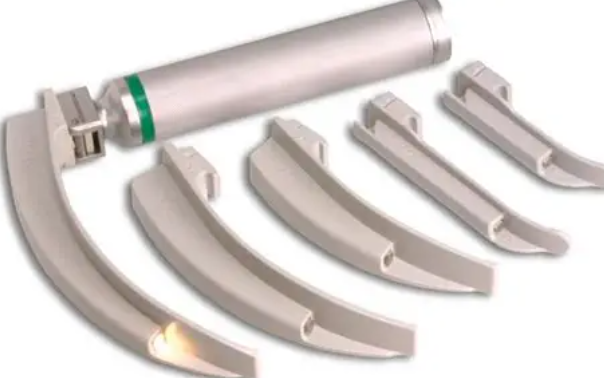
For adult patients, curved Macintosh blades (sizes 3 and 4) are most commonly used. However, the selection between these sizes has been a subject of clinical debate.
Recent research provides clarity on this decision. A randomized controlled trial comparing curved video laryngoscope blades 3 and 4 found that blade 3 provided superior laryngoscopic views compared to blade 4 . The median percentage of glottic opening (POGO) scores were:
- Blade 3: 100% (complete glottic visualization)
- Blade 4: 83% (p < 0.001)
The study demonstrated a significant negative impact of blade 4 on glottic visualization scores (−13, p < 0.001) . Interestingly, when analyzing the relationship with patient height:
- Blade 3 exhibited a steady rise in glottic opening scores with increasing height
- Blade 4 showed a peak followed by a decline around 185 cm
However, no significant association was found between laryngoscopic views and patient height overall (p = 0.819) . This suggests that factors beyond height influence optimal blade selection.
Manufacturer instructions often describe blade sizes ambiguously—for example, "medium or large adults" . Some physicians traditionally argue that blade size 3 is usually used, whereas blade size 4 is suitable only for patients who are overweight or have a very long thyromental distance . Others recommend using blade 4 first in all adult patients, considering that the vertical flange height is similar between sizes .
The evidence increasingly supports a more nuanced approach. In recent studies involving critically ill patients, blade 4 was used more frequently than blade 3 in conventional Macintosh laryngoscopy . However, the superior POGO scores with blade 3 suggest that smaller may often be better when adequate visualization can be achieved.
Modern video laryngoscopes offer additional blade configurations beyond traditional Macintosh and Miller designs :
| Device | Blade Types Available | Size Options |
|---|---|---|
| GlideScope | Angled blade models | Original: 2-5; Ranger: 3-4; Single-use: 1-4; Cobalt: 1-4 |
| C-MAC (Karl Storz) | Miller, Macintosh, D-Blade Ped | Miller 0,1; Macintosh 0,2; D-Blade for pediatrics |
| King Vision | Disposable, ergonomically designed, channeled | Size 1,2 for infants/children; Size 2,3 channeled (ETT 4.5-8 mm) |
| McGrath | Single-use blade covers reusable blade | Smallest size can be used in larger children/adolescents |
| UEscope | Angulated blade (reusable or single use) | Reusable: 1-4; Disposable: 2-4; Miller reusable: 0,1,2,3 |
Before fitting any laryngoscope, perform these essential checks:
1. Inspect the blade for damage, corrosion, or debris, particularly in the hinge mechanism and light source area
2. Verify battery function in the handle—weak batteries produce dim illumination that compromises visualization
3. Check the light source—for fiberoptic blades, ensure fibers are intact and not broken
4. Confirm compatibility between blade and handle (hook-on mechanism should engage smoothly)
The assembly process varies slightly depending on laryngoscope type. A study measuring preparation times for different laryngoscopes provides insights into efficient fitting :
For Macintosh and McGrath MAC Laryngoscopes:
1. Attach the blade to the handle, ensuring the hook engages securely
2. Confirm the light activates when the blade is opened to 90 degrees
3. Apply lubricant gel to the tip of the endotracheal tube
4. Insert a stylet into the tube and shape as needed
The median preparation time for these devices is approximately 12-13 seconds .
For Pentax AWS (Airway Scope):
1. Attach the disposable PBlade to the main unit
2. Apply lubricant gel to the endotracheal tube
3. Mount the tube in the lateral groove of the blade
The Pentax AWS requires significantly longer preparation time—median 29.36 seconds—because the lateral groove is shallow, making it easy for the tube to disconnect when fitting .
For Airtraq Optical Laryngoscope:
1. The device comes pre-assembled (no blade attachment required)
2. Apply lubricant gel to the endotracheal tube
3. Mount the tube in the body gutter
Preparation time for Airtraq is approximately 12-13 seconds, comparable to conventional laryngoscopes .
For curved blade laryngoscopes (Macintosh style), proper tube shaping improves first-pass success:
- Insert a stylet into the endotracheal tube
- Shape the tube to approximately 60 degrees upward bend at the distal end
- This "hockey-stick" configuration facilitates anterior tube direction toward the glottis
For channeled devices like King Vision, the integrated channel guides the tube, though this design requires greater oral aperture .
Video laryngoscopes require additional preparation steps:
- Monitor positioning: Ensure the external monitor is visible to the operator
- Anti-fog mechanisms: Activate integrated anti-fog features (many devices require power-on time for heating elements to function)
- Camera check: Verify clear image transmission before patient contact
In challenging airways where secretions or blood may obscure the lens, clinicians can modify the laryngoscope setup. One innovative approach involves attaching IV tubing to the blade to allow saline flushing during intubation :
Equipment needed:
- 10 cc syringe with 18 g blunt-tip needle
- IV tubing, scissors, tape, 0-0 silk suture
- Normal saline flush
- Disposable laryngoscope blade
Assembly procedure:
1. Cut the IV tubing at an oblique angle and fit a luer lock
2. Create three small holes in the blade using the syringe needle as a drill
3. Fasten the IV tubing to the blade with silk suture, securing the end within 0.5 cm of the lens
4. Attach the remainder of the tubing with tape
During intubation: The operator or assistant can push 5 mL increments of normal saline through the tubing to clear the lens if obscured by bodily fluids .
This apparatus is particularly valuable for patients with significant pulmonary edema, traumatic bloody airways, or active vomiting .
Before approaching the patient, complete this verification sequence:
1. Blade engagement: Confirm the blade is securely locked to the handle
2. Light illumination: Verify bright, consistent light (check both white light and any video display)
3. Tube fit: For channeled devices, confirm the endotracheal tube moves freely in the channel
4. Stylet security: Ensure the stylet is not protruding beyond the tube tip
5. Anti-fog readiness: Allow adequate warm-up time for heated lens elements
Proper fit also involves correct positioning during laryngoscopy:
- For Macintosh blades: Insert from the right side of the mouth, move toward the midline
- For video laryngoscopes: Insert along the midline, rotating the blade to visualize the glottis
- Depth of insertion: For curved blades, the tip should be positioned in the vallecula
- Problem: Blade does not engage securely or light fails to activate
- Solution: Verify compatibility; clean electrical contacts; try alternative blade
- Problem: Tube dislodges from the lateral groove during insertion (common with Pentax AWS)
- Solution: Practice mounting technique; consider pre-mounting the blade to the main unit in advance for emergencies
- Problem: Blade 4 obscures view despite adequate patient size
- Solution: Consider downsizing to blade 3, which may provide superior POGO scores
- Problem: Condensation obscures video image
- Solution: Allow adequate warm-up time; use anti-fog solution; consider saline flush modification
Understanding the time required to fit different laryngoscopes helps in emergency planning. Research shows significant variation :
| Laryngoscope Type | Median Preparation Time |
|---|---|
| Macintosh | 13.44 seconds |
| McGrath MAC | 12.93 seconds |
| Pentax AWS | 29.36 seconds |
| Airtraq | 12.71 seconds |
The extended preparation time for Pentax AWS (p < 0.01 compared to Macintosh) represents a potential drawback that could limit its use in emergency situations . In departments where emergency intubation is frequently performed, it could be useful to mount the blade to the main unit in advance .
Medical staff who prepare equipment for intubation should be regularly educated and trained to minimize preparation time and ensure proper fitting . This is particularly important for devices with unique assembly requirements, such as the Pentax AWS, where even experienced operating room nurses took substantially longer to set up the device .
Properly fitting a laryngoscope involves far more than simply attaching a blade to a handle. It requires evidence-based selection of the correct blade size for each patient—with current evidence favoring blade 3 over blade 4 for superior glottic visualization in adults—meticulous assembly and preparation, and verification of all components before patient contact.
The landscape of laryngoscope fitting has expanded with the proliferation of video laryngoscopes, each with unique preparation requirements. While traditional Macintosh and McGrath devices can be assembled in approximately 13 seconds, channeled devices like the Pentax AWS require nearly 30 seconds of preparation time—a clinically significant difference in emergency situations.
Ultimately, mastery of laryngoscope fitting requires both knowledge of device-specific assembly procedures and clinical judgment in matching blade geometry to patient anatomy. By following standardized protocols, verifying proper function before each use, and maintaining proficiency through regular training, clinicians can ensure that their laryngoscope is always fitted correctly—ready to provide the clear, unobstructed view of the airway that safe intubation demands.
Contact us to get more information!
Recent evidence suggests that blade size 3 provides superior glottic visualization compared to blade size 4, with median POGO scores of 100% versus 83% . While manufacturer guidelines are often ambiguous ("medium or large adults"), research shows a significant negative impact of blade 4 on glottic views . Consider starting with blade 3 unless specific patient factors (such as very large mandible or deep pharynx) suggest otherwise.
For channeled devices like the Pentax AWS or Airtraq, apply lubricant gel to the endotracheal tube and mount it in the lateral groove of the blade . For the Pentax AWS, be aware that the shallow groove can make tube securement challenging—practice this maneuver regularly, as even experienced nurses require significantly more preparation time (29 seconds vs. 13 seconds for Macintosh) .
Use the evidence-based sizing chart based on age and weight :
- Neonate (<1 kg): Miller 0
- Neonate (1-3 kg): Miller 0/1
- 1-6 months (4-6 kg): Miller 1
- 6-12 months (6-10 kg): Miller 1 or MAC 1
- 1-2 years (10-12 kg): MAC 1
- 2-4 years (12-16 kg): MAC 1 or MAC 2
First, verify the blade is fully engaged in the hook-on mechanism. Check that electrical contacts on both blade and handle are clean and dry. If using a fiberoptic blade, inspect for broken fibers. Test with a different blade to determine whether the issue is with the blade or handle. Never proceed with intubation if the light is inadequate.
Allow adequate warm-up time for integrated anti-fog mechanisms (may require 30-60 seconds) . Some devices require power to be switched on immediately when preparing for emergency use . For additional protection, consider the saline flush modification—attaching IV tubing to the blade to allow 5 mL saline flushes that clear the lens if obscured .


