
Views: 222 Author: Lake Publish Time: 2026-02-18 Origin: Site


Content Menu
● The Fundamental Purpose of Disposable Isolation Gowns
● Primary Materials Used in Disposable Isolation Gowns
>> Polyethylene and Polyethylene-Coated Materials
>> SMS (Spunbond-Meltblown-Spunbond)
>> SMMS and Multi-Layer Nonwovens
● Material Weights and Specifications
● Material Properties and Protection Levels
● Innovations in Gown Materials
>> Compostable and Sustainable Materials
● Material Features for Enhanced Functionality
>> Thumb Loops
● Material Testing and Certification Standards
>> Compliance with Regulations
● Material Considerations for Healthcare Workers
>> Breathability and Heat Stress
● Environmental Impact and Sustainability
>> Balancing Protection and Sustainability
● Integration with Other PPE: The Role of Medical Gloves
● Frequently Asked Questions (FAQs)
>> 1. What is the most common material used in disposable isolation gowns?
>> 2. What does "SMS" mean in gown material specifications?
>> 3. Are disposable isolation gowns made from environmentally friendly materials?
>> 4. How does the material affect the AAMI protection level?
>> 5. How do isolation gown materials interface with medical gloves?
In the realm of infection prevention, disposable isolation gowns stand as an essential barrier between healthcare workers and potentially infectious materials. While our company specializes in advanced medical visualization through devices, we recognize that foundational protective equipment—including isolation gowns worn beneath them—is equally critical to patient and provider safety. The materials that constitute these gowns determine their protective capability, comfort, and environmental impact. This article provides a comprehensive examination of what disposable isolation gowns are made of, exploring the various polymers, fabric structures, and innovative materials that define their performance, and how they integrate with other PPE like medical gloves to create a complete protective ensemble.
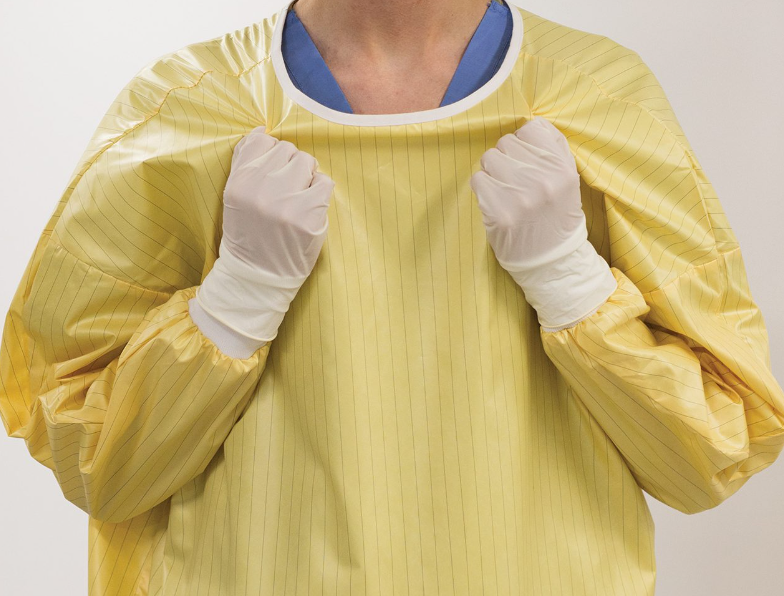
Disposable isolation gowns are single-use protective garments designed to shield healthcare workers' skin and clothing from contact with blood, bodily fluids, secretions, and infectious agents . Unlike reusable gowns, disposables are intended for one episode of patient care and then discarded. Their material composition directly determines their effectiveness as a barrier, their breathability, and their cost.
The choice of materials for disposable isolation gowns represents a careful balance between competing requirements:
- Barrier protection: The material must resist liquid penetration and, for higher protection levels, viral penetration
- Comfort: Healthcare workers often wear gowns for extended periods, requiring breathability to prevent heat stress
- Strength: The material must resist tearing during movement and patient care activities
- Cost-effectiveness: Disposables must be economically viable for high-volume use
Polypropylene is the most common base material for disposable isolation gowns . This thermoplastic polymer offers several advantages for PPE applications:
- Lightweight: Polypropylene fabrics are exceptionally light, reducing wearer fatigue during long shifts
- Breathable: The material allows air and moisture vapor to pass through, improving comfort
- Fluid resistant: When appropriately manufactured, polypropylene provides effective resistance to liquid penetration
- Cost-effective: As a widely produced commodity plastic, polypropylene keeps gown costs manageable
A typical disposable isolation gown specification might list "polypropylene: 28 gsm" (grams per square meter), indicating the fabric weight . This weight directly correlates with the gown's strength and protective capability.
For applications requiring higher levels of fluid protection, polyethylene is incorporated into gown construction . Polyethylene serves several roles:
- As a coating: Applied to polypropylene or other base fabrics to create a impermeable barrier
- As a film layer: Laminated between fabric layers to prevent liquid strike-through
- As a standalone material: In some low-cost gowns, polyethylene film alone may constitute the gown material
A product specification might describe "laminated fabric" with "polyethylene: 15 gsm" combined with polypropylene . This lamination creates a gown suitable for higher-risk procedures where significant fluid exposure is anticipated.
SMS fabric represents an advanced nonwoven technology widely used in disposable isolation gowns . The structure consists of three layers:
1. Spunbond outer layer: Provides strength and durability
2. Meltblown middle layer: Offers filtration and barrier properties through microfibers that trap particles and resist liquid penetration
3. Spunbond inner layer: Adds comfort against the skin and additional strength
The SMS structure is particularly valued because it achieves excellent barrier properties without lamination, maintaining breathability while providing protection. Variations include SMMS (Spunbond-Meltblown-Meltblown-Spunbond) for enhanced barrier performance .
For higher protection levels (such as AAMI Level 3 or 4), manufacturers may employ multi-layer nonwoven structures with additional meltblown layers . These constructions increase the path length that fluids must travel to penetrate the fabric, significantly enhancing barrier performance while maintaining acceptable breathability.
The material density, measured in grams per square meter (gsm), is a critical specification for disposable isolation gowns:
- Minimum standards: International procurement specifications often require minimum densities of 20-30 gsm
- Typical range: Common disposable gowns range from 25 to 45 gsm, depending on the protection level required
- Example specification: One product lists "42 gsm ± 3" total fabric weight for a laminated polypropylene-polyethylene gown
Higher gsm generally indicates greater material thickness, strength, and barrier protection, but also reduced breathability and increased cost.
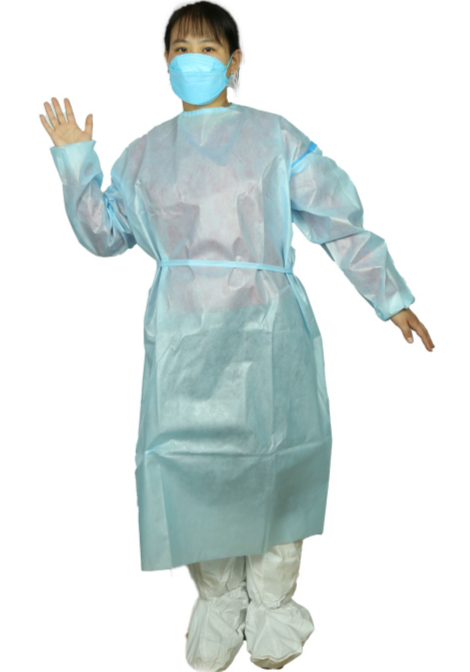
The AAMI PB70 standard categorizes isolation gowns into four levels based on barrier performance . The materials used directly determine which level a gown achieves:
| AAMI Level | Protection Description | Typical Materials | Key Test Requirements |
|---|---|---|---|
| Level 1 | Minimal risk, basic care | Lightweight polypropylene, basic SMS | Impact penetration test |
| Level 2 | Low risk, blood draw, suturing | SMS, SMMS, light polypropylene-polyethylene | Impact penetration, hydrostatic pressure |
| Level 3 | Moderate risk, IV insertion, trauma | SMMS, polyethylene-coated fabrics, laminated materials | Impact penetration, hydrostatic pressure (higher threshold) |
| Level 4 | High risk, fluid-intensive procedures, surgery | Impervious laminates, polyethylene films with reinforcement | Viral penetration testing (ASTM F1671 / ISO 16604) |
Research has demonstrated that advanced materials can achieve Level 3 protection using innovative substrates. For example, a paper-based textile with a compostable functional coating was recently shown to exceed ASTM F3352 requirements for Level 3 gowns, including viral penetration resistance .
Recent advances in textile engineering have introduced gowns with antimicrobial coatings that provide an additional layer of protection . These coatings, often containing silver ions or other antimicrobial agents, are designed to neutralize pathogens that contact the gown surface, reducing the risk of surface transmission.
Environmental concerns about PPE waste have driven innovation in biodegradable materials . One significant development involves paper-based substrates with compostable functional coatings:
- Base material: Paper or cellulose-based textile
- Functional coating: ASTM D6400 certified compostable polymer that provides liquid barrier properties
- Performance: Achieves Level 3 protection and shows degradation within 42 days under industrial composting conditions
These innovations address the substantial environmental impact of disposable gowns, as studies show that isolation gowns constitute the greatest percentage of landfilled PPE by weight .
Some manufacturers are incorporating recycled materials into gown production, reducing the environmental footprint while maintaining barrier performance.
Beyond the base fabric, disposable isolation gowns incorporate additional material components that enhance their functionality:
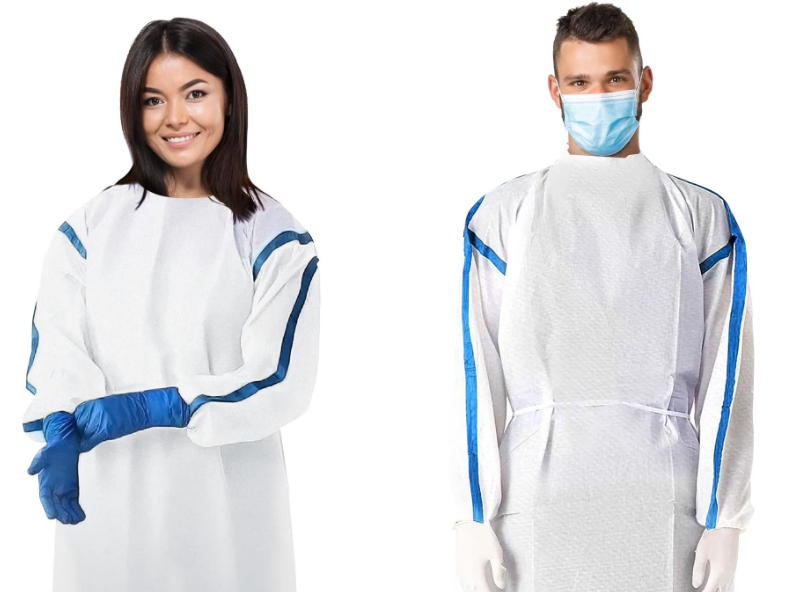
The cuffs of disposable isolation gowns are critical for creating a continuous barrier with medical gloves. Common cuff constructions include:
- Knit cuffs: Made from stretchy, interlocked jersey fabric (cotton or synthetic) that provides a snug fit around the wrist
- Double-layer cuffs: Extended cuffs that provide additional coverage and secure interface with gloves
- Elastic cuffs: Integrated elastic bands that maintain close contact with the skin or glove
The cuff-glove interface is essential—when medical gloves are pulled over the gown cuff, a continuous protective barrier is formed from the gown's body down to the glove fingertips.
The ties that secure isolation gowns must be strong enough to withstand movement during patient care. Common materials include:
- Polypropylene ties: Integrated into the gown fabric, these provide secure fastening at neck and waist
- Reinforced attachment points: Some gowns feature reinforced areas where ties attach to prevent tearing
Some isolation gowns incorporate thumb loops—elastic or fabric loops that secure the sleeve around the thumb. These features prevent sleeve migration during movement and maintain the protective barrier.
To ensure that isolation gown materials perform as intended, they must undergo standardized testing:
- AATCC 42: Impact penetration test, measures water resistance by spraying
- AATCC 127: Hydrostatic pressure test, measures resistance to water penetration under increasing pressure
- ASTM D5034: Breaking strength and elongation of textile fabrics
- ASTM D5733: Tear strength testing
- ASTM D1683: Seam strength evaluation
For Level 4 gowns and some Level 3 applications:
- ASTM F1671: Resistance to blood-borne pathogens using surrogate viruses
- ISO 16604: Resistance to penetration by blood-borne pathogens
Disposable isolation gowns must comply with relevant regulations:
- FDA: Class II medical devices requiring 510(k) clearance for surgical gowns
- EU Medical Devices Directive 93/42, Class I
- EU Personal Protective Equipment Directive 89/686, Category I
Healthcare workers often wear isolation gowns for extended periods in warm environments. Material breathability affects comfort and safety, as heat stress can impair cognitive function and increase error risk. SMS materials offer good breathability while maintaining barrier properties, making them suitable for extended wear .
Unlike medical gloves, which may contain latex proteins, disposable isolation gowns are typically latex-free. The materials used—polypropylene, polyethylene, and synthetic nonwovens—are generally hypoallergenic and suitable for users with latex sensitivity .
The flexibility and drapability of gown materials affect the wearer's ability to perform clinical tasks. Microfiber-based materials and advanced nonwovens are engineered to provide flexibility while maintaining strength .
Research indicates that single-use disposable gowns constitute the greatest percentage of landfilled PPE by weight . Under isolation procedures, healthcare systems dispose of an average of 33 gowns per patient per day as municipal waste . This substantial waste stream consists overwhelmingly of non-degradable synthetic polymer materials that persist in landfills indefinitely.
The development of compostable isolation gown materials represents a significant step toward sustainability . Paper-based textiles with compostable coatings offer the potential for gowns that:
- Meet rigorous barrier performance standards (Level 3)
- Degrade under industrial composting conditions within weeks
- Reduce the accumulation of synthetic waste in landfills
Healthcare facilities must balance the immediate need for reliable barrier protection with long-term environmental responsibility. This balance influences material selection, with some institutions choosing reusable gowns (made from woven polyester or polyester-cotton blends) for routine use while reserving disposables for high-risk situations .
The materials used in disposable isolation gowns are designed to integrate seamlessly with other PPE components, particularly medical gloves. The gown cuff must accommodate the glove cuff, allowing the glove to be pulled over the gown sleeve to create a continuous barrier . This interface prevents skin exposure at the wrist—a common site for contamination during patient care.
Similarly, the gown's front panels, which face the patient during care, are often constructed from materials with higher barrier properties, recognizing that this area is most likely to contact infectious materials. This targeted protection approach optimizes both safety and comfort.
Disposable isolation gowns are sophisticated medical devices constructed from engineered materials selected for their protective capabilities, comfort, and cost-effectiveness. The primary materials—polypropylene, polyethylene, SMS nonwovens, and multi-layer laminates—each offer specific advantages for different clinical applications. Understanding what these gowns are made of enables healthcare facilities to select appropriate products for their specific needs, whether for routine patient care, isolation precautions, or high-risk procedures.
The materials that constitute isolation gowns must work in concert with other PPE, particularly medical gloves, to create a complete protective barrier. The interface between gown cuff and glove is a critical point where proper material selection and design prevent exposure.
As environmental concerns about PPE waste grow, innovative materials—including compostable paper-based textiles and gowns made from recycled content—are emerging to address sustainability challenges while maintaining the rigorous barrier performance that patient and provider safety demand. These material innovations, coupled with thoughtful procurement decisions, will shape the future of disposable isolation gowns and their role in comprehensive infection prevention strategies.
Contact us to get more information!
The most common base material is polypropylene, a lightweight, breathable thermoplastic polymer. It is often used alone for lower-protection gowns or combined with polyethylene coatings or SMS (Spunbond-Meltblown-Spunbond) construction for higher barrier requirements .
SMS stands for Spunbond-Meltblown-Spunbond, a three-layer nonwoven fabric structure. The outer spunbond layers provide strength and durability, while the inner meltblown layer (composed of microfibers) provides filtration and barrier properties against liquids and particles .
Traditional disposable gowns are made from non-degradable synthetic polymers like polypropylene and polyethylene. However, innovative compostable materials are emerging, including paper-based textiles with compostable functional coatings that can degrade under industrial composting conditions while meeting Level 3 barrier standards .
The material directly determines the gown's AAMI protection level :
- Level 1: Basic polypropylene or lightweight SMS
- Level 2: SMS, SMMS, or light polypropylene-polyethylene laminates
- Level 3: SMMS, polyethylene-coated fabrics, or laminated materials that pass higher hydrostatic pressure tests
- Level 4: Impervious laminates or reinforced films that pass viral penetration testing (ASTM F1671/ISO 16604)
The gown cuff is typically constructed from knit, elastic, or double-layer materials designed to create a snug fit at the wrist . Medical gloves are then pulled over the gown cuff, creating a continuous barrier from the gown's body to the glove fingertips. This interface prevents skin exposure at the wrist, a common site for contamination during patient care.


