
Views: 222 Author: Lake Publish Time: 2026-02-17 Origin: Site


Content Menu
● Understanding Medical Gloves: Design and Purpose
>> Classification of Medical Gloves
● The Definitive Answer: No, You Cannot Wash Medical Gloves
● The Science: Why Washing Destroys Glove Integrity
>> 2. Micro-Perforations and Invisible Damage
>> 3. Ineffective Pathogen Elimination
>> 4. Compromised Fit and Dexterity
● The Risks: What Happens When You Wash and Reuse Gloves
>> For Patients: Increased Infection Risk
>> For Healthcare Workers: Occupational Exposure
>> For Healthcare Systems: Regulatory and Legal Consequences
● When Washing Is Appropriate: The Exception That Proves the Rule
● Proper Medical Glove Protocols
>> The Five Moments for Glove Use
● The Parallel with Single-Use Medical Devices
● Frequently Asked Questions (FAQs)
>> 1. Can I wash disposable medical gloves with soap and water if I'm careful?
>> 2. What about using hand sanitizer on gloved hands between patients?
>> 3. Are there any gloves designed to be washed and reused for patient care?
>> 4. What should I do during a glove shortage instead of washing them?
>> 5. How does the single-use principle for gloves compare to single-use endoscopes?
In healthcare settings worldwide, medical gloves stand as the most fundamental and frequently used barrier against infection. Every day, millions of healthcare workers don gloves before patient contact, confident in the protection they provide. Yet, amidst busy clinical environments, supply chain pressures, or simple misunderstanding, a persistent question arises: Can medical gloves be washed and reused? This question touches upon core principles of infection prevention, material science, and regulatory compliance. As a company dedicated to medical visualization and the precision manufacturing of devices like endoscopes and bronchoscopy workstations, we understand that the integrity of every barrier—whether a complex optical system or a simple glove—is paramount. This article provides a comprehensive, evidence-based examination of whether medical gloves can be washed, detailing the scientific, practical, and regulatory reasons why this seemingly intuitive practice is fundamentally unsafe.
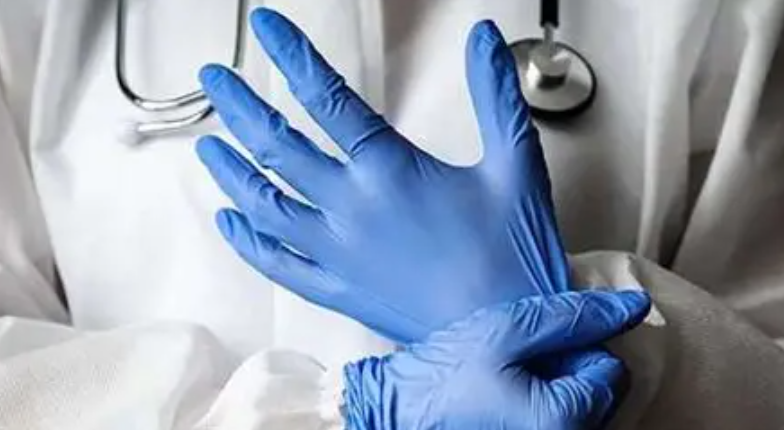
Medical gloves, also known as examination gloves or surgical gloves, are regulated medical devices designed for a single, critical purpose: to create an impermeable barrier between healthcare workers and patients, preventing the transmission of infectious agents . Their design is optimized for this one-time use.
The FDA classifies medical gloves into two main categories :
- Patient Examination Gloves: Used during medical examinations and procedures where contact with blood, body fluids, or mucous membranes is anticipated. They are typically non-sterile but must meet stringent quality standards.
- Surgeons' Gloves: Sterile gloves used during surgical and invasive procedures, manufactured to even higher standards of barrier integrity.
Medical gloves are manufactured from several materials, each with specific properties:
- Nitrile: Offers excellent puncture resistance and chemical protection, making it the preferred choice for most healthcare applications .
- Latex (Natural Rubber): Provides superior elasticity and tactile sensitivity, though latex allergies have reduced its prevalence .
- Vinyl (PVC): Economical option suitable for low-risk, brief tasks, though more permeable than nitrile or latex .
- Neoprene/Chloroprene: Combines comfort with chemical resistance for specialized applications .
Medical gloves are subject to rigorous regulatory oversight. In the United States, the FDA enforces specific quality standards, including acceptable quality limit (AQL) testing for pinholes—surgeons' gloves must meet a 1.5 AQL, while examination gloves must meet a 2.5 AQL . In Europe, the EN 455 standard series defines essential quality and safety requirements for single-use medical gloves . These regulations exist precisely because medical gloves are designed for one-time use only.
The consensus from every major public health authority is unequivocal: medical gloves are single-use devices and must never be washed, disinfected, or reused .
The CDC explicitly advises against washing gloved hands or attempting reuse, noting that alcohol rubs or soap contribute to material degradation and may conceal micro-perforations that impair protection . The World Health Organization echoes this, stating clearly not to wash or reuse gloves but to remove them and perform hand hygiene instead .
The FDA classifies both patient examination gloves and surgeons' gloves as single-use devices that are not intended for reprocessing . Even the simple educational materials from nursing organizations reinforce this fundamental principle with bold directives: "Do not wash gloves" .

The polymers that constitute medical gloves—nitrile, latex, and vinyl—are not designed to withstand chemical or physical stress beyond their intended single use . When exposed to cleaning agents:
- Alcohol-based sanitizers cause glove materials to swell, become tacky, and lose tensile strength .
- Soap and detergents interact with the polymer matrix, creating microscopic channels and weakening the material.
- Chlorine-based disinfectants are highly corrosive to glove materials, causing rapid breakdown and brittleness.
- Heat and mechanical stress from washing and drying further compromise the glove's structural integrity .
Research has demonstrated that reusing gloves after alcohol-based hand hygiene significantly increases the risk of microbial transmission due to barrier degradation .
Even when a washed glove appears intact to the naked eye, its microscopic integrity is compromised. The FDA's own test methods for detecting glove leaks require 1,000 milliliters of water and careful observation over two minutes—far beyond what any visual inspection can achieve .
The Acceptable Quality Level (AQL) standards for medical gloves acknowledge that even new, unused gloves may have a small percentage of pinholes . Washing dramatically increases this defect rate.
Washing cannot reliably disinfect the entire glove surface :
- The microscopic texture of glove material can trap pathogens.
- The area under the cuff and between fingers is difficult to clean thoroughly.
- The interior of the glove becomes contaminated with hand flora and moisture during use.
Studies have documented that attempts to disinfect gloves can actually spread contaminants during the rinsing process .
Even if barrier integrity were maintained—which it is not—washed gloves undergo physical changes that compromise their function:
- Material swelling or shrinkage alters fit, reducing tactile sensitivity .
- Residual moisture makes donning difficult and creates a environment for microbial growth.
- Chemical residues can cause skin irritation upon subsequent use.
The primary purpose of medical gloves is to prevent healthcare-associated infections (HAIs), which affect millions of patients annually and contribute to antimicrobial resistance . When gloves are washed and reused:
- Pathogens may be transmitted from one patient to another.
- Healthcare workers may unknowingly carry organisms from contaminated to clean sites.
- The false sense of security leads to laxity in hand hygiene and other infection control practices.
Healthcare workers face daily exposure to bloodborne pathogens, including Hepatitis B, Hepatitis C, and HIV, as well as hazardous drugs and chemicals . Washed gloves with compromised integrity:
- Fail to provide adequate barrier protection during high-risk procedures.
- May develop tears at critical moments of exposure.
- Create a false sense of security that encourages risky behavior.
- Violation of OSHA regulations requiring appropriate hand protection .
- Non-compliance with CDC and WHO infection control guidelines.
- Potential liability if an HAI or occupational exposure is traced to reused gloves.
- Accreditation issues during regulatory surveys.
The prohibition against washing applies specifically to disposable medical gloves. For non-patient care tasks requiring hand protection—such as environmental cleaning, handling chemicals, or decontaminating equipment—heavy-duty reusable utility gloves (e.g., made of nitrile or neoprene) are the appropriate choice. These gloves are specifically designed to be cleaned and disinfected between uses, but they are never used for direct patient care.
During extreme supply shortages, public health authorities may issue crisis capacity strategies, but these are temporary measures, not standards of care :
- Using gloves past their designated shelf life for training activities.
- Prioritizing glove use for highest-risk activities.
- Considering use of gloves conforming to other international standards when FDA-cleared products are unavailable.
Notably, even in crisis situations, washing and reusing disposable medical gloves is not recommended as a conservation strategy .
Medical gloves are indicated when hands may come into contact with :
- Blood and other body fluids
- Infectious substances
- Mucous membranes or non-intact skin
- Contaminated surfaces or items
- Radioactive substances
- Hazardous chemicals
Consensus guidelines emphasize proper practices :
1. Perform hand hygiene before donning gloves.
2. Don clean gloves appropriate for the task.
3. Remove gloves immediately after the task is complete.
4. Dispose of gloves in appropriate clinical waste.
5. Perform hand hygiene immediately after glove removal.
Critically, gloves do not replace hand hygiene . Hand washing or alcohol-based hand rub must be performed:
- Before putting on gloves
- Immediately after removing gloves
- Between different tasks on the same patient
Removing gloves correctly prevents self-contamination :
1. Grasp the outside of one glove near the wrist.
2. Peel it off, turning it inside out.
3. Hold the removed glove in the gloved hand.
4. Slide fingers under the cuff of the remaining glove.
5. Peel it off over the first glove, turning both inside out.
6. Discard immediately and perform hand hygiene.
The principle underlying single-use medical gloves is identical to that driving the adoption of single-use endoscopes and other visualization devices. Our industry has seen significant growth in disposable ureteroscopes, bronchoscopes, and video laryngoscopes precisely because the logic is the same: guaranteeing an uncompromised, sterile barrier for every procedure eliminates reprocessing failure risk and ensures optimal performance .
A medical glove is the most basic, ubiquitous form of a single-use medical device. Attempting to wash and reuse it is a fundamental misuse of the product, taking it outside its validated and safe operating parameters.
The answer to the question "Can you wash medical gloves?" is a resounding, unequivocal no. Medical gloves are single-use medical devices, meticulously engineered and rigorously tested to provide an impermeable barrier for one episode of patient care. Washing them compromises their material integrity, fails to eliminate pathogens, and creates unacceptable risks of healthcare-associated infections and occupational exposures.
Every major health authority—the CDC, FDA, WHO, and OSHA—concur in this prohibition. The science is clear: even a single wash cycle degrades the polymer matrix, creates microscopic channels, and renders the glove unsafe for subsequent use. The risks far outweigh any perceived savings.
Proper infection control demands adherence to evidence-based protocols: don clean gloves for each patient or task, remove them immediately after use, dispose of them appropriately, and perform hand hygiene. In healthcare, where safety is paramount, the small cost of a new pair of medical gloves is an indispensable investment in protecting human health.
As we continue to advance medical visualization technology, from endoscopy systems to bronchoscopy workstations, we remain committed to the same principle that governs glove use: uncompromising integrity, rigorous standards, and unwavering focus on patient and provider safety.
Contact us to get more information!

No. Washing disposable medical gloves with soap and water is explicitly prohibited by CDC, FDA, and WHO guidelines . The process degrades the glove material, causing micro-tears invisible to the naked eye, and fails to reliably eliminate pathogens from all surfaces. Even careful washing cannot restore the glove's original barrier integrity.
This practice is unsafe and not recommended. Alcohol-based hand sanitizers accelerate the chemical degradation of glove materials, causing them to swell, lose tensile strength, and develop microscopic channels . Additionally, sanitizer cannot disinfect the entire glove surface or interior. Gloves must be changed between patients, not "refreshed" with sanitizer.
No. For direct patient care involving potential exposure to blood, body fluids, or infectious materials, there are no gloves designed or approved for washing and reuse . Heavy-duty reusable utility gloves exist for environmental cleaning and instrument decontamination, but these are never used for direct patient contact. All patient examination and surgical gloves are strictly single-use.
During supply shortages, follow conservation strategies recommended by public health authorities :
- Prioritize glove use for highest-risk activities where blood or body fluid exposure is anticipated.
- Ensure rigorous hand hygiene protocols are followed.
- Use gloves past their designated shelf life only for training activities (not patient care).
- Consider reusable utility gloves for appropriate non-patient tasks.
- Work with infection control to identify situations where gloves may not be needed.
Notably, washing disposable gloves is not included in any conservation strategy.
The principle is identical: ensuring an uncompromised barrier for each patient encounter. A single-use bronchoscope or ureteroscope guarantees sterility and perfect function for one procedure, eliminating reprocessing failure risk. A single-use medical glove guarantees barrier integrity for one patient contact . Both are designed, validated, and regulated for a single-use lifecycle to maximize safety and prevent cross-contamination.
[1] https://beybi.com.tr/en/blog/general/medical-gloves
[2] https://pmc.ncbi.nlm.nih.gov/articles/PMC11767351/
[3] https://heightechsafety.com.au/blogs/news/can-you-wash-disposable-gloves-safety-guidelines
[4] https://pmc.ncbi.nlm.nih.gov/articles/PMC3025131/table/T0002/
[5] https://ouci.dntb.gov.ua/en/works/leLVdDKa/


