


Content Menu
● Introduction: The Purpose of the Barrier
● The Mechanism of Protection: How Isolation Gowns Are Designed to Work
● Evidence of Efficacy: What the Research and Standards Say
● The Critical Factors That Determine Real-World Effectiveness
>> 1. Correct Selection for the Task
>> 2. Proper Donning and Doffing
>> 4. Use as Part of a Comprehensive PPE Ensemble
● Limitations and Realistic Expectations
● The Role in Medical Visualization and High-Risk Procedures
● Frequently Asked Questions (FAQ)
>> 1. What is the difference between isolation gowns and surgical gowns?
>> 2. How do I know what AAMI PB70 level of gown I need?
>> 3. Can I reuse a disposable isolation gown?
>> 4. Why is the doffing (removal) procedure so important?
>> 5. Are there environmentally friendly alternatives to standard disposable isolation gowns?
In the intricate and risk-laden environment of modern healthcare, the efficacy of every protective measure is subject to scrutiny and validation. Our work is predicated on the principle that clear, reliable visualization is foundational to safe and effective care. This principle extends directly to the fundamental barriers that protect clinicians during procedures. A central question in infection prevention is: Do isolation gowns work? This article provides a definitive, evidence-based analysis of the functionality, effectiveness, and proper use of isolation gowns, examining their role as a critical component of the personal protective equipment (PPE) hierarchy in safeguarding both healthcare workers and patients.

Isolation gowns are single-use or limited-use garments designed to shield the wearer's torso, arms, and clothing from the transfer of microorganisms, bodily fluids, and particulate matter during patient care activities. They are a cornerstone of Contact and Droplet Precautions, deployed in scenarios ranging from routine patient care in isolation rooms to high-fluid exposure procedures. Their fundamental purpose is to interrupt the chain of infection by providing a physical barrier. The question of whether they "work" is not binary but depends on a multifaceted understanding of their design standards, appropriate selection, correct usage, and integration into a broader infection control protocol.
Isolation gowns function through a combination of material science and design:
1. Material Barrier: The primary mechanism is the use of engineered fabrics that resist penetration. Most disposable isolation gowns are made from non-woven materials like polypropylene in SMS (Spunbond-Meltblown-Spunbond) construction. The middle meltblown layer is key, acting as a fine filter to block fluids, bacteria, and viruses.
2. Fluid Repellency: Many gowns are treated with chemical finishes that cause liquids to bead up and roll off the surface rather than being absorbed, buying time for the wearer to safely remove the gown before saturation occurs.
3. Full-Coverage Design: By covering the front torso, arms, and potentially the lower legs (depending on style), they protect the areas of the healthcare worker's uniform or skin most likely to come into contact with contaminants during patient care.
4. Secure Closure: Features like tie-backs or elastic belts, combined with snug cuffs, help ensure the gown stays in place and minimizes gaps where contaminants could enter.
The effectiveness of isolation gowns is not anecdotal; it is codified in performance standards and supported by clinical evidence.
- The AAMI PB70 Standard: This is the critical benchmark. The ANSI/AAMI PB70 standard classifies protective apparel (including isolation gowns) into four levels based on their liquid barrier performance:
- Level 1 (Minimal Risk): Basic barrier for minimal fluid contact.
- Level 2 (Low Risk): For low fluid exposure (e.g., IV insertion).
- Level 3 (Moderate Risk): For moderate fluid exposure (e.g., arterial line insertion, emergency trauma).
- Level 4 (High Risk): For high fluid exposure (e.g., surgery, pathogen resistance).
A gown that meets its claimed AAMI PB70 level has been laboratory-tested to resist fluid penetration under specific pressures, providing a quantifiable measure of its protective capability.
- Infection Prevention Studies: Epidemiological studies have consistently shown that the proper use of PPE, including isolation gowns, reduces the incidence of healthcare-associated infections (HAIs) like MRSA and VRE in settings where Contact Precautions are implemented. They are a demonstrated component of successful infection control bundles.
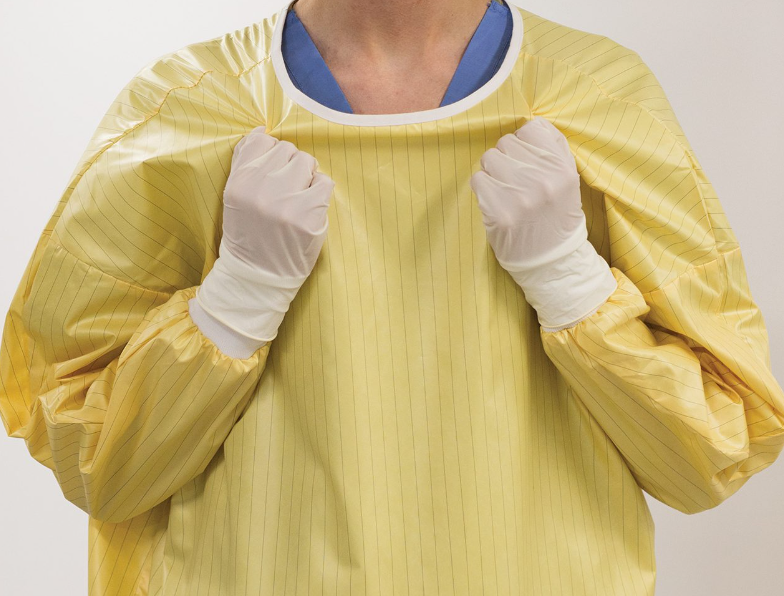
A gown's inherent design is only one variable. Its real-world performance hinges on several interdependent factors:
An isolation gown must match the anticipated exposure risk. Using a Level 1 gown during a high-fluid bronchoscopy procedure where irrigation is used is a failure of selection, not of the gown itself. Conversely, using a heavy, impermeable Level 4 gown for routine patient rounding is unnecessary and may lead to heat stress and non-compliance.
This is arguably the most critical factor. Studies show that contamination most often occurs during the removal (doffing) of PPE.
- Donning: The gown must be fully closed, with cuffs secured over or under gloves appropriately.
- Doffing: The CDC-recommended technique involves unfastening ties, peeling the gown away from the neck and shoulders, turning it inside out, and rolling it into a bundle without touching the contaminated exterior. Failure in this sequence can transfer pathogens to the wearer's hands, arms, or clothing.
A gown must be free of manufacturing defects like pinholes or weak seams. It must also maintain integrity during use—it should not tear when the wearer moves, stretches, or handles equipment like a video laryngoscope or patient monitor.
Isolation gowns do not work in isolation. They are part of a system that may include medical gloves, masks, respirators, and eye protection. The gown protects the torso, while gloves protect the hands; a gap between the cuff and the glove represents a vulnerability. All components must be used together correctly.
It is important to understand what isolation gowns are not designed to do:
- They are not a substitute for hand hygiene. Handwashing before donning and after doffing is absolute.
- They are not universally impervious. Except for Level 4 gowns, most are designed to resist fluid penetration for a limited time or under a specific pressure. Prolonged exposure or high-velocity splashes can lead to breakthrough.
- They do not provide respiratory protection. For airborne precautions, a respirator (N95) is required.
- They are single-use. Reusing a disposable gown compromises its integrity and is unsafe.
In the context of our specialty, isolation gowns are integral to procedural safety:
- During Endoscopic Procedures: Staff assisting during a bronchoscopy or handling a disposable ureteroscope post-procedure wear isolation gowns (typically Level 3 or 4) to protect against splashes of irrigation fluid, blood, or respiratory secretions.
- In the Operating Room: While sterile surgical gowns are used by the sterile team, non-sterile isolation gowns are often worn by circulating nurses and anesthesiologists to protect their clothing from non-sterile splashes.
- Reprocessing Areas: Staff performing manual cleaning of contaminated endoscope systems prior to high-level disinfection wear heavy-duty isolation gowns along with face shields and gloves as part of a robust chemical and biological barrier.
Isolation gowns do work when they are understood and utilized as a precisely engineered component of a larger infection control system. Their efficacy is rooted in validated performance standards like AAMI PB70 and demonstrated through their role in reducing transmission in clinical settings. However, their success is contingent upon a chain of correct decisions: selecting the appropriate protection level for the task, using a gown of verified quality, donning and doffing it with meticulous technique, and integrating it with other PPE and hand hygiene. A failure in any of these links can break the chain of protection. Therefore, the question is not merely whether the gown works as a fabric, but whether the healthcare system works to deploy it correctly. In an era of evolving pathogens and complex medical interventions, the humble isolation gown remains a vital, evidence-based defender—a necessary shield that, when used wisely, effectively contributes to the safety of both the caregiver and the patient.
Contact us to get more information!
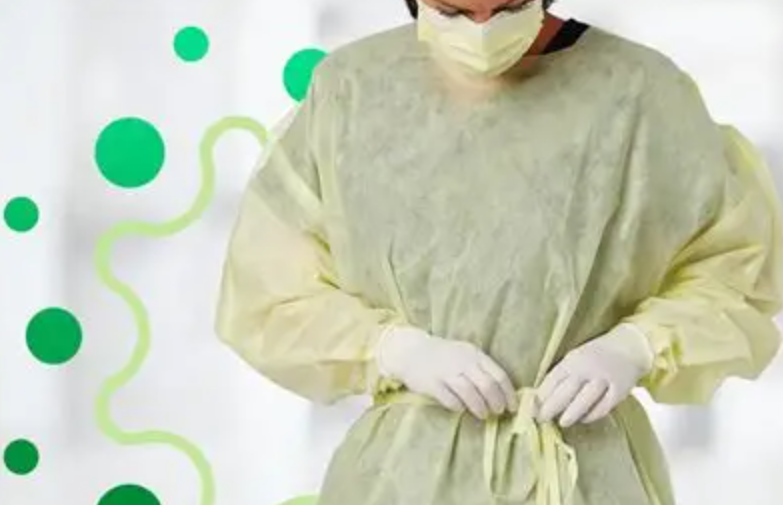
While both are protective garments, they differ in intended use and regulatory standard:
- Isolation Gowns: Used for non-sterile procedures and patient isolation to protect against transfer of microorganisms and body fluids. They are tested to the AAMI PB70 standard (Levels 1-4) for fluid barrier performance. They may have uncovered areas (e.g., back may not be fully covered).
- Surgical Gowns: Used in sterile surgical fields. They are regulated as Class II medical devices and must meet a higher standard (ANSI/AAMI PB70 Level 3 or 4) in critical zones (front, from chest to knees). They are designed for aseptic technique and provide a more comprehensive, consistent barrier.
The level should be based on the anticipated degree of fluid exposure:
- Level 1: Minimal risk, basic care (e.g., standard isolation room).
- Level 2: Low risk, minor fluid exposure (e.g., drawing blood, suturing).
- Level 3: Moderate risk, larger fluid volumes (e.g., emergency room trauma, central line insertion, procedures with bronchoscopy workstations).
- Level 4: High risk, pathogen resistance or copious fluid exposure (e.g., major surgery, trauma with arterial bleeding). Always refer to your facility's infection control policy.
No. Disposable isolation gowns are designed for single use only. Reusing them poses significant risks:
- Loss of Barrier Integrity: The material can degrade, and fluid-repellent treatments wear off.
- Cross-Contamination: The gown's exterior is contaminated after use; handling it again spreads pathogens.
- Regulatory Non-Compliance: It violates the manufacturer's instructions for use and CDC guidelines. If reuse is a consideration due to supply, the solution is to switch to a launderable, reusable isolation gown designed for multiple cycles.
Doffing is critical because the outside of the gown is considered contaminated. An improper removal technique can easily transfer pathogens from the gown's exterior to your hands, wrists, or clothing, defeating its purpose. The CDC's step-by-step doffing procedure—involving careful unfastening, peeling away without touching the front, and rolling the gown into a bundle—is designed to minimize self-contamination. This step is as important as wearing the gown itself.
Yes, growing options include:
- Reusable Isolation Gowns: Made from durable polyester or cotton blends, they can be laundered 50-100 times. They have a higher upfront cost but lower long-term cost and waste.
- Disposable Gowns with Recycled Content: Some manufacturers incorporate post-consumer recycled materials.
- Compostable/Biodegradable Gowns: Made from materials like polylactic acid (PLA) from corn starch, designed to break down in industrial composting facilities. However, it is essential that any "green" alternative still meets the required AAMI PB70 performance level for its intended clinical use


