
Views: 222 Author: Lake Publish Time: 2026-01-16 Origin: Site


Content Menu
● Introduction: The Imperative of Sterilization
● The Definitive Answer: It Depends on the Blade Type
>> 1. Traditional Reusable Metal Laryngoscope Blades – YES, with Conditions
>> 2. Fiberoptic or Channeled Reusable Blades – CAUTION REQUIRED
>> 3. Single-Use/Disposable Laryngoscope Blades – ABSOLUTELY NOT
● The Autoclaving Process for Reusable Metal Blades: A Step-by-Step Protocol
● The Driving Force: The Shift to Single-Use Disposable Blades
● The Clinical and Economic Considerations
● Implications for Manufacturers and OEMs
● Frequently Asked Questions (FAQ)
>> 1. Can I autoclave the entire laryngoscope, including the handle?
>> 2. How many times can a reusable metal laryngoscope blade be autoclaved?
>> 3. What are the alternatives to autoclaving for blades that can't withstand steam?
>> 4. Why are disposable blades becoming more popular than reusable autoclaved ones?
>> 5. How should I store autoclaved laryngoscope blades?
In the meticulous world of airway management and infection control, the sterility and integrity of every instrument are non-negotiable. The laryngoscope blade is a critical point of contact with the patient's airway. A central question in its reprocessing is whether it can withstand the gold standard of sterilization: autoclaving. This article provides a definitive, evidence-based analysis of the autoclaving of laryngoscope blades, examining material compatibility, manufacturer specifications, and the pivotal shift towards single-use alternatives that are reshaping clinical practice.
Effective sterilization is paramount to prevent cross-contamination and healthcare-associated infections. Autoclaving, or steam sterilization, uses pressurized saturated steam at high temperatures (typically 121°C or 134°C) to destroy all microbial life, including bacterial spores. It is the most reliable and widely used method for heat- and moisture-stable medical instruments. However, not all materials can endure this process. The answer for laryngoscope blades is not a simple yes or no but depends entirely on their construction and intended use design.
- Material: These are manufactured from medical-grade stainless steel or anodized aluminum.
- Autoclave Compatibility: Yes, these blades are designed to be autoclaved. Stainless steel is inherently robust and can withstand repeated autoclave cycles without degradation. Aluminum can also be autoclaved, though anodized coatings must be checked for durability.
- Critical Considerations:
- Manufacturer's Instructions for Use (IFU): The single most important document. The IFU will specify the exact sterilization parameters (time, temperature, drying cycle) and any required packaging.
- Disassembly: The blade must often be detached from the handle. Handles, which contain electronics and batteries for lighted blades, are NEVER autoclaved.
- Cleaning Prior to Sterilization: Thorough cleaning to remove all organic debris (blood, saliva) is absolutely mandatory. Residual soil can create a biofilm that shields microorganisms from the steam.
- Inspection: After each cycle, blades must be inspected for damage, such as cracks in the light bulb housing (for fiberoptic blades), dulling of the finish, or deformation.
- Design: These blades have internal light channels or components.
- Autoclave Compatibility: Potentially, but with strict adherence to IFU. The heat and moisture can damage optical fibers, degrade seals, or cause condensation inside light channels, impairing function. Some manufacturers may specify low-temperature sterilization methods (e.g., ethylene oxide gas, hydrogen peroxide plasma) instead of steam for these more complex blades. Always follow the IFU.
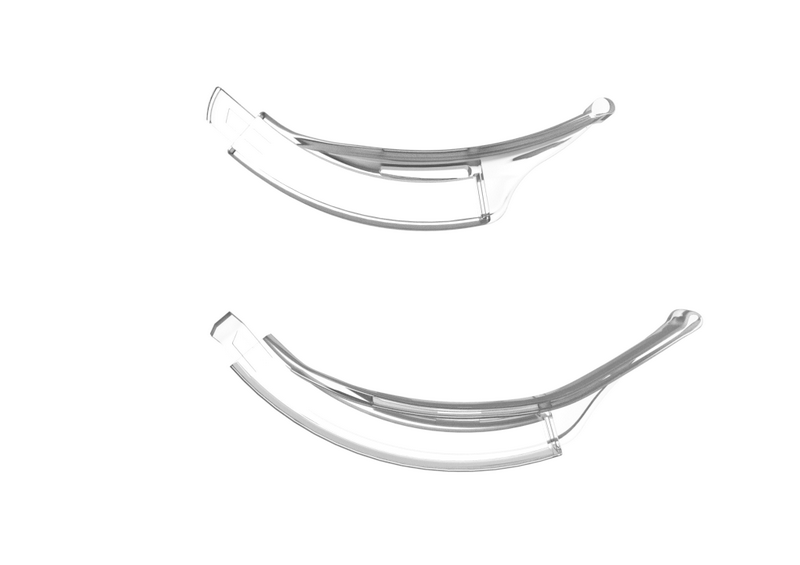
- Material: Made from medical-grade plastics (polycarbonate, ABS) with integrated, non-replaceable LEDs. They may also be made of lower-grade stainless steel not intended for reprocessing.
- Autoclave Compatibility: No. They are designed for single use only. Autoclaving will:
- Melt or Deform plastic components.
- Destroy the integrated LED light source.
- Compromise any plastic lens covers.
- Void all regulatory clearances and manufacturer warranties.
Their use is "use and discard," which eliminates reprocessing errors and guarantees sterility for each patient.
For blades confirmed as autoclave-safe by their IFU, a standardized protocol must be followed:
1. Point-of-Use Cleaning: Wipe the blade immediately after use to remove gross contamination.
2. Transport: Place in a designated, leak-proof container for transport to the reprocessing area.
3. Manual Cleaning: Clean thoroughly with enzymatic detergent and a soft brush, paying attention to crevices and the light window. Rinse completely.
4. Inspection and Function Check: Visually inspect for damage. Test the light function if applicable (before attaching to a non-sterile handle).
5. Packaging: Place in a sterilization pouch or wrap designed for steam sterilization, ensuring proper air removal.
6. Loading: Load into the autoclave without overpacking, allowing for steam penetration.
7. Cycle Selection: Run the appropriate cycle as per IFU (e.g., 134°C for 4-10 minutes, with drying time).
8. Cooling, Storage, and Verification: Allow to cool. Store in a clean, dry area. Verify the process using chemical indicators (on the pouch) and regular biological indicator tests of the autoclave itself.

The complexities and risks associated with reprocessing reusable laryngoscope blades have driven a massive shift toward single-use disposable blades, especially for video laryngoscope systems. This trend mirrors that seen in our other fields, such as disposable ureteroscopes.
Advantages of Disposable Blades:
- Eliminated Cross-Contamination Risk: Each patient receives a new, sterile blade.
- Guaranteed Functionality: Every blade has a new, bright LED light source.
- Reduced Workflow Complexity: Eliminates the entire costly and labor-intensive reprocessing chain (cleaning, packaging, sterilization, inspection).
- No Capital Cost for Reprocessing Equipment: No need for autoclaves, washers, or associated maintenance.
- Regulatory Simplicity: Clearly defined single-use pathway.
- Infection Control: Studies have shown that even with strict protocols, reusable laryngoscope blades can harbor pathogens if cleaning is suboptimal. Disposables offer a foolproof barrier.
- Total Cost of Ownership: While reusable blades have a higher upfront cost, their lifetime cost depends on reprocessing expenses (labor, utilities, detergent, packaging, capital equipment depreciation). Disposable blades offer a predictable, per-procedure cost. For many institutions, especially with high volumes, disposables can be cost-comparable or even favorable when all hidden reprocessing costs are accounted for.
- Clinical Performance: Modern disposable blades are engineered to provide comparable rigidity, fit, and illumination to their reusable counterparts.
As OEM specialists, we see this dichotomy clearly:
- For Reusable Blade Systems: Manufacturers must provide crystal-clear, validated IFUs for reprocessing and design blades that withstand repeated autoclaving without failure. This includes robust material selection and sealing of any optical components.
- For Disposable/Video Laryngoscope Systems: The design focus shifts to cost-effective, high-volume manufacturing of blades that integrate perfectly with reusable or disposable handles and provide reliable, single-use performance. This is a core competency in the modern video laryngoscope market.
The question of whether laryngoscope blades can be autoclaved has a conditional answer. Traditional, solid metal reusable blades are designed for autoclaving, provided the manufacturer's IFU is followed meticulously. However, more complex reusable blades with optical components require extreme caution and may need alternative low-temperature sterilization. The dominant and safest trend in modern airway management, however, is the adoption of single-use, disposable laryngoscope blades. These blades, which are categorically not autoclaveable, eliminate the risks and burdens of reprocessing altogether, offering guaranteed sterility and operational simplicity. For healthcare facilities, the choice between reusable and disposable involves a careful analysis of infection control priorities, procedural volume, and total cost. As in the broader field of medical visualization where disposability is increasingly standard, the trajectory for laryngoscope blades points clearly toward single-use solutions that prioritize absolute patient and provider safety above all else.

No, you should never autoclave a standard laryngoscope handle. Handles contain batteries, electrical circuits, and sometimes electronic components for video laryngoscopes. Steam under pressure will irreparably damage these components, cause corrosion, and create a safety hazard. Only the detachable laryngoscope blade may be autoclaved, and only if explicitly stated in the manufacturer's instructions for use (IFU). Handles are typically cleaned with low-level disinfection (wiping with an approved disinfectant).
There is no universal number. The lifespan depends on the blade's manufacturing quality, material, and how it is handled during cleaning and sterilization. Repeated autoclaving can eventually cause metal fatigue, but this usually takes hundreds of cycles. The key is regular inspection before and after each cycle. The blade should be retired if it shows any signs of cracking, corrosion, pitting, deformation, or if the light mechanism (if present) fails. The manufacturer's IFU may provide a recommended maximum cycle count.
For heat- or moisture-sensitive reusable blades (e.g., some fiberoptic blades), alternative low-temperature sterilization methods are used:
- Ethylene Oxide (EtO) Gas: Effective but has a long cycle time and requires aeration due to toxic residue.
- Hydrogen Peroxide Plasma (e.g., STERRAD®): Faster and safe for most materials, but requires specific packaging.
- Liquid Chemical Sterilants: Such as peracetic acid, used in automated systems. The choice is strictly dictated by the blade manufacturer's validated IFU.
Disposable laryngoscope blades are popular due to several key advantages:
- Infection Control: Eliminate risk of reprocessing failure.
- Operational Reliability: Guaranteed new, bright light for every intubation.
- Workflow Efficiency: Save time and resources spent on reprocessing.
- Cost Predictability: Shift from capital and variable reprocessing costs to a simple per-use cost.
- Regulatory Compliance: Simplify compliance by removing the complex reprocessing documentation trail.
Proper storage is crucial to maintain sterility:
- Store in closed, intact sterilization pouches or wrapped packs in a clean, dry, dust-free cabinet or drawer.
- Avoid areas with extreme temperature or humidity fluctuations.
- Practice First-In, First-Out (FIFO) inventory rotation to use the oldest sterilized blades first.
- Label storage areas clearly. Once the sterile barrier (pouch) is opened or compromised, the blade is no longer considered sterile and must be reprocessed again before use.
[1] https://www.cdc.gov/infectioncontrol/guidelines/disinfection/index.html
[2] https://www.fda.gov/medical-devices/general-hospital-devices-and-supplies/laryngoscopes
[3] https://www.aami.org/docs/default-source/standards-library/ansi-aami-st79.pdf
[4] https://www.ncbi.nlm.nih.gov/pmc/articles/PMC3692174/
[5] https://www.asahq.org/standards-and-guidelines/statement-on-the-use-of-video-laryngoscopy-for-endotracheal-intubation
[6] https://www.astm.org/f2058-07.html
[7] https://www.iso.org/standard/28096.html
[8] https://www.jointcommission.org/standards/standard-faqs/hospital-and-hospital-clinics/infection-prevention-and-control-ic/000001668/
[9] https://www.rcemlearning.co.uk/modules/rapid-sequence-induction/


