
Views: 222 Author: Lake Publish Time: 2026-01-14 Origin: Site


Content Menu
● Introduction: Understanding Tuberculosis Transmission
● The Official Guidance: What Do the Authorities Say?
>> 1. The Centers for Disease Control and Prevention (CDC)
>> 2. The World Health Organization (WHO)
>> 3. The European Centre for Disease Prevention and Control (ECDC)
● The Rationale: Why Gowns Are Not Routinely Required
● When ARE Isolation Gowns Required in TB Patient Care?
● The Correct PPE Ensemble for TB Isolation
● Implications for Healthcare Systems and OEM Partners
● Frequently Asked Questions (FAQ)
>> 1. What is the most important piece of PPE for TB isolation?
>> 2. If gowns aren't needed, why do I sometimes see staff wearing them in TB rooms?
>> 3. What type of isolation room is required for a TB patient?
>> 4. Are the PPE requirements different for drug-resistant TB (MDR-TB or XDR-TB)?
>> 5. How should PPE be donned and doffed when entering a TB isolation room?
In the meticulous and evolving field of infection prevention and control, protocol is dictated by the specific characteristics of the pathogen involved. Tuberculosis (TB) remains a significant global health threat, and its isolation protocols are distinct due to its primary mode of transmission. A common and crucial question arises: Are isolation gowns required for TB isolation? This article provides a comprehensive, evidence-based analysis of this question, exploring the latest guidelines from leading health authorities, the rationale behind TB-specific precautions, and the appropriate use of isolation gowns and other PPE in the management of patients with suspected or confirmed TB.

To answer the question of PPE requirements, one must first understand how Mycobacterium tuberculosis spreads. TB is primarily an airborne disease. Infectious particles, called droplet nuclei, are generated when a person with pulmonary or laryngeal TB coughs, speaks, or sings. These tiny particles (1-5 microns) can remain suspended in the air for hours and are inhaled by others, leading to infection. This is fundamentally different from diseases spread through direct contact (e.g., MRSA, C. diff) or large droplets (e.g., influenza) that fall quickly onto surfaces.
Because transmission is airborne, the cornerstone of TB infection control is airborne infection isolation (AII), previously known as "negative pressure isolation." The focus is on containing the infectious aerosol, not necessarily preventing contact with the patient's skin or immediate environment, unless there is a concurrent risk.
The consensus from global and national public health bodies is clear and specific.
The CDC's "Guidelines for Preventing the Transmission of Mycobacterium tuberculosis in Health-Care Settings" is the definitive source in the United States. It states:
> "Gowns are not indicated for preventing the transmission of TB. Gowns should be worn to protect the healthcare worker's skin and clothing if substantial contamination of clothing with potentially infectious respiratory secretions is anticipated (e.g., when performing procedures that could generate respiratory secretions, such as bronchoscopy or endotracheal intubation)."
The WHO's "Infection prevention and control guidelines for tuberculosis" aligns with this view, emphasizing respiratory protection and administrative/environmental controls. The use of gowns is not highlighted as a routine component of TB precautions unless there is a risk of extensive contamination.
ECDC guidance similarly prioritizes respiratory protection (FFP2/FFP3 respirators), patient isolation in negative pressure rooms, and rapid diagnosis. Routine gowning is not recommended.
The guidance is based on a risk assessment of the most likely transmission pathway:
1. Primary Route is Airborne: Since inhalation of droplet nuclei is the principal risk, resources and focus are directed toward respiratory protection (N95 or equivalent respirators) and engineering controls (negative pressure rooms, UVGI). These are non-negotiable.
2. Low Risk of Transmission via Clothing: For routine patient care activities (taking vitals, interviewing, administering oral medication) where the patient is not coughing uncontrollably or undergoing aerosol-generating procedures, the risk of contaminating healthcare worker clothing with sufficient infectious material to cause transmission is considered very low.
3. Focus on Effective Resource Allocation: Overusing isolation gowns when not indicated contributes to PPE waste, increases costs, and may inadvertently detract attention from the most critical protective measures—properly fitted respirators and room ventilation.
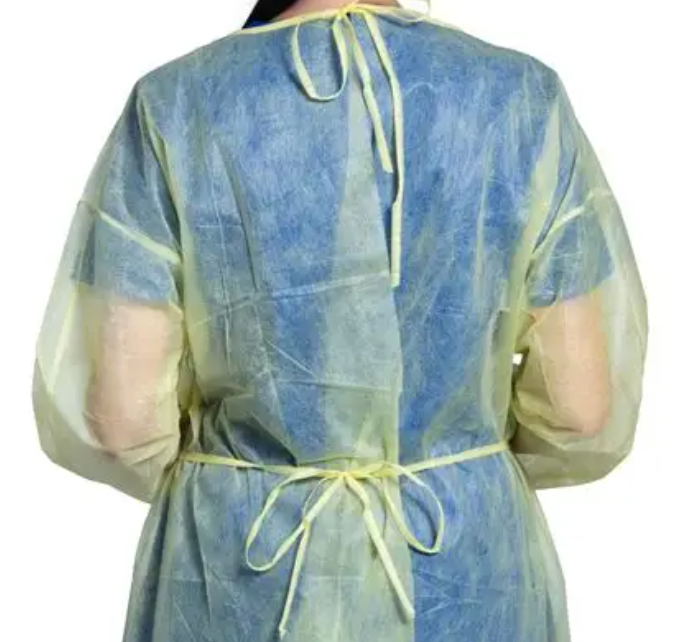
There are specific clinical scenarios where donning an isolation gown becomes necessary, moving from routine care to procedures with a high risk of extensive splash or contamination. These are often situations involving our domain of medical visualization:
- During Aerosol-Generating Procedures (AGPs): This is the most critical indication. AGPs are medical procedures that can induce coughing and generate higher concentrations of infectious aerosols. Examples include:
- Bronchoscopy (using a bronchoscopy workstation)
- Sputum induction
- Endotracheal intubation (using a video laryngoscope)
- Nebulizer treatment (though this is often avoided)
- Autopsy
During these procedures, an isolation gown (along with a respirator, face shield/goggles, and gloves) is essential to protect the wearer's skin and clothing from potentially contaminated respiratory secretions.
- When Managing Incontinent or Copiously Draining Patients: If the TB patient has an extrapulmonary site with draining lesions (e.g., lymphatic TB), standard contact precautions, including gowns and gloves, would be added to airborne precautions to prevent transmission from the wound exudate.
- During Patient Care Activities with Anticipated Splash: If the patient is unable to cover coughs and is producing large amounts of sputum, and care involves close contact where splatter is likely, a gown may be prudently used.
For routine entry into a TB isolation room:
1. A Fit-Tested N95 Respirator (or higher): Must be donned before entry and removed after exit. This is the single most important piece of PPE.
2. Gloves: If contact with respiratory secretions or contaminated surfaces is anticipated.
3. Eye Protection (Goggles or Face Shield): If there is a risk of splash from coughing or procedures.
For entry to perform an AGP (e.g., bronchoscopy):
1. Respirator (N95 or PAPR)
2. Isolation Gown (preferably with fluid-resistant properties)
3. Gloves
4. Full Face Shield or Goggles
Understanding these protocols has practical implications:
- PPE Procurement and Inventory: Hospitals should not stockpile isolation gowns for TB isolation at the same level as for contact precautions. Resources should be weighted toward respirators.
- Procedure Room Design: Rooms where AGPs like bronchoscopy are performed on potential TB patients must be Airborne Infection Isolation Rooms (AIIRs). Our bronchoscopy workstations and medical image processors are often used in these controlled environments.
- Staff Training: Education must stress that the gown is not for airborne protection but for splash/contact during specific high-risk procedures. Misuse can breed complacency about the essential respirator.
- Device Design and Workflow: For OEMs like us, designing endoscope systems and video laryngoscopes that minimize procedure time and clinician proximity to the patient's airway during AGPs can indirectly support infection control goals.
In summary, isolation gowns are not routinely required for standard TB airborne isolation precautions. The authoritative guidance from the CDC, WHO, and ECDC is consistent on this point, as the primary defense against this airborne pathogen is respiratory protection and environmental controls. However, isolation gowns become a mandatory component of PPE during aerosol-generating procedures—such as those involving bronchoscopy workstations or video laryngoscopes—or when there is a foreseeable risk of extensive contamination of clothing with infectious respiratory secretions. This nuanced approach exemplifies evidence-based infection control: deploying specific barriers against specific risks. For healthcare facilities and the manufacturers that supply them, clarity on these protocols ensures efficient resource allocation, effective staff protection, and ultimately, safer care for patients with tuberculosis.
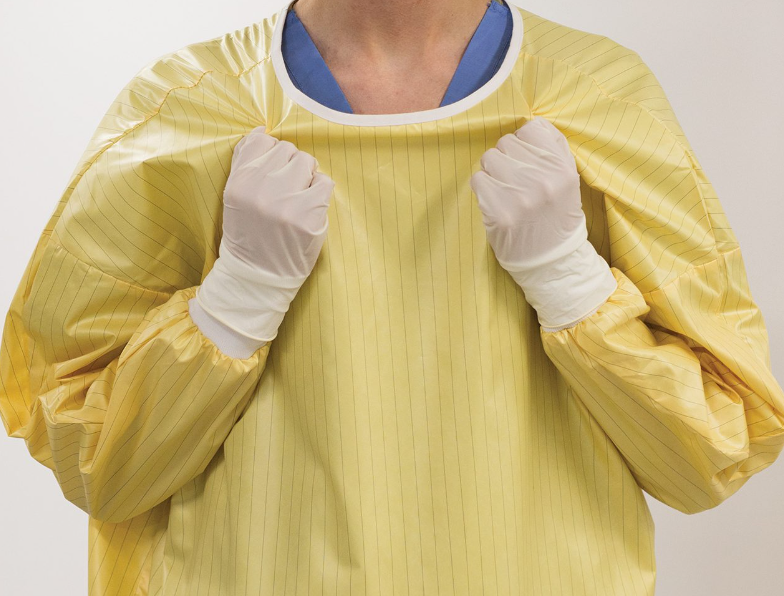
The single most important piece of PPE for TB isolation is a properly fit-tested N95 respirator (or equivalent, like an FFP2/FFP3 or a PAPR). This is because TB is an airborne disease, and the respirator is designed to filter out the tiny droplet nuclei that carry the bacteria. No other piece of PPE substitutes for this respiratory protection.
You may observe this for several reasons:
1. The staff member is about to perform or has just performed an aerosol-generating procedure (e.g., suctioning, sputum collection).
2. The patient has a concurrent condition requiring contact precautions (e.g., a draining wound from extrapulmonary TB, or an unrelated infection like CDIFF).
3. Institutional policy may be overly cautious or not fully aligned with the latest evidence-based guidelines.
4. The staff member is in the room for a task with high splash risk due to the patient's symptoms (e.g., uncontrollable coughing).
A patient with suspected or confirmed infectious pulmonary or laryngeal TB requires an Airborne Infection Isolation Room (AIIR), historically called a negative pressure room. This room must:
- Maintain negative pressure relative to the corridor (air flows into the room).
- Have a minimum of 6 or 12 air changes per hour (ACH).
- Exhaust air directly to the outside or through a HEPA filter before recirculation.
- Have the door kept closed at all times.
No, the PPE requirements are the same. MDR-TB and XDR-TB refer to the bacterium's resistance to antibiotics, not to a change in its mode of transmission. It is still spread via the airborne route. Therefore, the same airborne precautions—AIIR and respiratory protection—apply. The urgency and stringency of implementing these precautions may be heightened due to the grave consequences of infection.
The sequence is critical to avoid self-contamination:
- Donning (Outside the Room): 1. Perform hand hygiene. 2. Put on the isolation gown (if indicated for a procedure). 3. Put on the N95 respirator (perform seal check). 4. Put on eye protection. 5. Put on gloves.
- Doffing (In the Ante-room or just inside the room door): 1. Remove gloves. 2. Perform hand hygiene. 3. Remove gown (if worn). 4. Perform hand hygiene. 5. Remove eye protection. 6. Remove respirator by the straps (do not touch the front). 7. Perform hand hygiene. The respirator is always removed after leaving the patient room.
[1] https://www.cdc.gov/tb/publications/guidelines/infectioncontrol.htm
[2] https://www.cdc.gov/infectioncontrol/guidelines/tb/index.html
[3] https://www.who.int/publications/i/item/WHO-UCN-TB-2022.1
[4] https://www.ecdc.europa.eu/en/publications-data/infection-prevention-and-control-tuberculosis
[5] https://www.cdc.gov/infectioncontrol/guidelines/isolation/index.html
[6] https://www.cdc.gov/niosh/topics/tb/
[7] https://www.apic.org/resources/tuberculosis/
[8] https://www.who.int/news-room/fact-sheets/detail/tuberculosis
[9] https://www.cdc.gov/infectioncontrol/basics/transmission-based-precautions.html


