
Views: 222 Author: Lake Publish Time: 2026-01-11 Origin: Site


Content Menu
● Introduction: The 30-Week Neonate – A Profile
● The Definitive Answer: Blade Size and Type
>> Rationale Behind the Selection
● Anatomical Landmark Verification: The Mandibular Angle Check
● The Role of Video Laryngoscopy in the 30-Week Neonate
● Associated Equipment and Preparation
● The Manufacturer's Role in Neonatal Safety
● Frequently Asked Questions (FAQ)
>> 1. What if the Miller 0 blade seems too big when I check it against the baby's jaw?
>> 2. Can I use a video laryngoscope on a 30-week premature baby?
>> 3. Why is a straight (Miller) blade always recommended over a curved (Macintosh) blade for preterms?
>> 4. What other equipment is crucial besides the laryngoscope blade for this intubation?
>> 5. Are disposable laryngoscope blades acceptable for neonatal intubation?
In the precision-driven domain of neonatal medicine, where patients are measured in grams and centimeters, the margin for error is virtually nonexistent. Our expertise in illuminating minute anatomical structures gives us a profound respect for the challenges of neonatal airway management. The question of what size laryngoscope to use for a 30-week gestational age infant is a critical one, blending embryology, anthropometric data, and clinical protocol. This article provides a definitive, evidence-based guide to laryngoscope selection for the 30-week neonate, covering blade size, type, technique, and the supporting technology that ensures the highest standard of care for our most vulnerable patients.
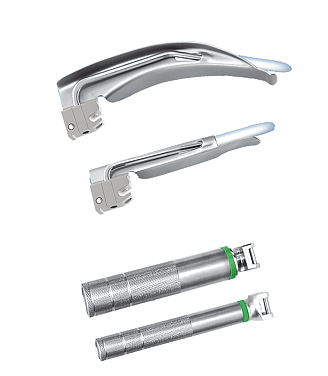
A neonate at 30 weeks gestational age is considered moderately to late preterm. Typical birth weight ranges from approximately 1,000 to 1,500 grams (1.0 to 1.5 kg), with a crown-to-heel length of about 39-42 cm. These infants are viable but physiologically immature. Their airways present specific challenges: an anterior and cephalad (high) larynx, a relatively large tongue, a floppy, often omega-shaped epiglottis, and a narrow subglottic area (cricoid ring). Any instrumentation must be exquisitely precise to avoid trauma, edema, or failed intubation, which can rapidly lead to hypoxia and bradycardia.
For a 30-week infant, the evidence-based and consensus-driven answer is clear:
Primary Recommendation: A Miller (straight) blade, size 0.
Supporting Recommendation: Have a Miller size 00 (or "premie" blade) immediately available as a backup.
1. Weight-Based Standard: The most reliable initial guide for laryngoscope blade selection in neonates is weight. The standard pediatric advanced life support (PALS) and neonatal resuscitation program (NRP) guidelines dictate:
- < 1 kg: Miller size 00.
- 1 kg – 2 kg: Miller size 0.
Since a 30-week infant typically falls within the 1-1.5 kg range, the Miller 0 is the primary size.
2. Gestational Age Correlation: At 30 weeks, the anatomical development, while immature, aligns with this weight-based model for blade selection. The oropharyngeal space is tiny, and the epiglottis is particularly floppy, necessitating a blade designed for direct control.
3. Why a Miller (Straight) Blade? The choice of blade type is non-negotiable for preterm infants. The Miller blade's straight design allows the tip to be placed *posterior to (underneath)* the epiglottis to lift it directly. This provides the most reliable view of the vocal cords, which are already anteriorly positioned. A curved Macintosh blade, designed to sit in the vallecula, is ineffective for lifting the floppy preterm epiglottis and occupies excessive space in the minute oral cavity.
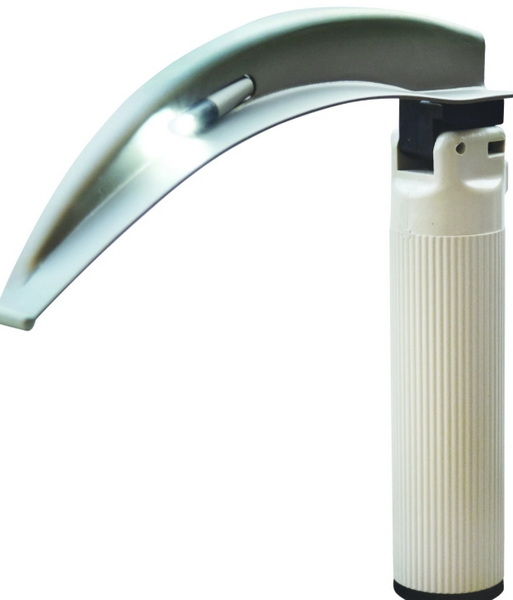
While weight provides the initial guide, the definitive bedside check involves comparing the laryngoscope blade to the infant's anatomy:
- Technique: Gently place the Miller 0 blade alongside the infant's face, with the blade tip at the angle of the mandible (the jawbone's corner) and the handle pointing down the chest.
- Ideal Fit: The tip of the blade should reach, but not significantly surpass, the angle of the mandible.
- Clinical Decision: If the blade appears excessively long (tip well past the mandible), immediately switch to the Miller 00. If it appears short, a Miller 1 could be considered, though this is highly unlikely for a 30-week infant. The "have the next size ready" rule is paramount.
The advent of neonatal video laryngoscope systems represents a significant advancement. These devices incorporate a micro-camera at the tip of a size 0 or 00 blade.
- Application: Using a neonatal video laryngoscope does not change the fundamental size selection—you would use a video laryngoscope blade designated as size 0. The difference lies in the visualization method.
Advantages:
- Superior View: Provides a magnified, high-resolution image on a screen, often improving glottic visualization without requiring excessive lifting force.
- Reduced Force: Minimizes the risk of palatal or gum trauma.
- Educational & Team-Based: Allows the supervising clinician, often the medical image processor screen, to guide the intubator and for the team to visualize tube placement simultaneously.
- Documentation: Integrated recording via the medical image processor can be used for review, quality assurance, and training.
- Consideration: The bulkier handle of some video laryngoscope units may require slight adjustment in hand positioning in the very confined space around a neonatal incubator.
Selecting the correct laryngoscope blade is only one element of a prepared approach. For a 30-week intubation, the following must be readied:
- Endotracheal Tube (ETT): Typically an uncuffed tube, size 2.5 mm internal diameter (ID) for infants at the lower end of the weight range (~1.0 kg) and 3.0 mm ID for those closer to 1.5 kg.
- Stylet: A small, flexible stylet may be used to provide a gentle curvature (a "hockey stick" shape) but must not protrude beyond the ETT tip to avoid tracheal injury.
- Suction: Functional suction with a premature-sized catheter (8F or 10F).
- Additional Airway Adjuncts: A flexible laryngoscope (though more often used for diagnostic nasolaryngoscopy) may be part of the difficult airway cart for scenarios where direct/video laryngoscopy fails.
- Personnel: At least two experienced providers are standard—one to perform the laryngoscopy and intubation, and one to handle monitoring, medication, and assistance.
The reliability of this life-or-death procedure rests on the precision engineering of laryngoscope manufacturers. For neonatal blades, tolerances are microscopic.
- Precision Dimensionality: A Miller 0 blade must be identical in every production run. Inconsistent length or width can lead to clinical failure.
- Material and Finish: Blades must have an ultra-smooth, atraumatic finish to prevent tissue laceration. They must withstand repeated sterilization without corroding.
- Light Source: The bulb or LED must provide bright, white, cool light without flicker, crucial for illuminating the deep, small orifice.
- Innovation for the Smallest Patients: Leading laryngoscope manufacturers, including those developing advanced video laryngoscope systems, are now producing high-quality, cost-effective disposable laryngoscope blades in neonatal sizes. This addresses infection control concerns in the NICU and ensures a consistently bright light source for every intubation attempt.
For the 30-week, approximately 1.0-1.5 kg neonate, the meticulously calibrated answer is a Miller size 0 straight laryngoscope blade. This selection is firmly rooted in weight-based resuscitation guidelines and is anatomically justified by the need to directly control the floppy epiglottis of the preterm infant. The mandibular angle check provides the essential bedside verification. While neonatal video laryngoscope technology enhances visualization and safety, it adheres to these same foundational sizing principles. The procedure's success is ultimately guaranteed by the flawless execution of the clinician and the manufacturing precision of the laryngoscope producer. In neonatal intensive care, where every breath is a triumph of technology and technique, the correct laryngoscope size is the indispensable first step in securing a future.
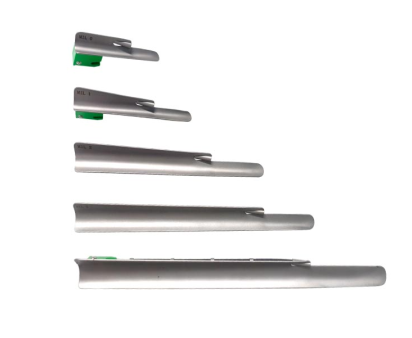
This is a critical observation. If the Miller 0 blade tip extends well beyond the angle of the infant's mandible during the anatomical check, it is too long. You must immediately switch to a smaller blade: the Miller size 00 (often called a "premie" blade). Using an overly long blade risks esophageal insertion and trauma to the posterior pharynx. This scenario underscores why having multiple sizes prepared is mandatory.
Yes, absolutely, and it is increasingly recommended. You must use a video laryngoscope system that offers a dedicated neonatal blade (size 0 or 00). The camera and light at the tip provide a superior, magnified view on the screen, which can improve first-attempt success and reduce the amount of lifting force needed. The principles of blade size selection (Miller 0 based on weight) remain exactly the same whether using a direct or video laryngoscope.
The anatomy dictates the tool. Preterm infants have a floppy, omega-shaped epiglottis that lies posterior to the tongue. The straight Miller blade is designed to be advanced underneath this epiglottis to lift it directly, revealing the glottis. The curved Macintosh blade is designed to sit in the vallecula (the space between the base of the tongue and the epiglottis) and lift indirectly. This indirect method is ineffective on the floppy, poorly supported preterm epiglottis and often results in a poor view.
A complete setup is non-negotiable:
- Correct ETT: Size 2.5 or 3.0 mm uncuffed tube.
- Stylet: To shape the ETT, ensuring it does not protrude.
- Suction: With a soft, premature-sized catheter (e.g., 8F).
- Securing Device: Tape or a commercial securement device.
- Confirmation Tools: A CO2 detector (colorimetric or waveform capnography) and a stethoscope for bilateral breath sound confirmation.
- Medications: Premedication (often a vagolytic, analgesic, and sedative) per NICU protocol.
Yes, when sourced from reputable laryngoscope manufacturers, disposable blades are clinically effective and enhance safety. They offer several advantages in the NICU:
- Guaranteed Sterility: Each blade is new and sterile, eliminating any risk of cross-contamination from inadequate reprocessing.
- Consistent, Bright Light: Every blade has a new, optimally bright LED light source.
- No Maintenance: Eliminates the costs and labor of cleaning, bulb replacement, and electrical testing required for reusable handles and blades.
Their performance is designed to meet the same stringent standards as reusable blades.
[1] https://www.aap.org/en/clinical-care/neonatal-resuscitation-program/
[2] https://www.ncbi.nlm.nih.gov/books/NBK537278/
[3] https://pediatrics.aappublications.org/content/147/1/e2020038505
[4] https://www.rcoa.ac.uk/safety-standards-quality/guidance-resources/pediatric-airway-guidelines


