
Views: 222 Author: Lake Publish Time: 2026-01-28 Origin: Site


Content Menu
● Fundamentals of Personal Protective Equipment Sequencing
>> The Hierarchy of Protection Principle
>> Historical Evolution of PPE Protocols
>> Regulatory and Guideline Framework
● The Correct Sequence: Rationale and Evidence
>> Establishing a Continuous Barrier
>> Contamination Pattern Studies
>> Doffing Sequence Considerations
● Clinical Scenarios and Special Considerations
>> Standard and Contact Precautions
>> Surgical and Sterile Procedures
>> Extended Use and Limited Reuse Scenarios
>> Specific Patient Populations
● Practical Implementation and Training Considerations
>> Facility-Specific Protocol Development
>> Human Factors and Compliance Strategies
● Common Misconceptions and Error Prevention
>> The "Quick Access" Misconception
>> Variability in Gown and Glove Designs
>> Cultural and Historical Practices
● The Role of PPE in Comprehensive Infection Prevention
>> Integration with Hand Hygiene
>> Environmental Contamination Considerations
>> Transmission-Based Precautions
● Quality Improvement and Monitoring
>> Compliance Monitoring Methods
>> Feedback and Corrective Action
>> Continuous Protocol Evaluation
● Frequently Asked Questions (FAQ)
>> 1. Why is it so important to put medical gloves on over the isolation gown cuffs?
>> 2. Does this sequencing apply to all types of isolation gowns and medical gloves?
>> 3. What if I need to change my medical gloves during patient care while wearing an isolation gown?
>> 4. How does this sequencing apply in surgical settings with sterile gowns and gloves?
>> 5. Are there any exceptions to the rule of putting medical gloves on over isolation gown cuffs?
The sequence of donning personal protective equipment (PPE) represents a critical component of infection prevention and control protocols in healthcare settings worldwide. Among the most common and practically significant questions is whether medical gloves should be placed on over or under the isolation gown. This seemingly simple procedural detail carries substantial implications for barrier effectiveness, contamination risk, and ultimately, the safety of both healthcare workers and patients. This article provides a comprehensive examination of the evidence-based protocols, rationale, and practical considerations governing the proper order of donning isolation gowns and medical gloves, with particular attention to different clinical scenarios and evolving standards in infection control.
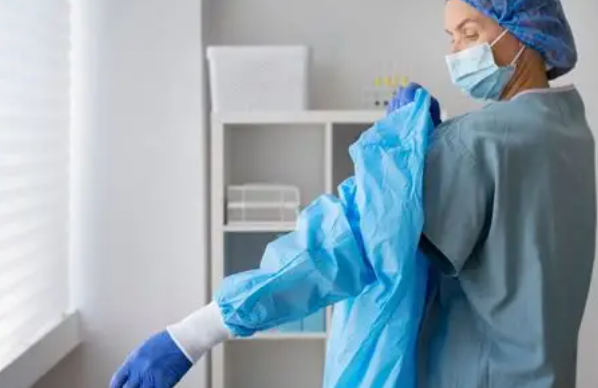
The order of donning PPE follows a logical hierarchy designed to create a continuous, unbroken barrier between the healthcare worker and potential contaminants. The fundamental principle guiding this sequence is to establish protection from the inside out—donning items in an order that minimizes contamination of both the wearer and the equipment itself. For the combination of isolation gown and medical gloves, this principle specifically dictates that the gown should be donned first, followed by the medical gloves, which are then pulled over the gown's cuffs. This sequence ensures that the medical gloves create a secure seal over the gown sleeves, preventing pathogens from accessing the healthcare worker's skin through gaps at the wrist interface.
Current protocols for donning isolation gowns and medical gloves have evolved significantly over decades of infection control research and practical experience. Early practices showed considerable variation between institutions, but systematic studies of contamination patterns and outbreak investigations gradually established the superiority of specific sequences. Major public health events, particularly the HIV/AIDS epidemic in the 1980s and the more recent COVID-19 pandemic, accelerated standardization efforts and highlighted the critical importance of consistent, evidence-based PPE donning and doffing procedures.
Multiple authoritative bodies provide specific guidance on the proper sequencing of isolation gowns and medical gloves. The Centers for Disease Control and Prevention (CDC) clearly states that when wearing both an isolation gown and medical gloves, the gown should be donned first, followed by the gloves, which should cover the gown's cuffs. Similar guidance is provided by the World Health Organization (WHO), the Occupational Safety and Health Administration (OSHA), and various professional societies including the Association for Professionals in Infection Control and Epidemiology (APIC). These guidelines are based on systematic evaluations of contamination risks and are designed to be applicable across diverse healthcare settings.
The primary rationale for donning medical gloves over the isolation gown cuffs is to establish a continuous protective barrier without gaps. When medical gloves are worn under the gown, a vulnerable gap exists at the wrist where the glove ends and the gown sleeve begins. This area is particularly prone to contamination during patient care activities, as fluids can wick up the sleeve through capillary action if the isolation gown fabric comes into contact with contaminants. By pulling the medical gloves over the gown cuffs, this potential entry point is sealed, significantly reducing the risk of skin exposure to infectious materials.
Multiple observational and simulation studies have demonstrated the practical benefits of the correct donning sequence. Research utilizing fluorescent marker solutions to simulate body fluids has consistently shown that when medical gloves are worn under the isolation gown, contamination frequently reaches the healthcare worker's skin at the wrist area during simulated patient care activities. In contrast, when medical gloves are properly donned over the gown cuffs, contamination remains on the exterior PPE surface without reaching the skin. These findings have been replicated across various clinical scenarios, reinforcing the evidence-based nature of current protocols.
The donning sequence directly influences the safety of the doffing (removal) process. When medical gloves are worn over the isolation gown cuffs, they can be removed in a manner that minimizes contact between contaminated glove exteriors and bare skin. The recommended technique involves grasping the exterior of one glove with the opposite gloved hand to peel it off, then sliding fingers under the remaining glove to remove it without touching the exterior. This process is more effective when the gloves are positioned over rather than under the gown sleeves, as it allows for cleaner access to the glove-gown interface during removal.
For standard precautions and contact precautions—the most common indications for isolation gown use—the sequence of gown first, then medical gloves over the gown cuffs, is universally recommended. This applies to routine patient care activities where contact with blood, body fluids, secretions, excretions, or contaminated environmental surfaces is anticipated. Examples include wound care, management of incontinence, handling of contaminated linens, and care for patients with known or suspected infections transmitted by contact such as Clostridioides difficile, norovirus, or multidrug-resistant organisms.
In surgical settings or during sterile procedures, the sequencing of sterile isolation gowns and sterile medical gloves follows a more specialized protocol designed to maintain asepsis. The sterile gown is typically donned first using a technique that preserves the sterility of the exterior gown surfaces. Sterile medical gloves are then donned using closed gloving technique, with the gloves positioned to cover the gown cuffs completely. This sequence not only maintains the sterile field but also creates the same continuous barrier essential for preventing microbial transfer in either direction.
During public health emergencies or supply shortages that necessitate extended use or limited reuse of PPE, proper sequencing becomes even more critical. When reusing an isolation gown between patients while changing medical gloves, maintaining the correct sequence helps preserve the relative cleanliness of the gown's sleeves. Healthcare workers must be particularly vigilant about performing hand hygiene before and after glove changes and avoiding contamination of the gown during the process. These challenging scenarios highlight the fundamental importance of the basic principle: medical gloves as the final barrier, donned over the isolation gown.
Certain patient populations present unique considerations for PPE use. For patients with extensive burns or compromised skin integrity, the continuous barrier provided by medical gloves over isolation gown cuffs is especially important in preventing transmission of environmental pathogens to vulnerable skin surfaces. Similarly, when caring for immunocompromised patients requiring protective isolation, the proper sequence helps prevent healthcare workers from transferring pathogens from their own skin or clothing to these highly susceptible individuals.
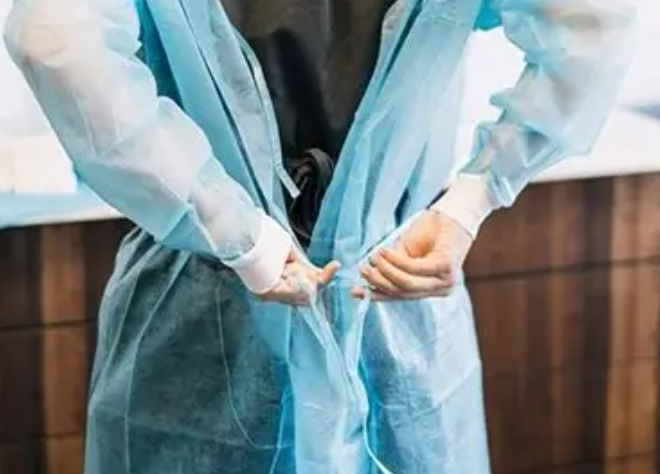
Effective implementation of proper PPE sequencing requires comprehensive, competency-based training programs. Such training should move beyond simple demonstrations to include:
- Hands-on practice with donning and doffing sequences using actual PPE
- Simulation exercises with fluorescent markers or other visualization techniques to demonstrate contamination risks
- Scenario-based training that reinforces the application of protocols in specific clinical situations
- Regular competency assessments with direct observation and feedback
Training should emphasize the "why" behind the protocols as strongly as the "how," as understanding the rationale improves compliance, especially in high-stress situations.
While evidence-based guidelines provide the foundation, healthcare facilities must develop specific protocols tailored to their unique environments, equipment, and patient populations. Key considerations include:
- The specific types of isolation gowns and medical gloves used in the facility, as design variations may affect optimal donning techniques
- The physical layout of patient care areas and availability of donning/doffing spaces
- The mix of clinical scenarios commonly encountered
- Integration with other infection control practices such as hand hygiene and environmental cleaning
Protocols should be clearly documented, readily accessible, and regularly reviewed and updated based on new evidence or changes in available PPE.
Achieving consistent compliance with proper PPE sequencing requires attention to human factors and implementation science. Effective strategies include:
- Placing visual reminders (posters, diagrams) at the point of care, particularly in areas where isolation gowns are frequently used
- Incorporating PPE donning/doffing checks into existing safety processes such as time-outs or handoff communications
- Engaging frontline staff in protocol development and improvement to increase ownership and identify practical barriers
- Creating a culture of peer accountability where staff respectfully remind each other of proper techniques
- Recognizing and addressing common misconceptions or "shortcuts" that may compromise the proper sequence
Some healthcare workers mistakenly believe that wearing medical gloves under the isolation gown allows quicker access if gloves need to be changed during patient care. However, this practice actually increases contamination risk, as the gown cuffs become contaminated when removing the first pair of gloves, potentially transferring pathogens to the new gloves during the change process. Proper training should emphasize that when glove changes are needed during patient care, they should be performed with careful technique regardless of the initial donning sequence, and that the correct sequence actually facilitates safer glove changes.
The increasing variety of isolation gown and medical glove designs available on the market has led to some confusion about proper sequencing. Some newer gown designs feature extended cuffs or thumb loops intended to secure the gown in place, which might be misinterpreted as indicators that gloves should go underneath. Similarly, certain medical glove designs with extended cuffs might create uncertainty about proper positioning relative to gown sleeves. Clear protocols should address the specific PPE products used in each facility, with training adapted accordingly.
In some settings, longstanding cultural or historical practices may conflict with evidence-based protocols. For example, in certain specialties or regions, traditional teaching may have emphasized different sequencing approaches. Changing these established practices requires respectful acknowledgment of existing traditions while clearly presenting the evidence supporting current standards. Sharing contamination studies and outbreak investigations that demonstrate the consequences of improper sequencing can be particularly effective in these situations.
The proper sequencing of isolation gowns and medical gloves must be understood within the broader context of hand hygiene, which remains the single most important infection prevention practice. Medical gloves are not a substitute for hand hygiene; rather, they are a complementary measure used when hand contamination is anticipated. Hand hygiene must be performed immediately before donning medical gloves and immediately after removing them, regardless of the sequencing with the isolation gown. Protocols should emphasize this integration rather than presenting PPE sequencing in isolation.
Proper PPE sequencing also relates to environmental contamination risks. When medical gloves are worn over isolation gown cuffs, they are less likely to become caught or pulled during patient care activities, reducing the risk of inadvertent contamination of the environment or the healthcare worker's clothing underneath the gown. This is particularly important in contact precaution settings, where environmental surfaces may serve as reservoirs for pathogens that can be transmitted to subsequent patients or healthcare workers.
The sequencing of isolation gowns and medical gloves takes on additional importance when used as part of transmission-based precautions beyond standard contact precautions. For droplet or airborne precautions in combination with contact precautions, the creation of a continuous barrier at the wrist becomes even more critical, as it prevents pathogens from reaching the skin where they might be transferred to mucous membranes during subsequent activities like face touching. In these scenarios, the proper sequence is non-negotiable, as the consequences of breach can be severe.
Healthcare facilities should implement systematic approaches to monitor compliance with proper PPE sequencing:
- Direct observation by infection prevention staff or trained observers using standardized tools
- Video monitoring in high-risk areas (with appropriate privacy protections)
- Self-reporting mechanisms for near misses or errors
- Integration of PPE sequencing checks into existing quality audits
Monitoring data should be analyzed regularly to identify patterns, training needs, or systemic barriers to compliance.
Monitoring should be coupled with timely, constructive feedback to healthcare workers and units. Effective feedback strategies include:
- Immediate, non-punitive correction when errors are observed
- Aggregate data sharing with clinical units to identify improvement opportunities
- Recognition of units or individuals demonstrating excellent compliance
- Root cause analysis for persistent non-compliance to identify and address underlying factors
Corrective actions should focus on system improvements rather than individual blame whenever possible.
PPE protocols, including sequencing of isolation gowns and medical gloves, should be subject to continuous evaluation and improvement. This includes:
- Regular review of new evidence and guidelines
- Assessment of new PPE products and their implications for donning/doffing sequences
- Analysis of compliance data to identify protocol elements that may be unclear or impractical
- Engagement of frontline staff in protocol refinement
The goal should be protocols that are simultaneously evidence-based, practical, and consistently followed.
The proper sequencing of personal protective equipment—specifically, donning medical gloves over isolation gown cuffs—represents a fundamental, evidence-based practice in infection prevention and control. This sequence creates a continuous barrier that minimizes healthcare worker exposure to infectious materials and prevents transmission of pathogens between patients. While seemingly simple, correct implementation requires comprehensive training, attention to human factors, and integration with broader infection control practices including hand hygiene. Healthcare facilities must develop clear protocols tailored to their specific environments and PPE products, supported by ongoing training, monitoring, and quality improvement. As PPE technologies evolve and new evidence emerges, protocols should be regularly reviewed and updated. Ultimately, consistent adherence to proper PPE sequencing, including the correct relationship between isolation gowns and medical gloves, contributes significantly to the safety of both healthcare workers and the patients they serve, forming an essential component of comprehensive infection prevention in modern healthcare delivery.
Contact us to get more information!
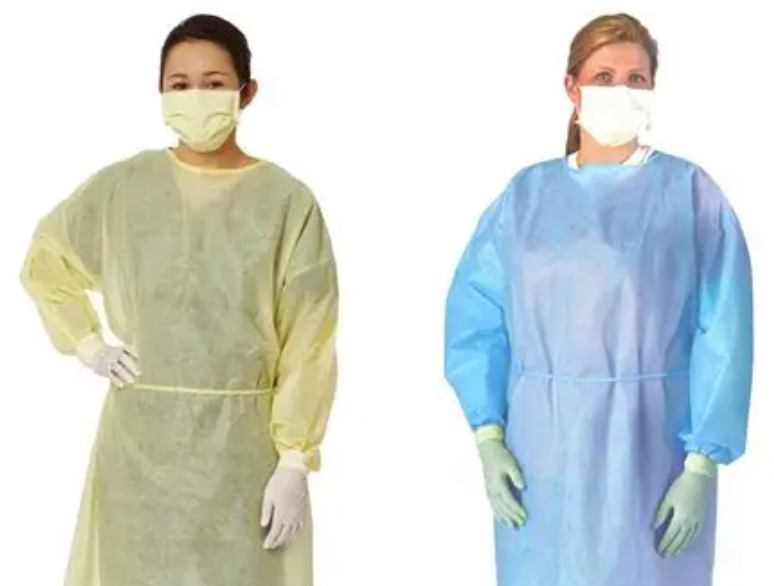
Putting medical gloves on over the isolation gown cuffs creates a continuous barrier without gaps at the wrist area. This prevents contaminants from wicking up the gown sleeve and reaching the healthcare worker's skin. Studies using fluorescent tracers have consistently shown that when gloves are worn under the gown, the wrist area frequently becomes contaminated during patient care activities, while the over-the-cuff approach maintains an effective seal against fluid penetration.
Yes, the fundamental principle applies regardless of the specific isolation gown or medical glove design. Whether using disposable or reusable gowns, latex or nitrile gloves, or various cuff designs, the goal remains the same: to create a continuous barrier with gloves sealed over gown cuffs. Some specialized PPE may have specific manufacturer instructions that should be followed, but these typically align with the standard sequencing approach. Training should address the specific products used in each healthcare facility.
When glove changes are necessary during patient care, they should be performed carefully to avoid contaminating the isolation gown sleeves or your hands. The correct initial sequence (gloves over gown) actually facilitates safer glove changes, as the gown cuffs remain protected under the first pair of gloves. Remove the soiled gloves using proper technique, perform hand hygiene, then don a new pair of gloves, again pulling them over the gown cuffs. Avoid touching the exterior of the gown sleeves during this process.
In surgical settings, the same fundamental principle applies but is implemented through specialized sterile technique. The sterile gown is donned first using methods that maintain the sterility of its exterior surfaces. Sterile medical gloves are then donned using techniques like closed gloving, with the gloves positioned to completely cover the gown cuffs. This creates the same continuous barrier while maintaining the sterile field necessary for surgical procedures.
Standard infection control guidelines do not recognize exceptions to this sequencing when both an isolation gown and medical gloves are indicated. Some healthcare workers have suggested exceptions for specific procedures or when using certain PPE designs, but these are not supported by evidence or authoritative guidelines. The continuous barrier principle applies universally across clinical scenarios where both gown and glove protection are needed. If specific circumstances seem to challenge this standard, the appropriate response is to consult infection control specialists rather than create ad hoc exceptions.
[1] https://www.cdc.gov/infection-control/hcp/isolation-precautions/index.html
[2] https://www.cdc.gov/infection-control/hcp/healthcare-personnel-ppe/index.html
[3] https://www.who.int/publications/i/item/WHO-2019-nCoV-IPC-2020.4
[4] https://www.osha.gov/laws-regs/regulations/standardnumber/1910/1910.1030
[5] https://www.fda.gov/medical-devices/personal-protective-equipment-infection-control/medical-gloves
[6] https://www.apic.org/resources/topic-specific-infection-prevention/isolation-precautions/


