


Content Menu
● Fundamental Components and Design
● Technological Innovations and Working Mechanism
● Clinical Applications and Advantages
● Comparison with Traditional Direct Laryngoscopy
● Types and Variations in Design
● Implementation in Different Clinical Settings
● Training and Proficiency Development
● Maintenance and Infection Control Considerations
● Future Developments and Technological Trends
>> 1. How does a video laryngoscope differ from a traditional laryngoscope?
>> 2. What are the main advantages of using a video laryngoscope?
>> 3. Is there a learning curve when switching to video laryngoscopy?
>> 4. Can video laryngoscopes be used for all intubations?
>> 5. How do you maintain and clean a video laryngoscope?
The video laryngoscope represents a revolutionary advancement in airway management technology, transforming the traditional approach to endotracheal intubation. A video laryngoscope is a sophisticated medical device that integrates digital imaging technology with conventional laryngoscopy principles to provide enhanced visualization of the laryngeal structures. Unlike traditional direct laryngoscope systems that require a direct line of sight between the operator's eye and the patient's vocal cords, the video laryngoscope utilizes a miniature camera positioned at the tip of the blade to transmit real-time video images to a display screen. This technological innovation in laryngoscope design has significantly improved the success rates of difficult intubations while reducing complications associated with airway management. The evolution of the video laryngoscope marks a fundamental shift in how healthcare providers approach one of medicine's most critical procedures, offering improved visualization, enhanced teaching capabilities, and greater procedural success across diverse clinical scenarios.

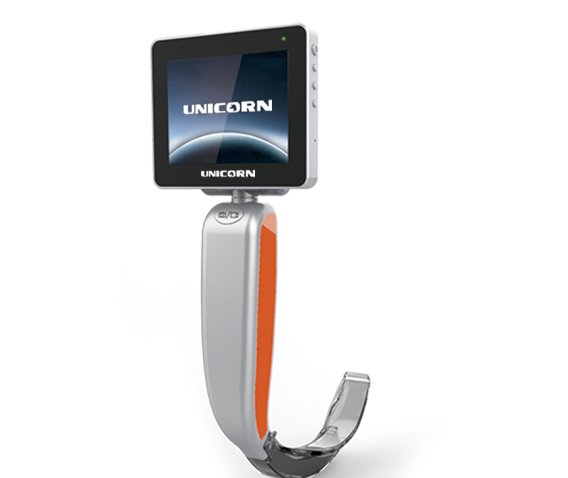
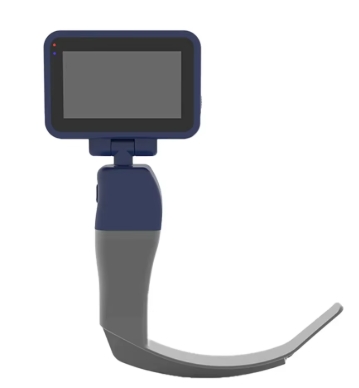
The video laryngoscope system comprises several integrated components that work together to provide superior airway visualization. At the core of any video laryngoscope is the blade component, which houses a miniature high-resolution camera and LED light source at its distal tip. This laryngoscope blade design often features a more pronounced curvature compared to traditional Macintosh blades, optimized for the camera's viewing angle rather than direct line-of-sight visualization. The camera technology in modern video laryngoscope systems typically employs CMOS or CCD sensors capable of delivering high-definition video quality, often with anti-fogging capabilities and adjustable focus. The illumination system in a video laryngoscope provides bright, shadow-free lighting of the airway structures, a significant improvement over conventional laryngoscope bulbs.
The handle of a video laryngoscope contains the power source, typically rechargeable batteries, and often incorporates control interfaces for adjusting screen brightness, image capture, and other functions. The display component of the video laryngoscope varies between systems, ranging from integrated screens mounted directly on the handle to separate monitors that can be positioned for optimal viewing. Many video laryngoscope systems include additional features such as video recording capabilities, image storage, and connectivity options for transmitting footage to external displays or electronic medical records. The integration of these components creates a comprehensive video laryngoscope system that enhances both the technical and educational aspects of airway management.
The working mechanism of a video laryngoscope represents a significant departure from traditional laryngoscopy principles. When a healthcare provider inserts the video laryngoscope blade into a patient's mouth, the miniature camera at the tip captures real-time video of the airway anatomy and transmits this footage to the display screen. This technological approach eliminates the need for aligning the oral, pharyngeal, and tracheal axes that traditional laryngoscope use requires. The video laryngoscope effectively creates a "virtual eye" at the blade tip, allowing operators to see around anatomical corners and obstacles that would obstruct direct vision with a conventional laryngoscope.
Modern video laryngoscope systems incorporate several technological innovations that enhance their functionality. Many devices feature image processing algorithms that optimize video quality in challenging lighting conditions and automatically adjust for secretions or fogging. The display technology in advanced video laryngoscope models often includes anti-glare screens visible in various ambient lighting conditions, with some systems offering picture-in-picture capabilities or integrated recording for documentation and teaching purposes. The integration of these technologies in the video laryngoscope has transformed airway management from a procedure reliant on optimal patient positioning and operator viewpoint to one guided by digital visualization that can be shared among multiple providers.
The video laryngoscope offers numerous clinical advantages across various healthcare settings, making it an invaluable tool for airway management. In difficult airway scenarios, the video laryngoscope significantly improves first-pass success rates by providing a superior view of the glottic structures compared to direct laryngoscopy. This advantage of the video laryngoscope is particularly valuable in patients with limited mouth opening, restricted neck mobility, or anatomical variations that challenge conventional laryngoscope use. The video laryngoscope has become the preferred tool in many emergency departments, intensive care units, and operating rooms for managing anticipated difficult airways, potentially reducing the need for surgical airway access.
The educational benefits of the video laryngoscope represent another significant advantage in clinical practice. Unlike traditional laryngoscope procedures where only the operator can visualize the airway, the video laryngoscope display allows supervisors, trainees, and assisting staff to simultaneously view the intubation process. This feature of the video laryngoscope enhances teaching effectiveness, facilitates real-time guidance, and promotes team coordination during critical airway management. Additionally, the video laryngoscope reduces the need for excessive force during intubation attempts by providing clear visualization with minimal tissue displacement, potentially decreasing the incidence of dental trauma and soft tissue injury associated with conventional laryngoscope use.
Understanding the differences between video laryngoscope systems and traditional direct laryngoscope devices is crucial for appreciating the technological evolution in airway management. The fundamental distinction lies in the visualization method: while a conventional laryngoscope requires a direct line of sight from the operator's eye to the vocal cords, the video laryngoscope provides an indirect view via digital video transmission. This difference means that with a video laryngoscope, the operator's eye level can remain at the patient's mouth level while still maintaining visualization of the glottic structures, unlike with a traditional laryngoscope where the operator often needs to position themselves at the head of the bed and elevate their viewpoint.
The blade design also differs significantly between conventional laryngoscope systems and video laryngoscope devices. Traditional laryngoscope blades, whether Macintosh or Miller designs, are optimized for creating a direct visual pathway. In contrast, video laryngoscope blades typically feature a more pronounced curvature and different angulation to optimize the camera's field of view rather than the operator's direct line of sight. This design difference in the video laryngoscope often requires a different technique for tube delivery, sometimes necessitating stylets with specific curvature or different approaches to tube advancement despite excellent glottic visualization. The learning curve for video laryngoscope use differs from traditional laryngoscope technique, though skills generally transfer well between the modalities.
The video laryngoscope market offers various designs and configurations to suit different clinical needs and preferences. Integrated video laryngoscope systems feature a screen mounted directly on the device handle, creating a self-contained unit that is highly portable and immediately ready for use. Alternatively, some video laryngoscope designs utilize separate cart-based monitors or connections to existing hospital display systems, offering larger screen size at the cost of portability. Another variation in video laryngoscope technology includes devices that incorporate traditional direct laryngoscope blades with attachable video components, providing flexibility to switch between direct and video visualization with the same device.
Video laryngoscope systems also vary in their blade options, with some offering single-use disposable blades and others utilizing reusable blades that require sterilization between patients. The choice between these video laryngoscope configurations often depends on institutional preferences regarding infection control, maintenance requirements, and cost considerations. Recent innovations in video laryngoscope technology include wireless systems that transmit video to tablets or other mobile devices, enhancing flexibility in various clinical environments. Some specialized video laryngoscope designs incorporate channel-guided blades that direct the endotracheal tube toward the glottic opening, while others maintain a more traditional blade design without tube channels, preserving operator flexibility in tube manipulation.
The implementation of video laryngoscope technology varies across different clinical environments, each with unique considerations and applications. In emergency departments, the video laryngoscope has become an essential tool for managing difficult airways in unpredictable situations, often serving as the primary intubation device rather than a rescue technique. The rapid setup and immediate visualization provided by the video laryngoscope make it particularly valuable in emergency settings where patient conditions may preclude optimal positioning for direct laryngoscopy. Many emergency medicine protocols now recommend the video laryngoscope as the initial approach for all intubations, not just anticipated difficult airways.
In operating rooms, the video laryngoscope finds application both for routine intubations and for managing patients with known difficult airways. Anesthesiologists increasingly utilize the video laryngoscope for patients with obesity, limited neck mobility, or other challenging anatomical features that complicate traditional laryngoscope use. The video laryngoscope has also proven valuable in intensive care units, where patients often present with evolving airway edema, secretions, or other factors that make serial intubations challenging. In prehospital care, portable video laryngoscope systems have enhanced paramedics' ability to manage airways in suboptimal conditions outside the hospital environment. The versatility of the video laryngoscope across these diverse settings underscores its value as a comprehensive airway management tool.
Developing proficiency with the video laryngoscope requires specific training approaches that acknowledge both its similarities to and differences from traditional laryngoscopy. While the fundamental principles of airway management remain consistent, the video laryngoscope introduces unique technical considerations related to camera navigation, screen interpretation, and tube delivery technique. Training programs for video laryngoscope use typically incorporate simulation-based learning that allows practitioners to develop skills in a controlled environment before clinical application. This approach to video laryngoscope training helps users adapt to the hand-eye coordination challenges of manipulating the blade based on screen visualization rather than direct sight.
An important aspect of video laryngoscope training involves recognizing and interpreting the anatomical views displayed on the screen, which may differ from the familiar perspectives of direct laryngoscopy. The depth perception and spatial relationships visualized through a video laryngoscope can initially present interpretation challenges for operators accustomed to traditional laryngoscope views. Additionally, video laryngoscope training must address the technique for guiding the endotracheal tube into view and advancing it through the vocal cords, which may require different maneuvers than with direct laryngoscopy. Despite these learning considerations, studies generally indicate that the video laryngoscope has a favorable learning curve, with novice operators often achieving proficiency more quickly than with traditional laryngoscope techniques.
Proper maintenance of the video laryngoscope is essential for ensuring device reliability and longevity while adhering to infection control standards. The complex electronic components of a video laryngoscope require careful handling and specific cleaning protocols that differ from those for conventional laryngoscope systems. Reusable video laryngoscope blades typically undergo high-level disinfection or sterilization between uses, with manufacturers providing specific instructions compatible with their device's materials and electronic components. The handles of reusable video laryngoscope systems require regular inspection for integrity of seals, battery performance, and screen functionality.
Infection control considerations for video laryngoscope use have led to the development of single-use disposable options that eliminate reprocessing concerns. These disposable video laryngoscope systems provide guaranteed sterility for each use while maintaining the visual quality of reusable systems. For institutions utilizing reusable video laryngoscope devices, establishing clear protocols for cleaning, disinfection, and storage is essential for preventing healthcare-associated infections. The display components of video laryngoscope systems, whether integrated or separate, also require regular cleaning according to manufacturer guidelines. These maintenance and infection control aspects represent important operational considerations when implementing video laryngoscope technology in clinical practice.
The evolution of video laryngoscope technology continues with several promising developments on the horizon. Future video laryngoscope systems are likely to incorporate enhanced imaging capabilities such as digital zoom, image stabilization, and augmented reality overlays that highlight anatomical landmarks. The integration of artificial intelligence with video laryngoscope technology represents another exciting frontier, with potential applications including automated identification of anatomical structures, difficulty prediction, and real-time guidance during tube advancement. These AI-enhanced video laryngoscope systems could potentially provide decision support, particularly for less experienced operators or in challenging clinical scenarios.
Connectivity features in video laryngoscope systems are expected to expand, enabling seamless integration with hospital electronic medical records for automatic procedure documentation and data storage. Miniaturization trends may lead to even more compact video laryngoscope designs without compromising screen size or image quality. The development of more affordable video laryngoscope options could further increase accessibility in resource-limited settings. As the technology matures, future video laryngoscope systems may incorporate additional functional capabilities such as integrated capnography or ventilation monitoring. These advancing technologies promise to further enhance the video laryngoscope as a comprehensive airway management platform rather than simply a visualization tool.
The video laryngoscope represents a transformative advancement in airway management technology, offering significant improvements over traditional direct laryngoscopy in visualization, success rates, and educational value. This sophisticated medical device integrates digital imaging technology with ergonomic design to provide clear, real-time visualization of the laryngeal structures, overcoming many of the limitations associated with conventional laryngoscope systems. The clinical applications of the video laryngoscope span multiple healthcare settings, from emergency departments and operating rooms to intensive care units and prehospital environments. As the technology continues to evolve, the video laryngoscope is likely to incorporate even more advanced features such as artificial intelligence integration and enhanced connectivity. Despite its technological sophistication, the successful implementation of video laryngoscope technology ultimately depends on proper training, appropriate maintenance, and clinical judgment regarding its optimal application. The video laryngoscope has firmly established itself as an essential tool in modern airway management, contributing to improved patient safety and procedural outcomes across diverse clinical scenarios.
A video laryngoscope differs from a traditional laryngoscope primarily in its visualization method. While a conventional laryngoscope requires a direct line of sight from the operator's eye to the vocal cords, a video laryngoscope utilizes a miniature camera at the blade tip to transmit real-time video to a display screen. This fundamental difference allows the video laryngoscope to provide visualization around anatomical obstacles that might obstruct direct vision with a traditional laryngoscope. Additionally, the video laryngoscope typically features a more pronounced blade curvature optimized for the camera's field of view rather than for direct line-of-sight alignment.
The video laryngoscope offers several significant advantages over traditional laryngoscopy, including improved glottic visualization particularly in difficult airway scenarios, higher first-pass success rates for intubation, and reduced need for excessive lifting forces that can cause tissue trauma. The video laryngoscope also provides educational benefits by allowing multiple providers to view the procedure simultaneously, enhancing training and team coordination. Additionally, the video laryngoscope often requires less optimal patient positioning compared to direct laryngoscopy, making it valuable in situations where neck movement must be minimized, such as in patients with suspected cervical spine injuries.
While there is a learning curve when transitioning from traditional laryngoscope use to video laryngoscope technology, most providers adapt relatively quickly. The video laryngoscope introduces new technical considerations related to camera navigation, screen interpretation, and tube delivery technique that differ from direct laryngoscopy. However, studies generally indicate that the video laryngoscope has a favorable learning curve, with novice operators often achieving proficiency more rapidly than with traditional laryngoscope techniques. For experienced providers, the transition to video laryngoscope use typically requires familiarization with the equipment and practice adapting their technique to optimize the video-assisted approach.
The video laryngoscope is suitable for the vast majority of intubation scenarios and many institutions now use it as their primary intubation device for all cases. The video laryngoscope is particularly valuable for anticipated difficult airways, patients with limited neck mobility or mouth opening, and situations where optimal positioning for direct laryngoscopy cannot be achieved. However, there may be rare circumstances where a traditional laryngoscope remains preferable, such as when excessive secretions or blood might obscure the video laryngoscope camera, or in situations where the device's size is incompatible with extremely limited anatomical space. Clinical judgment remains essential in selecting the most appropriate laryngoscope for each situation.
Maintenance and cleaning procedures for a video laryngoscope depend on whether the device utilizes reusable or disposable components. Reusable video laryngoscope blades typically require high-level disinfection or sterilization between uses according to manufacturer specifications, with careful attention to protecting the camera and lighting elements during processing. The handles of reusable video laryngoscope systems require regular inspection, battery charging or replacement, and surface cleaning. Many institutions now utilize disposable video laryngoscope blades that eliminate reprocessing concerns. Proper storage of video laryngoscope equipment according to manufacturer guidelines is essential for maintaining device functionality and longevity.
[1] https://www.ncbi.nlm.nih.gov/books/NBK539748/
[2] https://www.ncbi.nlm.nih.gov/pmc/articles/PMC3668105/
[3] https://www.asahq.org/standards-and-guidelines
[4] https://www.ncbi.nlm.nih.gov/pmc/articles/PMC4540233/
[5] https://www.ncbi.nlm.nih.gov/pmc/articles/PMC3276274/
[6] https://www.rcoa.ac.uk/sites/default/files/documents/2019-08/DAS-Intubation-Guidelines-2018.pdf
[7] https://www.ncbi.nlm.nih.gov/pmc/articles/PMC3245262/
[8] https://www.apsf.org/article/video-laryngoscopy/
[9] https://www.ncbi.nlm.nih.gov/pmc/articles/PMC4935532/


