


Content Menu
● The Foundation: Raw Materials and Compound Formulation
● The Core Process: Ceramic Hand Form Dipping
● Post-Processing: From Raw Glove to Finished Product
● Quality Control and Sterilization: The Non-Negotiables
● Frequently Asked Questions (FAQ)
>> 1. What is the main difference in the manufacturing process between latex and nitrile gloves?
>> 2. Why are some gloves powdered and others powder-free? How is powder-free achieved?
>> 3. How is sterility ensured for surgical medical gloves?
>> 4. What does the "leaching" step do, and why is it so important for latex gloves?
>> 5. How do manufacturers test for pinholes or defects in every single medical glove?
The medical glove is one of the most ubiquitous yet critical pieces of personal protective equipment (PPE) in the world. From routine check-ups and injections to complex surgeries and our own OEM production of delicate endoscopic devices, these thin barriers are indispensable for safety. But have you ever wondered about the journey of a single medical glove? The transformation from raw liquid to a reliable, sterile barrier is a feat of modern manufacturing, blending chemistry, precision engineering, and stringent quality control. As a company specializing in the precision manufacturing of medical visualization equipment like endoscopy systems and video laryngoscopes, we have a profound appreciation for the intricate processes that create the tools of modern medicine. This article will take you through the fascinating, multi-stage journey of how medical gloves are manufactured, from the initial compound formulation to the final packaged product ready for clinical use.

The journey of a medical glove begins not on a production line, but in a chemistry lab. The primary raw material determines the glove's fundamental properties. The three main types are:
1. Natural Rubber Latex (NRL): Sourced from the sap of the Hevea brasiliensis rubber tree. This milky colloidal suspension is the traditional material, prized for its excellent elasticity, tactile sensitivity, and fit. However, it contains proteins that can cause Type I allergic reactions.
2. Nitrile (Acrylonitrile Butadiene Rubber): A synthetic copolymer derived from petroleum. Nitrile is inherently resistant to oils and chemicals, making it superior for many laboratory and clinical uses. It is also latex-free, addressing allergy concerns, and generally offers good puncture resistance.
3. Vinyl (Polyvinyl Chloride - PVC): Another synthetic material, made from petroleum and salt. Vinyl gloves are generally the most cost-effective and latex-free but offer lower elasticity and barrier protection compared to latex or nitrile. Their use in high-risk medical settings has diminished.
The raw polymer is never used alone. It is meticulously compounded with a range of additives to create a stable, functional, and comfortable final product. This compounding stage is where the medical glove recipe is created. Key additives include:
- Vulcanizing Agents (e.g., Sulfur): To cross-link the polymer chains, giving the glove its strength and elasticity.
- Accelerators & Activators (e.g., Zinc Oxide): To speed up and control the vulcanization (curing) process.
- Antioxidants: To protect the glove from degradation by oxygen and ozone, extending its shelf life.
- Surfactants & Stabilizers: To keep the compound mixture uniform and prevent coagulation before dipping.
- Pigments & Colorants: To produce colored gloves (e.g., blue nitrile) for high visibility and to differentiate from latex.
- Softeners & Plasticizers (especially for Vinyl): To impart flexibility.
This formulated compound is then aged in controlled tanks to allow for maturation, ensuring consistency before the dipping process begins.
The iconic shape of the medical glove is created through a continuous, automated dipping process using porcelain or aluminum hand-shaped formers (also called molds). This highly standardized process involves several critical stages:
1. Former Cleaning and Preheating: The chain of clean ceramic formers, mounted on a continuous conveyor, first passes through a series of cleaning baths (often acid and alkali) to remove any residual gel or debris from previous cycles. They are then heated to a precise temperature (typically 50-70°C / 122-158°F), which is crucial for the next steps.
2. Coagulant Dipping: The heated formers are dipped into a tank containing a coagulant solution, usually a mixture of calcium nitrate or calcium carbonate in water and alcohol. As the formers emerge, the heat causes the liquid to evaporate, leaving a thin, even coating of coagulant salts on the surface. This layer is the key to forming a uniform gel film in the next stage.
3. Polymer Compound Dipping: This is the heart of the process. The formers, now coated with coagulant, are immersed into the tank of the formulated polymer compound (latex, nitrile, or vinyl). The coagulant destabilizes the polymer particles at the former's surface, causing them to coagulate and deposit as a wet, cohesive gel layer. The longer the dwell time in the compound, the thicker the glove will be. The formers are lifted out slowly and rotated to ensure a smooth, even coating.
4. Drying and Partial Curing (Leaching): The wet gel-coated formers pass through a series of heated drying tunnels or ovens. For latex, this stage also includes a critical leaching process, where the formers pass through hot water baths. This step washes out soluble proteins, chemicals, and residual coagulant, which is essential for reducing the allergenicity and improving the biocompatibility of the final latex medical glove.
5. Bead Rolling: While the film is still partially wet and pliable, a rotating brush or roller curls the cuff of the glove to create the strong, rolled bead that makes the glove easier to don and provides a secure fit on the wrist.
6. Final Vulcanization/Curing: The formers then enter high-temperature curing ovens (often over 100°C / 212°F). Here, the heat triggers the vulcanization process. The sulfur and accelerators form cross-links between the long polymer chains, transforming the sticky, weak gel into a strong, elastic, and durable solid film—the essential properties of a finished medical glove.
7. Stripping: After cooling, the fully cured gloves are stripped from the formers. This is often done mechanically, using jets of air or water, or a combination of both, to gently peel the cuff over the edge of the former. The empty formers loop back to the start for cleaning, while the gloves proceed to post-processing.
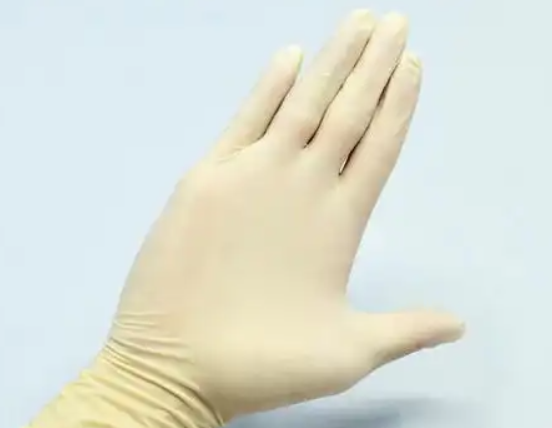
The gloves off the line are not yet ready for packaging. They undergo several finishing steps:
- Chlorination or Polymer Coating: To make the gloves easier to don without using powder, the interior surface is treated. Chlorination involves exposing the gloves to a chlorine solution or gas, which slightly modifies the surface polymer to make it smoother and less tacky. Alternatively, a thin polymer coating (like silicone or hydrogel) is applied for the same purpose.
- Tumbling and Drying: The gloves are tumbled in large dryers to remove excess moisture and any residual chlorination chemicals, and to soften the material for a more comfortable feel.
- 100% Visual and Leak Inspection: Every single medical glove is typically inflated mechanically and inspected visually by sensors and/or trained personnel for holes, thin spots, inclusions, or other defects. Sampling for water leak tests (ASTM D5151) is also performed regularly on production batches.
- Powdering (if applicable): For powdered gloves (less common now due to aerosol and complication risks), a food-grade cornstarch powder is applied as a donning agent. The powder absorbs residual moisture and reduces friction.
Quality control is integrated at every stage. Raw materials are tested for consistency. The compound viscosity, pH, and total solids content are monitored. Finished gloves undergo rigorous testing based on standards like ASTM D3577 (for rubber examination gloves) and FDA regulations. Key tests include:
- Physical Dimensions: Checking length, width, and thickness.
- Tensile Strength and Ultimate Elongation: Measuring how much force is needed to break the glove and how far it can stretch, ensuring durability.
- Modulus: Assessing the force required to stretch the glove to a certain point, related to comfort and flexibility.
- Puncture and Tear Resistance.
- Powder and Protein Levels (for latex): To ensure compliance with allergy-reduction limits.
For sterile medical gloves (required for surgical use), the final packaged boxes are subjected to a sterilization process after sealing. The most common method is Ethylene Oxide (EO) gas sterilization, as it is effective at low temperatures that won't damage the rubber. Radiation (Gamma or E-beam) sterilization is also used. Sterility is validated through rigorous biological and physical testing.
Finally, the gloves are automatically counted and packaged, either in loose pairs for examination gloves or in inner sterile wraps and outer boxes for surgical gloves. Packaging is designed to maintain cleanliness or sterility and includes lot numbers and expiration dates for traceability. They are then palletized and shipped to distributors, hospitals, and OEM partners like our company, where they become part of the essential supply chain supporting everything from primary care to complex visual-guided interventions.
The creation of a medical glove is a testament to the sophistication of modern medical manufacturing. It is a process that marries organic and synthetic chemistry with high-precision, automated engineering, all governed by an uncompromising regime of quality assurance. From the initial compounding of polymers to the final sterile packaging, each step is designed to produce a barrier that is simultaneously strong, elastic, sensitive, and safe. For professionals using advanced visualization tools—from a bronchoscopy workstation to a single-use ureteroscope—the reliability of their medical gloves is a fundamental precondition for safe practice. Understanding this intricate journey from liquid to lifesaving barrier deepens our appreciation for this humble yet vital tool in global healthcare, underscoring that its value lies as much in the rigor of its creation as in its final application.
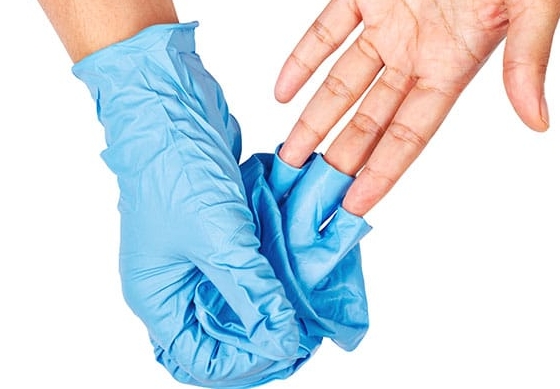
The core dipping process is similar, but the raw materials and compounding differ fundamentally. Latex starts as a natural colloidal suspension requiring careful stabilization and extensive leaching to remove proteins. Nitrile begins as a synthetic copolymer emulsion derived from petroleum, which is compounded and does not require protein leaching. Nitrile compounds are also generally more resistant to oils and chemicals from the outset.
Powder (usually cornstarch) was historically added to make gloves easier to don. However, powder can aerosolize, potentially carrying proteins (in latex) and causing respiratory irritation or granulomas in surgical sites. Modern "powder-free" gloves achieve donning ease through post-processing surface treatments. The most common is chlorination, a chemical bath that creates a smoother, less tacky inner surface. Alternatively, a thin polymer coating (like silicone or hydrogel) is applied.
Sterile medical gloves undergo a terminal sterilization process after they are sealed in their final packaging. The dominant method is Ethylene Oxide (EO) gas sterilization, as it penetrates packaging effectively at temperatures low enough not to damage the rubber. Gamma radiation is another method. The entire sterilization cycle (time, gas concentration, humidity, temperature) is rigorously validated, and sterility is confirmed through biological indicators and lot-by-lot testing to meet sterile assurance level (SAL) standards.
Leaching is a critical washing process unique to latex medical glove production. After the initial gel film is formed on the former, it passes through series of hot water baths. This process dissolves and removes water-soluble proteins, residual chemicals (like accelerators and antioxidants), and coagulant salts. Effective leaching is the primary manufacturing method for reducing the levels of allergy-causing proteins, making the final latex glove safer and more biocompatible.
This is typically done through an automated 100% leak test. The most common method is an air inflation test. Machines automatically don each glove onto a pressurized air mold or chamber. Sensors monitor for a pressure drop, which would indicate a leak from a pinhole or tear. Gloves that pass are conveyed forward; those that fail are automatically rejected. This is complemented by visual inspection systems and statistical sampling for more stringent water leak tests.
[1] https://www.fda.gov/medical-devices/personal-protective-equipment-infection-control/gloves
[2] https://www.astm.org/d3577-19.html
[3] https://www.cdc.gov/niosh/npptl/gloves.html
[4] https://www.rubbernews.com/article/20141001/NEWS/310019978/how-are-gloves-made
[5] https://www.businesswire.com/news/home/20201001005856/en/How-Are-Nitrile-Gloves-Made-A-Step-by-Step-Guide-From-Nitrile-Glove-Manufacturer-AMMEX
[6] https://www.fda.gov/medical-devices/general-hospital-devices-and-supplies/ethylene-oxide-sterilization-medical-devices
[7] https://www.iso.org/standard/45876.html


