
Views: 222 Author: Lake Publish Time: 2025-12-29 Origin: Site


Content Menu
● The Imperative of Correct Disposal: More Than Just Trash
● The Regulatory Framework: OSHA, EPA, and State Directives
● The Disposal Hierarchy: From Point of Use to Final Destination
>> Step 1: Immediate Post-Use Handling (At the Point of Care)
>> Step 2: Segregation and Primary Containment
>> Step 3: Secondary Containment and On-Site Storage
>> Step 4: Treatment and Final Disposal
● Environmental Considerations and the Future of Disposal
● Special Considerations for Home Healthcare and Public Use
● Frequently Asked Questions (FAQ)
>> 1. Can I throw used medical gloves in the regular trash at a clinic or hospital?
>> 2. What is the proper way to dispose of gloves used with a patient in isolation?
>> 3. Are biodegradable medical gloves better for the environment?
>> 4. Why can't medical gloves be recycled like other plastics?
>> 5. What is the biggest mistake people make when disposing of medical gloves?
In the meticulous world of healthcare, where the focus often lies on advanced technology like the real-time imaging of a bronchoscopy workstation or the precision of a single-use ureteroscope, the final act of a medical glove's lifecycle is of paramount importance: its disposal. The proper disposal of a used medical glove is a critical component of infection control, environmental responsibility, and regulatory compliance. An improperly discarded glove is not merely litter; it is a potential biohazard that can contribute to disease transmission, environmental pollution, and legal repercussions. For OEM partners and healthcare providers committed to holistic safety and sustainability, understanding the correct pathways for medical glove disposal is as essential as knowing their correct application. This article provides a comprehensive guide to the responsible disposal of medical gloves, covering regulatory frameworks, practical steps, environmental considerations, and the evolving landscape of waste management in healthcare.
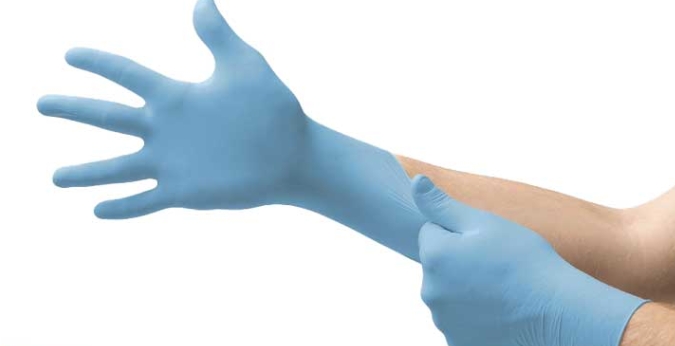
A used medical glove is considered regulated medical waste (RMW), also known as biohazardous waste, if it is saturated or dripping with blood or other potentially infectious materials (OPIM), or if it was used in the care of a patient with a highly communicable disease. Even gloves that appear clean after routine use fall under the category of general medical waste, requiring specific handling to prevent occupational exposure to those who manage waste downstream. The consequences of improper disposal are severe:
- Infection Transmission: Gloves contaminated with pathogens can expose sanitation workers, patients, and the public to infectious diseases if mixed with regular trash.
- Environmental Harm: Most medical gloves are made from synthetic polymers (nitrile, vinyl) or treated natural rubber (latex), which do not biodegrade readily in landfills. They can contribute to microplastic pollution and harm wildlife.
- Regulatory Violations: Healthcare facilities are subject to strict regulations from agencies like OSHA (Occupational Safety and Health Administration) and the EPA (Environmental Environment Protection Agency). Improper disposal can result in significant fines and reputational damage.
- Compromised Safety Culture: Sloppy disposal practices undermine a facility's overall commitment to safety and protocol adherence.
Disposal practices are not discretionary; they are mandated by a layered regulatory structure.
1. OSHA's Bloodborne Pathogens Standard (29 CFR 1910.1030): This is the primary regulation protecting workers from occupational exposure. It mandates that contaminated sharps and other regulated waste must be placed in appropriate, closable, leak-proof containers that are color-coded (red or orange-red) or labeled with the biohazard symbol. While not all used medical gloves meet the definition of "regulated waste," the standard sets the principle of treating all waste from patient care areas as potentially infectious.
2. EPA Regulations on Medical Waste: The EPA governs the final disposal of medical waste, primarily through the Resource Conservation and Recovery Act (RCRA). While the EPA does not classify non-hazardous medical waste as "hazardous" under RCRA, it defers to state and local regulations, which are often more stringent.
3. State and Local Health Department Regulations: These are typically the most specific and rigorous. They define categories of waste (e.g., biohazardous, general, pharmaceutical), specify container types and labeling, and license medical waste treatment and disposal facilities. It is absolutely essential to know and follow the specific rules of your jurisdiction.
The journey of a used medical glove from the clinician's hand to its final treatment follows a defined pathway.
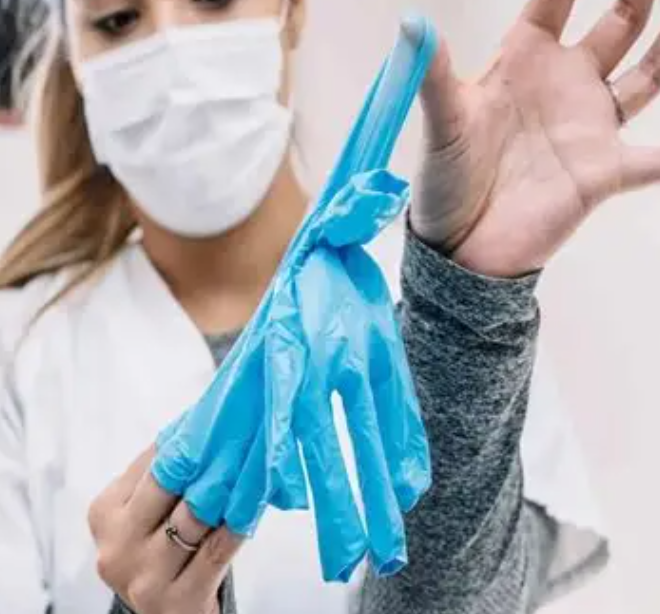
- Proper Doffing: The first step in safe disposal begins with correct removal. The medical glove should be peeled off inside out, containing the contaminants within. This technique minimizes the contamination of the wearer's hands and the external surface of the glove.
- Holding and Containment: The doffed glove should be held in the remaining gloved hand. After the second glove is doffed inside-out over the first, a single contained bundle is created.
This is the most critical decision point: Which waste container does the glove go into? The rule is: When in doubt, treat it as a higher-risk waste.
- Regulated Medical Waste (RMW / Biohazard) Containers:
- Use for: Gloves that are visibly contaminated with blood, bodily fluids, or OPIM (e.g., from wound care, surgery, trauma). Gloves used in isolation rooms for patients with highly infectious diseases (e.g., C. diff, Ebola, resistant organisms) as per facility policy.
- Container: Puncture-resistant, leak-proof, closable container (often a red bag placed in a hard-walled bin) labeled with the biohazard symbol. These are often foot-operated to prevent cross-contamination.
- General (Non-Hazardous) Medical Waste Containers:
- Use for: Gloves used for routine patient care (e.g., vitals, physical exam, handling unsoiled equipment) that are not visibly contaminated. This constitutes the majority of used medical gloves.
- Container: Often a black bag or clear bag in a dedicated medical waste bin. It is still kept separate from municipal solid waste (regular office trash) and recycling streams.
- Chemotherapy Waste Containers:
- Use for: Gloves used in the preparation or administration of hazardous drugs (e.g., chemotherapy). These are considered hazardous pharmaceutical waste and must be disposed of in specially designated, often yellow, containers.
- Recycling Bins:
- Use for: NEVER. Used medical gloves are never placed in standard recycling. They contaminate the recyclable materials stream and pose a serious risk to recycling facility workers.
Filled primary containers are sealed and transported to a designated, secure storage area. This area must be labeled, have limited access, and protect the waste from weather, animals, and unauthorized individuals. Regulated waste is typically stored for no longer than 30 days before treatment.
Licensed medical waste haulers transport the waste to permitted treatment facilities. Common treatment methods render the waste non-infectious and reduce its volume:
- Incineration: High-temperature burning that destroys pathogens and reduces waste to ash. A common method for RMW and chemotherapy waste.
- Autoclaving (Steam Sterilization): Uses pressurized steam to sterilize waste. The treated waste is then often shredded and sent to a landfill. Common for general medical waste.
- Other Technologies: Microwave treatment, chemical disinfection, or plasma pyrolysis may be used.
After treatment, the residual material is disposed of in a permitted landfill. The incineration ash may require special hazardous waste landfill disposal.
The environmental impact of disposable medical gloves is significant. Billions are used and discarded annually, contributing to plastic pollution. The industry is responding with several evolving approaches:
- Biodegradable & Compostable Gloves: Some manufacturers offer gloves made from polymers designed to break down under specific industrial composting conditions. Crucially, these are still medical waste and must undergo the same regulated disposal process for infection control; they cannot simply be thrown in a compost bin. Their benefit is realized post-treatment.
- Waste-to-Energy Programs: Incineration with energy recovery can offset fossil fuel use.
- Advanced Recycling Technologies: Chemical recycling processes that break down polymers like nitrile into their base components for reuse are in development but not yet widespread for contaminated medical waste.
- Source Reduction: The most effective environmental strategy is using medical gloves only when medically necessary, as per standard precautions, and not out of habit.
With the rise of home-based care and public use of gloves during pandemics, proper disposal education is vital.
- Home Healthcare: Used gloves from patient care should be placed in a sealed plastic bag (e.g., a zip-top bag) before being placed in the household trash. For patients with highly infectious conditions, local health departments may provide specific guidance, which may include using a separate, lined trash can.
- Public/Community Use: Individuals using gloves for personal protection should remove them carefully, place them in a trash bin (never litter), and perform hand hygiene immediately. Public health messaging should emphasize that gloves do not replace handwashing.
The disposal of a medical glove is the final, critical link in the chain of infection control and environmental stewardship. It is a procedure governed by science, regulation, and ethics. From the operating room utilizing video laryngoscopes to the home care setting, the principle remains: treat every used medical glove with respect for the potential hazard it may carry. By rigorously adhering to segregation protocols, utilizing appropriate containers, and engaging with licensed disposal partners, healthcare organizations fulfill their duty of care to their staff, their community, and the planet. As the industry advances in medical visualization and device technology, parallel innovation in sustainable materials and waste treatment for disposables like the medical glove is not just preferable—it is imperative for a responsible future in healthcare.
No, you should not throw used medical gloves directly into regular municipal trash within a healthcare facility. Standard protocol requires segregating them as general medical waste (typically in black bags) even if not visibly contaminated. This protects sanitation workers and aligns with treating all waste from patient care areas as potentially infectious. Only clearly uncontaminated gloves from administrative areas might go into regular trash, per facility policy.
Gloves used for patients under Contact, Droplet, or Airborne Precautions are almost always considered regulated medical waste (biohazard waste). They must be disposed of in the designated biohazard container (red bag or labeled container) within the patient's isolation room or anteroom. This is a non-negotiable protocol to contain pathogens.
They have the *potential* to be better after proper medical waste treatment. The key is that "biodegradable" does not mean "compostable at home" or safe to discard casually. A used biodegradable medical glove is still a biohazard and must go through the same regulated disposal stream (incineration or autoclave). The environmental benefit is that the treated residue may break down more completely in a landfill than traditional synthetic gloves.
Used medical gloves are contaminated with biological and chemical residues, making them unacceptable for standard material recovery facilities (MRFs). They would contaminate entire batches of clean recyclables (like bottles and paper) and pose a severe health risk to sorting-line workers. Currently, there is no safe, scalable system to decontaminate and recycle used medical gloves at their end-of-life.
The most common and dangerous mistake is improper segregation—placing visibly contaminated gloves into general waste streams or, conversely, placing large volumes of uncontaminated gloves into expensive biohazard streams, which drastically increases treatment costs and environmental footprint. The second major mistake is littering, which creates immediate public health and environmental hazards.


