
Views: 222 Author: Lake Publish Time: 2025-12-30 Origin: Site


Content Menu
● Defining Fluid Resistance in the Context of Isolation Gowns
● The Gold Standard: AAMI PB70 Classification System
>> Breakdown of AAMI Levels for Isolation Gowns
● How Fluid Resistance is Tested and Validated
● Critical Distinctions: Fluid Resistant vs. Fluidproof vs. Impervious
● Practical Implications: Choosing the Right Level of Protection
● Limitations and Proper Usage
● The Role of Manufacturers and Procurement
● Frequently Asked Questions (FAQ)
>> 1. If an isolation gown is AAMI Level 3, does that mean it's sterile?
>> 2. How can I tell what AAMI level an isolation gown is?
>> 3. Is a higher AAMI level always better?
>> 4. What happens if fluid gets on an isolation gown?
>> 5. Can I reuse a disposable isolation gown if it's not visibly soiled?
In the high-stakes environments of healthcare, infection control is paramount. From the operating room to the patient's bedside, personal protective equipment (PPE) serves as a critical barrier against the transmission of pathogens. Among these essential items, isolation gowns are a frontline defense for healthcare workers. A common and crucial question arises: Are isolation gowns fluid resistant? The answer is not a simple yes or no, but rather a nuanced explanation based on standardized performance levels and intended use. For a company like ours, deeply embedded in the precision world of medical visualization through OEM manufacturing of devices such as endoscopy systems and bronchoscopy workstations, we understand that performance specifications are the bedrock of safety and efficacy. This article will delve into the science and standards behind the fluid resistance of isolation gowns, explaining the classification systems, testing methods, and practical implications for selecting the appropriate gown for any given clinical or procedural scenario.

Fluid resistance, in the context of isolation gowns, refers to the material's ability to prevent the penetration of liquids, primarily water and synthetic blood, under specific conditions. It is a measured performance characteristic, not an inherent property of all gowns. The primary purpose of this resistance is to block the transmission of microorganisms, which are often carried in bodily fluids such as blood, saliva, urine, and respiratory secretions. A gown's fluid resistance is what prevents these potentially infectious liquids from soaking through to the wearer's skin, scrubs, or uniform, thereby breaking the chain of infection.
The most widely recognized and utilized standard for defining the fluid barrier performance of isolation gowns and other protective apparel is the American Association of Medical Instrumentation (AAMI) standard, specifically AAMI PB70: "Liquid barrier performance and classification of protective apparel and drapes intended for use in health care facilities." This standard provides a clear, four-tiered classification system based on the level of protection offered.
Key Principle: The AAMI level indicates the gown's performance under controlled laboratory conditions against a specific challenge. Higher levels denote greater barrier protection.
AAMI Level 1: Minimal Risk
- Fluid Resistance: Provides a barrier to small amounts of fluid, such as during basic care or standard isolation.
- Test & Performance: Tested with water only. The material must resist water penetration under low hydrostatic pressure.
- Typical Use: Basic patient care, standard isolation where no substantial fluid exposure is anticipated (e.g., visitor gowns, for care of patients in standard precautions).
AAMI Level 2: Low Risk
- Fluid Resistance: Provides a barrier to larger volumes of fluid and light spray.
- Test & Performance: Tested with water; must demonstrate a higher level of water resistance than Level 1.
- Typical Use: Blood draws, suturing, insertion of intravenous (IV) lines, procedures in the Intensive Care Unit (ICU), or pathology lab work.
AAMI Level 3: Moderate Risk
- Fluid Resistance: Provides a barrier to larger volumes of fluid and pressure, including fluid strikethrough from a heavier spray or splash.
- Test & Performance: Tested with a synthetic blood solution. The material must resist penetration from a surrogate blood under a defined pressure.
- Typical Use: Arterial blood draws, emergency trauma response, major surgery where moderate fluid exposure is expected, and for use in settings where isolation gowns are required for procedures with higher splash risk.
AAMI Level 4: High Risk
- Fluid Resistance: Provides the highest level of barrier protection against fluid penetration, including resistance to viral penetration under very high hydrostatic pressure.
- Test & Performance: Tested with a viral penetration challenge (using a bacteriophage like Phi-X174) in addition to synthetic blood. Must demonstrate no viral penetration.
- Typical Use: Long, fluid-intensive procedures (e.g., major orthopedic or trauma surgery), when caring for patients with known infectious diseases transmitted via bodily fluids (e.g., Ebola, Lassa fever), or in situations where pathogen resistance is critical.
The AAMI PB70 standard defines specific laboratory test methods to assign a level:
1. Hydrostatic Pressure Test (AATCC 127): Primarily for Levels 1-3. Measures the pressure at which water begins to penetrate the fabric. A higher pressure rating indicates better resistance.
2. Synthetic Blood Penetration Test (ASTM F1670): Used for Levels 3 and 4. A volume of synthetic blood is placed against the gown material, and pressure is applied for a specific time. The material passes if no penetration is observed on the other side.
3. Viral Penetration Resistance Test (ASTM F1671): The definitive test for Level 4. Uses a bacteriophage suspension under sustained pressure to simulate viral penetration. Passing this test is required for a gown to be classified as Level 4.
Reputable manufacturers test their isolation gowns in accredited laboratories and should provide a Certificate of Analysis (CoA) or technical data sheet verifying the AAMI level achieved for a specific product lot.
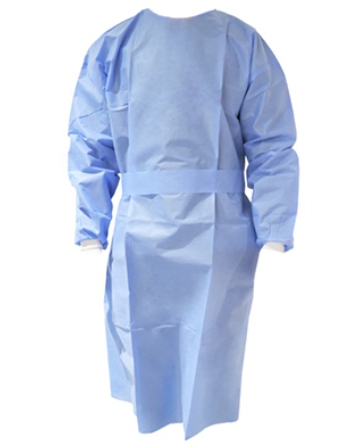
It is vital to understand the terminology:
- Fluid Resistant: The material can resist the penetration of liquids to a degree defined by its AAMI level. No everyday material is 100% "fluidproof" under all conditions.
- Impervious/Impermeable: Often used interchangeably with high-level fluid resistance, particularly for Level 4 gowns that have passed the viral penetration test. It denotes a very high barrier.
- Surgical Gowns vs. Isolation Gowns: Surgical gowns, used in sterile operative fields, are also rated under AAMI PB70 but have more stringent overall requirements, including coverage (they must cover the back in the "critical zone") and higher performance standards. A surgical gown can be Level 3 or 4. An isolation gown may be any level (1-4) and is designed for non-sterile isolation and precautionary use.
Selecting an isolation gown with the appropriate fluid resistance is a risk-based decision. Using an under-protective gown (e.g., Level 1 for a trauma case) exposes the wearer to danger. Using an over-protective gown (e.g., Level 4 for routine phlebotomy) is unnecessarily costly and may compromise comfort and breathability.
- For Routine Patient Care & Standard Precautions: AAMI Level 1 or 2 isolation gowns are typically sufficient.
- For Procedures with Anticipated Splash or Spray: (e.g., endoscopy, wound irrigation, insertion of chest tubes) an AAMI Level 3 isolation gown is the appropriate choice.
- For High-Risk, Fluid-Intensive Procedures or Known Infectious Diseases: AAMI Level 4 isolation gowns are mandatory.
In the context of medical visualization procedures, such as those using a bronchoscopy workstation or a single-use ureteroscope, fluid exposure from irrigation and suction is common. Therefore, clinicians should typically utilize at least an AAMI Level 3 isolation gown to protect against splashes of bodily fluids during these interventions.
Even a Level 4 isolation gown has limitations. Its protection is dependent on:
- Integrity of the Material: Gowns can be compromised by tears, snags, or abrasions.
- Seams and Closures: Areas with stitching or where ties are attached may be potential weak points, though many are sealed.
- Proper Donning and Doffing: Incorrect technique can lead to contamination. The gown must fully cover the intended areas, and removal must be performed without touching the contaminated exterior.
- Duration of Exposure: No material can resist penetration indefinitely under constant fluid pressure.
As an OEM provider, we recognize the importance of specification clarity. Responsible manufacturers of isolation gowns clearly label the AAMI protection level on packaging and marketing materials. Procurement specialists and safety officers must verify these claims through technical documentation and prioritize purchasing gowns that match their facility's procedural risk profile.
So, are isolation gowns fluid resistant? Yes, but to varying, scientifically measured degrees. The AAMI PB70 classification system provides an essential framework for understanding this resistance, ranging from minimal protection (Level 1) to the highest barrier against viruses (Level 4). This fluid resistance is the defining characteristic that allows isolation gowns to fulfill their role in infection control. For healthcare professionals, from those performing complex image-guided procedures with medical visualization tools to those providing bedside care, selecting the correct AAMI level is a critical clinical and safety decision. It ensures that the wearer is protected commensurate with the risk, enabling them to perform their duties effectively while being shielded from the hazards posed by infectious bodily fluids. Understanding this gradation of protection moves the conversation from a generic question about isolation gowns to an informed strategy for specific, safer practice.
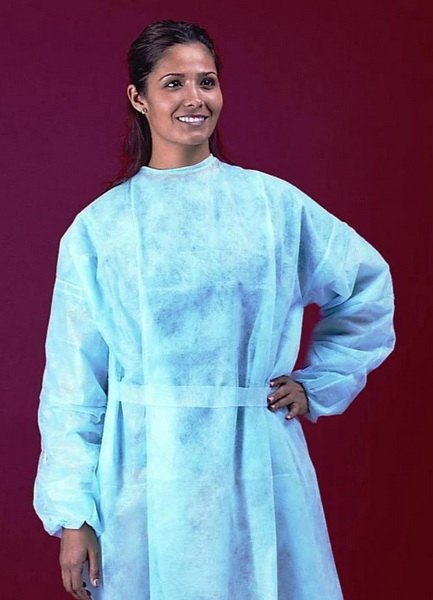
No, AAMI level and sterility are separate characteristics. The AAMI Level (1-4) indicates fluid barrier performance. "Sterile" means the gown has been processed to eliminate all viable microorganisms and is packaged to maintain that sterility until use. You can have a non-sterile, Level 3 isolation gown for use in an isolation room, and a sterile, Level 3 surgical gown for use in an operating room. The intended use determines the need for sterility.
The AAMI level should be clearly marked on the product packaging (the box or case) and often on individual gown packaging. Look for text that says "AAMI PB70 Level 3" or similar. If it is not visibly labeled, request the technical data sheet or Certificate of Analysis (CoA) from the supplier or manufacturer, which must state the verified performance level.
Not necessarily. A higher AAMI level provides greater fluid barrier protection but often comes with trade-offs: increased cost, reduced breathability (which can cause heat stress during long wear), and sometimes less comfort or flexibility. The best practice is to select the lowest level of protection suitable for the specific task's risk. Using a Level 4 gown for a routine task is wasteful and uncomfortable; using a Level 1 gown for surgery is dangerous.
The gown's material is designed to resist penetration for a period. With a correctly specified gown (e.g., Level 3 for a splash), the fluid should bead up and roll off, or be contained on the surface long enough for you to safely doff the gown. However, if the volume is excessive, the exposure is prolonged, or the gown's integrity is compromised, strikethrough (penetration to the inside) can occur. If strikethrough is suspected or observed, the gown should be considered contaminated, and the wearer should doff it immediately and perform hand hygiene.
Disposable isolation gowns are designed and tested for single use. Even without visible soiling, the material's barrier integrity may be microscopically compromised through stretching, abrasion, or moisture exposure during use. Reuse is not recommended as it can lead to a false sense of security and increased risk of contamination. Always follow the manufacturer's instructions and facility policy, which almost universally dictate single use and disposal.
[1] https://www.aami.org/docs/default-source/standards-library/is-80001-1-2021.pdf
[2] https://www.fda.gov/medical-devices/personal-protective-equipment-infection-control/isolation-gowns
[3] https://www.astm.org/f1670-17.html
[4] https://www.astm.org/f1671-13.html


