


Content Menu
● Introduction: The Fundamental Barrier in Healthcare
● Key Design Features and Materials
● Levels of Protection: Understanding the Standards
● Types of Isolation Gowns: Disposable vs. Reusable
● The Critical Protocol: Proper Donning and Doffing
● Applications and Use Cases in Clinical Settings
● Frequently Asked Questions (FAQs)
>> 1. What is the difference between an isolation gown and a surgical gown?
>> 2. Can isolation gowns be reused?
>> 3. How do I choose the right level of isolation gown?
>> 4. Why is the doffing (removal) sequence so important?
>> 5. Are there eco-friendly options for isolation gowns?
In the intricate ecosystem of patient care, where advanced medical visualization tools like endoscopes and bronchoscopes reveal internal anatomy, a simpler yet equally vital class of equipment works silently to protect both caregiver and patient. The isolation gown is a cornerstone of infection prevention and control (IPC), a fundamental piece of personal protective equipment (PPE) that serves as a critical physical barrier. While our expertise lies in providing the clarity of vision through devices like video laryngoscopes and medical image processors, we recognize that safety is built on layers of protection. This article delves into the essential nature of the isolation gown, exploring its definition, standards, types, proper use, and its indispensable role in safeguarding healthcare delivery.
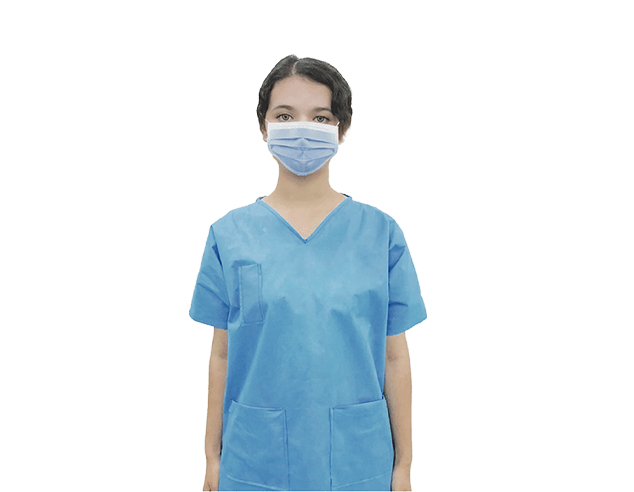
An isolation gown is a protective garment worn by healthcare personnel, patients, and sometimes visitors to prevent the transmission of infectious agents. Its primary function is to cover and protect the wearer's torso, arms, and clothing from contact with blood, bodily fluids, secretions, and excretions. Conversely, in protective isolation settings, it can shield immunocompromised patients from pathogens carried by others. Unlike a surgical gown, which is designed for maintaining a sterile field in the operating room, an isolation gown is intended for use in a wide range of clinical and non-sterile settings where contact with potentially infectious material is anticipated.
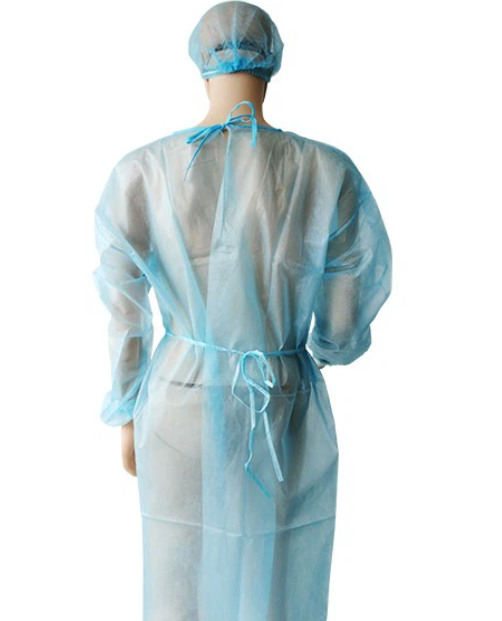
The design of an isolation gown prioritizes coverage, comfort, and barrier protection. Common features include:
- Full Coverage: Designed to cover the body from the neck to at least mid-thigh, including the arms to the wrist.
- Closure Systems: Typically secured at the back with ties or snaps, minimizing contamination points on the front.
- Cuffs: Often made of elastic or knit material to provide a secure fit around the wrists, facilitating safe overlap with medical gloves.
- Materials: Made from either disposable non-woven fabrics (like polypropylene or polypropylene-polyethylene blends) or reusable woven fabrics (like cotton-polyester). The material is key to its protective capability.
Not all isolation gowns offer the same level of protection. In the United States, the American National Standards Institute (ANSI) and the Association of the Advancement of Medical Instrumentation (AAMI) have established a consensus standard (ANSI/AAMI PB70) that classifies gowns based on their liquid barrier performance. This classification is crucial for selecting the right gown for the right task.
The Four Levels of Barrier Protection:
- Level 1 (Minimal Risk): For basic care, standard isolation, or visitor gowns. Used when no fluid exposure is expected. Provides a minimal barrier to small amounts of fluid.
- Level 2 (Low Risk): For procedures with minimal fluid exposure (e.g., suturing, drawing blood from a vein). Offers a slightly higher level of fluid resistance.
- Level 3 (Moderate Risk): For procedures with moderate fluid exposure (e.g., arterial blood draw, inserting an IV line). Provides a barrier to larger volumes of fluid and some fluid penetration pressure.
- Level 4 (High Risk): For long, fluid-intensive procedures, when pathogen resistance is crucial, or during surgery. Offers the highest level of protection against fluid and viral penetration, often using impervious materials.
Selecting the appropriate level is a risk assessment decision, balancing protection needs with breathability, cost, and waste.
The choice between disposable and reusable isolation gowns involves considerations of cost, logistics, sustainability, and performance.
- Disposable Isolation Gowns: Made from non-woven materials, these are designed for single use. They offer consistent, guaranteed barrier integrity for each use, eliminate cross-contamination risks from inadequate laundering, and simplify inventory and use logistics. This model mirrors the principle behind single-use medical visualization devices, like disposable ureteroscopes, where sterility and performance are assured per procedure.
- Reusable Isolation Gowns: Made from woven fabrics, these are designed to be laundered and reused multiple times (typically 50-100 cycles). They have a higher upfront cost but can be more cost-effective over time and generate less solid waste. However, they require a robust institutional laundry infrastructure, and their barrier integrity must be monitored for degradation with each wash cycle.
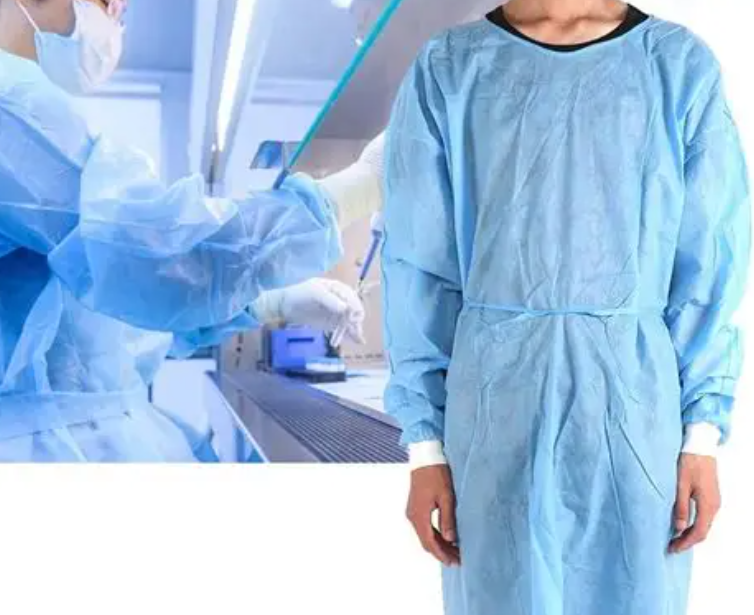
The protective value of an isolation gown is only realized if it is put on (donned) and taken off (doffed) correctly. A breach in technique can lead to self-contamination.
Key Donning Steps:
1. Perform hand hygiene.
2. Hold the isolation gown cleanly, allow it to unfold, and slide arms into the sleeves.
3. Secure the neck and waist ties.
4. Ensure the gown fully covers the torso. The cuff of the gown should be positioned to allow the cuff of the medical glove to be pulled over it, creating a continuous barrier.
Key Doffing Steps (CDC Sequence):
1. Remove and dispose of medical gloves first.
2. Unfasten the gown ties.
3. Pull the gown away from the neck and shoulders, turning it inside out as it is removed.
4. Fold or roll it into a bundle, dispose of it (if disposable), or place it in a soiled linen container (if reusable).
5. Perform hand hygiene immediately.
The gown and medical gloves function as an integrated system; the removal of medical gloves must precede the removal of the gown to prevent contaminating the hands with the gown's soiled exterior.
The isolation gown is employed across healthcare whenever contact transmission is a risk:
- Contact Precautions: Used for patients with known or suspected infections transmitted by direct or indirect contact (e.g., MRSA, C. difficile, RSV).
- Droplet Precautions: Often used in conjunction with a mask and eye protection for diseases like influenza or COVID-19, especially during close patient contact.
- Protective (Reverse) Isolation: Worn by staff and visitors to protect severely immunocompromised patients (e.g., bone marrow transplant recipients).
- During Procedures: Used for any procedure with a risk of splashes or sprays of body fluids, such as wound care, lumbar punctures, or delivery care.
- Handling Contaminated Equipment: Used when cleaning or reprocessing used medical devices, ensuring the isolation gown protects the worker just as the device is designed to protect the patient.
The isolation gown is far more than a simple smock; it is a meticulously standardized, strategically selected, and procedurally critical component of modern infection prevention. It embodies the principle of creating a reliable barrier between host and pathogen, a principle that is universal in healthcare—from the sterile field of an operating room to the bedside of a patient in isolation. Understanding its levels of protection, the rationale behind its design, and the non-negotiable protocols for its use is essential for every healthcare professional. Just as we engineer our visualization devices for clarity and precision under demanding conditions, the isolation gown is engineered for consistent, reliable protection in the face of biological hazards. It remains an unsung but vital tool in the ongoing effort to provide safe care and prevent the spread of infection.
Contact us to get more information!
The key difference lies in the intended use and protection zones. An isolation gown is for general isolation precautions and provides generally uniform protection. A surgical gown is a regulated medical device designed for the sterile field of an operating room; it has defined "critical zones" (front, from chest to knees, and arms) that require the highest level of liquid barrier protection (Level 4), while other areas may have lower protection.
Disposable isolation gowns are designed for single use and should be discarded after one wearing. Reusable fabric isolation gowns are specifically designed and tested to withstand industrial laundering and can be reused for a specified number of cycles, after which they must be retired.
The choice is based on a risk assessment of the anticipated exposure:
- Level 1/2: For basic care, standard isolation, or low-fluid tasks (visitors, taking vitals).
- Level 3: For procedures with moderate fluid exposure (IV insertion, blood draws).
- Level 4: For high-risk, fluid-intensive procedures or when managing highly infectious agents. Always refer to your facility's infection control policy.
The doffing sequence is crucial because the outside of the gown and medical gloves are considered contaminated. The CDC-recommended sequence (gloves first, then gown, then hand hygiene) is designed to remove the most contaminated items first without allowing them to touch clean skin or clothing, thereby preventing self-contamination.
Yes. Options include:
- Reusable gowns, which significantly reduce waste.
- Disposable gowns made from compostable/biodegradable materials (requires industrial composting facilities).
- Gowns made from recycled content. The most sustainable choice depends on your facility's waste management and laundry infrastructure.


