
Views: 222 Author: Lake Publish Time: 2026-02-13 Origin: Site


Content Menu
● The Fundamental Purpose and Design of Medical Gloves
● Defining "Sanitize" in a Medical Context
● Why Sanitization and Reuse of Medical Gloves is Unsafe and Impractical
>> 1. Material Degradation and Loss of Barrier Integrity
>> 2. Ineffective Pathogen Elimination
>> 3. Compromised Fit and Dexterity
>> 4. Violation of Regulations and Standards
>> 5. False Economy and Risk Amplification
● Appropriate Alternatives and Best Practices
>> 1. Conservation Through Proper Use:
>> 2. Reusable Utility Gloves:
>> 3. Technological Parallel: The Single-Use Device Model
● The OEM Perspective: Design for a Defined Lifecycle
● Frequently Asked Questions (FAQs)
>> 1. What about just washing medical gloves with soap and water?
>> 2. Can I use hand sanitizer on my gloved hands to extend their use?
>> 3. Are there any gloves designed to be sanitized and reused for patient care?
>> 4. What should I do if there is a critical shortage of medical gloves?
>> 5. How does the single-use principle for gloves compare to single-use endoscopes?
In the intricate and high-stakes world of healthcare, the proper use of personal protective equipment (PPE) is a non-negotiable pillar of safety. Medical gloves, in particular, serve as a primary barrier against cross-contamination, protecting both healthcare workers and patients. Amidst pressures of supply chain constraints, cost considerations, or simple misunderstanding, a recurring question arises: Can medical gloves be sanitized and reused? This query touches upon the core principles of infection prevention, material science, and regulatory compliance. As a company dedicated to the precision and reliability of medical visualization devices—from bronchoscopy workstations to single-use ureteroscopes—we understand that the integrity of a barrier, whether a digital image or a physical glove, is paramount. This article will provide a definitive, evidence-based examination of whether medical gloves can be sanitized, detailing the scientific, practical, and regulatory reasons behind the established protocols.
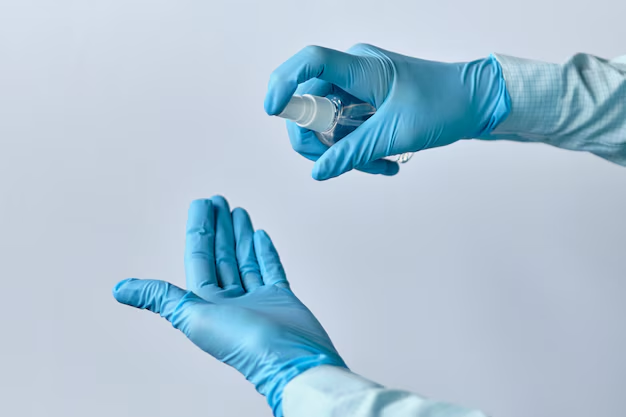
To understand why sanitization is not feasible, one must first understand what medical gloves are designed to do. They are regulated as medical devices (Class I in many jurisdictions) with a singular, critical function: to act as a single-use, impermeable barrier. Their design is optimized for this one-time use.
- Barrier Integrity: They are engineered to provide a reliable physical barrier against microorganisms (bacteria, viruses) and other contaminants for the duration of a specific task or procedure.
- Material Limitations: The polymers used—primarily nitrile, latex, and vinyl—are not designed to withstand the chemical or physical stresses of decontamination processes. Their integrity is finite.
- Microscopic Compromise: Even new, unused medical gloves can have microscopic pores. The act of wearing them, stretching them, and using them subjects the material to stress that can create micro-tears and channels invisible to the naked eye.
The term "sanitize" is often used loosely. In infection control terminology, it is crucial to distinguish:
- Cleaning: The physical removal of dirt, debris, and organic material (e.g., with soap and water). This does not kill a significant number of pathogens.
- Disinfecting: Using chemical agents to kill or inactivate pathogens on environmental surfaces or non-critical objects. This process does not necessarily achieve sterility.
- Sterilizing: The complete elimination of all microbial life, including bacterial spores, typically through processes like autoclaving (steam), ethylene oxide gas, or radiation.
When people ask about sanitizing medical gloves, they are typically referring to a process that would render a used glove safe for reuse on another patient or task. This would require a level of decontamination approaching high-level disinfection or sterilization, while also fully preserving the glove's barrier integrity and fit. No approved, practical method exists to achieve this.
The chemical agents used in disinfection (alcohol, chlorine, quaternary ammonium compounds, etc.) actively degrade the polymer matrix of medical gloves.
- Alcohols (Isopropyl, Ethanol): Cause the glove material (especially nitrile and latex) to swell, become tacky, and lose tensile strength. This dramatically increases the risk of tears and compromises the barrier.
- Chlorine-based disinfectants (Bleach): Are highly corrosive to glove materials, causing rapid breakdown, brittleness, and the formation of channels.
- Effect of Washing: Simply washing medical gloves with soap and water weakens the material, can leave residual moisture inside, and does not eliminate pathogens from all surfaces.
Even if a chemical could theoretically kill pathogens without visible damage, the microscopic integrity of the glove is compromised. A glove that appears intact can become permeable.
Medical gloves are donned on hands that are not sterile. During use, the outer surface becomes contaminated, and the inner surface becomes moist from perspiration, creating a microenvironment. Disinfectant sprays or wipes cannot reliably contact and disinfect the entire surface area, particularly:
- The microscopic interior surfaces.
- Areas under fingernails or in crevices.
- The inside of the cuff.
Pathogens can remain in these protected areas, leading to contamination upon reuse. Sterilization methods like autoclaving would melt or destroy the gloves.
Decontamination processes alter the physical properties of the glove. A sanitized glove would likely be:
- Ill-fitting: Either stretched out or shrunk, reducing tactile sensitivity and increasing the risk of tears during donning or use.
- Unsafe for Donning: A damp or chemically treated inner surface would make donning extremely difficult and could itself cause skin irritation for the wearer.
Every major public health and regulatory body explicitly mandates that patient examination and surgical medical gloves are single-use only.
- Centers for Disease Control and Prevention (CDC): States that gloves are "not intended to be washed or disinfected for reuse."
- Food and Drug Administration (FDA): Clears medical gloves as single-use devices. Their labeling and instructions for use prohibit reprocessing.
- Occupational Safety and Health Administration (OSHA): In its Bloodborne Pathogens Standard, it emphasizes that gloves are to be replaced when contaminated or damaged, not cleaned for reuse.
Attempting to sanitize and reuse them violates these standards, exposes healthcare facilities to liability, and jeopardizes accreditation.
The perceived cost-saving of reusing medical gloves is a dangerous illusion. The potential costs associated with a single healthcare-associated infection (HAI) or an occupational exposure incident due to glove failure—including patient treatment, staff illness, litigation, and regulatory penalties—dwarf the cost of a pair of gloves. The risk amplification is immense.
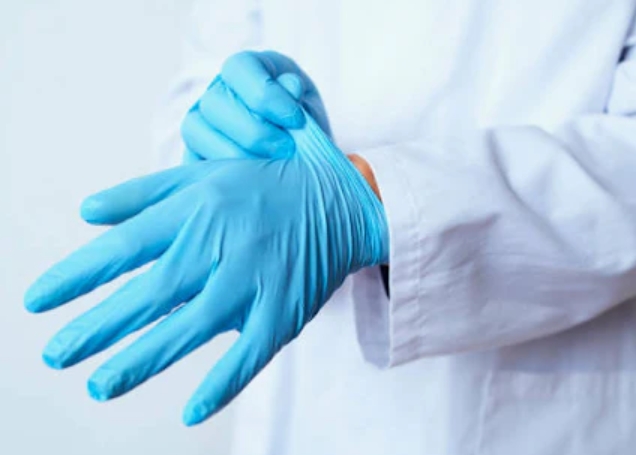
Given that sanitization is not an option, the correct protocols focus on conservation through prudent use and selection of alternatives where appropriate.
- Don't Over-Glove: Use medical gloves only when indicated by standard and contact precautions—for anticipated contact with blood, bodily fluids, mucous membranes, or contaminated surfaces.
- Correct Doffing: Remove gloves carefully without "snapping" to avoid contamination and discard immediately after the task.
- Hand Hygiene: Perform hand hygiene *before* donning and *after* doffing gloves. Gloves are not a substitute for clean hands.
For non-patient care tasks that require hand protection but not a medical-grade sterile barrier—such as cleaning environmental surfaces, handling chemicals, or decontaminating equipment (like external components of a bronchoscope workstation)—heavy-duty, chemical-resistant reusable utility gloves (e.g., made of rubber or nitrile) are the appropriate choice. These can be cleaned and disinfected between uses for their intended purpose, but they are never used for direct patient care.
The principle underpinning single-use medical gloves is identical to that driving the adoption of single-use endoscopes and other devices. Our industry has seen a significant shift towards devices like disposable ureteroscopes and video laryngoscopes. The rationale is the same: guaranteeing an uncompromised, sterile barrier for every procedure, eliminating the risk of reprocessing failure, and removing the hidden costs of cleaning, disinfection, and repair. A medical glove is the most basic, ubiquitous form of a single-use medical device.
From our perspective as an OEM designer and manufacturer, every medical device has a meticulously engineered lifecycle. A disposable visualization device is designed, tested, and validated to perform its function once with absolute reliability. Its materials, seals, and optics are not intended to withstand reprocessing. Similarly, medical gloves are the product of precise formulation and testing to ensure barrier performance for a single episode of care. Attempting to extend their lifecycle through sanitization is a fundamental misuse of the product, taking it outside its validated and safe operating parameters.
The answer to the question "Can you sanitize medical gloves?" is a resounding and unequivocal no. Medical gloves are single-use devices designed as a final, disposable barrier. The processes required to decontaminate them effectively degrade their material integrity, fail to ensure complete pathogen elimination, and violate every established infection control standard and regulation. The attempt to sanitize and reuse them creates a profound and unacceptable risk of transmitting infections to patients and exposing healthcare workers to hazards. The correct approach lies in the prudent use of single-use medical gloves according to established protocols, reserving reusable gloves for non-patient environmental tasks, and understanding that the integrity of safety barriers—whether advanced imaging sensors or simple protective gloves—cannot be compromised. In healthcare, where safety is paramount, the small cost of a new pair of gloves is an indispensable investment in protecting human health.
Contact us to get more information!
Washing medical gloves with soap and water is ineffective and harmful. It does not sterilize or reliably disinfect them. More importantly, it weakens the glove material, increasing the likelihood of microscopic tears and holes. Water can become trapped inside, promoting microbial growth. This practice dangerously compromises barrier protection.
No. Using alcohol-based hand rub (ABHR) on medical gloves accelerates the chemical degradation of the glove material, causing it to swell, become sticky, and lose integrity. It also does not disinfect the entire glove surface or interior. Medical gloves should be changed when contaminated or between tasks, not "refreshed" with ABHR.
For direct patient care involving exposure to blood or bodily fluids, there are no gloves designed or approved for sanitization and reuse. Heavy-duty reusable utility gloves are for environmental cleaning and instrument decontamination only. All patient examination and surgical medical gloves are strictly single-use.
During a true shortage, contingency and crisis strategies from bodies like the CDC may be enacted, but these are last-resort measures. They prioritize glove use for the highest-risk activities and may extend the use of gloves in limited, specific circumstances for a single patient (without sanitization). However, these are temporary crisis guidelines, not standards of care, and reusing gloves between patients remains strictly prohibited.
The core principle is identical: ensuring an uncompromised barrier. A single-use bronchoscope or ureteroscope guarantees sterility and perfect function for one procedure, eliminating reprocessing failure risk. A single-use medical glove guarantees barrier integrity for one task or patient contact. Both are designed, validated, and regulated for a single-use lifecycle to maximize safety.
[1] https://www.cdc.gov/infectioncontrol/guidelines/isolation/precautions.html
[2] https://www.fda.gov/medical-devices/consumers-medical-devices/medical-gloves
[3] https://www.osha.gov/laws-regs/regulations/standardnumber/1910/1910.1030
[4] https://www.who.int/publications/i/item/9789241549837
[5] https://www.astm.org/d3577-19.html
[6] https://www.ncbi.nlm.nih.gov/pmc/articles/PMC7315982/
[7] https://www.ismp.org/guidelines/safe-practice-glove-use
[8] https://www.cdc.gov/infectioncontrol/pdf/guidelines/environmental-guidelines-P.pdf
[9] https://www.fda.gov/medical-devices/reprocessing-reusable-medical-devices/information-assurance-reprocessing-reusable-medical-devices


