
Views: 222 Author: Lake Publish Time: 2026-02-10 Origin: Site


Content Menu
● Understanding "Medical Grade": Regulation and Purpose
● Understanding "Food Safe" and "Food Grade": A Different Regulatory Framework
● Comparative Analysis: Medical Gloves vs. Food-Safe Gloves
● Potential Risks of Using Medical Gloves for Food Handling
● When Might Medical Gloves Be Acceptable in a Food Context?
● The OEM Perspective: Design for Intended Use
● Frequently Asked Questions (FAQs)
>> 1. I see nitrile medical gloves used in restaurants sometimes. Is that okay?
>> 2. Are vinyl/polyethylene gloves food safe?
>> 3. What does the NSF/ANSI 51 mark mean on a box of gloves?
>> 4. Can the powder on powdered medical gloves contaminate food?
>> 5. What is the safest overall glove material for food handling?
In both healthcare and food handling environments, protective gloves serve as a critical barrier. This has led to a common, yet complex, question: Are medical gloves—specifically designed and regulated for clinical use—safe and appropriate for handling food? At first glance, the high standards for medical gloves might suggest they are superior for any application requiring hygiene. However, the intersection of medical device regulation and food safety standards reveals a nuanced answer. As a company specializing in medical visualization and OEM services for regulated devices like endoscopes and bronchoscopes, we understand that intended use is the cornerstone of product design and regulation. This article will dissect the key differences between medical gloves and food-grade gloves, examining their materials, regulatory pathways, and the potential risks of using one in place of the other, ultimately providing a clear, evidence-based conclusion.

The term "medical grade" is not casual; it signifies a product regulated as a medical device. In the United States, the Food and Drug Administration (FDA) classifies patient examination medical gloves as Class I medical devices (with some exceptions), while surgical medical gloves are Class II. This classification triggers specific requirements.
Primary Purpose of Medical Gloves: Their fundamental design objective is to create a barrier that protects healthcare workers and patients from cross-contamination of bloodborne pathogens, microorganisms, and other potentially infectious materials during medical procedures. The regulatory focus is on:
- Barrier Integrity: Resistance to tears and punctures (tested per standards like ASTM D3577/D3578).
- Biological Safety: Biocompatibility testing to ensure they do not cause skin irritation or cytotoxic reactions.
- Powder Residue Limits: Regulation of powder levels to prevent patient complications.
- Labeling for Medical Use: Clear indication for single-use, examination, or surgical applications.
The FDA's oversight of medical gloves is centered on their safety and effectiveness in a clinical setting, not on their suitability for direct, prolonged contact with a wide variety of food substances.
"Food safe" and "food grade" refer to materials and products that are suitable for direct contact with food without posing a health risk. This is governed by a different set of regulations, primarily enforced in the U.S. by the FDA under Title 21 of the Code of Federal Regulations (CFR), but not under its medical device center.
Key Regulations for Food-Contact Gloves:
- FDA 21 CFR Part 177: This section details standards for "Indirect Food Additives: Polymers," which includes the materials used to make gloves. It specifies which substances can be used and sets limits on extractables—chemicals that could migrate from the glove into the food.
- FDA 21 CFR Part 182: Covers substances "Generally Recognized As Safe" (GRAS).
- NSF/ANSI 51: This is a crucial, non-regulatory but widely adopted standard specifically for food equipment materials. Gloves certified to NSF/ANSI 51 have been tested to ensure they do not transfer colors, odors, or toxic substances to food under intended use conditions and that they meet specific material safety and purity requirements.
The focus here is on chemical migration—ensuring no harmful levels of plasticizers, accelerators (like thiurams or carbamates used in vulcanization), or other processing chemicals leach into food, especially fatty, acidic, or hot foods.
While there is overlap in materials (nitrile, vinyl, latex), the difference lies in formulation, testing priorities, and certification.
| Aspect | Medical Grade Gloves | Food-Safe/Food-Grade Gloves |
|---|---|---|
| Primary Regulatory Focus | FDA Center for Devices and Radiological Health (CDRH). Barrier to pathogens, biocompatibility. | FDA Food Contact Regulations (CFR Title 21), NSF/ANSI 51. Prevention of chemical migration. |
| Key Testing Standards | ASTM D3577/D3578 (barrier), ISO 10993 (biocompatibility). | FDA CFR 177/182, NSF/ANSI 51 (extractables, non-toxicity). |
| Chemical Additives | May contain accelerators and stabilizers necessary for medical-grade strength and elasticity. | Formulations often minimize or use specific, food-safe accelerators to reduce extractable chemicals. |
| Powder | Now largely powder-free due to medical risks; any powder must be compliant. | Powder is generally avoided as a physical contaminant risk. |
| Certification Mark | FDA 510(k) clearance or listing, CE Mark (for Europe). | NSF Mark (specifically NSF/ANSI 51), or statement of FDA Food Contact Compliance. |
| Intended Use Labeling | Labeled explicitly for medical examination or surgical use. | Labeled as for food handling, food service, or as food-grade. |
The Critical Distinction: A medical glove is engineered and tested to be an effective barrier against biological hazards. A food-safe glove is engineered and tested to be chemically inert when in contact with food. The chemical formulation differences, though potentially subtle, are significant for food contact safety over time.

Substituting medical gloves in a food setting is not simply a case of "better safe than sorry." It introduces specific risks:
1. Chemical Migration: The chemical accelerators and stabilizers in medical gloves, while safe for dermal contact, are not necessarily evaluated for safe migration into all food types, particularly high-fat, acidic, or hot foods. Long-duration contact (e.g., handling food for prep) increases this risk.
2. Allergen Transfer: Latex medical gloves pose a severe risk of transferring latex proteins to food, potentially triggering life-threatening allergic reactions in sensitive consumers. This is a major reason why latex is banned in many food service jurisdictions.
3. False Sense of Security: Medical gloves are designed for single-use, short-duration procedures. In a busy kitchen, workers might wear the same pair for extended periods, handling multiple tasks and surfaces, leading to cross-contamination—defeating the purpose of glove use. Food safety relies more on frequent glove changes and handwashing.
4. Regulatory Non-Compliance: Health department inspections for restaurants and food processing facilities typically require gloves that comply with food-contact regulations. Using medical gloves could result in violations, as they lack the required food-grade certifications (like NSF mark).
5. Cost Inefficiency: Medical gloves, especially high-quality nitrile exam gloves, are often more expensive than purpose-made food service gloves, creating an unnecessary operational cost.
There are limited, exceptional scenarios where medical gloves could be used temporarily, but they are not best practice:
- Emergency/Short-Term Use: In a temporary, unplanned situation where no food-grade gloves are available (e.g., a community emergency kitchen), clean, powder-free nitrile medical gloves are a better barrier than bare hands, but should be replaced with proper food-grade gloves as soon as possible.
- Handling Food for Immunocompromised Individuals: In a very specific home-care medical context, a caregiver might use medical gloves to prepare food for a severely immunocompromised patient to minimize microbial risk. However, the chemical migration concern remains, and consultation with a healthcare professional is advised.
Our work as an OEM provider for medical visualization equipment reinforces this principle. A disposable ureteroscope is engineered for the urinary tract's specific environment; using its materials in a bronchoscope for the lungs would be inappropriate and unsafe without redesign and retesting for that new intended use. Similarly, a medical glove is a precision-engineered device for a specific clinical purpose. Its formulation and testing protocol are optimized for that purpose. Repurposing it for food contact is a change in intended use that invalidates its original safety profile and requires a separate evaluation under a different regulatory framework.
The question "Are medical gloves food safe?" has a definitive, nuanced answer: Not necessarily, and they are not the appropriate or compliant choice for food handling. While both medical gloves and food-safe gloves provide a physical barrier, they are designed, formulated, and regulated for fundamentally different primary hazards: biological vs. chemical. Medical gloves excel at preventing pathogen transmission in healthcare but may contain chemical additives not fully evaluated for safe migration into all food types. For any professional or home kitchen, food processing, or service environment, the correct choice is gloves explicitly manufactured and certified as food-grade or food-safe, bearing marks like NSF/ANSI 51. These gloves are formulated to minimize chemical extractables and are the compliant, safest option for protecting both the food and the consumer. Just as you would select a bronchoscope for lung visualization and not a ureteroscope, selecting the right glove for the specific task is a fundamental requirement of safety and professionalism.
Contact us to get more information!
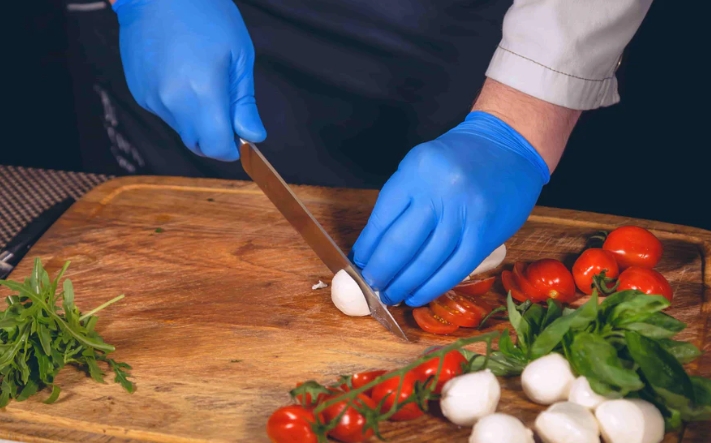
While nitrile is a common material for both medical and food-grade gloves, the specific formulation matters. Unless the nitrile gloves are explicitly labeled as food-grade or carry an NSF/ANSI 51 mark, they are likely medical or industrial grade. Using them in a restaurant may not meet health code requirements and could pose a chemical migration risk. It is best practice to use only gloves labeled for food service.
Disposable vinyl or polyethylene gloves are frequently used in food service for quick, low-risk tasks (like handling ready-to-eat bread or garnishes). They can be food safe if they are certified as such (e.g., comply with FDA food contact regulations). However, they offer poor barrier protection against pathogens compared to nitrile or latex and tear easily. They are not suitable for handling raw meats, sharp bones, or for tasks requiring durability.
The NSF/ANSI 51 mark is a voluntary certification indicating the glove material has been tested by NSF International, an independent public health organization. The testing confirms the materials are safe for food contact, do not impart harmful levels of substances (extractables) into food, and are non-toxic. It is a key indicator of a truly food-safe glove.
Yes. Powdered gloves (now rare in medicine and banned in many areas) are absolutely unsuitable for food handling. The powder (often cornstarch) can physically contaminate food, alter its texture, and serve as a carrier for chemical allergens (like latex proteins). Always use powder-free gloves for any food-related task.
For a balance of durability, barrier protection, and chemical safety, powder-free, food-grade nitrile gloves are generally considered the best all-around choice for professional food handling. They are strong, resistant to fats and oils, free from latex allergens, and, when certified to NSF/ANSI 51, are formulated to minimize chemical migration into food.
[1] https://www.fda.gov/medical-devices/classify-your-medical-device/class-i-general-controls
[2] https://www.accessdata.fda.gov/scripts/cdrh/cfdocs/cfcfr/CFRSearch.cfm?CFRPart=177
[3] https://www.nsf.org/testing/food/food-equipment-materials
[4] https://www.astm.org/d3577-19.html
[5] https://www.fda.gov/food/food-ingredients-packaging/food-contact-substances-fcs
[6] https://www.cdc.gov/niosh/topics/foodsafety/default.html
[7] https://www.fsis.usda.gov/policy/fsis-directives/7320.1
[8] https://www.ecfr.gov/current/title-21/chapter-I/subchapter-B/part-182
[9] https://www.who.int/publications/i/item/9789241595391


