
Views: 222 Author: Lake Publish Time: 2026-01-09 Origin: Site


Content Menu
● Introduction: The Essential Barrier in Flux
● Primary Procurement Channels for Disposable Isolation Gowns
>> 1. Direct from Manufacturers (OEM/ODM)
>> 2. Medical Supply Distributors and Wholesalers
>> 3. Online Medical Supply Marketplaces and B2B Platforms
>> 4. Group Purchasing Organizations (GPOs)
>> 5. Government and Public Health Agency Procurement
● Key Selection Criteria Beyond the Supplier
● The Connection to Medical Visualization and OEM Practice
● Frequently Asked Questions (FAQ)
>> 1. What is the most important certification to look for when buying disposable isolation gowns?
>> 2. Can I buy disposable isolation gowns directly from China to save money?
>> 3. What AAMI PB70 level do I need for general patient care in a hospital ward?
>> 4. How can I verify the quality of a disposable isolation gown before a large purchase?
>> 5. Are there eco-friendly or biodegradable disposable isolation gowns available?
In the meticulously coordinated environment of modern healthcare, the integrity of personal protective equipment (PPE) is as vital as the precision of diagnostic tools. Disposable isolation gowns are a cornerstone of this surface-level defense, protecting healthcare workers from exposure to infectious agents during patient care. For procurement officers, facility managers, and clinical directors, knowing where to source reliable, compliant, and cost-effective disposable isolation gowns is a critical operational task. This comprehensive guide explores the primary procurement channels, key selection criteria, and strategic considerations for purchasing disposable isolation gowns, with insights relevant to the broader medical device ecosystem.
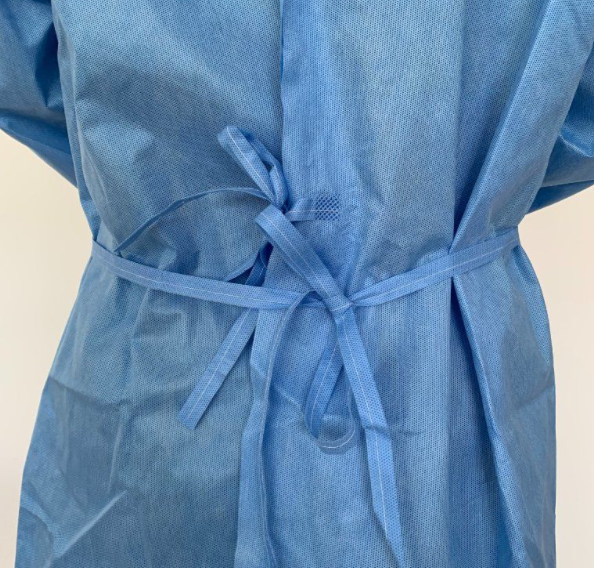
Disposable isolation gowns are single-use garments designed to shield the wearer's torso, arms, and clothing from the transfer of microorganisms and bodily fluids. They are a fundamental component of Contact and Droplet Precautions in infection control protocols. Unlike the regulated surgical gowns used in sterile fields, isolation gowns are used in non-sterile environments but must still meet performance standards for fluid resistance. The global demand for these gowns, accentuated by recent public health crises, has diversified the supply chain. Identifying the right source is not merely about finding a product; it's about ensuring a reliable partnership that delivers quality, compliance, and supply chain resilience.
Procurement strategies can vary based on volume, urgency, compliance requirements, and budget. Here are the main avenues for purchasing disposable isolation gowns.
- Description: Purchasing directly from the factory that produces the disposable isolation gowns. This is common for large-volume buyers, government tenders, or companies seeking private-label (OEM) products.
Advantages:
- Lowest Cost per Unit: Eliminates middleman markups.
- Customization: Ability to specify material, design (e.g., thumb loops, tie-back vs. elastic waist), packaging, and branding.
- Quality Control Direct Access: Direct line to production quality teams.
- Supply Chain Insight: Greater visibility into production capacity and lead times.
- Considerations: Requires significant minimum order quantities (MOQs), involves navigating international trade (if sourcing overseas), and places the burden of regulatory verification and logistics on the buyer. For a medical device OEM like our company, this channel is familiar, as it mirrors how we engage with clients for endoscope systems or video laryngoscopes.
- Description: Established companies like McKesson, Henry Schein, Medline, and Cardinal Health that stock a vast range of medical supplies, including multiple brands and levels of disposable isolation gowns.
Advantages:
- Convenience & Speed: One-stop-shop for all PPE and medical supplies. Faster shipping from regional warehouses.
- Brand Variety: Access to several tested and approved brands.
- Regulatory Assurance: Major distributors typically carry products that are already cleared for the local market (e.g., FDA-registered, CE-marked).
- Volume Flexibility: Can accommodate orders from a single case to truckloads.
- Considerations: Higher per-unit cost compared to direct manufacturing, and selection may be limited to the distributor's contracted brands.
- Description: Digital platforms such as Amazon Business, Alibaba.com (for bulk/manufacturer connections), ThomasNet, and specialized medical equipment websites.
Advantages:
- Broad Supplier Access: Easy to compare specifications, prices, and reviews from numerous sellers globally.
- Transparency: User ratings and feedback can inform decisions.
- Ease of Procurement: Streamlined ordering processes.
- Considerations (Especially on open platforms like Alibaba):
- Quality Verification Risk: Requires extreme due diligence. Not all sellers are authorized distributors or legitimate manufacturers.
- Regulatory Gray Areas: Products may not have appropriate FDA or CE certifications for your market.
- Lead Time Variability: Shipping from overseas can be long and unpredictable.
- Description: Entities that leverage the collective purchasing power of multiple healthcare facilities (hospitals, clinics) to negotiate discounted contracts with manufacturers and distributors.
Advantages:
- Pre-Negotiated Pricing: Significant cost savings due to volume contracts.
- Vetted Suppliers: GPOs pre-qualify suppliers for quality and regulatory compliance.
- Simplified Administration: Reduces the procurement workload for member facilities.
- Considerations: Membership is required, and choices may be limited to the GPO's contracted vendors.
- Description: For public hospitals and institutions, procurement often occurs through centralized government bidding processes or contracts established by national or regional health authorities.
- Process: Involves responding to detailed public tenders (Requests for Proposal - RFPs) with strict technical specifications for disposable isolation gowns, including required certifications (e.g., AAMI PB70 levels) and delivery schedules.
Identifying a source is the first step. Evaluating the product and the partnership is critical.
1. Regulatory Compliance & Certification: The disposable isolation gowns must meet the regulatory requirements of your region (e.g., FDA 510(k) clearance as a Class II device, CE Marking under EU MDR). They should also comply with the ANSI/AAMI PB70 liquid barrier classification standard (Levels 1-4). Always request and verify certification documents.
2. AAMI PB70 Performance Level: Match the gown's protection level to clinical need.
- Level 1-2: Minimal to low fluid exposure risk (standard isolation, visitor gowns).
- Level 3-4: Moderate to high fluid exposure risk (ER, ICU, during procedures with bronchoscopy workstations or handling soiled endoscope systems).
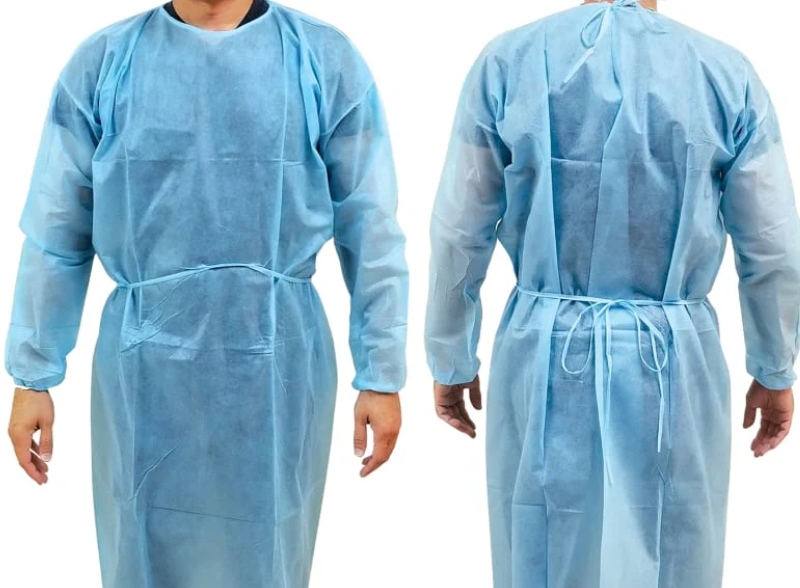
3. Material and Construction: Assess the fabric (e.g., SMS non-woven, polyethylene laminate), seam strength (ultrasonic welding is superior to stitching), and features (tie-back closure, knit cuffs, thumb loops).
4. Supply Chain Reliability & Scalability: Evaluate the supplier's ability to fulfill orders consistently and scale up during surge demand. Do they have multiple manufacturing sites? What is their raw material sourcing strategy?
5. Total Cost of Ownership (TCO): Look beyond unit price. Factor in shipping costs, import duties (if applicable), storage costs, and the clinical cost of gown failure (e.g., contamination due to inadequate protection).
The procurement logic for disposable isolation gowns parallels that for medical devices. As an OEM, we understand that our partners seek not just a product but a reliable supply chain partner. Similarly, when buying disposable isolation gowns:
- Procedure-Specific Needs: The gown used by an assistant during a messy bronchoscopy or ureteroscopy procedure may need to be a higher AAMI level (3 or 4) than one used for routine patient rounding. This mirrors selecting a specific visual flexible laryngoscope model for a difficult airway versus a standard one.
- Bundling with Devices: Some OEM partnerships for procedure kits or mobile carts (video laryngoscope carts, bronchoscopy workstations) may include integrated PPE supply. A partner might procure disposable isolation gowns, medical gloves, and devices from a single OEM provider for streamlined logistics and compatibility.
- Quality as a Non-Negotiable: Just as a defective image sensor in a medical image processor is unacceptable, a disposable isolation gown with poor seam integrity is a critical failure. Both scenarios represent a breakdown in patient and provider safety.
Identifying where to buy disposable isolation gowns requires a strategic approach that balances cost, compliance, quality, and reliability. The optimal channel depends on the buyer's volume, expertise, and risk tolerance. Large healthcare systems may benefit from GPO contracts or direct manufacturer relationships, while smaller clinics might rely on trusted medical distributors for convenience and assured compliance. Regardless of the channel, rigorous due diligence is non-negotiable. Verifying AAMI PB70 ratings, FDA/CE status, and supplier legitimacy is as crucial as the purchase itself. In an interconnected healthcare environment where the integrity of a disposable isolation gown protects the professional who operates a multi-million dollar endoscope system, informed procurement is not an administrative task—it is a critical component of clinical safety and operational resilience. Building a relationship with a reputable supplier is an investment in a stable, safe foundation for all patient care activities.
The most critical certifications are regulatory market clearance (e.g., FDA registration/clearance in the USA, CE Marking in Europe) and compliance with the ANSI/AAMI PB70 performance standard. The AAMI level (1-4) quantifies the gown's liquid barrier protection. Always request the supplier's test reports and certification documents before making a bulk purchase.
Yes, many global manufacturers are based in China, and platforms like Alibaba.com facilitate these connections. However, extreme caution is required. You must:
- Verify the manufacturer is a legitimate factory, not just a trading company.
- Confirm they have experience producing medical-grade gowns to AAMI/FDA/CE standards.
- Request and independently verify all certification documents.
- Order samples for quality testing before committing to a large order.
- Account for shipping costs, import duties, and potential delays. For most hospitals, using a vetted domestic distributor or a highly reputable global manufacturer with a local presence is safer.
For general inpatient care with minimal anticipated fluid exposure (e.g., taking vitals, routine patient interaction), AAMI Level 1 or 2 isolation gowns are typically sufficient. These provide a basic barrier against dry skin squames and light fluid splashes. Level 2 is preferred if any minor fluid contact (e.g., wound drainage) is possible.
Conduct a multi-step verification:
1. Document Review: Scrutinize all provided certifications (FDA, CE, AAMI test reports).
2. Sample Evaluation: Physically test samples. Check seam strength, material tear resistance, and comfort.
3. Supplier Audit: If possible, audit the factory or visit the distributor's warehouse. For overseas manufacturers, third-party inspection services (e.g., SGS, Bureau Veritas) can conduct pre-shipment inspections.
4. Reference Check: Ask for and contact other healthcare facilities that have purchased from the supplier.
Yes, this is a growing segment. Some manufacturers now offer disposable isolation gowns made from biodegradable polymers like polylactic acid (PLA) or from materials with recycled content. However, it is crucial to ensure these "green" options still meet the required AAMI PB70 performance level for your clinical application. They may also come at a premium cost and require specific industrial composting facilities to break down effectively.
[1] https://www.fda.gov/medical-devices/personal-protective-equipment-infection-control/isolation-gowns
[2] https://www.aami.org/docs/default-source/standards-library/ansi-aami-pb70.pdf
[3] https://www.cdc.gov/infectioncontrol/guidelines/isolation/index.html
[4] https://www.ecfr.gov/current/title-21/chapter-I/subchapter-H/part-878/subpart-D/section-878.4040
[5] https://www.who.int/publications/i/item/WHO-2019-nCoV-IPC_PPE_specifications-2020.1
[6] https://www.medicaldevicesgroup.com/how-to-source-medical-devices-from-china/


