
Views: 222 Author: Lake Publish Time: 2025-12-09 Origin: Site


Content Menu
● The Pre-Laryngoscope Era: A "Hidden Organ"
● Manuel García and Indirect Laryngoscopy (1854)
● The Quest for Direct Vision: Early Prototypes
● Alfred Kirstein and the First Direct Laryngoscope (1895)
● Refinement and Standardization: Chevalier Jackson
● Adaptation for Anesthesia: Sir Robert Macintosh (1943)
● The Modern Era: From Fiberoptics to Video Laryngoscopy
● Frequently Asked Questions (FAQ)
>> 1. Is it accurate to say Manuel García invented the laryngoscope?
>> 2. Why is Alfred Kirstein considered the inventor of the direct laryngoscope?
>> 3. What was Chevalier Jackson's major contribution?
>> 4. How did Macintosh change the use of the laryngoscope?
>> 5. How does this history relate to modern Laryngoscope Manufacturers?
The story of the laryngoscope is not one of a single eureka moment by a solitary inventor, but rather a compelling narrative of cumulative innovation spanning nearly a century. From the first indirect glimpse of the vocal cords to the sophisticated direct-view and video laryngoscopes used today, this journey reflects the broader evolution of medical visualization. Understanding this history is particularly relevant for modern Laryngoscope Manufacturers, as today's innovations in video laryngoscopy and OEM device design stand on the shoulders of these pioneering breakthroughs.
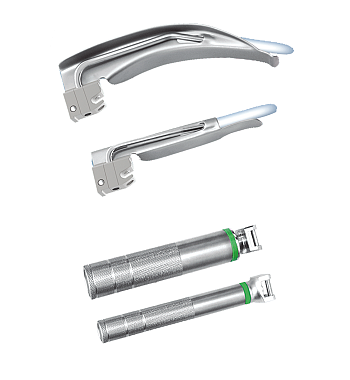
Before the mid-19th century, the living larynx was essentially a medical mystery. Physicians could only infer its condition from a patient's symptoms—hoarseness, stridor, or difficulty breathing. Diagnosis of tumors, infections, or obstructions was often late, and procedures were perilously blind. This profound lack of visualization severely limited therapeutic options and made airway management during anesthesia or emergencies a daunting, life-threatening challenge.
The first pivotal breakthrough came not from a physician, but from a Spanish singing teacher. In 1854, Manuel García became fascinated with the mechanics of his own voice. Using a dental mirror and positioning himself to catch sunlight with a second hand mirror, he successfully viewed the glottis of his own larynx. He published his findings in 1855 in a paper titled "Observations on the Human Voice."
While García did not create a medical device, his demonstration that the larynx could be visualized in a living person was revolutionary. He proved the concept of indirect laryngoscopy. His technique was quickly adopted and refined by pioneering laryngologists like Johann Nepomuk Czermak and Ludwig Türck, who used artificial light sources and head mirrors. However, this method required significant patient cooperation, offered a small, reversed image, and was unsuitable for interventions or emergency airway management. It was a diagnostic tool, not yet a therapeutic one.
The limitations of the mirror sparked efforts to develop instruments for direct viewing. American physician Horace Green is often cited for his aggressive attempts in the 1840s and 50s. He used a bent tongue spatula and sunlight to try to view the larynx directly in children, even reporting the removal of a laryngeal polyp. His "American method" was controversial, painful, and dangerous, but it represented an early, crude attempt at direct laryngoscopy, highlighting the need for a dedicated instrument.
Several other inventors in the late 19th century contributed prototypes. Benjamin Guy Babington exhibited a "glottiscope" in 1829, and John Avery presented a similar design in 1844. These devices used mirrors and sunlight but were impractical and did not gain widespread clinical traction. The missing elements were a reliable, integrated light source and a design optimized for controlled blade insertion.
The individual most credited with inventing the first true direct laryngoscope is German physician Alfred Kirstein. In 1895, frustrated by the limitations of indirect techniques for examining the trachea, Kirstein pioneered "autoscopy" of the larynx. His key innovation was the integration of a distal electric light source on a straight metal blade.
Kirstein's instrument, detailed in his paper "Autoscopy of the Larynx and Trachea," had a blade to retract the tongue and epiglottis and a small electric bulb at its distal end to illuminate the airway directly. This combination—a dedicated blade for retraction and exposure, coupled with directed illumination—established the fundamental architecture of the modern direct laryngoscope. While Kirstein's primary goal was diagnostic visualization for conditions like diphtheria, his invention provided the essential tool that would later be adapted for endotracheal intubation. For this reason, many historians of medical technology recognize Alfred Kirstein as the inventor of the direct laryngoscope.
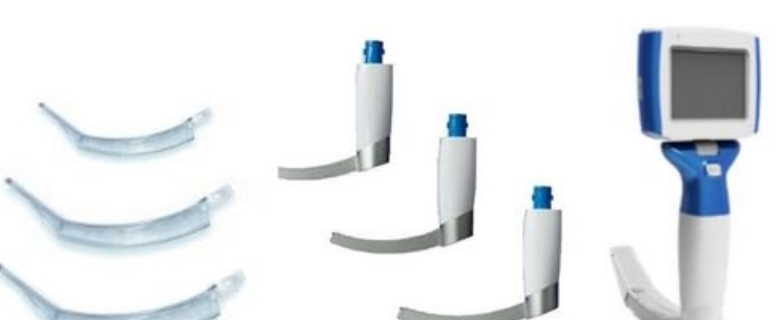
The laryngoscope transitioned from a novel invention to a standardized medical instrument largely through the work of American laryngologist Chevalier Jackson in the early 20th century. Jackson created a comprehensive set of straight blades, introduced distal lighting powered by external sources via a removable battery handle, and systematized the technique of direct laryngoscopy. He published exhaustive atlases and textbooks, training a generation of specialists. His work in Philadelphia established direct laryngoscopy as a cornerstone of otolaryngology, primarily for diagnostic and therapeutic procedures like foreign body removal. Jackson's rigorous approach to instrument design and technique provided a stable platform upon which further innovation could build.
The most transformative adaptation of the laryngoscope occurred not in an ENT clinic, but in the operating theater. Prior to the 1940s, endotracheal intubation for general anesthesia was often performed blindly or by touch. The straight-blade laryngoscope, which required lifting the epiglottis directly, could be traumatic and provided a limited view.
In 1943, British anesthetist Sir Robert Reynolds Macintosh introduced his revolutionary curved blade design. The Macintosh blade was designed to be inserted into the vallecula (the space between the base of the tongue and the epiglottis), indirectly lifting the epiglottis and exposing the glottis. This technique was less traumatic, more consistent, and provided a better physiological view for anesthetists. The "Mac blade" became, and remains, the most widely used laryngoscope blade globally for routine intubation, fundamentally cementing the laryngoscope's role as the primary tool for securing the airway in anesthesia and emergency medicine.
The late 20th and early 21st centuries have witnessed another revolution, moving from direct line-of-sight optics to enhanced camera-based visualization.
- The Flexible Fiberoptic Laryngoscope: Pioneered by Shigeto Ikeda in the 1960s, this device used flexible fiberoptic bundles to transmit light and images. It allowed for nasotracheal intubation and examination of awake, sedated patients, revolutionizing the management of the "difficult airway."
- The Video Laryngoscope: Emerging prominently in the early 2000s, this technology incorporates a miniature digital camera at the tip of the blade, transmitting a real-time, magnified image to a screen. This provides a superior, often wider-angle view without the need to align the oral, pharyngeal, and tracheal axes. It has dramatically increased first-pass intubation success rates, especially in difficult airways, and has become a new standard of care.
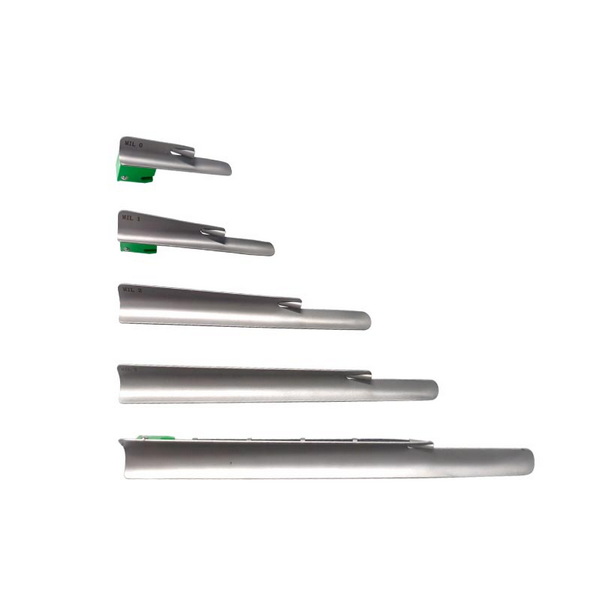
This evolution is the direct purview of today's Laryngoscope Manufacturers. Modern manufacturers develop and produce a vast range of devices, from traditional Macintosh and Miller blades to sophisticated single-use and reusable video laryngoscope systems. Their work in optics, ergonomics, display technology, and sterilization drives the continual improvement of airway management. For companies engaged in OEM services, this history underscores a market that values both the reliability of proven designs (like the Macintosh blade) and relentless innovation in visualization technology.
So, who invented the laryngoscope? If we define it as the first instrument for direct visualization of the larynx with an integrated light source, the credit belongs decisively to Alfred Kirstein in 1895. However, this invention was the culmination of prior insights from Manuel García, Horace Green, and others. It was then refined into a practical tool by Chevalier Jackson and revolutionized for airway management by Robert Macintosh.
The history of the laryngoscope is a testament to iterative progress in medical technology. Each innovator solved a critical piece of the puzzle: García proved visualization was possible; Kirstein created the first dedicated instrument; Jackson standardized its use; Macintosh optimized it for intubation; and Ikeda and modern Laryngoscope Manufacturers overcame the limitations of direct sight with flexible and video technology. From a simple mirror to a high-definition digital screen, the laryngoscope's journey mirrors humanity's enduring quest to see, understand, and safely intervene within the human body. For contemporary Laryngoscope Manufacturers, this legacy is both an inspiration and a responsibility to advance the art and science of airway visualization for future generations.
It is more accurate to say Manuel García invented indirect laryngoscopy. His 1854 mirror experiment was the foundational discovery that proved the larynx could be visualized in a living person. However, he did not create a handheld medical instrument for direct examination or intubation. That crucial step came later with Alfred Kirstein.
Alfred Kirstein is credited because in 1895 he created the first integrated instrument combining a straight blade for mechanical retraction of tissue with a distal electric light source for direct illumination of the larynx. This combination of form and function defines the direct laryngoscope, distinguishing it from earlier mirror-based or poorly illuminated tools.
Chevalier Jackson's contribution was one of systematization and popularization. He standardized blade designs, perfected distal lighting systems, created detailed procedural protocols, and trained countless physicians. He transformed the laryngoscope from an experimental tool into a reliable, mainstream medical instrument for ENT specialists.
Robert Macintosh fundamentally adapted the laryngoscope for routine endotracheal intubation in anesthesia. His 1943 curved blade design, which sits in the vallecula to indirectly lift the epiglottis, was less traumatic and provided a more reliable view for anesthetists. This innovation made the laryngoscope the global standard for securing the airway during surgery and emergencies.
Modern Laryngoscope Manufacturers operate within this rich historical continuum. They produce the evolved descendants of these early inventions: from standard Macintosh and Miller blades to advanced fiberoptic and video laryngoscopes. Their work in R&D focuses on improving upon the core challenges identified by these pioneers—better views, easier insertion, and successful management of difficult airways—using contemporary materials, optics, and digital technology.


