
Views: 222 Author: Lake Publish Time: 2026-01-07 Origin: Site


Content Menu
● Introduction: The Unique Challenge of the Neonatal Airway
● Determining the Correct Blade Size: Guidelines and Rationale
>> 1. The Weight-Based Standard
>> 2. The Gestational Age Correlation
>> 3. Miller vs. Macintosh: The Blade Type Decision
● Anatomical and Practical Considerations for Intubation
>> 2. Technique with a Miller 0 Blade
>> 3. The Role of Video Laryngoscopy
● The Critical Role of Laryngoscope Blade Manufacturers
● Broader Context in Medical Visualization
● Frequently Asked Questions (FAQ)
>> 1. Why is a Miller blade preferred over a Macintosh for a 1.4 kg neonate?
>> 2. What if a Miller 0 blade seems too large or too small during the procedure?
>> 3. Can a video laryngoscope be used for a 32-week, 1.4 kg infant?
>> 4. Are disposable blades safe and effective for neonatal intubation?
>> 5. What other equipment should be prepared alongside the Miller 0 blade for this intubation?
In the high-stakes, delicate environment of neonatal intensive care, precision is not just a goal—it is an absolute necessity. Every instrument, every decision, is magnified by the vulnerability of the tiny patient. The question of what size laryngoscope blade to use for a 32-week, 1.4 kg neonate is a critical one that blends anatomical science, clinical experience, and equipment knowledge. This article delves deeply into the evidence-based guidelines, anatomical considerations, and practical techniques for blade selection in this specific population, while also highlighting the role of specialized laryngoscope blade manufacturers in supporting safe neonatal care.

Neonatal intubation, particularly for premature infants around 32 weeks gestation weighing approximately 1.4 kg, is among the most challenging procedures in medicine. The airway anatomy is markedly different from that of an adult or even a full-term infant: a large tongue, anterior and cephalad larynx, floppy epiglottis, narrowest point at the cricoid ring (not the glottis), and overall tissue fragility. Using an incorrectly sized laryngoscope blade can lead to failed intubation, airway trauma, hypoxia, bradycardia, and long-term complications. Therefore, blade selection is not a matter of approximation but of calculated precision based on weight, gestational age, and anatomical landmarks.
For a 1.4 kg infant at 32 weeks gestation, the consensus from pediatric anesthesia and neonatology guidelines points unequivocally to a Miller (straight) blade, size 0.
The most reliable and commonly used method for initial blade selection is the patient's weight:
- < 1 kg: Miller size 00 (or "premie" blade).
- 1 - 2 kg: Miller size 0.
- 2 - 10 kg: Miller size 1.
Given the infant's weight of 1.4 kg, it falls squarely within the 1-2 kg range, making a Miller size 0 the primary recommendation.
At 32 weeks gestation, the infant is moderately premature. The anatomical development of the larynx and oral cavity corresponds more closely to a weight-based model than to a post-menstrual age model for blade selection. A 32-week airway will still be very small and anterior, favoring the design of a straight blade, which is better suited to directly lift the often omega-shaped epiglottis common in preterms.
- Miller (Straight Blade): This is the blade of choice for neonates and infants. Its straight design allows it to be inserted posterior to the epiglottis to lift it directly, providing a clear view of the vocal cords. For the small, floppy epiglottis of a 1.4 kg baby, this direct-lift technique offers superior control and visualization.
- Macintosh (Curved Blade): Designed to sit in the vallecula and indirectly lift the epiglottis, it is less commonly used in very small neonates as it can occupy too much space in the tiny oropharynx and may not effectively lift the floppy epiglottis. It is typically reserved for older infants and children.
Conclusion for the Clinical Scenario: The evidence-based answer is a Miller size 0 blade.
Beyond the simple size number, successful intubation requires an understanding of how to use this blade effectively in such a small patient.
The neonatal "sniffing position" is subtle. A small towel roll under the shoulders (not the head) can help align the oral, pharyngeal, and tracheal axes without overextending the fragile neck.
- The blade is inserted along the right side of the mouth, gently sweeping the tongue to the left.
- Advance until the epiglottis is visualized.
- The tip of the Miller 0 blade is placed underneath (posterior to) the epiglottis.
- A gentle lifting motion directed at a 45-degree angle towards the caregiver (not a rocking motion using the teeth as a fulcrum) elevates the epiglottis to reveal the vocal cords.
The advent of neonatal video laryngoscope systems has been revolutionary. Using a video laryngoscope with a dedicated neonatal blade (e.g., a hyper-angulated or standard geometry size 0 blade) provides a magnified, high-resolution view on a screen. This improves glottic visualization, reduces excessive lifting force, allows for coaching, and can increase first-pass success rates. Leading laryngoscope blade manufacturers now produce specialized disposable and reusable video blades for this exact population.
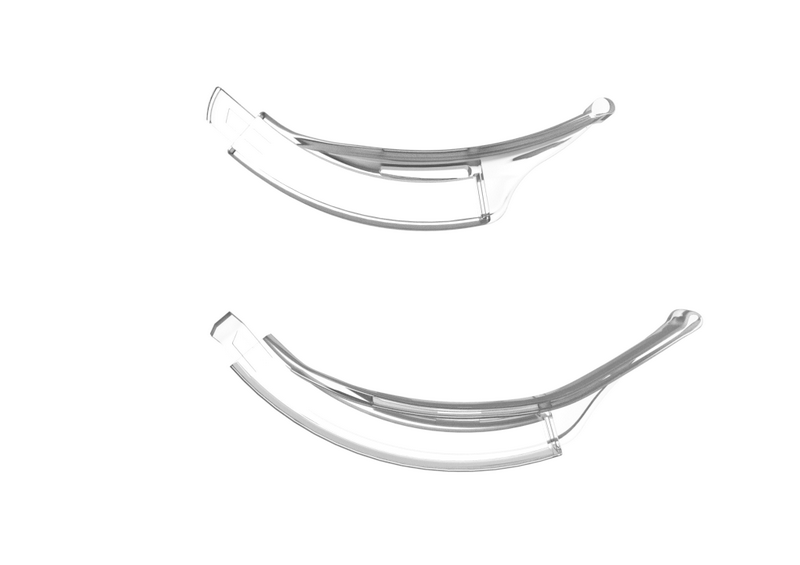
The safety of this procedure is underpinned by the precision and reliability of the equipment, a responsibility borne by laryngoscope blade manufacturers.
- Precision Engineering: Manufacturing a Miller 0 blade that is perfectly sized, with a smooth finish and appropriate light source placement, requires microscopic-level precision. Inconsistent dimensions from poor-quality manufacturers can lead to procedural failure.
- Material Science: Blades must be made of medical-grade stainless steel or compatible polymers that can withstand repeated sterilization (for reusable blades) without corroding or degrading. For disposable blades, used increasingly to prevent cross-contamination in NICUs, materials must be rigid yet safe, with integrated, reliable lighting.
- Specialization in Neonatal Sizes: Reputable laryngoscope blade manufacturers offer a full range of neonatal and pediatric sizes (00, 0, 1). Their product catalogs and instructional materials are vital resources for clinicians.
- Innovation in Visualization: The most advanced laryngoscope blade manufacturers, including those who develop complete video laryngoscope systems, design blades that optimize the camera angle and lighting for the neonatal airway, integrating with high-quality medical image processors for clear visualization.
- OEM and Customization: For companies building specialized resuscitation carts or neonatal intubation kits, partnering with an experienced OEM manufacturer ensures a supply of correctly sized, branded blades that meet specific quality and regulatory standards.
The selection of a laryngoscope blade is the first step in a visualization chain. In complex neonatal cases, such as those requiring prolonged ventilation or with suspected airway anomalies, the initial intubation might be followed by diagnostic procedures using a visual flexible laryngoscope or bronchoscope. The principles of gentle, size-appropriate instrumentation learned in basic laryngoscopy are directly applicable to these more advanced endoscope systems. Furthermore, the medical image processors used in bronchoscopy workstations share technological DNA with those in advanced video laryngoscope carts, emphasizing the interconnectedness of visualization technology across specialties.
For a 32-week, 1.4 kg neonate, the meticulously researched and clinically validated answer is a Miller size 0 straight laryngoscope blade. This selection is based on a primary weight-based guideline, supported by the anatomical realities of the premature airway, which favor the direct-lift technique of a straight blade. Mastery of intubation at this scale, however, extends beyond mere blade selection. It encompasses gentle technique, optimal positioning, and an increasing reliance on the enhanced visualization provided by neonatal video laryngoscope technology. The reliability of this fundamental choice is ultimately guaranteed by the expertise of specialized laryngoscope blade manufacturers who commit to producing precision instruments for our most vulnerable patients. In neonatal care, there is no room for error, and the correct blade size is the foundational step on the path to securing a safe airway and a hopeful future.
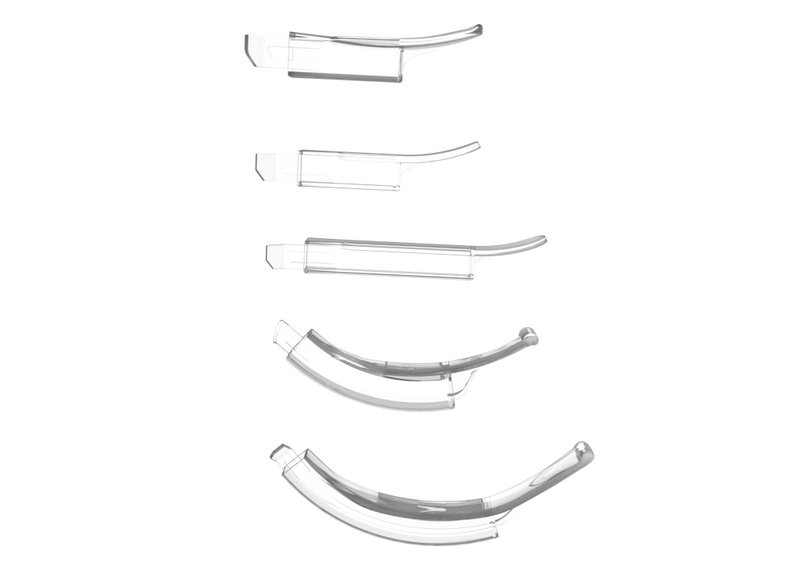
The Miller (straight) blade is preferred because it allows for direct elevation of the epiglottis. The epiglottis in a premature neonate is often floppy and omega-shaped. The straight blade can be positioned underneath it to lift it directly out of the visual pathway, providing a more reliable view of the vocal cords. The curved Macintosh blade, designed for indirect elevation from the vallecula, can be less effective in this anatomy and may occupy too much space in the neonate's tiny oropharynx.
Clinical judgment at the bedside is paramount. Have the next size available. If the Miller 0 appears too long and is entering the esophagus, or visualization is poor, switch to a smaller blade like a Miller 00. If it seems too short and cannot reach the epiglottis, a Miller 1 might be tried, though this is less likely for a 1.4 kg infant. This underscores the necessity for laryngoscope blade manufacturers to provide full, precise size ranges and for clinicians to have a prepared kit.
Yes, and it is increasingly recommended. Dedicated neonatal video laryngoscope blades (size 0 or equivalent) are produced by leading laryngoscope blade manufacturers. They offer a superior, magnified view on a screen, which can reduce the need for excessive lifting force, improve first-attempt success, and allow for team coaching. The principles of blade size selection (Miller 0) remain the same, whether using a direct or video device.
Yes, when sourced from reputable laryngoscope blade manufacturers, disposable neonatal blades are clinically effective and enhance safety by eliminating cross-contamination risk. They are sterile, single-use items that guarantee a sharp, clean light source every time. Their performance is designed to match reusable blades, and they are becoming standard in many NICUs to avoid reprocessing errors and costs.
Proper preparation is critical. The setup should include:
- Endotracheal Tube (ETT): Typically an uncuffed tube, size 2.5 or 3.0 mm internal diameter for a 1.4 kg infant.
- Stylet: A small, soft, flexible stylet to shape the ETT, should not protrude beyond the tube tip.
- Suction: Working suction with a appropriately sized (e.g., 8Fr) catheter.
- Magill Forceps: For potential guidance.
- Alternative Blades: A Miller 00 blade as a backup.
- Monitoring: Pulse oximeter, cardiac monitor, and ideally, a carbon dioxide detector for confirmation.
- Personnel: At least two experienced providers.
[1] https://www.ncbi.nlm.nih.gov/books/NBK537278/ (Neonatal Resuscitation)
[2] https://www.aap.org/en/clinical-care/neonatal-resuscitation-program/
[3] https://journals.lww.com/ejanaesthesiology/fulltext/2021/10000/pediatric_airway_management__a_practical_guide.5.aspx
[4] https://www.uptodate.com/contents/emergency-endotracheal-intubation-in-children
[5] https://www.rcoa.ac.uk/safety-standards-quality/guidance-resources/pediatric-airway-guidelines
[6] https://www.fda.gov/medical-devices/general-hospital-devices-and-supplies/laryngoscopes
[7] https://www.healthychildren.org/English/ages-stages/prenatal/delivery-beyond/Pages/Neonatal-Resuscitation.aspx
[8] https://www.nhlbi.nih.gov/news/2023/new-recommendations-infant-resuscitation


