
Views: 222 Author: Lake Publish Time: 2026-01-04 Origin: Site


Content Menu
● Introduction: The First Line of Textile Defense
● The Primary Fabric: Non-Woven Technology
● Key Material Constructions and Composites
>> 1. Spunbond-Meltblown-Spunbond (SMS) Composite
>> 3. Film-Reinforced or Laminated Fabrics
● Performance Standards: The AAMI PB70 Classification
● The Manufacturing Process: From Polymer to Gown
● Material Considerations for the Medical Visualization Environment
● Sustainability and Future Material Innovations
● Frequently Asked Questions (FAQ)
>> 1. What is the difference between isolation gowns and surgical gowns?
>> 2. Can I wash and reuse a disposable isolation gown?
>> 3. How do I know what level of isolation gown I need?
>> 4. Why are some isolation gowns very crinkly and others soft?
>> 5. Are there environmentally friendly isolation gowns?
In the intricate ecosystem of modern healthcare, protection operates on multiple fronts. We recognize that the safe application of these sophisticated tools is predicated on a foundation of fundamental barrier protection. Chief among these barriers are isolation gowns, the ubiquitous garments that shield healthcare workers from infectious agents. This article provides a comprehensive examination of the materials that constitute disposable isolation gowns, exploring their composition, performance standards, and critical role in complementing procedural safety in environments where medical visualization is key.
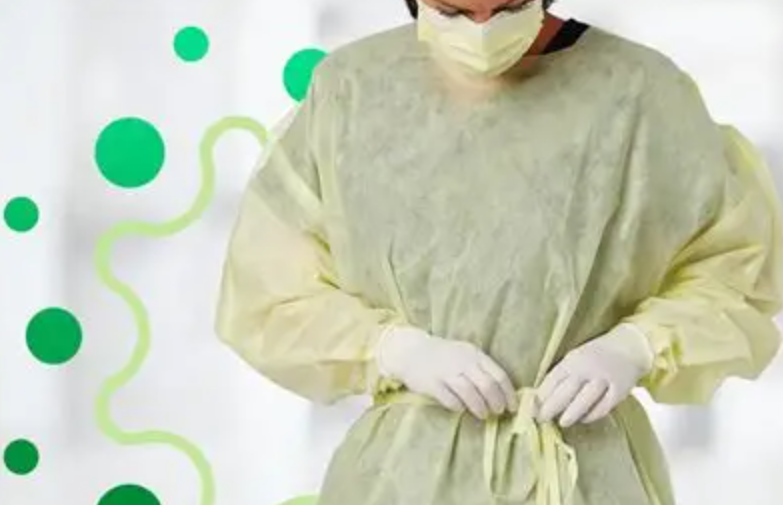
Isolation gowns are single-use or limited-use garments designed to protect the wearer's torso, arms, and clothing from the transfer of microorganisms and bodily fluids during patient care activities. Unlike surgical gowns, which are regulated devices for sterile operative fields, isolation gowns are employed in non-sterile settings for isolation precautions, routine patient care, and procedures with a risk of splash or spray. The material from which an isolation gown is constructed directly determines its protective capability, comfort, and appropriate clinical application. As an OEM partner for global medical brands, we understand that material science is as crucial for PPE as it is for the fluid-resistant coatings on our video laryngoscopes or the flexible sheaths of our disposable ureteroscopes.
The vast majority of disposable isolation gowns are manufactured from non-woven fabrics. Unlike woven or knitted textiles made from spun yarns, non-wovens are engineered sheets produced by bonding fibers together through mechanical, chemical, thermal, or solvent processes. This method allows for the direct creation of a fabric with specific barrier properties from raw polymers. The most common polymers used include:
- Polypropylene (PP): The workhorse of the industry. It is lightweight, hydrophobic (water-repelling), and cost-effective. PP is often used in its spunbond form (continuous filaments bonded) for strength or meltblown form (extremely fine fibers) for superior filtration.
- Polyester (PET): Often used to add strength and durability to the fabric blend.
- Polyethylene (PE): Frequently used as a film or coating to enhance fluid barrier properties, though it can reduce breathability.
The level of protection offered by isolation gowns is a function of their material construction. The industry uses several standardized fabric types:
This is the gold standard for moderate-risk isolation gowns. SMS is a three-layer laminate:
- Outer Spunbond Layer: Provides durability and initial liquid repellency.
- Middle Meltblown Layer: The critical barrier; a dense web of microfibers that blocks the penetration of fluids, bacteria, and particulate matter.
- Inner Spunbond Layer: Offers comfort against the skin and helps manage moisture.
SMS fabric provides an optimal balance of protection (resisting fluid penetration under pressure) and breathability, making it suitable for prolonged wear during procedures involving our bronchoscopy workstations or patient isolation scenarios.
Single-layer or multiple layers of spunbond PP are used for isolation gowns intended for minimal risk, such as standard isolation or basic patient care with no anticipated fluid exposure. These gowns are breathable and inexpensive but offer limited fluid resistance.
For high-risk situations where imperviousness is required, isolation gowns incorporate a continuous plastic film (e.g., polyethylene or polyurethane) laminated to a non-woven substrate. This creates a virtually impenetrable barrier to fluids and viruses. These are essential during high-fluid-volume procedures but are less breathable and can lead to heat stress.
A more advanced laminate, where a thin film with microscopic pores is used. These pores are small enough to block liquids and pathogens but allow water vapor to pass through, significantly improving breathability and comfort for the wearer during lengthy tasks, such as those involving complex medical image processor setup or monitoring.
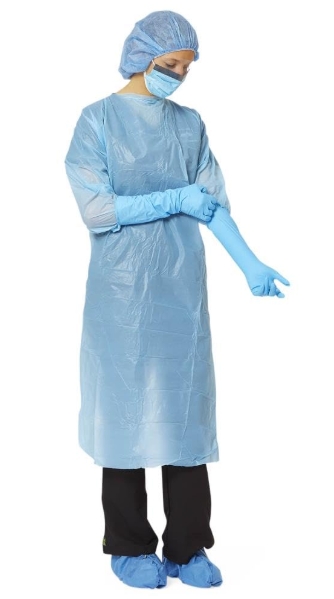
The materials are engineered and tested to meet the ANSI/AAMI PB70 standard, which classifies isolation gowns (and other protective apparel) into four levels based on their liquid barrier performance:
- Level 1 (Minimal Risk): Gowns are made from basic non-wovens like lightweight spunbond PP. Tested only for water repellency (simulating incidental contact). Suitable for basic care.
- Level 2 (Low Risk): Typically made from SMS or similar. Must resist water and a small amount of synthetic blood under minimal pressure. Used for procedures like peripheral IV insertion or suturing.
- Level 3 (Moderate Risk): Made from heavier-weight SMS or fabrics with a slight film reinforcement. Must resist synthetic blood penetration under higher pressure. Used for arterial blood draws, emergency room trauma, or handling contaminated medical visualization equipment post-procedure.
- Level 4 (High Risk): Constructed from laminated or film-reinforced fabrics. Must resist viral penetration and synthetic blood under even higher pressure. Used in settings with high fluid exposure risk, such as during major surgery or when dealing with highly infectious pathogens.
The creation of isolation gowns is a highly automated, continuous process:
1. Polymer Extrusion & Web Formation: Polymer resins are melted and extruded to form fibers (spunbond or meltblown) which are deposited onto a conveyor belt, forming a web.
2. Bonding & Lamination: The fiber web is bonded. For SMS, the three layers are combined in-line. For laminated gowns, a film is extruded directly onto the non-woven fabric.
3. Finishing: The fabric may be treated with fluorochemicals for enhanced fluid repellency.
4. Cutting & Assembling: Fabric rolls are die-cut into panels. Gowns are assembled using ultrasonic welding (which seals without creating stitch holes) or sewing. Elastic cuffs, tie-backs, and reinforcement patches are added.
5. Sterilization (if required): Some isolation gowns intended for use in critical zones are sterilized using ethylene oxide (EtO) or gamma irradiation.
6. Packaging: Gowns are folded, packaged, and shipped for distribution.
The choice of isolation gown material is context-dependent, especially in procedure rooms utilizing advanced visualization:
- Pre-Procedure Setup: Technicians donning Level 2 or 3 isolation gowns can safely uncouple sterile components, connect endoscope systems to medical image processors, and prepare the bronchoscopy workstation without risk of contaminating the environment or themselves.
- During the Procedure: While the primary surgeon may wear a sterile surgical gown, assisting staff often wear Level 3 isolation gowns to protect against splashes from irrigation fluids used during procedures with disposable ureteroscopes or visual flexible laryngoscopes.
- Post-Procedure & Reprocessing: Staff handling soiled scopes prior to high-level disinfection require the superior fluid resistance of Level 3 or 4 isolation gowns, coupled with heavy-duty gloves, to prevent exposure to bioburden.
The environmental impact of disposable isolation gowns is a significant challenge, driving material innovation:
- Biodegradable Polymers: Research is focused on isolation gowns made from polylactic acid (PLA) derived from corn starch or other bio-based sources that break down more readily in industrial composters.
- Recycled Content: Some manufacturers are exploring the incorporation of recycled polyester or polypropylene into non-woven fabrics.
- Durable Reusable Gowns: For certain risk levels, reusable isolation gowns made from tightly woven polyester/cotton blends, which can be laundered dozens of times, present a sustainable alternative.
- Enhanced Comfort Fabrics: Innovations aim to improve the breathability of high-level barrier fabrics, making them more comfortable for long-duration use in complex image-guided interventions.
Isolation gowns are not simple garments but are complex, engineered products whose material composition—from basic spunbond polypropylene to advanced SMS composites and laminated films—directly dictates their protective function. Governed by the AAMI PB70 standard, these materials are meticulously selected to match the clinical risk, balancing barrier integrity with wearer comfort. In the world of medical visualization, where technology provides the eyes for diagnosis and treatment, isolation gowns provide the essential shield that allows healthcare professionals to operate that technology safely and effectively. As material science advances, the future promises isolation gowns that offer uncompromised protection while addressing pressing environmental concerns, ensuring this critical component of PPE evolves in step with the medical devices it helps enable.
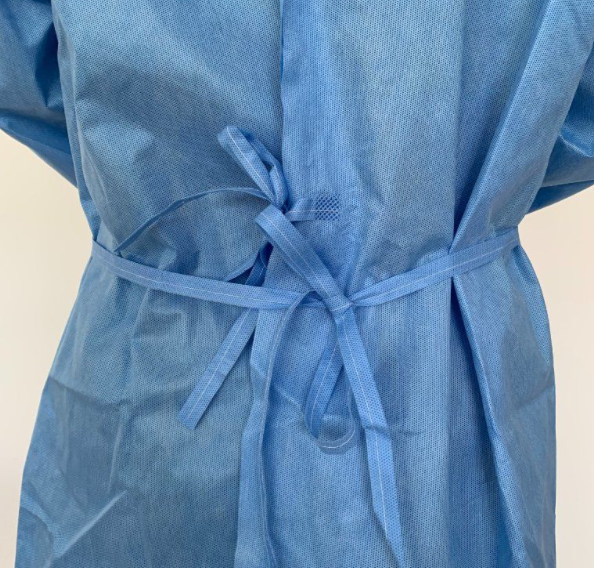
The key differences lie in intended use, regulatory class, and protective scope. Isolation gowns are for use in non-sterile environments to protect against the spread of contaminants; they cover the torso and arms but may have uncovered areas. Surgical gowns are sterile, regulated Class II medical devices designed to create a critical barrier in the sterile surgical field, with specific requirements for the critical zone (front, from chest to knees). Surgical gowns undergo more rigorous testing for liquid barrier performance.
No, disposable isolation gowns are designed and tested for single use only. Washing or disinfecting them can compromise the material's integrity, degrade the protective barrier (e.g., cause delamination of SMS layers or alter fluid-repellent treatments), and potentially create micro-tears. Reuse significantly increases the risk of contamination and infection transmission.
Select the level based on the anticipated risk of exposure to fluids or pathogens:
- Level 1: Basic care, standard isolation.
- Level 2: Blood draws, suturing, working in an ICU.
- Level 3: Arterial procedures, emergency trauma, handling contaminated linens or equipment.
- Level 4: Major surgery, when pathogen resistance is required.
Always adhere to your facility's infection control policies and risk assessments.
The "crinkly" feel often comes from isolation gowns made with polyethylene film laminates or heavy SMS layers, which prioritize high fluid barrier over drape and softness. Softer isolation gowns typically use finer, more textile-like non-woven constructions or microporous films that offer better comfort and breathability, often suitable for moderate risk levels.
The industry is actively developing more sustainable options. These include gowns made from biodegradable materials like PLA, gowns incorporating recycled content, and systems promoting reusable gowns for appropriate settings. However, balancing stringent medical performance standards, cost, and true end-of-life sustainability remains a significant challenge for widespread adoption.
[1] https://www.fda.gov/medical-devices/personal-protective-equipment-infection-control/isolation-gowns
[2] https://www.cdc.gov/infectioncontrol/guidelines/isolation/index.html


