


Content Menu
● Introduction: Redefining Airway Visualization
● Core Components and How It Works
● Key Clinical Applications and Advantages
>> 1. Management of Difficult and Anticipated Difficult Airways
>> 2. Improving First-Pass Success Rate
>> 3. Enhanced Teaching and Team Communication
>> 4. Routine Use in Operating Rooms and ICUs
>> 5. Integration with Broader Visualization Platforms
● Types of Video Laryngoscopes
● The Ecosystem of Video Laryngoscope Manufacturers
● Frequently Asked Questions (FAQ)
>> 1. Is a video laryngoscope difficult to learn for someone used to direct laryngoscopy?
>> 2. Are disposable video laryngoscopes as good as reusable ones?
>> 3. Can a video laryngoscope be used on all patients, including infants?
>> 4. What are the main limitations or drawbacks of video laryngoscopy?
>> 5. What should a hospital look for when choosing a video laryngoscope manufacturer/supplier?
In the critical moments of airway management, where every second counts and anatomical visibility is paramount, the video laryngoscope has emerged as a transformative technological advancement. At [Your Company Name], as specialists in medical visualization and OEM services for a comprehensive portfolio including endoscope systems, disposable ureteroscopes, visual flexible laryngoscopes, bronchoscopy workstations, medical image processors, and video laryngoscopes, we are at the forefront of this evolution. This device represents a fundamental shift from traditional techniques, enhancing both patient safety and clinical efficacy. This article provides a detailed exploration of the video laryngoscope: its definition, working principles, clinical applications, and the pivotal role played by global video laryngoscope manufacturers in driving this innovation forward.
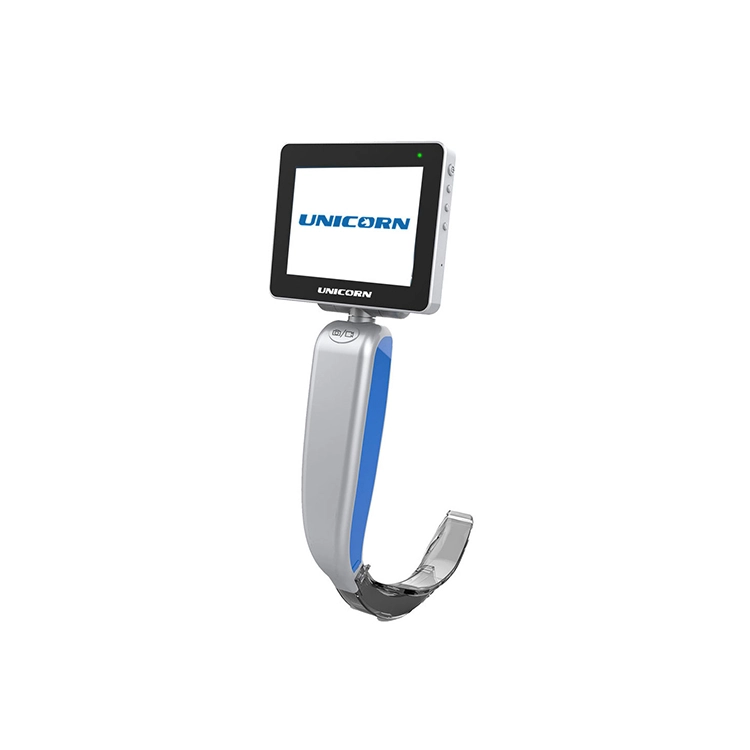
A video laryngoscope is an advanced airway management device used primarily for endotracheal intubation—the placement of a breathing tube into the trachea. Unlike a direct laryngoscope, which requires the clinician to attain a direct line-of-sight from their eye to the patient's vocal cords, a video laryngoscope employs a miniaturized digital camera (typically a CMOS sensor) positioned at the tip of its blade. This camera transmits a real-time video feed to a dedicated handheld screen, a cart-based monitor, or an integrated display. This indirect visualization method fundamentally changes the geometry and success dynamics of intubation, making it a cornerstone of modern difficult airway management and, increasingly, routine airway management protocols.
Understanding a video laryngoscope requires familiarity with its integrated system, a testament to the engineering expertise of video laryngoscope manufacturers.
1. The Blade: Similar in shape to traditional Macintosh or Miller blades, or featuring novel hyper-angulated designs, the blade houses the critical components. It is designed to displace soft tissue (tongue, epiglottis) to create a pathway.
2. The Camera Module: A tiny, high-resolution, often anti-fogging camera is embedded near the distal end of the blade. This is the "eye" of the device.
3. Light Source: High-intensity LEDs surround the camera, illuminating the dark airway without the heat and burnout issues of traditional bulbs.
4. The Handle/Controller: Contains the power source (often rechargeable batteries), user controls (e.g., image capture, brightness), and the physical interface connecting to the blade. In many designs, the screen is attached here.
5. The Display Screen: This can be a small LCD screen integrated into the handle or a larger, separate monitor on a portable cart. It shows the live feed from the camera, providing a clear, magnified view of the glottis.
6. Image Processing Unit: Sophisticated video laryngoscope manufacturers integrate a medical image processor within the system. This hardware and software enhance image quality, manage video recording and storage, and may overlay graphical guides.
The Procedure: The clinician inserts the blade into the patient's mouth along a standard or modified path. Instead of straining to peer down the blade's axis, they watch the screen. The camera's view, looking forward from the blade tip, reveals the glottis without requiring alignment of the oral, pharyngeal, and tracheal axes. The endotracheal tube is then guided into view on the screen and advanced through the vocal cords under continuous visual guidance.
The adoption of video laryngoscope technology is driven by its demonstrable benefits across numerous clinical scenarios.
This is the flagship application. A video laryngoscope excels where direct laryngoscopy often fails:
- Limited Mouth Opening: The camera can see "around corners," requiring less oral access.
- Unfavorable Anatomy: Conditions like a large tongue, short neck, or anterior larynx become less obstructive.
- Cervical Spine Immobilization: Intubation can be performed with minimal neck movement, as the need for the "sniffing position" is reduced.
It is a first-line tool in difficult airway carts and algorithms worldwide.
Studies consistently show that video laryngoscope use increases the likelihood of successful intubation on the first attempt. This is crucial, as multiple attempts are associated with complications like hypoxia, airway trauma, and hemodynamic instability.
The external display transforms airway management from a solo act into a team-oriented procedure. Instructors can see exactly what the trainee sees, providing real-time guidance. Team members can anticipate the operator's needs, and the shared visual confirmation of tube placement is invaluable.
Many institutions now advocate for the use of a video laryngoscope as the first-choice device for all intubations, not just difficult ones. This "video-first" strategy standardizes equipment, improves skill retention for providers, and maximizes preparedness for unexpected difficulties.
Advanced systems from leading video laryngoscope manufacturers can connect to hospital networks, allowing for:
- Procedure Recording: For documentation, quality assurance, and medico-legal purposes.
- Live Streaming: For remote supervision or telemedicine consultation.
- Integration with Bronchoscopy Workstations: In hybrid procedures, a video laryngoscope may be used to initially secure the airway before switching to a flexible bronchoscope for lower airway inspection, with both feeds managed by the same medical image processor.
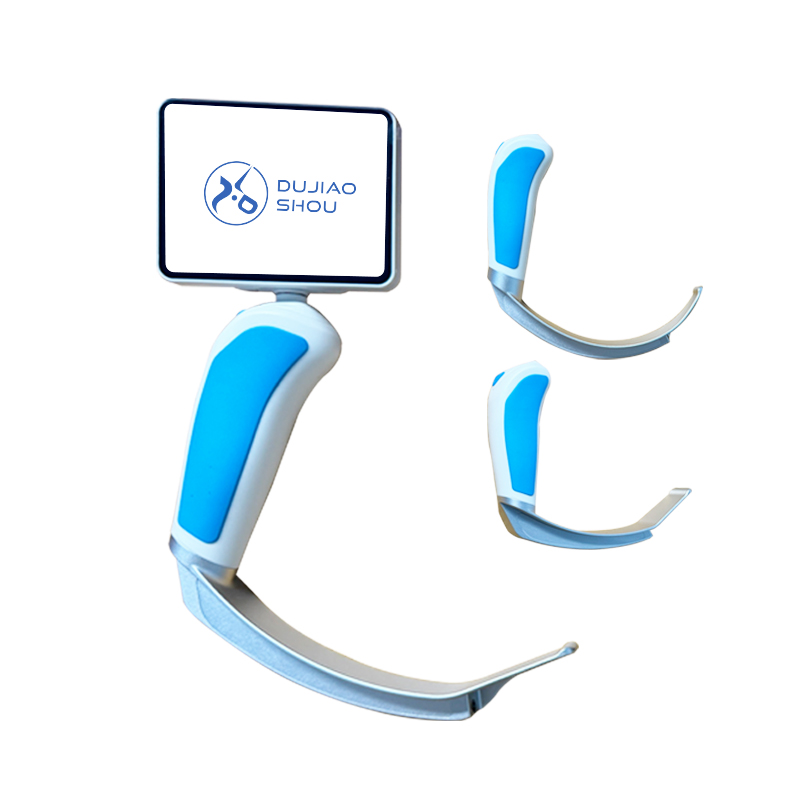
Video laryngoscope manufacturers have developed various models to suit different needs and budgets:
- Standard Geometry Blades: Resemble traditional Macintosh blades. They allow for both direct and video viewing, easing the transition for experienced clinicians.
- Hyper-angulated Blades: Feature a pronounced curve (often 60-90 degrees). These are specifically designed for video-only use and are exceptionally effective for severely anterior airways, but may require the use of a stylet or channeled introducer for tube delivery.
- Channeled Devices: Incorporate a guide channel integrated into the blade that directs the endotracheal tube toward the glottic opening, simplifying tube delivery, especially with hyper-angulated blades.
- Portable/Disposable Units: Compact, all-in-one devices often designed for single-use or with disposable blades. These are ideal for emergency departments, rapid response teams, and field use, emphasizing infection control and operational readiness.
- Cart-Based Systems: More substantial units with larger monitors, integrated recording, and storage. They are the core of an anesthesia department's or ICU's airway station and share operational DNA with bronchoscopy workstations.
The reliability, innovation, and accessibility of this technology are directly fueled by video laryngoscope manufacturers. Their multifaceted role includes:
- Hardware Innovation: Continuously improving camera miniaturization, display resolution, battery technology, and blade ergonomics. The development of single-use, cost-effective video laryngoscope units is a major industry focus, mirroring trends in disposable ureteroscopes.
- Software and Imaging Development: Creating intuitive user interfaces, image enhancement algorithms, and connectivity solutions via integrated medical image processors.
- Regulatory Mastery: Navigating complex FDA, CE Mark, and other global regulatory pathways to ensure devices meet stringent safety and performance standards.
- OEM/ODM Partnerships: Many global medical brands rely on specialized video laryngoscope manufacturers for OEM production. Companies like ours provide end-to-end service, from design and prototyping to mass manufacturing, quality control, and regulatory support, enabling partners to launch their own branded airway solutions efficiently.
- Clinical Education and Support: Leading manufacturers invest heavily in training programs, simulation tools, and clinical evidence generation to support safe adoption and demonstrate value to healthcare systems.
The video laryngoscope is more than just an incremental improvement; it is a paradigm shift in airway management. By replacing the constrained, single-viewer perspective of direct laryngoscopy with a shared, high-resolution video feed, it enhances visualization, improves success rates, reduces complications, and transforms team dynamics. The rapid evolution and diversification of devices—from hyper-angulated blades to disposable units—are a direct result of the competitive and innovative drive among global video laryngoscope manufacturers. As the technology continues to converge with trends in digital integration, connectivity, and disposability, its role will only become more central. For clinicians, mastering the video laryngoscope is now an essential skill. For healthcare providers and partners, collaborating with experienced and reliable video laryngoscope manufacturers is key to accessing the tools that define modern, safe, and effective patient care from the very first breath.
While there is a learning curve, most practitioners find it intuitive and often easier to master than direct laryngoscopy for difficult cases. The key difference is hand-eye coordination: your hands manipulate the blade while your eyes look at the screen, not down the patient's throat. With practice, this becomes natural. Many video laryngoscope manufacturers provide excellent training resources and simulators to accelerate proficiency.
Modern disposable video laryngoscope systems from reputable manufacturers are highly effective for clinical intubation. They offer significant advantages: guaranteed sterility for every patient, zero risk of cross-contamination, no maintenance or reprocessing costs, and immediate availability. While high-end reusable systems may offer more features (e.g., larger screens, recording), the clinical core performance of disposables is excellent and is increasingly the standard for emergency and routine use.
Yes, but with important considerations. Leading video laryngoscope manufacturers produce blades and systems specifically designed for pediatric and neonatal patients. These feature appropriately sized blades and modified ergonomics. The principles remain the same, but device selection must be age- and size-appropriate. It is a highly valuable tool in pediatric difficult airway management.
Potential limitations include:
- Cost: Initial purchase and, for disposables, per-use cost can be higher than traditional blades.
- Fogging or Contamination: The camera lens can fog or be obscured by secretions, though most manufacturers incorporate anti-fog technology and lens cleaning swipes are used.
- Screen Dependency: A device malfunction or dead battery renders it unusable, unlike a direct laryngoscope. Having a backup direct laryngoscope is always recommended.
- Tube Delivery Challenge (with hyper-angulated blades): Seeing the glottis is easier, but guiding the tube through it can sometimes require different techniques or stylet use.
Critical factors include:
- Clinical Evidence & Reputation: Look for strong peer-reviewed data and a good reputation among clinicians.
- Product Range & Appropriateness: Does the manufacturer offer the types of blades (standard, hyper-angulated, pediatric) and form factors (disposable, cart-based) your facility needs?
- Total Cost of Ownership: Consider not just unit price, but costs of blades, batteries, repairs, and service contracts.
- Ease of Use & Training: The user interface should be intuitive, and the manufacturer should offer robust training and support.
- OEM Capability (if applicable): For companies looking to private label, the manufacturer's experience in OEM/ODM services, regulatory support, and design flexibility are paramount.
[1] https://www.ncbi.nlm.nih.gov/books/NBK539747/
[2] https://www.asahq.org/standards-and-guidelines/statement-on-the-use-of-video-laryngoscopy-for-endotracheal-intubation
[3] https://www.fda.gov/medical-devices/general-hospital-devices-and-supplies/video-laryngoscopes
[4] https://www.apsf.org/article/video-laryngoscopy-should-be-standard-of-care-for-elective-intubations/
[5] https://www.rcoa.ac.uk/safety-standards-quality/guidance-resources/airway-management-guidelines


