
Views: 222 Author: Lake Publish Time: 2026-02-26 Origin: Site


Content Menu
● Regulatory Classification and Oversight
>> Surgical Gowns: Class II Medical Devices
>> Isolation Gowns: Class I or Class II Devices
● Critical Zones of Protection
>> Surgical Gown Critical Zones
>> Isolation Gown Critical Zones
● Barrier Performance Standards: ANSI/AAMI PB70
● European Standards: EN 13795
● Design and Physical Characteristics
>> Surgical Gown Design Features
>> Isolation Gown Design Features
● Intended Use and Clinical Applications
>> Isolation Gown Applications
● Color Coding and Visual Identification
>> Blue Gowns
>> Yellow Gowns
● Donning and Doffing Procedures
● Updated Standards: ANSI/AAMI PB70:2022
● What the Standards Do Not Cover
● Frequently Asked Questions (FAQs)
>> 1. What is the main difference between an isolation gown and a surgical gown?
>> 2. What do the different AAMI protection levels mean for gowns?
>> 3. Are isolation gowns sterile?
>> 4. Can an isolation gown be used as a surgical gown?
>> 5. What materials are used in isolation gowns vs. surgical gowns?
In the complex ecosystem of personal protective equipment (PPE), medical gowns serve as critical barriers against infection transmission. However, the terms "isolation gown" and "surgical gown" are often used interchangeably despite representing distinctly different categories of protective apparel. Understanding these differences is essential for healthcare professionals, procurement specialists, and infection control practitioners to ensure appropriate protection in clinical settings. This comprehensive guide explores the fundamental differences between isolation gowns and surgical gowns, examining their regulatory classifications, design features, protection levels, and appropriate clinical applications.
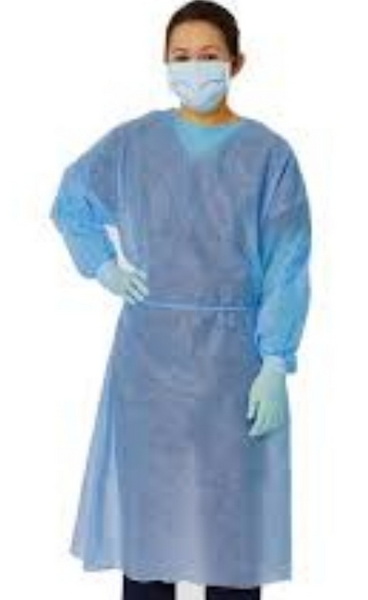
The U.S. Food and Drug Administration (FDA) provides clear regulatory distinctions between different types of medical gowns based on their intended use and risk classification .
Surgical gowns are regulated by the FDA as Class II medical devices that require 510(k) premarket notification . This higher level of regulatory scrutiny reflects their use in sterile surgical environments where the risk of infection transmission is greatest. A surgical gown is defined as a personal protective garment intended to be worn by healthcare personnel during surgical procedures to protect both the patient and healthcare personnel from the transfer of microorganisms, body fluids, and particulate matter .
Because of the controlled nature of surgical procedures, national standards have described critical zones of protection that include the front of the body from the top of shoulders to knees and the arms from the wrist cuff to above the elbow . All surgical gowns must be provided sterile and labeled as surgical gowns .
Isolation gowns fall into two regulatory categories depending on their intended use :
Non-surgical isolation gowns are regulated as Class I medical devices (exempt from premarket review) and are intended to protect the wearer from the transfer of microorganisms and body fluids in low or minimal risk patient isolation situations. These gowns are not worn during surgical procedures, invasive procedures, or when there is a medium to high risk of contamination .
Surgical isolation gowns represent a hybrid category regulated as Class II medical devices requiring 510(k) clearance. These are used when there is a medium to high risk of contamination and a need for larger critical zones than traditional surgical gowns .
One of the most significant differences between isolation gowns and surgical gowns lies in their designated critical zones—the areas requiring the highest level of barrier protection .
For surgical gowns, the critical zones are specifically defined and limited :
- The entire front of the gown (from chest to knees)
- The sleeves from the cuff to above the elbow
- The back of the surgical gown may be non-protective
These zones are where direct contact with blood, bodily fluids, and other potentially infectious material is most likely to occur during surgical procedures. The standard requires that the front of the gown and the sleeve critical zones have a barrier performance of at least Level 1, while the back panel may be non-protective .
For both surgical isolation gowns and non-surgical isolation gowns, the critical zone definition is significantly more extensive :
The entire gown—including all areas except bindings, cuffs, and hems—is considered a critical zone of protection and must meet the highest liquid barrier protection level for which the gown is rated. All seams must have the same liquid barrier protection as the rest of the gown .
This comprehensive coverage reflects the different use patterns of isolation gowns, where healthcare workers may encounter contaminants from any direction during patient care activities, not just from the front as in controlled surgical environments.
Both isolation gowns and surgical gowns are classified according to the American National Standards Institute/Association for the Advancement of Medical Instrumentation (ANSI/AAMI) PB70 standard, which establishes a system for liquid barrier performance and classification . However, the application of these levels differs between gown types.
The ANSI/AAMI PB70 standard, most recently updated in 2022, defines four levels of barrier protection based on standardized test methods :
| AAMI Level | Protection Description | Test Requirements | Typical Applications |
|---|---|---|---|
| Level 1 | Minimal risk, minimal water resistance | AATCC 42: ≤4.5 g | Basic care, standard isolation, visitor gowns |
| Level 2 | Low risk, resistant to water spray and some penetration under pressure | AATCC 42: ≤1.0 g; AATCC 127: ≥20 cm | Blood draw, suturing, ICU, pathology lab |
| Level 3 | Moderate risk, higher resistance to water penetration | AATCC 42: ≤1.0 g; AATCC 127: ≥50 cm | Arterial blood draw, IV insertion, ER, trauma |
| Level 4 | High risk, blood and viral penetration resistance | ASTM F1670 (blood) & ASTM F1671 (viral): no penetration at 13.8 kPa | Long fluid-intense procedures, surgery, infectious disease suspected |
Understanding the test methods helps clarify the protection each level provides :
- AATCC 42 (Impact Penetration Test): Measures water resistance by spraying the fabric and weighing the amount of water that penetrates. Lower weights indicate better barrier performance.
- AATCC 127 (Hydrostatic Pressure Test): Measures resistance to water penetration under constantly increasing pressure. Higher centimeters of water pressure resistance indicate better barrier performance.
- ASTM F1670 (Synthetic Blood Penetration Test): Determines the ability of a material to resist penetration of synthetic blood under constant contact pressure.
- ASTM F1671 (Viral Penetration Test): Uses bacteriophage Phi-X174 (one of the smallest known viruses, similar in size to hepatitis C) to test resistance to viral penetration . Level 4 gowns must pass this test.
In Europe, surgical gowns are governed by the EN 13795 standard, which takes a different approach to classification . This standard categorizes gowns as either "low performance" or "high performance" based on testing that includes:
- EN 20811: Hydrostatic pressure testing (≥10 cm for less critical areas, ≥100 cm for critical areas)
- EN ISO 22612: Resistance to dry microbial penetration
- EN ISO 22610: Resistance to wet microbial penetration (expressed as Barrier Index "I," with I=6.0 indicating no penetration)
The EN 13795 standard focuses on both barrier properties and physical characteristics such as tensile strength, tear resistance, and lint generation—factors particularly important in surgical environments where gown integrity must be maintained throughout lengthy procedures.
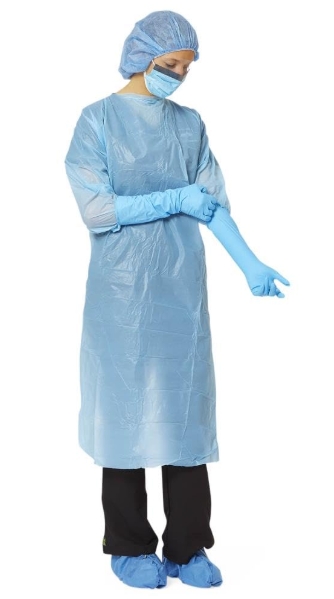
Isolation gowns and surgical gowns differ significantly in their physical design and construction .
Surgical gowns are specifically engineered for the operating room environment :
- Sterile packaging: All surgical gowns are provided sterile
- Reinforced critical zones: The front and sleeves feature additional material layers or enhanced barrier properties where exposure risk is highest
- Knit cuffs: Always feature knitted cuffs designed to fit under surgical gloves, creating a secure barrier
- Back closure: Typically feature a generous overlap at the back, requiring assistance from a scrub nurse for donning to maintain sterility
- Velcro or tie closures: High-quality closures at the neck for secure fastening
- Material composition: Made from non-woven or laminated non-woven composite materials with specific protective properties
Isolation gowns are designed for versatility across various clinical settings :
- Non-sterile or sterile options: Available in both forms depending on intended use
- Uniform or targeted protection: May have uniform protection across the entire gown (for surgical isolation gowns) or vary by area
- Cuff variations: May feature elastic loops, knit cuffs, or open cuffs depending on the protection level
- Back design: May be open-back (for breathability) or full-coverage, depending on risk level
- Easy donning: Designed for self-donning without assistance
- Lightweight materials: Often constructed from lightweight non-woven fabrics with waterproof and anti-pollution capabilities
The materials used in isolation gowns and surgical gowns reflect their different performance requirements .
Surgical gowns typically employ advanced material technologies :
- Non-woven fabrics with specific barrier properties
- Laminated non-woven composite materials
- Materials meeting both barrier and mechanical property requirements (tensile strength, tear resistance)
- Anti-static properties (often required)
- Breathable yet protective constructions for long-duration wear
Isolation gowns use a broader range of materials depending on the protection level required :
- Polypropylene (PP): Basic spunbond fabric used for Level 1 isolation gowns; breathable and economical but offers lower fluid resistance
- PE Coated (Polyethylene): Polypropylene gowns coated with a polyethylene layer, creating impervious fluid barriers but reducing breathability
- SMS (Spunbond-Meltblown-Spunbond): Considered the industry gold standard for Levels 2-3 protection, offering excellent balance of comfort and protection. The three-layer structure includes:
- Top layer (Spunbond): Provides strength and durability
- Middle layer (Meltblown): Dense web of microfibers filtering fluids and bacteria
- Bottom layer (Spunbond): Soft against the skin for comfort
The fundamental difference between isolation gowns and surgical gowns lies in their intended clinical applications .
Surgical gowns are specifically designed for :
- Operating rooms: During surgical procedures requiring sterile fields
- Invasive procedures: Any procedure where a sterile environment must be maintained
- Interventional therapy: Procedures involving entry into sterile body cavities
- Two-way protection: Protecting both the patient from the surgical team and the surgical team from the patient
Isolation gowns serve broader purposes across healthcare settings :
Contact with infectious patients:
- Patients with infectious diseases transmitted by contact
- Patients infected with multidrug-resistant bacteria
- Implementation of protective isolation (e.g., patients with extensive burns, bone marrow transplants)
Anticipated fluid exposure:
- When contact with patient's blood, body fluids, secretions, and excretions is possible
Departmental use:
- Intensive Care Units (ICU)
- Neonatal Intensive Care Units (NICU)
- Protective wards
- Laboratory departments
- Wards and isolation wards during infectious disease outbreaks
Two-way isolation: Isolation gowns provide bidirectional protection—preventing both the transmission of microorganisms from patients to healthcare workers and from healthcare workers to vulnerable patients .
Healthcare facilities often use color-coded gowns to enhance safety protocols, though this varies by institution and region .
Blue isolation gowns are commonly associated with :
- Non-invasive or moderate-risk procedures (ICU, surgery)
- Thicker materials with higher fluid resistance
- Often designed to meet AAMI Level 3 standards
- Associated with sterility and professional environments
- Psychological effects: calmness, professionalism, trust
Yellow isolation gowns are frequently used for :
- High-risk procedures (isolation wards, emergency rooms)
- Lighter weight materials with adequate protection
- Often aligned with Level 1-2 standards
- Enhanced visibility for contamination detection
- Psychological effects: vigilance, warmth, positivity
The different designs of isolation gowns and surgical gowns necessitate different donning procedures.
Surgical gown donning is a complex, sterile procedure :
- Requires assistance from a circulating nurse or scrub nurse
- Gown is presented with the inside facing the wearer
- Hands remain inside the sleeves until gloves are donned (closed-gloving technique)
- Back ties are secured by an assistant
- The entire procedure maintains sterility of the gown front and sleeves
Isolation gown donning is simpler and typically performed without assistance :
- Self-donning is standard
- Back ties are secured by the wearer
- Focus is on creating a complete barrier, not maintaining sterility
- Often integrated into broader PPE donning sequences
The 2022 revision of ANSI/AAMI PB70 expanded the scope of protective apparel covered by the standard, recognizing the variety of gown types used in healthcare .
Key updates include:
- Addition of new categories: "surgical gown–E" (extended protection), "procedure gown," and "decontamination gown"
- Labeling requirements specifying the area of protection: full coverage gown, non-protective back gown, or open back gown
- Recognition that "there are many other protective apparel products used in healthcare settings which provide barrier protection"
These updates help healthcare professionals better understand the protective properties of available products and make informed decisions when selecting appropriate PPE .
The ANSI/AAMI PB70 standard explicitly excludes certain elements that are important for comprehensive understanding :
- Protective apparel for hands (surgical gloves, examination gloves, other medical gloves)
- Protective apparel for face and eyes (goggles, face shields, surgical masks)
- The interfaces between products (such as the gown-to-glove interface)
- Protection from dry particulate and dry microbial penetration
- Protection from gas permeation
The gown-to-glove interface remains an area without industry consensus for best practices .
Isolation gowns and surgical gowns serve distinct but complementary roles in healthcare infection prevention. The fundamental differences can be summarized as follows:
Surgical gowns are Class II medical devices designed specifically for sterile operating room environments. They feature defined critical zones (front and sleeves) requiring high-level barrier protection, sterile packaging, knit cuffs that fit under surgical gloves, and require assisted donning to maintain sterility. Their primary purpose is two-way protection during invasive surgical procedures.
Isolation gowns encompass both Class I and Class II devices designed for broader clinical applications. They feature comprehensive critical zones covering the entire gown (excluding cuffs, hems, and bindings), are available in sterile or non-sterile forms, offer various cuff designs, and enable self-donning. Their purpose is bidirectional protection in patient isolation scenarios, routine care, and situations with anticipated fluid exposure.
Both gown types are classified under the ANSI/AAMI PB70 standard's four protection levels, but the application of these levels differs based on critical zone definitions. Understanding these distinctions is essential for healthcare facilities to select appropriate PPE for specific clinical situations, ensuring both healthcare worker safety and optimal patient outcomes.
As the healthcare landscape continues to evolve, updated standards like ANSI/AAMI PB70:2022 provide clearer guidance for manufacturers and users alike, ultimately contributing to safer healthcare environments through properly selected and utilized protective apparel.
Contact us to get more information!
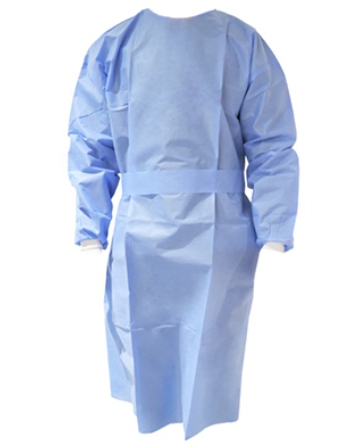
The main difference lies in their intended use and critical zone definitions. Surgical gowns are Class II medical devices designed for sterile operating room environments with defined critical zones (front and sleeves) that require high-level protection, while the back may be non-protective . Isolation gowns have comprehensive critical zones covering the entire gown (excluding cuffs, hems, and bindings) and are used for broader patient care scenarios including isolation precautions, routine care, and situations with anticipated fluid exposure .
The ANSI/AAMI PB70 standard defines four levels of barrier protection based on standardized testing :
- Level 1: Minimal risk; passes impact penetration test (≤4.5 g)
- Level 2: Low risk; passes impact (≤1.0 g) and hydrostatic pressure (≥20 cm)
- Level 3: Moderate risk; passes impact (≤1.0 g) and higher hydrostatic pressure (≥50 cm)
- Level 4: High risk; passes viral penetration testing (ASTM F1671)
Isolation gowns are available in both sterile and non-sterile forms . Non-surgical isolation gowns (Class I devices) are typically non-sterile and used for low-risk situations. Surgical isolation gowns (Class II devices) are used for medium-to-high risk situations and are provided sterile. Surgical gowns are always provided sterile .
No. Isolation gowns and surgical gowns have different critical zone requirements and regulatory classifications . Surgical gowns are specifically designed for sterile operating room environments with defined critical zones, while isolation gowns are designed for broader applications. Using an isolation gown in a surgical setting could compromise the sterile field and patient safety.
Surgical gowns typically use non-woven or laminated non-woven composite materials meeting both barrier and mechanical property requirements . Isolation gowns use a broader range of materials including basic polypropylene (Level 1), PE-coated polypropylene (impervious barriers), and SMS (Spunbond-Meltblown-Spunbond) technology for Levels 2-3 protection, which provides an excellent balance of comfort and protection through its three-layer structure .


