
Views: 222 Author: Lake Publish Time: 2025-12-21 Origin: Site


Content Menu
● The Core Purpose: A Bidirectional Barrier
● Isolation Gowns Within Infection Control Frameworks
● Types of Isolation Gowns and Their Specific Uses
● Key Design Features and Their Functional Use
● Common and Specific Use Scenarios
● Frequently Asked Questions (FAQ)
>> 1. What is the difference between an isolation gown and a surgical gown?
>> 2. Can isolation gowns be reused?
>> 3. How do I know what level of isolation gown is needed for a specific task?
>> 4. What should I do if an isolation gown becomes visibly soiled during use?
>> 5. Are there eco-friendly alternatives to traditional disposable isolation gowns?
In the intricate and high-stakes environment of modern healthcare, the prevention of infection transmission is a paramount objective. Among the array of tools employed in this critical mission, the isolation gown stands as a fundamental and visible line of defense. But what exactly is an isolation gown used for? Far more than a simple piece of clothing, it is a carefully engineered component of personal protective equipment (PPE) designed to serve a specific, dual-purpose barrier function. Its primary use is to protect healthcare personnel and patients from the transfer of microorganisms and hazardous substances during patient care activities and medical procedures. This article delves deeply into the multifaceted roles, appropriate applications, and critical importance of isolation gowns within the framework of infection control protocols, providing a comprehensive understanding of this indispensable garment.
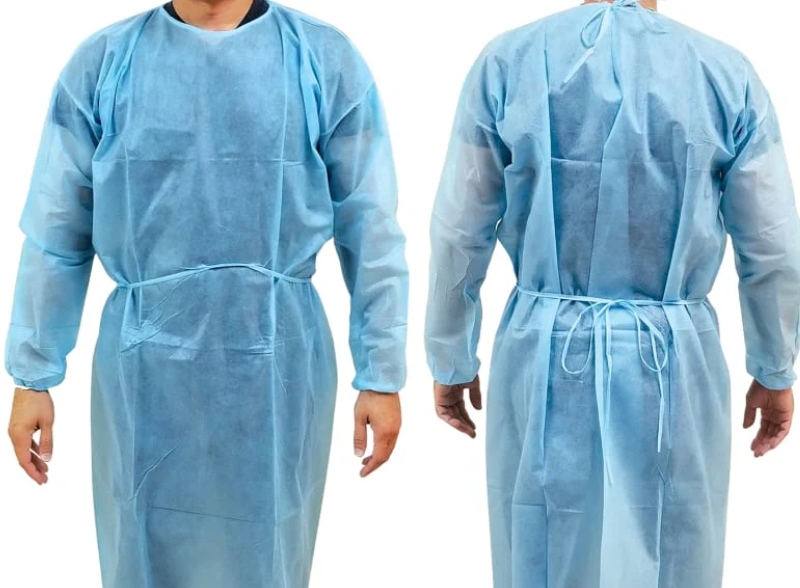
The fundamental use of an isolation gown is to establish a protective barrier. This function operates in two essential directions, safeguarding both the wearer and the patient.
1. Protecting the Healthcare Worker: The most immediate use of an isolation gownis to shield the wearer's skin, scrubs, or uniform from contact with blood, bodily fluids, secretions, excretions, and other potentially infectious materials (OPIM). During tasks such as wound dressing, assisting with toileting, suctioning, handling contaminated linens, or during surgical procedures, the isolation gown acts as a shield. It prevents pathogens and hazardous substances from reaching the healthcare worker's skin or personal clothing, thereby significantly reducing their risk of colonization or infection. This protective layer is crucial in maintaining the health and safety of the clinical workforce.
2. Protecting the Patient: Equally important is the role of the isolation gown in preventing the transmission of pathogens from the healthcare worker to the patient. This is especially vital for vulnerable patients, including those who are immunocompromised (e.g., oncology patients, transplant recipients), have open wounds, are in intensive care units, or are in protective isolation. By covering the arms and torso of the provider, the isolation gown minimizes the risk that microorganisms from the provider's skin, hair, or clothing will contaminate the patient's environment, surgical site, or medical devices. This aspect is central to preventing healthcare-associated infections (HAIs).
The specific use of an isolation gown is systematically governed by established infection prevention and control principles. Its application is dictated by the anticipated level of exposure and the mode of disease transmission.
Standard Precautions: Standard Precautions are the foundation of infection control and apply to the care of all patients. An isolation gown is used under Standard Precautions when there is a reasonable anticipation of contact with blood, body fluids, secretions, excretions, or contaminated items. The key concept is anticipatedexposure. If a procedure or patient interaction carries a likelihood of such contact, donning an isolation gown is a mandatory protective step.
Transmission-Based Precautions: These are additional measures used for patients known or suspected to be infected with highly transmissible pathogens. The isolation gown is a cornerstone of specific precautions:
- Contact Precautions: Used for pathogens spread by direct or indirect contact (e.g., MRSA, VRE, C. difficile, RSV). For patients on Contact Precautions, an isolation gown (and gloves) must be worn for all interactions that may involve contact with the patient or potentially contaminated areas in the patient's immediate environment. The gown is donned upon room entry and removed before exiting to prevent carrying pathogens out.
- Droplet and Airborne Precautions: While the primary defenses are masks (for droplet) and respirators (for airborne), an isolation gown is also recommended when substantial contact with the patient or their environment is anticipated, as the patient may have concurrent conditions or contamination that warrant a barrier.
Not all isolation gowns are identical, and selecting the appropriate type is critical for effective protection. They are classified based on the level of liquid barrier protection they provide, as defined by the ANSI/AAMI PB70 standard.
- Level 1 (Minimal Risk): These isolation gowns provide a basic barrier for minimal fluid exposure situations. They are suitable for routine patient care in standard inpatient units, for visitors, or for use in basic care settings where only small amounts of fluid are anticipated.
- Level 2 (Low Risk): Offering a step up in protection, Level 2 isolation gowns are used for procedures with low fluid exposure, such as peripheral intravenous line insertion, blood draws, suturing in the emergency department, or pathology lab work.
- Level 3 (Moderate Risk): Designed for moderate fluid exposure, these isolation gowns are appropriate for arterial blood draws, inserting central intravenous lines, emergency trauma care, or procedures where moderate amounts of fluid may be encountered.
- Level 4 (High Risk): Providing the highest level of liquid and microbial barrier protection, Level 4 isolation gowns are used for high-fluid exposure situations. This includes major surgical procedures, long-lasting trauma cases, or when pathogen resistance is a critical concern. A Level 4 gown that meets additional criteria may also be rated as a surgical gown.
Furthermore, isolation gowns are categorized by their intended use cycle:
- Disposable (Single-Use) Isolation Gowns: Made from non-woven materials like polypropylene. They are used once and then discarded, ensuring no risk of cross-contamination via laundering. Their performance is consistent and predictable.
- Reusable Isolation Gowns: Typically made from woven cotton or cotton-polyester blends. They are designed to be laundered and sterilized between uses. Their use requires a robust institutional reprocessing protocol to maintain barrier integrity.
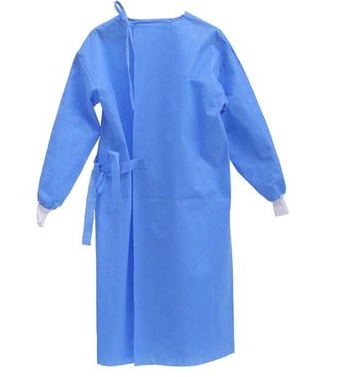
The design of an isolation gown directly supports its protective function:
- Closure System: Ties (neck and waist), snap fasteners, or hook-and-loop closures ensure the gown stays securely closed, preventing gaps and exposure.
- Cuffs: Elasticated, knit, or bound cuffs are crucial for securing the gown at the wrist, creating a continuous barrier when used with gloves.
- Coverage: A proper isolation gown should provide full coverage of the torso from neck to knees and the arms to the end of the wrist. Back coverage can be full or partial (like "code blue" gowns with open backs secured by ties).
- Material and Reinforcement: The choice of material determines breathability, comfort, and barrier strength. Reinforced panels in high-risk areas like the forearms and chest enhance protection where it is most needed.
The decision to use an isolation gown should be based on a risk assessment. Common scenarios include:
- Entering the room of a patient on Contact Precautions.
- Performing or assisting with procedures likely to generate splash or spray of body fluids (e.g., wound irrigation, endotracheal intubation, bronchoscopy).
- Handling visibly soiled patient care equipment, linens, or waste.
- During outbreaks of multidrug-resistant organisms (MDROs).
- Caring for patients with extensive uncontrolled drainage, skin lesions, or incontinence.
- In surgical or procedural settings where a sterile isolation gown (i.e., a surgical gown) is required to maintain a sterile field for the procedure.
In summary, an isolation gown is used for protection. It is a strategic, evidence-based tool deployed to break the chain of infection transmission in healthcare settings. Its use extends beyond a simple garment; it is a physical manifestation of the principles of Standard and Transmission-Based Precautions. From the Level 1 gown used during a routine visit to a patient in isolation to the Level 4 surgical gown used in an operating theater, each isolation gown serves the unified goal of creating a safer environment for both caregiver and patient.
The effective use of an isolation gown hinges on proper selection according to the anticipated risk level, correct donning and doffing procedures to avoid self-contamination, and its integration into a comprehensive culture of safety that includes meticulous hand hygiene. As healthcare continues to evolve, so too will the materials and designs of isolation gowns, driven by the dual imperatives of enhancing protection and improving sustainability. However, the fundamental purpose of the isolation gown will remain constant: to serve as a reliable, critical barrier in the enduring mission to provide care without causing harm.
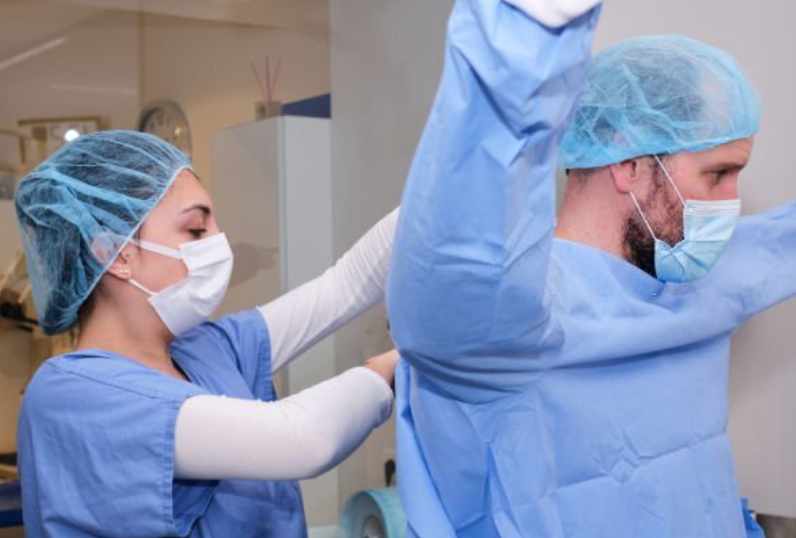
While both are protective garments, a surgical gown is a specific type of gown designed for use in sterile operative or procedural fields. It must meet more stringent regulatory standards for critical barrier protection in specific zones (chest and arms) and is always sterile. An isolation gown is used for non-sterile isolation purposes, has varying levels of liquid barrier protection (ANSI/AAMI PB70 Levels 1-4), and is not necessarily sterile. A Level 4 isolation gown may qualify as a surgical gown if it passes additional tests.
Disposable isolation gowns are designed for single use only and must be discarded after doffing. Reusable isolation gowns are constructed from launderable fabrics and can be used multiple times after proper hospital-grade laundering and inspection for damage. The decision depends on facility policy, cost analysis, and the specific gown's design and integrity.
The level should be determined by a risk assessment of the anticipated exposure. Healthcare facilities typically have protocols based on the ANSI/AAMI PB70 standard. For example, drawing blood might require a Level 2 gown, while managing a trauma patient with significant bleeding might require a Level 3 or 4 gown. Always consult your facility's infection prevention guidelines.
If an isolation gown becomes soiled during a procedure, it should be removed as soon as it is safe to do so. Follow careful doffing procedures to avoid self-contamination, perform hand hygiene immediately, and don a new, clean gown if continued patient care is necessary.
The market is evolving to address environmental concerns. Options include isolation gowns made from biodegradable materials (for appropriate, low-risk settings) and the use of reusable gown systems. The most sustainable practice is to use the appropriate level of protection without over-specifying and to minimize waste through correct usage and disposal.


