


Content Menu
● The History and Evolution of the Laryngoscope
● How a Laryngoscope Works: Basic Principles and Components
>> The Principle of Airway Visualization
>> Flexible Fiberoptic Laryngoscope
● Applications and Uses of Laryngoscopes in Medical Practice
>> Diagnostic Procedures in ENT
>> Surgical and Therapeutic Interventions
● The Global Market and Key Manufacturers
● Future Trends and Innovations in Laryngoscopy
● FAQ
>> What is the main purpose of a laryngoscope?
>> What is the difference between a direct laryngoscope and a video laryngoscope?
>> Is a laryngoscope examination painful?
>> What are flexible laryngoscopes used for?
>> Are laryngoscopes reusable or disposable?
A laryngoscope is a medical instrument designed for examining the larynx (voice box) and the surrounding structures in the throat . It is an essential tool in various medical fields, including anesthesiology, emergency medicine, pulmonology, and otolaryngology (ENT). The primary function of a laryngoscope is to provide a clear view of the vocal cords and the glottis (the entrance to the windpipe), which is crucial for procedures like endotracheal intubation—the insertion of a breathing tube into the trachea to secure an airway . By enabling clinicians to visualize the airway directly, the laryngoscope plays a critical role in managing patients' breathing during surgery, in emergency situations, and in intensive care settings, thereby ensuring adequate oxygenation and ventilation.
The significance of the laryngoscope in modern medicine cannot be overstated. Its invention revolutionized airway management, moving from blind techniques to visualized procedures, which significantly improved patient safety and outcomes. From its rudimentary beginnings to today's sophisticated video-enabled devices, the laryngoscope has continually evolved. This article delves into the history, types, working principles, applications, and future trends of this indispensable medical device.

The journey of the laryngoscope began in 1854 when a Spanish singing teacher named Manuel García became the first person to observe the functioning of his own larynx. He achieved this using a simple dental mirror and another hand-held mirror to catch sunlight, effectively creating the first indirect laryngoscope . For this groundbreaking self-observation, he is celebrated as the "father of the laryngoscope." His invention allowed for the indirect visualization of the larynx, paving the way for laryngology as a medical specialty.
The development of the direct laryngoscope followed, which involved directly lifting the tongue and epiglottis to obtain a line-of-sight view of the larynx. This was a significant advancement but often required general anesthesia for patient tolerance due to its invasiveness . The late 20th century witnessed the next major leap with the advent of fiberoptic technology. The flexible fiberoptic laryngoscope, introduced in the latter half of the 1900s, utilized bundles of flexible glass fibers to transmit light and images, allowing the scope to navigate the natural contours of the upper airway . This made examinations possible without the need for general anesthesia in many cases and was particularly useful for patients with difficult airway anatomy.
The most recent revolutionary step has been the integration of digital technology, leading to the video laryngoscope. These devices, often equipped with a miniature camera at the tip, transmit a real-time video feed to a screen, providing a superior, magnified view of the laryngeal structures without the need to align the oral, pharyngeal, and laryngeal axes . This has dramatically improved the success rate of intubation, especially in challenging cases.
Despite the variety of laryngoscope types available today, they all operate on some fundamental principles to achieve the common goal of visualizing the larynx.
The core challenge in laryngoscopy is to create a clear optical path from the mouth to the larynx. The human airway is a curved structure, and the tongue and epiglottis naturally obstruct the view. A laryngoscope, particularly direct and video laryngoscopes, works by physically displacing these soft tissues—the tongue and the epiglottis—out of the way to create a direct or enhanced line of sight to the glottis . This process is known as blade insertion and lifting.
Traditional direct laryngoscope designs are typically comprised of two main parts: a handle and a blade.
- Handle: The handle serves as the grip for the operator and houses the power source, usually batteries. It provides the necessary stability and leverage during the procedure.
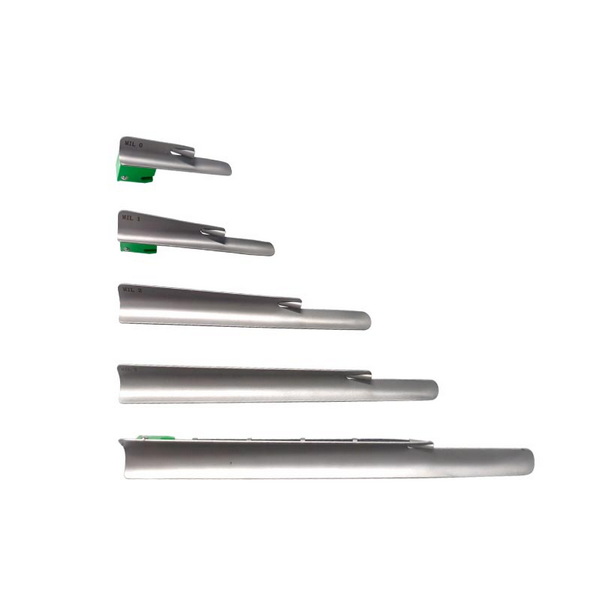
- Blade: The blade is the part that is inserted into the patient's mouth. It is designed to retract the soft tissues. Blades come in various shapes (e.g., curved Macintosh or straight Miller) to suit different patient anatomies and clinical preferences . A small light source is integrated near the tip of the blade to illuminate the dark cavity of the throat.
More advanced laryngoscope systems, like video and flexible laryngoscopes, incorporate additional components:
- Optical Fibers/Fiberoptic Bundles: In flexible laryngoscopes, these are used to channel light from an external source to the tip and to relay the image back to the eyepiece .
- Camera and LED Light Source: Video laryngoscopes feature a miniaturized CMOS camera and bright LED lights at the distal end of the blade .
- Video Processor and Display: The camera's signal is processed and displayed on a built-in screen or an external monitor, allowing the operator and the entire team to view the procedure .
Laryngoscopes can be broadly categorized into several types, each with distinct advantages and clinical applications.
This is the simplest form, consisting of a small mirror attached to a long handle. The mirror is warmed and placed in the throat, reflecting the image of the larynx, which the clinician views via a head mirror reflecting a light source . While it is a low-cost and simple tool, its use is limited by patient gag reflex and provides a reversed and somewhat limited view.
As the name suggests, this type aims to establish a direct line of sight from the operator's eye to the larynx. It consists of a handle and a detachable blade. The operator inserts the blade and uses it to lift the epiglottis directly, visualizing the vocal cords. While it has been the gold standard for decades for intubation, it requires significant skill and can be difficult in patients with limited neck mobility or unfavorable anatomy .
This laryngoscope is a flexible tube containing thousands of optical fibers. It can be introduced through the nose or mouth and gently navigated through the complex anatomy of the upper airway to reach the larynx . Its flexibility makes it ideal for awake intubations, diagnostic examinations, and biopsies. It is particularly invaluable for managing known or anticipated difficult airways. According to market research, the global market for flexible laryngoscopes is expected to grow steadily, reflecting their clinical importance .
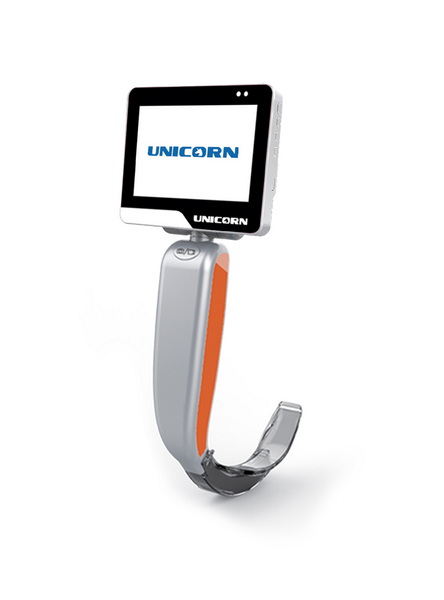
The video laryngoscope represents the current pinnacle of technology in this field. It functions similarly to a direct laryngoscope but with a crucial difference: a miniaturized camera on the blade tip transmits a color video feed to a screen . This offers several key benefits:
- Superior View: It often provides a better view, including a view of the glottis, without the need for perfect alignment.
- Improved Success Rates: Studies show higher first-pass success rates for intubation, especially in difficult scenarios.
- Enhanced Training and Teamwork: The screen allows for supervision, training, and shared situational awareness among the clinical team.
The global video laryngoscope market, valued at USD 436.65 million in 2024, is projected to grow rapidly, underscoring its widespread adoption . These devices can be reusable or single-use (disposable), with the latter category growing due to infection control concerns .
The laryngoscope is a versatile tool with applications spanning several critical medical domains.
The most common use of the laryngoscope, particularly direct and video laryngoscopes, is to facilitate endotracheal intubation. This procedure is vital in operating rooms to administer general anesthesia, in intensive care units (ICUs) for patients requiring mechanical ventilation, and in emergency departments and pre-hospital settings for patients who cannot breathe on their own .
Laryngoscopes, especially flexible and video models, are indispensable for otolaryngologists. They are used to diagnose a wide range of conditions affecting the larynx and pharynx, including:
- Hoarseness, voice changes, and persistent cough.
- Suspected tumors, nodules, or polyps on the vocal cords.
- Airway obstructions, inflammation, and infections.
- Evaluating the larynx before and after surgery .
Beyond diagnostics and intubation, specialized laryngoscope systems are used in surgical procedures.
- Surgery: Suspension laryngoscope systems are used in microsurgery of the larynx, allowing surgeons to operate on the vocal cords with both hands free . These procedures can include biopsy, removal of benign lesions like polyps, and laser surgery.
The medical laryngoscope market is robust and growing, driven by technological advancements and rising surgical volumes. The global video laryngoscope market alone is expected to reach USD 1,326.47 million by 2032, growing at a significant compound annual growth rate (CAGR) . The flexible laryngoscope market is also on a steady growth path .
The competitive landscape includes well-established multinational corporations and emerging players. Key global manufacturers mentioned in market reports include:
- Olympus, Ambu, PENTAX, Fujifilm, and Karl Storz are leaders in the flexible and video laryngoscope segments .
- Medtronic and Verathon Inc. are prominent names, especially in the video laryngoscope market with products like the McGRATH MAC and GlideScope series .
- Aohua Endoscopy, Zhuhai Seesheen Medical Technology, and Zhejiang Youyi Medical are examples of Chinese manufacturers that have gained significant market share, often offering cost-effective solutions .
This vibrant market also presents extensive opportunities for OEM (Original Equipment Manufacturing) and ODM (Original Design Manufacturing) services, where specialized companies manufacture products or components that are then branded and sold by other companies . This model allows brands to leverage specialized manufacturing expertise.
The future of the laryngoscope is being shaped by digitalization and connectivity. Key trends include:
- Integration of Artificial Intelligence (AI): AI algorithms are being developed to provide real-time guidance during intubation. These systems can automatically identify anatomical landmarks, suggest optimal tube placement, and provide decision support, potentially improving success rates and reducing complications .
- Portability and Wireless Connectivity: There is a growing demand for compact, handheld, and battery-operated video laryngoscope devices. Wireless models that can connect to tablets or hospital networks facilitate use in diverse settings like ambulances and field hospitals, and support telemedicine consultations .
- The Rise of Single-Use Devices: The market for disposable laryngoscope blades and entire single-use video laryngoscope units is expanding rapidly. This trend is primarily driven by the need to eliminate cross-contamination risks and the costs associated with reprocessing reusable devices .
- Enhanced Imaging and Data Integration: Future laryngoscope systems will feature even higher-resolution cameras and may integrate with hospital electronic health records for seamless documentation. Further miniaturization of components is also expected to continue.
From Manuel García's simple mirror to today's high-definition digital scopes, the laryngoscope has undergone a remarkable transformation. It stands as a cornerstone of modern airway management, a critical tool without which many life-saving procedures in anesthesia, emergency medicine, and ENT would be immensely more difficult and dangerous. Understanding its history, principles, types, and applications is fundamental for medical professionals involved in patient airway care. As technology continues to advance, the laryngoscope will undoubtedly evolve further, becoming smarter, more connected, and more accessible, thereby continuing to enhance patient safety and clinical outcomes across the globe.
The primary purpose of a laryngoscope is to provide a view of the larynx (voice box) and vocal cords. Its most critical application is to facilitate endotracheal intubation, a procedure to insert a breathing tube into the windpipe to secure an airway during anesthesia, critical illness, or emergency situations .
A direct laryngoscope requires the clinician to align their eye with the patient's airway to get a direct line-of-sight view of the larynx. A video laryngoscope, in contrast, has a small camera at the tip of its blade that transmits a real-time video feed to a screen. This often provides a better view without requiring stringent alignment, making intubation easier, especially in difficult airways .
For indirect and flexible laryngoscope examinations, the throat is typically numbed with a local anesthetic spray to minimize discomfort and the gag reflex. While not typically described as painful, patients may feel a sensation of pressure or mild discomfort. Direct laryngoscopy for intubation is usually performed on sedated or anesthetized patients .
Flexible laryngoscopes are thin, bendable scopes that can be passed through the nose or mouth. They are exceptionally valuable for diagnostic examinations of the throat and voice box in an ENT clinic, for assessing swallowing difficulties, and for managing difficult intubations where the patient is awake or has limited neck movement .
Both options are available. Traditional metal laryngoscope blades and handles are reusable after strict sterilization. However, there is a growing trend toward disposable or single-use laryngoscope blades and entire video laryngoscope units. This shift is largely driven by infection control protocols to prevent cross-contamination between patients .
[1](https://zdic.net/hant/%e5%96%89%e9%8f%a1)
[2](https://pre.gelonghui.com/p/3004721)
[3](https://dxpress.gelonghui.com/p/2506923)
[4](https://baike.baidu.com/item/%e5%96%89%e9%95%9c?forcehttps=1%3ffr%3dkg_hanyu)
[5](https://db.yaozh.com/jinkoujixie/7080876190000062.html)
[6](https://osmundacn.com/news/newsinfo/id/834.html)
[7](https://www.databridgemarketresearch.com/zh/reports/global-video-laryngoscope-market)
[8](https://www.wmfts.com/zh-tw/medical-and-diagnostic-devices/)
[9](http://s.cn.bing.net/academic/search?FORM=PQNR&first=1&q=laryngoscope)
[10](https://baike.baidu.com/item/%e5%96%89%e5%86%85%e7%aa%a5%e9%95%9c/1939027)


