
Views: 222 Author: Lake Publish Time: 2025-12-26 Origin: Site


Content Menu
● Defining the Instrument: Anatomy of a Disposable Scalpel System
● Primary Uses and Clinical Applications
>> 1. General Surgery and Minor Procedures
>> 4. Plastic and Reconstructive Surgery
>> 7. Non-Medical Professional Uses
● Key Advantages of the Disposable Blade System
● Technical Considerations: Blade Selection
● Environmental and Safety Considerations
● Frequently Asked Questions (FAQ)
>> 1. Why are there so many different numbers for disposable blades?
>> 2. Can a disposable blade be reused if it's only been used for a very small cut?
>> 3. What is the difference between a "disposable blade" and a "disposable scalpel"?
>> 4. How should a used disposable blade be safely removed from a handle?
>> 5. Are disposable blades really sharper than reusable ones that have been professionally sharpened?
In the intricate world of surgery and clinical procedures, precision, safety, and efficiency are paramount. Among the most fundamental tools in this domain is the scalpel, a device whose design has evolved significantly. The modern disposable blade, affixed to either a reusable or disposable handle, represents a critical advancement in medical practice. But what exactly is a disposable blade and scalpel used for? Far from being a single-purpose instrument, it is a versatile cornerstone of countless medical interventions. Its primary use is to create clean, precise incisions in skin and tissue during surgical and diagnostic procedures. This article provides a comprehensive exploration of the diverse applications, inherent advantages, and technical considerations of the disposable blade and scalpel system, underscoring its indispensable role across the spectrum of medical care.

A standard disposable scalpel system consists of two main components:
1. The Blade: This is the sharp, sterile cutting component, typically made from high-grade surgical steel. It is the disposable blade element, designed for a single procedure or a single patient. Blades come in a standardized numbering system (e.g., #10, #11, #15, #20, #23) with distinct shapes—such as curved, pointed, or hooked—each optimized for specific tasks.
2. The Handle: This can be reusable (sterilizable metal, like a #3 or #7 handle) or disposable (often plastic). The handle provides grip and control. In a fully disposable system, the plastic handle and pre-attached disposable blade are supplied as a single, sterile unit, used once and discarded entirely.
The advent of the single-use disposable blade marked a revolution in aseptic technique and occupational safety, moving away from the era of reusable blades that required sharpening and posed higher risks of cross-contamination and injury during handling.
The disposable blade is ubiquitous in medicine due to its versatility. Its applications can be categorized by medical specialty and procedural type.
This is the most common arena for disposable blade use.
- Skin Incision: Making the initial cut through the epidermis and dermis to access underlying tissue. A #10 or #20 blade is often used for long, straight incisions in abdominal or thoracic surgery.
- Excision of Lesions: Removing skin tags, cysts, lipomas, and small tumors with precision. Blades like #15 are favored for their fine control in dermatological excisions.
- Debridement: Sharp removal of necrotic (dead) or infected tissue from wounds to promote healing. A disposable blade allows for precise tissue differentiation.
- Abscess Drainage: Creating an incision to allow pus to drain from an infected cavity.
- Surgical Approach: Incising through multiple tissue layers to access bones and joints.
- Release Procedures: Cutting tight fascial bands or ligaments, such as in carpal tunnel release or trigger finger surgery.
- Harvesting Grafts: Precisely cutting bone or tendon grafts from a donor site.
Demands extreme precision. Smaller blades (e.g., #11, angled #69) are used for:
- Cataract Incisions: Creating precise corneal or scleral tunnels.
- Glaucoma Surgery: Performing trabeculectomy or other drainage procedures.
- Corneal Surgery.
- Skin Grafting: Harvesting thin sheets of skin from a donor site with a disposable blade (often a large #20 or a specialized graft blade).
- Flap Creation and Shaping: Incising and dissecting tissue flaps with minimal trauma.
- Scar Revision: Precisely excising old scar tissue.
- Gross Dissection: Systematically opening body cavities and dissecting organs for examination. A fresh, sharp disposable blade is essential for clean cuts that allow for accurate morphological assessment.
All the above applications translate directly to animal surgery, with the same emphasis on sterility and precision offered by a single-use disposable blade.
In controlled environments, similar disposable blade systems are used in crafting, model-making, and industrial applications where a sterile, sharp, single-use cutting edge is required.

The shift to single-use disposable blade technology was driven by compelling advantages over traditional reusable scalpels:
1. Guaranteed Sterility and Infection Control: Each disposable blade is factory-sterilized (typically by gamma irradiation or ethylene oxide) and packaged individually. This eliminates the risk of patient-to-patient cross-contamination that could occur with inadequately sterilized reusable blades. In an era of drug-resistant organisms, this is a critical safety feature.
2. Consistent, Maximum Sharpness: Every new disposable blade is razor-sharp, providing optimal cutting performance. This ensures clean incisions with minimal tissue trauma, which promotes faster healing and reduces scarring. Reusable blades can become dull, requiring increased pressure that leads to jagged cuts and collateral tissue damage.
3. Enhanced Safety for Healthcare Workers: The disposable blade system reduces the risk of sharps injuries associated with cleaning, handling, and resharpening old blades. Safety-engineered disposable scalpels with retractable blades or protective sheaths further minimize this risk.
4. Operational Efficiency and Convenience: There is no need for post-procedure cleaning, inspection, packaging, and sterilization. This saves valuable time for sterile processing departments and clinical staff, reduces logistics complexity, and guarantees blade availability.
5. Cost-Effectiveness in the Full Context: While the per-unit cost of a disposable blade is higher than the theoretical per-use cost of a reusable blade, the total cost of ownership often favors disposables. This calculation includes the eliminated costs of reprocessing (labor, utilities, detergent, equipment depreciation), repair, sharpening, and the reduced risk of costly infection transmission or sharps injury follow-up.
Choosing the correct disposable blade is a skill. The shape and size dictate its use:
- #10 Blade: A large, curved cutting edge. The "workhorse" for large skin incisions.
- #11 Blade: A pointed, triangular blade. Ideal for stab incisions (e.g., abscess drainage) and precise, pointed cuts.
- #15 Blade: A small, curved blade. The most common blade for minor surgery, precise excision, and dissection in confined areas.
- #20-29 Series: Larger versions of the #10 blade, used for major surgery.
- Specialty Blades: E.g., #12 (hooked) for tonsillectomy, #23 for large skin grafts.
The handle must match the blade's mounting style (e.g., a #15 blade fits a standard #3 handle).
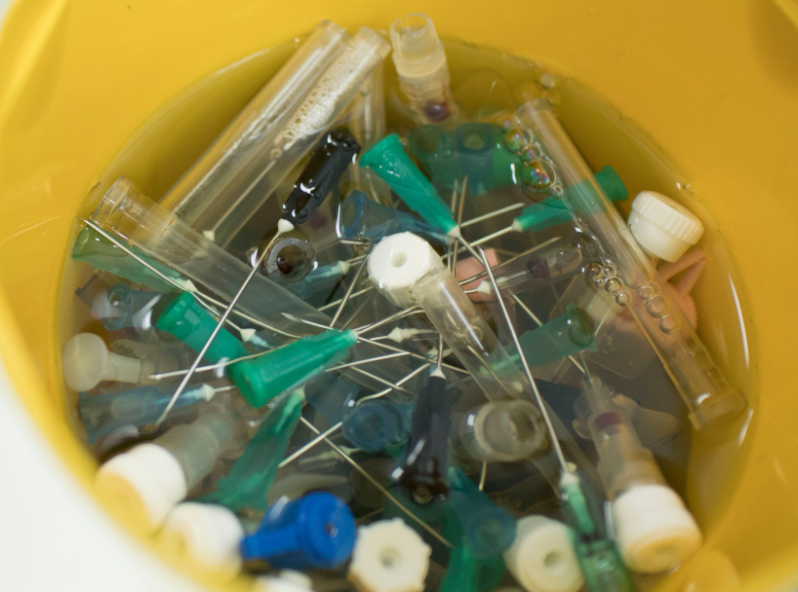
The universal use of disposable blade products generates medical sharps waste. Proper disposal in puncture-resistant, labeled sharps containers is a non-negotiable OSHA requirement to protect sanitation workers and prevent environmental contamination. The shift to fully disposable plastic-handled units increases plastic waste, an ongoing concern that the industry addresses through responsible waste stream management and exploring sustainable materials where possible without compromising sterility or performance.
The disposable blade and scalpel system is far more than a simple cutting tool; it is a foundational element of modern safe surgical practice. Its uses span from the grand incision of open-heart surgery to the delicate excision of a skin lesion in a clinic. The core advantages of guaranteed sterility, unwavering sharpness, enhanced user safety, and operational efficiency have cemented its role as the standard of care.
Understanding its applications—from general surgery to ophthalmology—and the rationale behind its design is essential for every healthcare professional. The humble disposable blade exemplifies a critical principle in medical technology: that a simple, well-designed, single-use instrument can profoundly elevate the standards of patient safety, clinical outcomes, and practitioner protection. As medical visualization and minimally invasive techniques advance, the precise cut made by a scalpel with a fresh disposable blade remains an irreplaceable act at the heart of therapeutic intervention.
The numbering system (e.g., #10, #11, #15) corresponds to specific disposable blade shapes and sizes, each optimized for different tasks. A #10 is for long incisions, a #11 for precise stabs and cuts, and a #15 for fine dissection. Choosing the right blade is like choosing the right paintbrush—it allows the surgeon to execute the specific required cut with optimal control and outcome.
No. A disposable blade is designed and regulated for single use only. Even a brief use can cause microscopic imperfections (burrs) that reduce sharpness and increase tissue trauma. More importantly, it becomes contaminated with patient tissue and blood, making resterilization unsafe and unreliable. Reuse violates infection control protocols and device regulations.
A disposable blade refers specifically to the sterile, single-use cutting element that attaches to a handle. A disposable scalpel typically refers to a complete single-unit device where a disposable blade is pre-attached to a lightweight (often plastic) disposable handle. The entire assembly is used once and discarded. A disposable blade can also be attached to a reusable metal handle.
Always use a blade remover device or the approved "scoop" technique into a sharps container. Never use fingers. The blade remover grips the blade safely, allowing it to be ejected directly into the sharps container. This practice is mandated by occupational safety (OSHA) standards to prevent sharps injuries.
Yes, a new, factory-produced disposable blade generally provides a superior, more consistent edge. Industrial sharpening processes for disposables achieve a level of sharpness and edge geometry that is difficult to replicate consistently with hospital-based resharpening. Each new disposable blade offers peak performance, while a resharpened blade's edge degrades with each cycle.
[1] https://www.fda.gov/medical-devices/general-hospital-devices-and-supplies/surgical-scalpels
[2] https://www.osha.gov/laws-regs/regulations/standardnumber/1910/1910.1030
[3] https://www.ncbi.nlm.nih.gov/books/NBK554519/
[4] https://www.who.int/publications/i/item/WHO-MCS-ESB-98.1
[5] https://www.aorn.org/guidelines/clinical-resources/tool-kits/sharp-safety-tool-kit
[6] https://www.astm.org/Standards/surgical-instruments-standards.html
[7] https://www.cdc.gov/sharpssafety/index.html
[8] https://journals.lww.com/ons/Fulltext/2021/03000/Disposable_vs_Reusable_Surgical_Scales__A_Cost.10.aspx
[9] https://www.sciencedirect.com/science/article/pii/S2468122921000042


