
Views: 222 Author: Lake Publish Time: 2026-01-08 Origin: Site


Content Menu
● Introduction: The Engineered Barrier
● Primary Material Classes and Their Composition
>> 1. Natural Rubber Latex (NRL) Gloves
>> 2. Nitrile Gloves (Acrylonitrile-Butadiene Rubber)
>> 3. Vinyl Gloves (Polyvinyl Chloride - PVC)
● Other Materials and Specialty Gloves
● Additives, Finishes, and Post-Processing
● The Role of Glove Material in the Medical Visualization Workflow
● Standards and Quality Assurance
● Frequently Asked Questions (FAQ)
>> 1. What are the main differences between latex and nitrile glove materials?
>> 2. Why are some people allergic to latex gloves?
>> 3. Are vinyl gloves safe for medical use?
>> 4. What does "powder-free" mean and how is it achieved?
>> 5. How are chemotherapy-resistant gloves different?
In the intricate and high-stakes environment of modern healthcare, every layer of protection is meticulously engineered. While our expertise illuminates the internal pathways of the human body, we recognize that the safety of every procedure begins with the most fundamental barrier: the material composition of medical gloves. These essential items are not simple coverings; they are complex products of material science, designed to balance protection, dexterity, and safety. This article delves deep into the constituent materials of medical gloves, exploring the polymers, additives, and manufacturing processes that create this critical line of defense in infection control.

Medical gloves are disposable personal protective equipment (PPE) designed to create a protective barrier between the hands of healthcare workers and potential contaminants, including microorganisms, bodily fluids, and hazardous chemicals. Their efficacy is not accidental but is a direct result of their material composition and manufacturing precision. The choice of material determines key properties such as tensile strength, elasticity, chemical resistance, allergenicity, and tactile sensitivity. Understanding what medical gloves are made from is essential for selecting the right glove for the right task, ensuring both clinician safety and procedural efficacy, whether during a routine check-up or a complex intubation with a video laryngoscope.
The vast majority of medical gloves fall into three primary material categories, each with distinct chemical origins and properties.
- Base Material: The raw material is latex, a milky, stable colloidal dispersion obtained from the sap of the Hevea brasiliensis rubber tree. This sap is an aqueous emulsion of polymer microparticles, primarily composed of cis-1,4-polyisoprene.
- Manufacturing & Compounding: The liquid latex is not used pure. It undergoes a critical "compounding" process where various chemicals are added:
- Vulcanizing Agents (e.g., Sulfur): To create cross-links between polymer chains, transforming the sticky liquid into a strong, elastic film.
- Accelerators (e.g., thiurams, carbamates): To speed up the vulcanization process.
- Antioxidants: To prevent degradation from ozone and oxygen.
- Stabilizers & Surfactants: To maintain the emulsion.
- Pigments: For color (e.g., tan).
- Forming the Glove: Ceramic or aluminum hand-shaped formers are dipped into the compounded latex. Coagulants on the formers cause the latex to gel, forming a film. The glove is then leached (washed) to remove soluble proteins and chemicals, cured (vulcanized), and dried.
- Key Consideration: The residual natural latex proteins (Hev b 1, Hev b 3, etc.) are the primary cause of Type I (IgE-mediated) allergic reactions, which has driven the development of synthetic alternatives.
- Base Material: Nitrile is a synthetic copolymer derived from petroleum. It is made by the emulsion polymerization of two monomers: acrylonitrile (ACN) and butadiene. The ratio of ACN to butadiene is crucial; a higher ACN content increases chemical resistance but reduces flexibility.
- Manufacturing Process: Similar to latex, a compounding process is used. The nitrile polymer emulsion is mixed with curatives, accelerators, stabilizers, and pigments. The dipping process on formers is also used. However, the coagulation and curing chemistry differs from latex. No natural proteins are present.
- Material Properties: The acrylonitrile component provides excellent resistance to oils, fuels, and many chemicals (including chemotherapy drugs when formulated to ASTM D6978). The butadiene component contributes to flexibility. This combination makes nitrile gloves highly puncture-resistant, durable, and hypoallergenic, explaining their dominance as the standard medical glove for examination and many procedural uses.
- Base Material: Vinyl gloves are made from polyvinyl chloride (PVC), a synthetic thermoplastic polymer also derived from petrochemicals.
- Manufacturing & Plasticizers: Pure PVC is rigid. To make it flexible enough for gloves, high levels (often 30-40%) of liquid plasticizers, such as phthalates (e.g., DEHP, DINP) or newer non-phthalate alternatives, are added. The PVC resin is suspended in a plasticizer to form a plastisol, a liquid paste.
- Forming the Glove: Formers are dipped into the plastisol and then heated in an oven. The heat causes the PVC particles to fuse (gel and fuse) into a continuous, flexible film as the plasticizer integrates with the polymer. This is a heat-curing process, not a chemical vulcanization like latex or nitrile.
- Material Properties: Vinyl gloves are the most cost-effective but offer the lowest barrier protection. They are more prone to tearing and have poor elastic recovery. Their chemical resistance is inferior. They are suitable only for minimal-risk, short-duration tasks.

- Neoprene & Isoprene Gloves: Synthetic materials designed to mimic latex without the proteins. Polychloroprene (Neoprene) and Polyisoprene are used for high-quality surgical gloves, offering excellent sensitivity and chemical resistance.
- Polyethylene (PE) Gloves: Made from very thin, low-density PE film. They are loose-fitting, non-elastic, and used primarily in food service or as an outer barrier.
- Chemotherapy Gloves: These are not a unique base polymer but are medical gloves (usually nitrile or neoprene) that have been specifically formulated and tested per ASTM D6978 to provide permeation resistance to a battery of hazardous cytotoxic drugs.
The base polymer is only part of the story. Final medical glove performance is shaped by additives and treatments:
- Donning Aids: Historically, powder (cornstarch) was used. Modern powder-free gloves use polymer coatings (e.g., silicone or hydrogel) on the interior to allow for easy donning without the risks associated with powder (granulomas, respiratory irritation, impaired wound healing).
- Texturing: The glove surface may be textured (micro-roughened) via acid etching or patterning of the formers to improve wet grip when handling instruments, video laryngoscope handles, or slippery tissues.
- Beaded Cuffs: Created by rolling the glove cuff during manufacturing for easier donning and a secure fit under gown sleeves.
- Chlorination: A post-treatment wash with chlorine or other chemicals to reduce surface tackiness and make gloves powder-free. This process can slightly reduce elasticity.
The material of medical gloves interacts directly with our visualization technology:
1. Device Setup & Handling: Staff donning nitrile exam gloves can safely unpack and connect sensitive endoscope systems to medical image processors, protecting the electronics from static and oils while protecting themselves.
2. Sterile Procedures: During surgery or intubation with a video laryngoscope, clinicians use sterile surgical gloves often made from synthetic isoprene or latex. The material's high tactile sensitivity is crucial for manipulating delicate controls and feeding endotracheal tubes.
3. Reprocessing & Decontamination: After a procedure, contaminated devices like disposable ureteroscopes or bronchoscopy scopes are initially handled by staff wearing heavy-duty, chemical-resistant utility gloves (thick nitrile or rubber) to protect against harsh disinfectants and bioburden during cleaning.
Medical gloves are governed by stringent international standards (ASTM, ISO) that specify test methods for:
- Physical Dimensions: Length, thickness.
- Barrier Integrity: Water leak test (AQL - Acceptable Quality Level).
- Physical Properties: Tensile strength, ultimate elongation, modulus.
- Powder and Protein Limits: For residual powder and, for latex, extractable protein content.
These standards ensure that regardless of the base material, the finished medical gloves provide a consistent and reliable level of protection.
Medical gloves are sophisticated products of chemical engineering, not simple commodity items. Their composition—from the natural polymer colloidal dispersion of latex, to the synthetic acrylonitrile-butadiene copolymer of nitrile, and the plasticized PVC of vinyl—defines their entire performance profile. The choice of material directly impacts protection against pathogens and chemicals, resistance to tears and punctures, wearer comfort and dexterity, and the risk of allergic reactions. In the interconnected world of modern medicine, where advanced medical visualization tools provide the eyes for diagnosis and treatment, medical gloves provide the essential, material-engineered hands that operate those tools safely and effectively. Selecting the correct glove material is therefore a critical clinical and logistical decision, one that underpins the entire chain of infection control and patient safety.
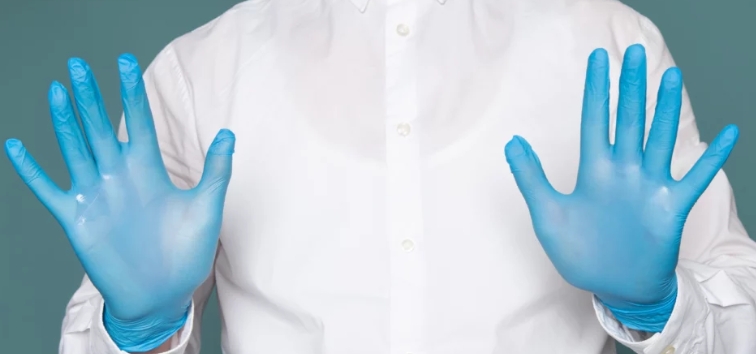
The core difference is origin and chemistry. Latex is a natural polymer from rubber trees, prized for its superior elasticity and feel but carrying a risk of protein allergies. Nitrile is a synthetic copolymer from petroleum, offering superior puncture/chemical resistance, no allergy risk to latex proteins, and generally better durability, making it the modern standard for most clinical use.
The allergy is to residual natural latex proteins (e.g., Hev b 1, Hev b 3) present in the glove material. These can trigger a Type I IgE-mediated hypersensitivity reaction, ranging from skin redness and itching (contact urticaria) to, in severe cases, anaphylaxis. The proteins can become airborne with powdered gloves. Using powder-free, low-protein latex gloves or switching to synthetic nitrile gloves mitigates this risk.
Vinyl gloves provide only a minimal barrier and are prone to tearing. They are not considered safe for procedures with a risk of exposure to bloodborne pathogens, bodily fluids, or sharp instruments. Their use should be confined to very short-duration, low-risk tasks such as handling non-infectious materials or clean equipment. For patient care, nitrile or latex are strongly preferred.
Powder-free gloves are manufactured without using cornstarch or other donning powders. Instead, the gloves undergo a post-processing treatment, most commonly chlorination (a wash with chlorine solution) or the application of a polymer coating (like silicone or hydrogel) on the interior. These treatments reduce the surface tackiness of the polymer, allowing gloves to be donned easily while eliminating the health risks associated with powder.
Chemotherapy-rated gloves (per ASTM D6978) are not necessarily made from a different base polymer (they are often nitrile). The difference lies in the formulation and testing. They are compounded and processed to resist permeation by specific hazardous drugs. They undergo rigorous laboratory testing against a panel of cytotoxic agents to ensure they provide a reliable barrier for the extended exposure times common in drug preparation and administration.
[1] https://www.fda.gov/medical-devices/personal-protective-equipment-infection-control/medical-gloves
[2] https://www.cdc.gov/niosh/topics/gloves/default.html
[3] https://www.astm.org/f2878-10r19.html
[4] https://www.ncbi.nlm.nih.gov/books/NBK470403/
[5] https://www.fda.gov/medical-devices/medical-gloves/about-gloves
[6] https://www.astm.org/d3578-05r19.html


