
Views: 222 Author: Lake Publish Time: 2025-12-28 Origin: Site


Content Menu
● The Bronchoscope: The Conduit of Vision
● The Procedure: A Systematic Visual Journey
● Beyond Simple Sight: The Enhanced Visual Examination
● The Interventional Dimension: Vision-Guided Therapy
● Limitations and Complementary Roles
● Frequently Asked Questions (FAQ)
>> 1. What exactly does a doctor see during a bronchoscope examination?
>> 2. Can a bronchoscope see lung cancer?
>> 3. How far into the lungs can a flexible bronchoscope see?
>> 4. Is the visual examination enough for a diagnosis, or are biopsies always needed?
>> 5. What's the difference between what a CT scan shows and what a bronchoscope shows?
The human respiratory system, a complex and vital branching network, holds its deepest secrets within the bronchi and bronchioles. For centuries, these passages were largely inaccessible to direct inspection, with diagnoses relying on indirect evidence from symptoms, physical exam, and external imaging. The advent of the bronchoscope revolutionized this paradigm. The question, "Is the visual examination of the bronchi through a bronchoscope?" can be answered with a definitive yes. This procedure, known as bronchoscopy, represents a cornerstone of modern pulmonology. However, this simple affirmation opens the door to a deeper exploration of how this examination is conducted, the transformative technology that enables it, its clinical significance, and its evolution from a crude inspection to a sophisticated, multidimensional diagnostic and therapeutic platform. This article delves into the intricate process of visually examining the bronchial tree using a bronchoscope, detailing the methodology, technological foundations, and profound impact on patient care.

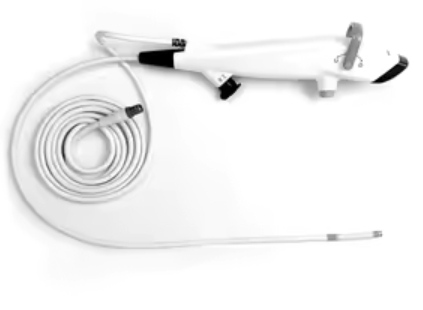
At its core, a bronchoscope is an endoscope specifically engineered for the airways. It is the essential tool that makes the visual examination possible. Modern bronchoscope devices are marvels of medical engineering, designed to be both minimally invasive and maximally informative.
Key Components Enabling Visualization:
- The Insertion Tube: A long, flexible, or rigid tube that navigates the anatomic path from the mouth or nose to the distal bronchi.
- The Light Source: A high-intensity light, typically from LEDs, transmitted down the bronchoscope to illuminate the dark interior of the airways.
- The Imaging System: This is the heart of visual examination. In a video bronchoscope, a miniature charge-coupled device (CCD) or complementary metal-oxide-semiconductor (CMOS) camera chip at the distal tip captures real-time images. In older fiberoptic models, coherent bundles of optical fibers transmit the image to an eyepiece.
- The Working Channel: An internal conduit that allows the passage of tools (brushes, needles, forceps) to take samples from areas under visual guidance.
The design of the bronchoscope is inherently patient-centric, balancing diameter for comfort, flexibility for navigation, and optical quality for diagnostic accuracy.
The visual examination is a structured and skilled procedure performed by a pulmonologist or thoracic surgeon.
1. Preparation and Access:
The patient is typically sedated, and the airway is locally anesthetized. The bronchoscope is gently introduced via the nostril or mouth, advanced past the vocal cords, and into the trachea. From this moment, the visual examination commences on a monitor viewed by the operator and team.
2. Systematic Anatomic Survey:
The bronchoscopist performs a methodical inspection, using the bronchoscope to:
- Examine the Trachea: Assessing the cartilaginous rings and posterior membrane.
- Inspect the Carina: The critical ridge separating the right and left main bronchi; its sharpness or widening can be a key visual clue.
- Navigate the Bronchial Tree: The bronchoscope is advanced sequentially into the lobar and segmental bronchi of each lung. The operator uses dials to steer the tip, visually following the lumen of each branching airway. The normal bronchial mucosa appears pinkish-white, smooth, and glistening.
3. Visual Identification of Pathology:
The primary power of the examination is identifying abnormalities in real-time. Through the bronchoscope, physicians can directly see:
- Tumors and Masses: Endobronchial lesions appearing as irregular, fleshy, or necrotic growths obstructing or lining the airway.
- Inflammation and Infection: Reddened, swollen, friable mucosa; presence of purulent secretions.
- Stenosis and Strictures: Abnormal narrowing of the airway.
- Foreign Bodies.
- Blood and Hemorrhage: Identifying the source of bleeding.
- Anatomical Variations or Compressions.
This direct visual evidence is irreplaceable, allowing for immediate diagnostic and therapeutic decisions.
The phrase "visual examination" has expanded far beyond white-light inspection thanks to technological integrations with the bronchoscope.
- Narrow Band Imaging (NBI): A filter technology on some bronchoscope systems that uses specific blue and green light wavelengths to enhance the visualization of mucosal vasculature. This can help in early detection of dysplastic or malignant lesions that are not obvious under standard white light.
- Autofluorescence Bronchoscopy (AFB): Uses a blue light to cause natural tissue fluorescence. Normal tissue fluoresces green, while pre-cancerous or cancerous areas appear darker (brownish-red), guiding biopsies.
- Optical Coherence Tomography (OCT): An emerging "optical biopsy" technique that provides micron-resolution, cross-sectional images of the airway wall, visualizing layers beneath the surface mucosa.
- Confocal Laser Endomicroscopy: Provides real-time, microscopic imaging of cellular structures *in vivo* during the bronchoscope procedure.
These advanced imaging modalities, often integrated into or used alongside the standard bronchoscope, transform the visual examination from a gross anatomical survey into a detailed microstructural analysis.
The visual examination is not passive. What is seen through the bronchoscope directly guides intervention.
1. Guided Sampling: Visual identification of a suspicious lesion allows the operator to pass a biopsy forceps, needle, or brush through the bronchoscope's working channel and, under direct real-time visualization, take an accurate tissue or cell sample. This includes transbronchial biopsies of lung parenchyma.
2. Therapeutic Procedures: The bronchoscope provides the visual roadmap for treatments such as:
- Laser or Electrosurgical Tumor Debulking: Vaporizing obstructive tumors under sight.
- Stent Placement: Visually deploying a stent across a stenosis.
- Foreign Body Removal: Locating and extracting objects with graspers.
- Bleeding Control: Identifying and treating a bleeding source with cautery or topical agents.
In these cases, the bronchoscope is both the eye and the hand of the physician within the airway.
While the visual examination through a bronchoscope is powerful, it has limits. It can only examine the inner lining (luminal surface) of accessible airways. It cannot see:
- Lesions outside the airway wall (extrinsic compression).
- Detailed anatomy of the lung parenchyma beyond the immediate subepithelial layer.
- Lymph nodes.
This is why bronchoscope-guided procedures are often combined with other modalities:
- Endobronchial Ultrasound (EBUS): A bronchoscope with an integrated ultrasound probe visualizes structures *beyond* the airway wall, allowing for real-time ultrasound-guided needle aspiration of lymph nodes or masses. This is a perfect synergy of internal vision and deeper imaging.
- Fluoroscopy: Used during transbronchial biopsy to provide a broad, real-time X-ray view, helping guide the forceps toward a peripheral lung lesion that is not directly visible through the bronchoscope.
The visual examination of the bronchi through a bronchoscope is not only a reality but a foundational practice in respiratory medicine. It is a dynamic, interactive process that transforms the bronchoscope from a simple viewing tube into an essential extension of the clinician's senses. From the initial survey of the tracheobronchial anatomy to the identification of subtle mucosal changes and the precise guidance of life-saving interventions, this direct visualization is irreplaceable.
The evolution of this examination continues, driven by advancements in bronchoscope technology. The integration of enhanced imaging like NBI and AFB, and the combination with modalities like EBUS, have created a new era of "smart bronchoscopy," where vision is augmented with sub-surface and microscopic detail. As a company engaged in the development of medical visualization technology, we recognize that the future of this field lies in making the invisible visible, providing ever-clearer and more informative windows into the body. The visual journey through the bronchi, guided by the bronchoscope, remains one of the most direct and powerful paths to understanding and treating diseases of the lung.

Through the bronchoscope, the doctor sees a real-time, magnified video image of the internal surfaces of the airways. This includes the pale, smooth lining of normal bronchi, the cartilaginous rings of the trachea, and the branching points where airways divide. They look for visual abnormalities such as redness, swelling, tumors, mucus plugs, bleeding, foreign objects, or narrowing of the passages.
A bronchoscope is a primary tool for directly visualizing central lung cancers that involve or are accessible from the large airways. The doctor can see the tumor mass, take a visual-guided biopsy for confirmation, and sometimes assess its extent. However, it cannot directly see small peripheral lung cancers deep in the lung tissue, though it can be used with other guidance (like fluoroscopy or EBUS) to sample them.
A standard flexible bronchoscope can be advanced to visually examine airways down to approximately the 4th to 6th generation of bronchi—the segmental and subsegmental levels. This allows inspection of a significant portion of the bronchial tree. Very small peripheral bronchioles and the alveoli (air sacs) themselves are too narrow for the scope to enter and cannot be directly visualized.
The visual examination through the bronchoscope is often highly suggestive, but it is rarely definitively diagnostic on its own for conditions like cancer. Visual findings guide the physician to the exact spot, but a tissue biopsy (obtained through the bronchoscope) is almost always required for a histological diagnosis to identify the specific cell type and confirm malignancy, infection, or other pathologies.
A CT scan provides a detailed, cross-sectional external view of the entire chest, showing the lungs, airways, lymph nodes, and blood vessels in silhouette. It can reveal masses, inflammation, and fluid but cannot see the color or surface detail of the airway lining. A bronchoscope provides a direct internal view of the mucosal surface of the airways, allowing for real-time assessment of color, texture, movement, and the ability to interact with the tissue (e.g., biopsy). They are complementary: the CT scan finds the area of concern, and the bronchoscope examines and samples it directly.
[1] https://www.thoracic.org/patients/patient-resources/resources/bronchoscopy.pdf
[2] https://www.lung.org/lung-health-diseases/lung-procedures-and-tests/bronchoscopy
[3] https://www.ncbi.nlm.nih.gov/books/NBK448152/
[4] https://erj.ersjournals.com/content/50/3/1700429
[5] https://www.chestnet.org/Guidelines-and-Resources/Guidelines-and-Consensus-Statements/Bronchoscopy


