
Views: 222 Author: Lake Publish Time: 2026-02-24 Origin: Site


Content Menu
● Raw Materials Used in Medical Glove Production
>> Polyisoprene
● The Manufacturing Process: Step-by-Step
>> Step 2: Drying the Coagulant
>> Step 3: Latex or Synthetic Compound Dipping
>> Step 4: Gelling and Rotation
>> Step 6: Vulcanization (Curing)
>> Step 7: Surface Treatment (Powder-Free Processing)
>> Step 8: Final Rinsing and Drying
>> Step 11: Packaging and Quality Testing
● Advanced Manufacturing Technologies
>> Sustainable Manufacturing Innovations
● Regulatory and Quality Standards
● Global Manufacturing Landscape
● Quality Control and Testing Throughout Production
● Frequently Asked Questions (FAQs)
>> 1. What are the main raw materials used to manufacture medical gloves?
>> 2. What is the basic manufacturing process for medical gloves?
>> 3. How are powder-free medical gloves made?
>> 4. How are medical gloves sterilized?
>> 5. What quality tests are performed on medical gloves?
Medical gloves are essential protective barriers used billions of times annually in healthcare settings worldwide. From routine patient examinations to complex surgical procedures, these single-use devices safeguard both healthcare workers and patients from cross-contamination. Yet the journey from raw materials to a sterile, ready-to-use medical glove involves sophisticated manufacturing processes, rigorous quality control, and precise material science. This comprehensive guide explores how medical gloves are manufactured, covering raw materials, production techniques, quality standards, and the innovative technologies shaping the future of this critical industry.

Medical gloves are manufactured from several primary materials, each with distinct properties and manufacturing requirements.
Natural rubber latex is derived from the sap of the *Hevea brasiliensis* tree, primarily grown in Thailand and Indonesia, which together supply approximately 60% of the world's natural rubber . Latex is harvested by tapping the tree bark and collecting a milky fluid composed of 30% to 35% cis-1,4 polyisoprene suspended in water .
Properties: Latex gloves offer exceptional elasticity, tactile sensitivity, and tear resistance, making them the historical gold standard for surgical procedures . However, they contain proteins that may cause Type I allergic reactions in sensitive individuals .
Typical composition: Natural rubber latex (75%), bulking agents such as calcium carbonate, vulcanizing agents including sulphur, vulcanization accelerators (ZDEC, ZDBC), cross-linking additives like zinc oxide, release agents, pigments (titanium dioxide), and antioxidants .
Nitrile, also known as acrylonitrile butadiene rubber (NBR), is a synthetic copolymer of acrylonitrile and butadiene . It is produced through emulsion polymerization of these monomers .
Properties: Nitrile gloves contain no latex proteins, making them safe for individuals with latex sensitivity . They offer excellent puncture resistance, chemical protection, and durability . Modern formulations minimize chemical accelerator content to reduce the risk of Type IV allergic contact dermatitis . They are more resistant to tearing than vinyl and provide superior barrier protection .
Vinyl gloves are made from polyvinyl chloride (PVC), a synthetic polymer produced from ethylene and chlorine .
Properties: Vinyl gloves are economical and skin-friendly for users prone to allergies . However, they offer lower durability, puncture resistance, and barrier protection compared to nitrile or latex . They are suitable for low-risk, short-duration tasks.
Neoprene is a synthetic rubber produced by emulsion polymerization of chloroprene monomers .
Properties: Neoprene gloves offer good chemical resistance, particularly to oils, and resist aging . They are available only in powder-free versions and serve as an excellent material for surgical gloves due to their performance parameters .
Polyisoprene gloves use synthetic cis-PI rubber, which shares the same chemical backbone as natural rubber but is produced artificially via polymerizing isoprene monomers .
Properties: Polyisoprene offers high strength, flexibility, impermeability, and user comfort while containing no latex proteins . It is the most expensive natural latex substitute but provides comparable performance for surgical applications .
Both synthetic and natural latex gloves undergo a similar series of steps to create the final product . The process begins with clean, hand-shaped porcelain or plastic glove forms (molds) that determine the size and shape of the finished glove .
The manufacturing process starts by vertically immersing clean glove molds into a coagulant solution . The coagulant comprises a mold release agent (such as calcium carbonate) and an ionic metal salt (such as calcium nitrate) . This coating serves two critical functions: it facilitates later removal of the finished glove from the mold, and it causes the subsequent latex layer to gel upon contact .
For uniform thickness, manufacturers may employ a two-step coagulant process: first dipping in high-concentration coagulant, then immersing in low-concentration coagulant to create a concentration gradient that equalizes coagulant distribution across the mold .
The coagulant-coated molds pass through heated ovens to dry the coating thoroughly before the next dipping stage.
The coagulant-coated glove molds are immersed into liquid latex or a synthetic alternative compound . The coagulant causes the liquid elastomer to gel immediately upon contact, forming a uniform layer over the mold . The thickness of this layer depends on:
- Metal ion concentration in the coagulant
- Immersion time in the latex compound
- Number of dips
- Solids percentage of the latex dispersion
To achieve thinner fingers (desirable for tactile sensitivity), manufacturers may limit the first latex dip to just above the thumb crotch, then later extract metallic ions from the finger portions to reduce subsequent latex deposition .
After depositing the latex layer, the molds are usually rotated continuously until the coagulant reacts, producing a gelled latex film . This rotation equalizes any wet latex runs and assures more uniform overall gauge in the finished gloves .
To ensure high purity, gloves undergo one or more water leaching stages before the final cure to extract residual proteins and chemicals . This step is critical for:
- Removing water-soluble materials from the deposited film
- Reducing allergenic proteins in natural latex gloves
- Eliminating residual coagulant salts and processing chemicals
After leaching, the gloves pass through sequential heated ovens to dry and vulcanize the rubber . Vulcanization is a curing process that cross-links the polymer chains using sulphur and accelerators, providing elasticity, strength, and durability .
Modern surgical gloves are powder-free. Manufacturers use several methods to prevent the gloves from sticking together:
Chlorination: Gloves are treated with a chlorine solution that modifies the surface, reducing tackiness . This process also further reduces latex protein content.
Polymer coating: A thin layer of polyurethane or silicone may be applied to achieve the same non-stick effect .
Alternative polymer coatings: Carboxylated styrene butadiene lattice, vinyl acrylate lattice, or polyurethane aqueous dispersions may be used as antiblocking layers .
After coating, gloves are rinsed thoroughly with water (often including a dilute acid wash to dissolve residual acid-soluble powders) and then with a second aqueous liquid, followed by treatment with a silicone emulsion and final drying .
The finished gloves are removed, or "stripped," from the molds. This process typically involves mechanical rollers that peel the glove off the form, turning it inside out in the process .
Surgical gloves are sterilized to achieve the required sterility assurance level (SAL) of 10⁻⁶, meaning the probability of a viable microorganism is fewer than one in a million . Common sterilization methods include:
- Gamma irradiation: Exposure to cobalt-60 gamma radiation
- Ethylene oxide (EtO) gas: Penetrates packaging to sterilize without damaging materials
Examination gloves may be non-sterile but must still meet stringent quality standards.
Gloves are individually packed in sterile pairs (for surgical gloves), sealed, and labeled with lot information before being boxed for distribution .
Throughout and after manufacturing, rigorous quality control tests ensure compliance with regulatory standards . Key tests include:
Visual inspection: Automated and manual inspection for defects, discoloration, or contamination.
Water leak test: Gloves are filled with water to detect pinhole leaks . This test is critical for verifying barrier integrity.
Physical properties testing: Samples are tested for dimensions (length and thickness), tensile strength, and elongation according to ASTM D3577 (U.S.) or EN 455 standards .
Acceptable Quality Level (AQL): Surgical gloves must meet a 1.5 AQL for pinholes; examination gloves meet a 2.5 AQL . Only batches that meet these defect limits are released.
Biological evaluation: Testing for cytotoxicity, sensitization, and irritation per ISO 10993 .
Shelf-life determination: Accelerated aging studies to establish expiration dates .
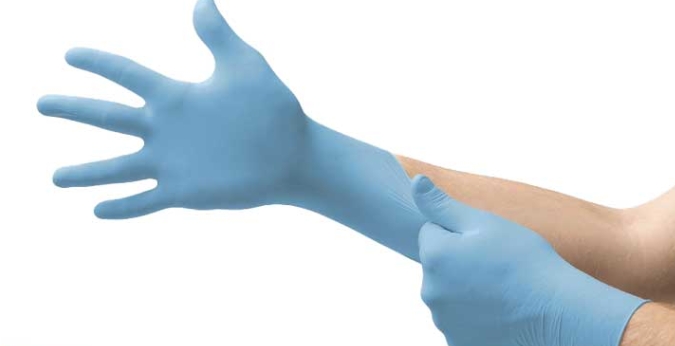
Modern glove manufacturing employs highly automated production lines with distributed control systems (DCS) that precisely regulate:
- Form temperatures (typically heated to 65-75°C before coating)
- Dipping speeds and durations
- Coagulant and compound concentrations
- Oven temperatures and residence times
Leading manufacturers have developed advanced production lines with significant efficiency improvements. For example, third-generation nitrile glove production lines feature:
- Fully automatic dual-form technology
- Unit time output 30% higher than conventional lines
- 20% coal consumption reduction
- Medical-grade yield exceeding 95%
New manufacturing technologies dramatically reduce environmental impact:
- 11 times less water consumption
- 10 times less energy usage
- Modular machine design enabling rapid deployment
Advanced manufacturing processes address the inherent tendency of dip-molding to produce thicker fingertips (which spend longest in the latex) than cuffs. Patent-protected methods create concentration gradients in the coagulant layer, allowing the high-concentration solute to rapidly diffuse toward low-concentration areas, achieving dynamic equilibrium that produces uniform coagulant thickness and consequently uniform latex film thickness . This enables production of thin-fingered gloves (less than 0.13mm fingertip thickness) suitable for delicate procedures like ophthalmology .
In the United States, medical gloves are regulated as medical devices:
- Patient examination gloves: Class I medical devices
- Surgeons' gloves: Class II medical devices requiring 510(k) premarket notification
Manufacturers must comply with:
- ASTM D3577 (surgical gloves) and ASTM D3578 (examination gloves) standards for dimensions, tensile strength, elongation, and pinhole limits
- 21 CFR Part 820 (Quality System Regulation)
- Good manufacturing practices
In Europe, medical gloves must comply with:
- Medical Device Regulation (EU) 2017/745 as Class I devices
- PPE Regulation (EU) 2016/425 for gloves also serving as personal protective equipment, often Category III
- EN 455 series standards (Parts 1-4) covering freedom from holes, physical properties, biological evaluation, and shelf-life determination
- ISO 13485:2016 quality management system certification
The global medical glove manufacturing industry is concentrated in Southeast Asia:
- Malaysia: The world's largest exporter, with 2023 export value of approximately $1.86 billion
- China: Second-largest exporter at $1.31 billion, home to major manufacturers like Intco Medical
- Thailand: Third-largest exporter at $797 million, significant natural rubber production
Leading medical glove manufacturers and suppliers operating globally include :
| Property | Latex | Nitrile | Vinyl | Neoprene | Polyisoprene |
|---|---|---|---|---|---|
| Skin-friendly (latex-free) | No | Excellent | Excellent | Excellent | Excellent |
| Comfort of use | Excellent | Excellent | Poor | Good | Good |
| Resistance/durability | Excellent | Good | Poor | Excellent | Excellent |
| Stretchability/flexibility | Excellent | Good | Poor | Excellent | Excellent |
| Puncture resistance | Good | Excellent | Poor | Good | Good |
| Tear resistance | Excellent | Good | Poor | Good | Good |
| Abrasion resistance | Good | Excellent | Poor | Excellent | Excellent |
| Chemical/solvent resistance | Good | Excellent | Poor | Excellent | Excellent |
| Virus/bacteria protection | Excellent | Excellent | Poor | Excellent | Excellent |
| Biodegradability | Excellent | Poor | Poor | Poor | Poor |
| Price | Moderate | Moderate | Low | High | Very High |
Major manufacturers operate enormous production facilities. For example, Intco Medical has invested in facilities capable of producing 28 billion high-end medical gloves annually, with total glove production capacity reaching 87 billion units per year .
Throughout manufacturing, multiple quality checks ensure consistency:
- Coagulant concentration monitoring
- Latex compound viscosity and solids content verification
- Oven temperature profiling
- Visual inspection of gelled films
Random sampling from each production lot undergoes rigorous testing:
- Physical testing: Tensile strength, elongation at break, force at tear
- Barrier integrity: Water leak testing, air inflation testing
- Biological evaluation: Cytotoxicity, sensitization, irritation
- Chemical resistance: Permeation testing for hazardous drug protection
For sterile gloves, sterility testing and process validation ensure the required sterility assurance level is consistently achieved.
Manufacturing medical gloves is a sophisticated, multi-stage process that transforms raw materials—whether natural latex tapped from rubber trees or synthetic polymers produced through chemical synthesis—into precision medical devices that protect millions of healthcare workers and patients daily. The journey from clean glove molds through coagulant dipping, latex coating, leaching, vulcanization, surface treatment, sterilization, and rigorous quality testing requires precise control, advanced automation, and deep materials science expertise.
The global medical glove manufacturing industry, concentrated in Malaysia, China, and Thailand, produces billions of gloves annually using increasingly efficient and sustainable technologies. Modern production lines achieve yields exceeding 95% medical-grade product while reducing energy and water consumption through innovative machine design . Leading manufacturers like Ansell, Cardinal Health, Intco Medical, and McKesson offer diverse product lines spanning multiple materials and thickness options to meet varied clinical needs .
Quality assurance is paramount throughout the manufacturing process, with gloves tested to meet stringent regulatory standards including ASTM D3577 (surgical gloves), ASTM D3578 (examination gloves), EN 455 series, and ISO 10993 biological evaluation requirements . Only batches meeting the required acceptable quality levels for pinhole defects (1.5 AQL for surgical, 2.5 AQL for examination) are released for clinical use .
As materials science advances, innovations in synthetic alternatives—including Intco's Syntex™ synthetic latex technology and high-performance polyisoprene formulations—continue to improve glove performance while addressing allergy concerns and environmental sustainability . Understanding how medical gloves are manufactured provides valuable insight into the complexity behind these seemingly simple yet critically important devices that form the foundation of healthcare infection prevention.
Contact us to get more information!
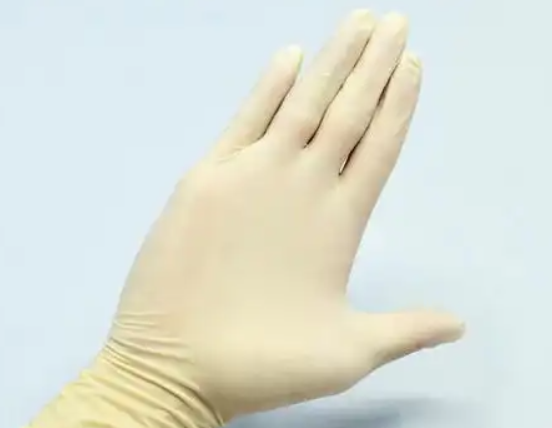
Medical gloves are manufactured from several primary materials: natural rubber latex (derived from Hevea brasiliensis trees), nitrile rubber (synthetic acrylonitrile butadiene rubber), vinyl (polyvinyl chloride), neoprene (polychloroprene), and polyisoprene (synthetic cis-PI rubber) . Each material has distinct properties affecting barrier protection, comfort, durability, and allergy risk.
The process begins with clean glove molds dipped into a coagulant solution, then into liquid latex or synthetic compound. After gelling, the gloves undergo water leaching to remove impurities, vulcanization (curing) to cross-link polymers, surface treatment (chlorination or polymer coating) for powder-free properties, rinsing and drying, stripping from molds, sterilization (for surgical gloves), packaging, and rigorous quality testing including water leak tests .
Powder-free gloves are manufactured through either chlorination—treating the glove surface with chlorine solution to reduce tackiness—or polymer coating—applying a thin layer of polyurethane, silicone, or other polymers to prevent sticking . These methods eliminate the need for donning powders like cornstarch, which were associated with postoperative complications and have been banned in many regions .
Surgical gloves are typically sterilized using gamma irradiation (exposure to cobalt-60 gamma radiation) or ethylene oxide (EtO) gas . Both methods achieve the required sterility assurance level of 10⁻⁶, meaning fewer than one in a million chance of a viable microorganism remaining. Examination gloves may be non-sterile but must still meet stringent quality standards.
Manufacturers perform multiple quality tests including water leak tests to detect pinhole defects, physical properties testing (tensile strength, elongation, tear resistance per ASTM D3577 or EN 455), dimensional verification, biological evaluation (cytotoxicity, sensitization, irritation), and acceptable quality level (AQL) sampling to ensure defect rates meet regulatory requirements (1.5 AQL for surgical gloves, 2.5 AQL for examination gloves) .
[1] https://journals.lww.com/aosopen/fulltext/2025/09000/gloving_the_surgeon__a_practical_review_of.11.aspx
[2] https://www.intcomedical.com.cn/index.php/innovating.html
[3] http://icd-11.org/index.php?title=Medical_gloves


