


Content Menu
● Understanding the Bronchoscope
● The Fundamental Grip and Hand Position
● Techniques for Specific Clinical Scenarios
>> Navigating the Upper Airways and Vocal Cords
>> Entering the Main and Segmental Bronchi
>> Utilizing the Working Channel for Instruments
● Ensuring Patient Safety and Operator Comfort
● Advanced Handling Tips and Common Mistakes
>> 1. What is the correct way to hold a bronchoscope?
>> 2. How can I improve stability when holding the bronchoscope?
>> 3. Why is my bronchoscope tip not moving as expected?
>> 4. How do I avoid hand fatigue during long bronchoscopy procedures?
>> 5. What should I do if the bronchoscope feels slippery during a procedure?
The bronchoscope is an indispensable tool in the field of respiratory medicine, enabling diagnostic and therapeutic interventions within the intricate anatomy of the human airways. As a company deeply embedded in the development and manufacturing of medical visualization devices, including endoscopy systems, disposable ureteroscopes, visual flexible laryngoscopes, bronchoscopy workstations, medical image processors, and video laryngoscopes, we recognize that the mastery of bronchoscope handling is fundamental to its effective application. The manner in which a bronchoscope is held and manipulated directly influences the success of procedures, patient safety, and the longevity of the equipment. This article provides a comprehensive guide on the proper techniques for holding a bronchoscope, drawing from clinical best practices and our extensive experience in medical device technology.
A bronchoscope, whether flexible or rigid, is a precision instrument that requires a nuanced approach to handling. The grip, hand positioning, and control movements are not merely about dexterity; they encompass an understanding of ergonomics, anatomy, and the technology itself. For flexible bronchoscope models, the control body is designed with various mechanisms that allow the operator to steer the distal tip with precision. Incorrect handling can lead to inadequate visualization, procedural delays, patient discomfort, or even mucosal injury. Conversely, a proper hold enhances stability, facilitates smooth navigation, and enables the operator to respond adeptly to the dynamic environment of the airways. Our commitment at [Company Name] is to support healthcare professionals through OEM services that deliver bronchoscopes engineered for optimal balance, responsiveness, and user comfort, thereby complementing skilled technique.
This article will delve into the specifics of bronchoscope handling, from the fundamental grip techniques to advanced maneuvers for challenging anatomical scenarios. We will explore how different components of the bronchoscope, such as the control lever, suction button, and insertion tube, are managed during a procedure. Additionally, we will discuss the integration of the bronchoscope with bronchoscopy workstations and medical image processors, which play a supportive role in visualization and documentation. By the end of this guide, medical practitioners, from trainees to seasoned pulmonologists, will have a deeper appreciation of how ergonomic handling contributes to procedural excellence and patient care.
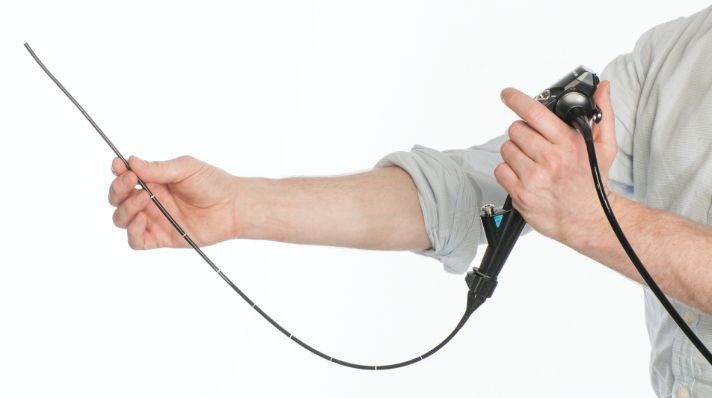
To hold a bronchoscope correctly, one must first be familiar with its physical structure and functional components. A flexible bronchoscope, which is commonly used for a majority of endoscopic airway procedures, typically consists of a long, flexible insertion tube, a control body held by the operator, and a universal cord that connects to the light source and bronchoscopy workstation. The control body is the central hub for manipulation, housing the controls for tip deflection, suction, and instrument passage. The distal end of the insertion tube contains the camera or fiberoptic bundles, light source, and the opening of the working channel. Each part must be handled with precision to ensure the bronchoscope performs as intended during delicate interventions.
The design of the bronchoscope control body is engineered for one-handed operation, allowing the operator to use their dominant hand to manage the scope while the other hand may assist with stabilizing the insertion tube or handling supplementary instruments. On the control body, the thumb typically operates the large control lever that directs the up and down movement of the distal tip. The index finger is naturally positioned over the suction button or valve, which is used to clear secretions or blood from the field of view. The working channel port, located on the control body, allows for the introduction of various accessories like biopsy forceps or brushes. Understanding this layout is crucial, as a proper grip ensures that all these functions can be accessed intuitively without having to look away from the monitor displaying the bronchoscope's view.
Different models of bronchoscopes, including those produced under OEM arrangements, may have slight variations in the shape of the control body, the resistance of the control lever, or the placement of buttons. For instance, some modern video bronchoscopes might incorporate additional buttons for image capture or freezing frames. However, the fundamental principles of holding the bronchoscope remain consistent. As a company involved in the OEM manufacturing of bronchoscopes and related medical image processors, we prioritize ergonomic design that aligns with standard handling techniques. This ensures that our clients receive devices that are not only technologically advanced but also comfortable and intuitive to use over prolonged procedures, reducing operator fatigue and enhancing procedural accuracy.
The foundational grip for a flexible bronchoscope is akin to a pencil grip, but adapted to the larger and more complex shape of the control body. The operator should cradle the control body in the palm of their dominant hand, allowing the fingers to wrap naturally around it. The thumb is placed on the control lever, which is responsible for angling the distal tip of the bronchoscope. The thumb's movements on this lever are subtle; pushing it down typically deflects the tip downward (anteflexion), while pulling it up moves the tip upward (retroflexion). The precision of thumb control is vital, as abrupt or excessive force can lead to jerky movements inside the patient's airways, causing discomfort or injury.
The index finger plays a complementary role, resting lightly on or near the suction button. In many bronchoscope designs, the suction button is a valve that can be pressed to activate suction. The index finger should be poised to operate this button without having to shift the entire hand grip. This allows for quick clearance of secretions or blood during advancement, maintaining a clear visual field on the bronchoscopy workstation monitor. The remaining fingers and the palm provide stability, firmly but not rigidly grasping the control body. A common mistake among novices is gripping the bronchoscope too tightly, which can lead to hand fatigue and reduced fine motor control. Instead, a relaxed yet secure hold promotes sustained precision.
The non-dominant hand has the critical task of managing the insertion tube of the bronchoscope. This hand is responsible for gently advancing or withdrawing the tube, as well as stabilizing it at the patient's nose or mouth to prevent excessive movement. The insertion tube should be held between the thumb and fingers, much like holding a pen but with a looser grasp to allow smooth feeding. As the bronchoscope is navigated through the airways, the non-dominant hand works in concert with the dominant hand: the dominant hand adjusts the tip direction, while the non-dominant hand controls the linear movement. This coordinated approach is essential for successful navigation, especially when passing the bronchoscope through the vocal cords or into the segmental bronchi, where angles are acute and the mucosa is sensitive.
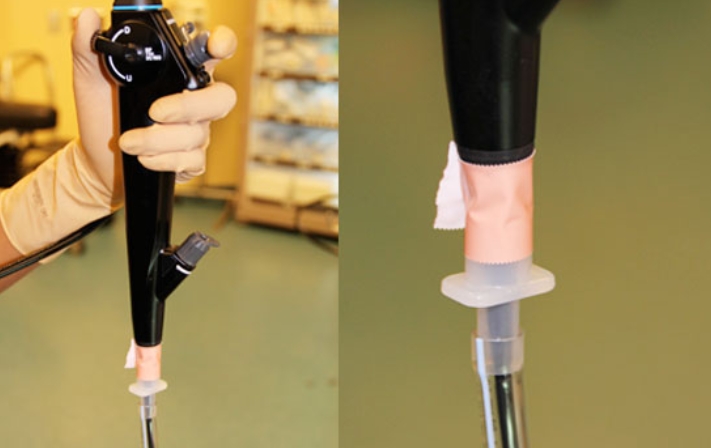
The initial insertion of the bronchoscope through the nasal or oral passage and into the trachea demands particular attention to grip and control. As the bronchoscope is introduced, the operator should hold the control body in the dominant hand with the fundamental grip, while the non-dominant hand guides the insertion tube at the entry point. The thumb should be gentle on the control lever, making small adjustments to navigate the natural curvature of the pharynx and larynx. When approaching the vocal cords, the bronchoscope tip must be centered and passed through during inspiration when the cords are abducted. A delicate touch on the control lever is crucial here; forced movement can cause the tip to impact the cords or arytenoids, leading to patient coughing or laryngeal injury.
Once the bronchoscope is in the trachea, the grip may be adjusted for more precise steering into the bronchial tree. The thumb manipulates the control lever to direct the tip toward the left or right main bronchus. To enter a specific segmental bronchus, the operator may need to combine tip deflection with slight rotation of the entire bronchoscope. This rotation is achieved by turning the control body in the dominant hand, while the non-dominant hand continues to manage the insertion tube's advancement. The grip should be flexible enough to allow this rotational movement without compromising stability. In cases where the anatomy is tortuous or narrowed, the operator might "lock" the control lever in a slightly deflected position by applying gentle pressure, then use the non-dominant hand to advance the scope. This technique reduces the need for constant thumb pressure, minimizing fatigue.
When a procedure requires the use of accessories like biopsy forceps, brushes, or needles, the grip on the bronchoscope must accommodate the introduction of these tools. The dominant hand maintains its hold on the control body, but the fingers may need to adjust to allow the instrument to be inserted into the working channel port. Once the accessory is introduced, it is advanced through the channel until it appears in the bronchoscope's field of view. During this process, the operator's grip should remain steady to prevent the bronchoscope tip from dislodging from the target area. The non-dominant hand may be used to help guide the accessory into the port initially, but then it returns to stabilizing the insertion tube. The coordination between holding the bronchoscope and manipulating the accessory is challenging and requires practice, as the added stiffness of the instrument can affect the bronchoscope's flexibility and response to control lever movements.
A proper grip on the bronchoscope is not only about technical efficacy but also about patient safety. The airway mucosa is highly vascular and sensitive, and rough handling of the bronchoscope can cause trauma, bleeding, or perforation. The operator should always be aware of the bronchoscope tip's position via the monitor and avoid advancing the scope when the view is unclear. The dominant hand's control over the lever should be exercised with mindfulness that the tip is interacting with living tissue. For instance, when navigating past the carina or into the upper lobes, minimal deflection and gentle advancement are key. The non-dominant hand plays a protective role by preventing the insertion tube from kinking or being forced too rapidly into the airways.
Operator ergonomics is another critical aspect of bronchoscope handling. Prolonged procedures can lead to hand strain, especially if the grip is awkward or the control lever is stiff. The design of the bronchoscope itself can mitigate this; as an OEM manufacturer, we focus on creating control bodies with comfortable contours and responsive controls that require minimal force to operate. The operator should position themselves comfortably, with the monitor of the bronchoscopy workstation at eye level to avoid neck strain. The dominant arm should be kept close to the body to reduce shoulder fatigue. During long cases, it may be helpful to momentarily relax the grip or switch the bronchoscope to the other hand if possible, though in practice the dominant hand typically retains control throughout.
Integration with the bronchoscopy workstation and medical image processors also contributes to safe handling. The high-definition images provided by modern bronchoscopes and processed by advanced medical image processors allow for clearer visualization of anatomical landmarks and pathologies. This clarity enables the operator to make more informed, precise movements with the bronchoscope, reducing the need for exploratory probing that might irritate the airways. Furthermore, features like image enhancement and recording available in these workstations can aid in documentation and sharing with colleagues, which is part of the overall procedure but does not directly alter the grip. The goal is a seamless interaction between the operator's tactile handling of the bronchoscope and the visual feedback from the medical visualization system, creating a loop of precision and safety.
For experienced operators, refining bronchoscope handling can lead to greater efficiency and success in complex procedures. One advanced technique involves using the non-dominant hand to apply slight torque to the insertion tube, which can help in steering the tip in directions beyond the primary up-down axis of the control lever. This is particularly useful when trying to access the upper lobe bronchi, which often require a combination of tip deflection and rotational maneuvering. Another tip is to "walk" the bronchoscope tip along the bronchial walls when navigating tight or angled passages, using minimal deflection and short advances. This technique reduces the risk of the tip plunging into the mucosa.
Common mistakes in holding the bronchoscope often stem from poor ergonomics or anxiety. Novices frequently "death-grip" the control body, leading to rapid hand fatigue and coarse movements. They may also overuse the suction, causing the airways to collapse and the view to be lost. Another error is advancing the bronchoscope without a clear visual lumen, which can result in the tip pushing against the mucosa and causing bleeding or discomfort. Additionally, operators sometimes focus too intently on the monitor and neglect the patient's physiological responses, such as coughing or desaturation, which are important cues to adjust their technique.
Troubleshooting handling issues often involves re-assessing the basic grip and position. If the bronchoscope tip is not responding as expected, check that the control lever is being pressed correctly and that the insertion tube is not kinked. If the image is blurry, it might be due to secretions on the lens, which can be cleared by gently touching the tip to the mucosal surface or using suction and air/water irrigation if available. Regular maintenance of the bronchoscope, including checks for lever stiffness or loose connections, is essential. As an OEM provider, we ensure that our bronchoscopes undergo rigorous quality checks so that they respond accurately to the operator's handling, thereby minimizing device-related procedural challenges.
Mastering the art of holding a bronchoscope is a continuous journey that blends technical knowledge with hands-on experience. The correct grip and handling techniques are foundational to performing safe, effective, and efficient bronchoscopic procedures. From the basic hold that allows intuitive control of tip deflection and suction, to the advanced maneuvers for navigating challenging anatomy, each element contributes to the overall success of the intervention. The integration of well-designed bronchoscope equipment with supportive technology like bronchoscopy workstations and medical image processors further enhances the operator's ability to visualize and treat airway conditions.
As a company dedicated to advancing medical visualization, we recognize that the dialogue between technology and technique is vital. Our commitment through our OEM services is to provide bronchoscopes and related devices that are ergonomic, reliable, and capable of meeting the demands of modern pulmonology. By focusing on the user's handling experience, we contribute to reducing operator fatigue, improving procedural outcomes, and ultimately, enhancing patient care. Whether you are a trainee learning the nuances of bronchoscope manipulation or a seasoned practitioner refining your skills, we hope this guide serves as a valuable resource in your clinical practice.

The correct way to hold a flexible bronchoscope involves cradling the control body in your dominant hand, with your thumb on the control lever for tip deflection and your index finger positioned over the suction button. Your remaining fingers should grip the control body comfortably without excessive force. This grip allows for one-handed operation of the primary controls while your non-dominant hand guides the insertion tube.
To improve stability, keep your dominant elbow close to your body and use your non-dominant hand to stabilize the insertion tube at the patient's airway entry point. Ensure you are in a comfortable position with the bronchoscopy workstation monitor directly in your line of sight. A relaxed yet firm grip on the control body will also reduce tremors and facilitate smoother movements.
If the bronchoscope tip is not responding properly, first check that your thumb is correctly operating the control lever. Ensure the insertion tube is not kinked or twisted, which can restrict tip movement. If the issue persists, the bronchoscope may require maintenance, as internal mechanisms could be damaged. Regular servicing of the device is recommended to maintain optimal performance.
To avoid hand fatigue, maintain a relaxed grip on the bronchoscope and take micro-breaks if possible between phases of the procedure. Adjust your chair and the bronchoscopy workstation to an ergonomic height so that your arms are supported naturally. Using bronchoscopes with ergonomically designed control bodies can significantly reduce strain during prolonged use.
If the bronchoscope feels slippery, it may be due to moisture from the environment or gloves. Ensure your gloves are dry before starting the procedure. Some operators use a dry gauze to wipe the control body if it becomes moist. As an OEM manufacturer, we can incorporate non-slip surfaces on the control body for better grip, which is especially beneficial in humid conditions.


