
Views: 222 Author: Lake Publish Time: 2026-01-31 Origin: Site


Content Menu
● Understanding the Components: Anatomy of a Laryngoscope
>> 1. The Handle (Small Variant)
>> 2. The Blade
● Pre-Assembly Preparation and Safety Checks
● Step-by-Step Assembly of a Direct Laryngoscope with a Small Handle
● Step-by-Step Assembly of a Video Laryngoscope with a Small Handle
● Special Considerations for Small Handles
● Common Assembly Errors and Troubleshooting
● Post-Assembly Protocol and Storage
● Frequently Asked Questions (FAQ)
>> 1. Why won't my laryngoscope blade click into place on the small handle?
>> 2. Can I use a standard adult-sized blade on a small laryngoscope handle?
>> 3. How do I know if the small video laryngoscope handle is fully charged and ready?
>> 4. Is it safe to assemble a laryngoscope with gloves on?
>> 5. What is the single most important check after assembling any laryngoscope?
The laryngoscope is a fundamental medical device for airway management, and its correct assembly is a prerequisite for safe and effective use. While assembly may seem straightforward, it is a critical procedural step where errors can lead to equipment failure during crucial moments. This is particularly true when working with a laryngoscope that features a small handle—a design common in pediatric kits, portable emergency sets, and specialized video laryngoscope systems. Assembling a laryngoscope with a small handle requires attention to detail, an understanding of the components, and a methodical approach to ensure a secure, functional, and reliable instrument. This comprehensive guide provides step-by-step instructions, best practices, and troubleshooting advice for correctly assembling both traditional direct and modern video laryngoscopes with small handles, emphasizing the nuances introduced by the compact design.
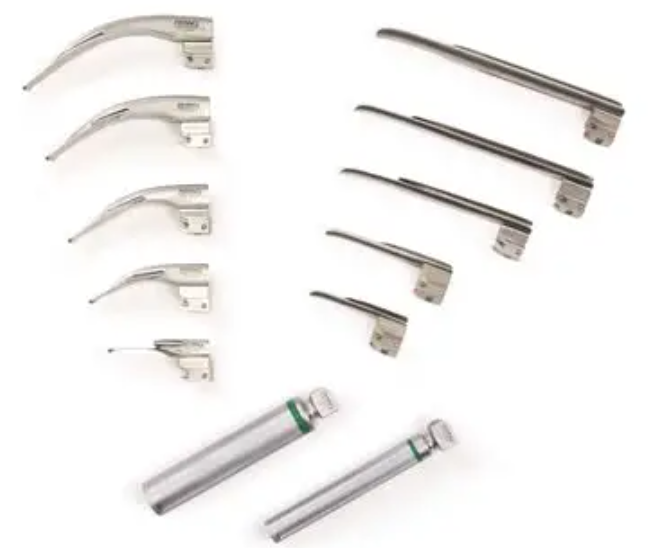
Before assembly, one must be familiar with the core parts of a laryngoscope. The assembly process is the act of correctly joining these components.
The handle is the power and grip unit. A "small handle" typically refers to a shorter, narrower, or more lightweight version compared to standard adult handles.
- Power Source: Contains batteries (usually AA or smaller, like AAA or specialized rechargeable lithium-ion packs in video units).
- Electrical Contacts: Features positive (+) and negative (-) contact points at the top to transfer power to the blade.
- Connector Mechanism: Has a hook, latch, or slot designed to physically and electrically mate with a specific blade. For small handles, this connector is proportionally smaller but must be equally robust.
- Switch: An on/off button or sliding mechanism.
This is the working end that enters the patient's airway.
- Direct Laryngoscope Blade: Made of metal (stainless steel) or plastic (disposable). It has a light source (bulb or LED) at its distal tip and a heel with a connector that matches the handle.
- Video Laryngoscope Blade: Contains a miniature camera, LEDs, and often a heating element at the tip. Its heel has both an electrical connector and often a mechanical locking mechanism.
- Bulb-based Systems: A small incandescent or halogen bulb is either integral to the blade (direct) or housed in the handle (fiberoptic systems).
- LED-based Systems: Now the standard. LEDs are located in the blade (direct or video) for optimal illumination.
Proper preparation prevents assembly errors and confirms device readiness.
1. Clean Work Surface: Use a clean, well-lit, and dry surface to prevent contamination or loss of small parts.
2. Component Inspection: Visually inspect all parts.
- Handle: Check for cracks, corrosion in the battery compartment, and clean electrical contacts. Ensure the switch functions smoothly.
- Blade: Inspect for straightness, integrity of the light source/camera lens (no cracks or fogging), and cleanliness. For disposable blades, ensure the packaging is intact and sterile.
- Batteries: Use fresh, high-quality batteries. Check for expiration dates (for medical-grade lithium cells) and ensure no corrosion is present. Verify polarity markings.
3. Battery Installation (for Direct Laryngoscopes):
- Open the battery compartment, usually via a screw-on cap or sliding door.
- Insert batteries according to the clearly marked polarity diagram (+/-) inside the compartment. Incorrect insertion is a common cause of failure.
- Close and secure the compartment tightly. A loose cap can break the circuit.
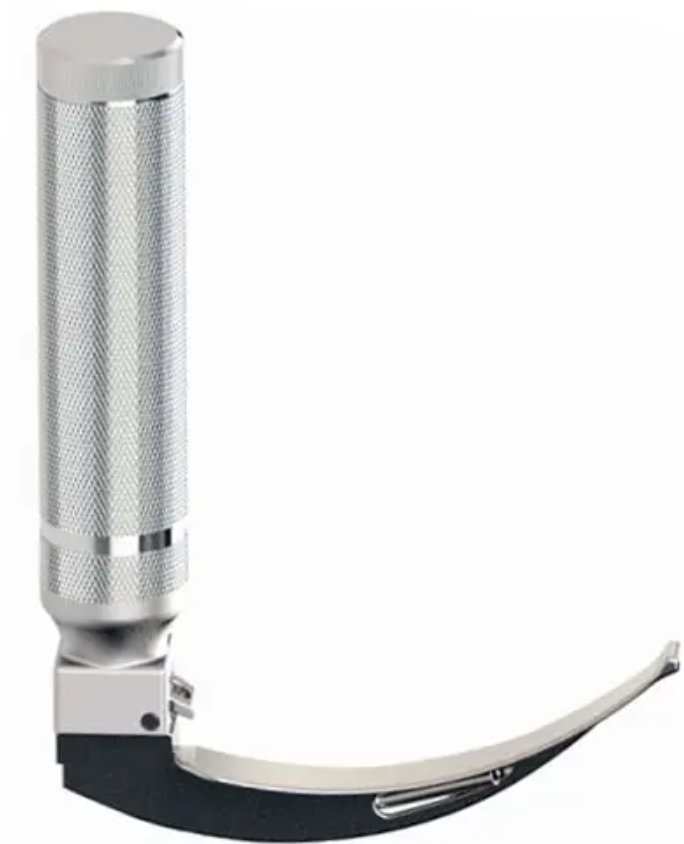
The assembly of a traditional direct laryngoscope focuses on achieving a secure mechanical lock and electrical connection.
Step 1: Power Verification (Pre-Assembly Test)
Before attaching the blade, perform a "buddy check" on the handle. Briefly press the switch to confirm the internal circuit is complete and the batteries are functional. Some handles have a test light; others require a blade to complete the circuit. If no light is present at this stage, troubleshoot the batteries and contacts before proceeding.
Step 2: Blade Selection and Orientation
Select the appropriate blade (e.g., Macintosh size 2 for a child, Miller 1 for an infant). Hold the laryngoscope handle in your left hand. Hold the blade in your right hand with the lighting element (bulb/LED) facing forward, away from you, and the curved/flat side of the blade facing upward. The blade's connector heel should be oriented to engage the handle's connector.
Step 3: The Engagement and Lock
This is the critical step. Small handles often use a hook-and-latch or slide-and-lock mechanism.
- Hook-and-Latch (Most Common):
1. Tilt the blade at approximately a 90-degree angle to the handle.
2. Hook the blade's heel over the top of the handle's connector pin or rail.
3. Firmly swing the blade down into its working position (aligned with the handle) until you hear and feel a definitive click. This click indicates the latch has engaged, securing the blade.
- Slide-and-Lock:
1. Align the blade's rail with the handle's slot.
2. Slide the blade directly onto the handle from the front until it stops.
3. Engage any secondary locking lever or twist mechanism if present.
Step 4: Security and Functional Test
- Tug Test: Gently attempt to pull the blade away from the handle. It should not dislodge or wobble. Any movement indicates improper locking.
- Light Test: Press the switch. The light at the blade tip should illuminate brightly and steadily. A dim or flickering light suggests poor battery contact, a failing bulb/LED, or a compromised connection at the blade-heel interface. Never use a laryngoscope with a suboptimal light.
Step 5: Final Visual Check
Ensure the blade is straight and firmly locked. The assembly is now ready for use or to be placed in its designated clean storage/kit.
Video laryngoscope assembly is more complex due to integrated electronics and often includes pairing the blade to the handle.
Step 1: System Power-Up
Ensure the small video laryngoscope handle is fully charged or has fresh batteries installed. Power on the handle. The device may go through a brief self-check, indicated by lights on the handle or a startup screen if integrated.
Step 2: Blade Selection and Preparation
Choose the correct video blade (standard or hyperangulated, correct size). For disposable video blades, open the sterile package carefully, maintaining the sterility of the blade. For reusable video blades, ensure it is clean, dry, and the lens is undamaged.
Step 3: Electrical and Physical Connection
- Align the electrical contacts on the video blade's connector with the pins or contact pad on the handle. These are often keyed to prevent incorrect orientation.
- Gently but firmly push the blade onto the handle until it seats fully. Most systems use a positive click or a magnetic connection (e.g., with a snap). Some have a secondary locking collar that twists to secure.
- Crucial Note: Never force the connection. If it doesn't slide on easily, check for misalignment or debris.
Step 4: System Recognition and Activation
Upon successful connection, the video laryngoscope system should recognize the blade. This is often shown by:
- The screen (if integrated) activating or changing its display.
- The camera's anti-fogging heater activating (you may feel slight warmth at the blade tip after a moment).
- An LED on the handle changing color or a confirmation tone.
- The specific blade type (e.g., "D-Blade, Regular") being displayed on the screen.
Step 5: Pre-Use Verification
- Visual Check: Look at the screen. You should see a clear, well-lit image, typically from the blade's own tip. Covering the camera with your finger should show a clear, close-up image of your fingerprint, confirming the camera is functional.
- Audio/Visual Check: Confirm all controls (record, image capture, brightness) are responsive.
- Secure Check: Ensure the blade is physically secure with no play.
- Ergonomics and Grip: A small handle can be more challenging to grip firmly, especially with gloved hands. During assembly, ensure your grip on the small handle is secure to prevent it from twisting or slipping when applying force to lock the blade.
- Connector Precision: The smaller connector mechanisms on small handles can be more delicate. Avoid dropping the handle or blade, as impacts can misalign the tiny hooks or electrical pins.
- Pediatric Specifics: When assembling a laryngoscope for pediatric use, the small handle is matched with a small blade. Double-check that the blade size is appropriate (e.g., Miller 0 for a newborn) and that the connection is absolutely secure, as the forces during intubation, while gentler, must not dislodge the blade.
1. No Light/No Power (Direct Laryngoscope):
- Cause: Batteries dead/incorrectly inserted; dirty/corroded contacts; bulb/LED failure; blade not fully locked.
- Fix: Replace batteries, clean contacts with alcohol swab, ensure audible click on assembly, replace blade.
2. Blade is Loose or Wobbles:
- Cause: Not fully locked; worn latch mechanism; incompatible blade/handle (e.g., a generic blade on a proprietary handle).
- Fix: Disconnect and re-connect, listening for the click. Use only manufacturer-matched components.
3. Video Screen is Black or "No Signal":
- Cause: Blade not fully seated; handle not powered; damaged cable (in modular systems); faulty camera in blade.
- Fix: Re-seat the blade connection, charge/handle, inspect cables, try a different blade.
4. Foggy or Blurry Video Image:
- Cause: Camera lens is physically fogged (anti-fog heater not working or not given time to warm up); lens is soiled.
- Fix: Wait 15-30 seconds for heater to work. If disposable, replace. If reusable, clean lens per manufacturer instructions.
5. Difficulty Locking the Blade:
- Cause: Debris in connector; misalignment; damaged hook/latch.
- Fix: Inspect for foreign material, clean, realign carefully. Do not force.
- For Immediate Use: After successful assembly and testing, the laryngoscope is ready for the procedure.
- For Kit Restocking: After use, disassemble for cleaning. Once cleaned and dried, reassemble without batteries for storage to prevent corrosion. Store in a designated, protective case.
- For Video Systems: Store the handle and blades separately in their designated clean, dry storage compartments. Ensure handles are placed on chargers if part of a charging dock system.
Assembling a laryngoscope, particularly one with a small handle, is a fundamental clinical skill that demands precision and understanding. It is a process that transforms individual components into a reliable, life-saving tool. The steps—from pre-assembly inspection and battery installation to the critical engagement and locking of the blade—must be performed deliberately and checked methodically. For video laryngoscopes, the process extends to ensuring electronic handshake and functional imaging. The small handle, common in pediatric and portable applications, requires the same diligence as its larger counterpart, with added attention to its compact connectors and ergonomics. Mastery of laryngoscope assembly, underscored by consistent pre-use verification, directly contributes to patient safety by ensuring the device will function flawlessly at the moment of critical need. By adhering to a standardized assembly protocol, healthcare providers and device technicians can guarantee that every laryngoscope is not just put together, but is assembled for success.
Contact us to get more information!

If the blade won't click into place, the most common causes are: misalignment (the blade's heel is not properly hooked over the handle's connector), debris obstruction (dried blood, disinfectant residue in the connector), or component incompatibility/damage (using a blade not designed for that specific handle model, or a bent hook/latch). First, disconnect completely, visually inspect both connectors for debris or damage, clean if necessary, and realign carefully. Never use excessive force to achieve a click.
Generally, no. Laryngoscope handles and blades are designed as matched systems. The connector mechanisms and electrical contacts are specific to product lines and sizes. A small pediatric handle is engineered to connect securely only with its corresponding small blades. Forcing an incompatible blade can damage the locking mechanism, result in a poor electrical connection (dim light), and create a safety hazard if the blade detaches during use. Always use manufacturer-paired components.
Most modern video laryngoscope handles have clear charge indicators. This is typically an LED light on the handle or charging dock: red for charging, green for fully charged. Some models with integrated displays will show a battery icon with a charge percentage. Always consult the user manual for your specific model. A best practice is to place the handle on its dedicated charger immediately after use and after cleaning, ensuring it is always ready for the next case.
Yes, it is not only safe but often recommended, especially when assembling a laryngoscope for immediate use in a sterile or clean procedure. Gloves do not typically interfere with the assembly of standard direct laryngoscopes. For video laryngoscopes with small, precise connectors, ensure your gloves are not overly bulky or wet, as this can reduce dexterity. The key is to maintain the same deliberate, tactile process—feeling for the definitive click—even through the glove.
The single most important check is the functional light test for direct scopes and the visual image verification for video scopes. After hearing the secure *click* of assembly, you must immediately activate the device. For a direct laryngoscope, the light must be bright, white, and steady—not yellow or flickering. For a video laryngoscope, the screen must display a clear, well-illuminated image from the blade's tip. This final verification confirms that the assembly is not only mechanically sound but also electrically and functionally complete. Never skip this step.
[1] https://www.fda.gov/medical-devices/surgery-devices/laryngoscopes
[2] https://www.ncbi.nlm.nih.gov/books/NBK493224/
[3] https://www.rcoa.ac.uk/safety-standards-quality/guidance-resources/airway-management-guidelines
[4] Manufacturer Instructions for Use (IFU) for specific laryngoscope models (e.g., Heine, Riester, Verathon, Medtronic).
[5] https://www.astm.org/Standards/F2719.htm


