
Views: 222 Author: Lake Publish Time: 2025-12-29 Origin: Site


Content Menu
● The Fundamental Role of Medical Gloves in Healthcare
● Applying Standard Precautions: A Risk-Based Framework
● Indisputable Scenarios: When Medical Gloves Are Mandatory
>> 1. All Parenteral (Injectable) Administrations
>> 2. Handling and Administering Hazardous Drugs
>> 3. Contact with Non-Intact Skin and Mucous Membranes
>> 4. Situations with High Risk of Unplanned Fluid Exposure
● Situations Where Glove Use is Not Routinely Indicated
>> 1. Distributing Oral Solid Medications in Packaging
>> 2. Handling Sealed Medication Packages
● The Nexus with Advanced Medical Visualization
● Consequences of Inappropriate Glove Use
● Frequently Asked Questions (FAQ)
>> 1. Is it a violation not to wear gloves when giving a pill?
>> 2. What type of medical glove should be used for giving a routine injection?
>> 3. Why is hand hygiene still needed if I'm wearing gloves?
>> 4. Should I wear gloves when applying hand sanitizer to a patient's hands before medication?
>> 5. How does contact precaution status change the rule for medication administration?
In the modern healthcare environment, medication administration represents one of the most frequent and critical interactions between healthcare providers and patients. This routine procedure, whether involving oral tablets, injectable solutions, or topical applications, carries inherent risks of exposure to infectious agents, hazardous drugs, and allergens. The question of whether to wear medical gloves during this process is not merely procedural but fundamental to infection control and occupational safety. This decision sits at the intersection of established guidelines, clinical judgment, and practical workflow considerations. This article will thoroughly examine the evidence, standards, and situational factors that dictate the appropriate use of medical gloves in medication administration.

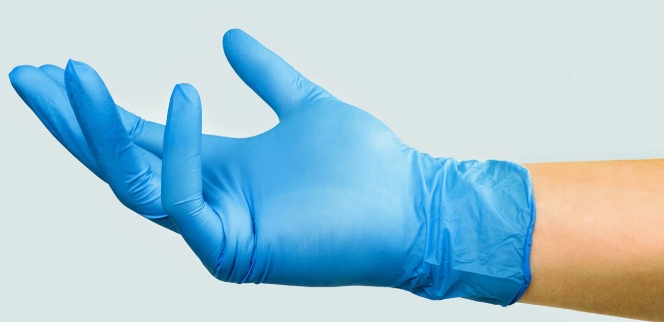
A medical glove serves as a primary barrier device within the hierarchy of infection control. Its core functions are dualistic: to protect the healthcare worker's hands from contamination by patient blood, bodily fluids, and harmful substances, and conversely, to protect the patient from microorganisms transiently residing on the healthcare worker's skin. It is crucial to understand that a medical glove is a supplement to, not a replacement for, proper hand hygiene. Gloves are designed as single-use items for specific tasks and must be changed between patients and between different procedures—even on the same patient—to prevent cross-contamination and maintain the integrity of care.
The Centers for Disease Control and Prevention (CDC)'s Standard Precautions form the universal foundation for preventing pathogen transmission in healthcare settings. These precautions are based on the principle that all blood, body fluids, secretions, excretions (excluding sweat), non-intact skin, and mucous membranes may harbor transmissible infectious agents.
Applying this to medication administration requires a dynamic risk assessment focused on the nature of the task and anticipated exposure. The pivotal question is straightforward: Is there a reasonable anticipation that this task will involve hand contact with substances covered under Standard Precautions?
- Anticipated Contact (YES): Wearing a medical glove is indicated. Examples include administering an injection, handling liquid medications prone to spillage, or applying cream to an open wound.
- No Anticipated Contact (NO): Gloves are not typically required. An example is handing a sealed, unit-dose oral medication package to an alert patient capable of self-administration. However, rigorous hand hygiene before and after the task remains non-negotiable.
Several clinical situations present clear, non-negotiable requirements for medical glove use.
Any procedure that punctures the skin's barrier—including intravenous (IV), intramuscular (IM), subcutaneous (SQ), and intradermal routes—carries a significant risk of blood exposure. Wearing a clean (or sterile, depending on the technique) medical glove is essential. This practice protects the provider from potential bloodborne pathogen exposure via needlestick or splash and protects the patient from the introduction of pathogens during skin antisepsis and injection.
The administration of cytotoxic chemotherapy agents and other hazardous drugs, as defined by NIOSH, requires specific PPE protocols to prevent occupational exposure through dermal absorption. For these high-risk tasks, double-gloving with medical gloves specifically tested for resistance to the drugs being handled is often a mandated safety standard.
Applying topical medications to open wounds, ulcers, or severe dermatological conditions necessitates wearing a medical glove. Similarly, administering medications to mucous membranes—such as eye drops, nasal sprays, ear drops, or vaginal/rectal suppositories—involves direct contact with bodily secretions, making glove use a critical protective measure for the provider.
When assisting patients who are incontinent, vomiting, diaphoretic, or have uncontrolled respiratory secretions with medication, gloves should be worn. The unpredictable nature of these encounters makes the likelihood of contact with urine, feces, vomit, or saliva sufficiently high to warrant preemptive barrier protection.

Conversely, certain low-risk tasks do not routinely require medical glove use, emphasizing instead the role of hand hygiene and environmental barriers.
The act of retrieving a unit-dose packaged pill from a dispensing system and placing it into a medication cup for a cooperative patient is considered low risk. The packaging itself acts as an effective barrier. The critical control points are performing hand hygiene before retrieving the medication and after the patient interaction.
Tasks such as scanning barcodes on sealed medication boxes, delivering sealed multi-dose blister packs, or stocking automated dispensing cabinets do not, in themselves, require medical glove use.
The Critical Exception: Contact Precautions
The above exceptions are void if the patient is under Contact Precautions (e.g., for C. difficile, MRSA, VRE). In isolation scenarios, donning a clean medical glove (and often a gown) is required upon room entry for any patient or environment contact, including simple medication delivery.
In complex procedural settings utilizing medical visualization technology, the rules for medical glove use are integrated into broader sterile or aseptic techniques. For instance:
- During a bronchoscopy workstation procedure, a clinician may administer topical anesthetic or saline irrigation through the scope's channel. Here, medical gloves are worn as part of a full PPE ensemble (gown, mask, eye protection) to guard against splash exposure from airway secretions.
- When using a video laryngoscope for intubation, the provider handling the device and associated medication syringes (e.g., sedatives, paralytics) is in a high-risk zone for exposure to oropharyngeal secretions and blood. Medical glove use is mandatory.
In these contexts, the medical glove enables the safe manipulation of sensitive visualization equipment while concurrently handling necessary medications, ensuring both procedural success and clinician safety.
Misapplication of medical gloves can introduce its own set of risks:
- Cross-Contamination: A contaminated gloved hand touching a "clean" surface, like a medication bottle or computer keyboard, can spread pathogens. The concept of "clean vs. dirty" must be mentally maintained.
- Skin Damage: Prolonged and unnecessary glove wear can cause skin maceration, irritation, and contribute to latex allergy development.
- Resource Waste and Environmental Impact: Indiscriminate glove use contributes to increased procurement costs and medical waste volume.
- Complacency in Hand Hygiene: The most significant risk is the erroneous belief that gloves eliminate the need for handwashing. Hands must be cleaned before donning and immediately after removing gloves, as the process of doffing can contaminate the skin.
Leading global health authorities advocate for a thoughtful, risk-based approach:
1. Hand Hygiene is Paramount: Always perform hand hygiene before donning and after doffing medical gloves.
2. Glove for Anticipated Exposure: Wear gloves when contact with blood, body fluids, mucous membranes, non-intact skin, or contaminated surfaces/equipment is reasonably expected.
3. Select Task-Appropriate Gloves: Use sterile gloves for aseptic procedures (like IV insertion) and chemotherapy-rated gloves for hazardous drugs.
4. Change Gloves Diligently: Change gloves if torn or heavily soiled, and always between different tasks or patients.
5. Never Reuse: Dispose of single-use medical gloves immediately after use; never wash or disinfect them for reuse.
The decision to don a medical glove when administering medication is a deliberate act of clinical risk management, guided by the principles of Standard Precautions. It is not a reflexive habit but a judgment call based on the mode of administration, patient condition, and medication properties. From the simple act of delivering a packaged pill—where hand hygiene is the star—to the complex administration of chemotherapeutic agents—where specialized medical gloves are a lifeline—the goal remains unchanged: to safeguard the well-being of both patient and provider. As medical technology, particularly in visualization, continues to advance, the consistent and correct use of fundamental PPE like the medical glove remains a cornerstone of safe, effective, and responsible healthcare delivery.
Not necessarily. If the pill is in unit-dose packaging and handed to a patient who can self-administer, and the patient is not on Contact Precautions, gloves are not typically required by standard infection control guidelines. The critical violation would be failing to perform hand hygiene before and after the interaction. However, individual facility policy may be stricter, so always adhere to local protocols.
For routine intramuscular or subcutaneous injections (e.g., vaccines, insulin), clean, non-sterile examination gloves are generally sufficient, as the critical sterility is maintained by the needle and syringe. For intravenous administration or any procedure requiring a sterile field, sterile medical gloves are mandated. The key is that gloves must be single-use and changed between patients.
Medical gloves are not 100% impermeable and can have microscopic defects. Hands can become contaminated with perspiration and bacteria during prolonged glove wear and, most importantly, during the glove removal process. Hand hygiene before gloving protects the patient from organisms on your hands. Hand hygiene after degloving protects you from any pathogens that may have contaminated the glove exterior.
No, this is not a standard indication for glove use. The purpose is to decontaminate the patient's hands. Performing this task with bare, clean hands (followed by your own hand hygiene) is appropriate. Wearing gloves would be an unnecessary use of resources unless the patient has known infectious secretions on their hands.
It overrules all routine assessments. If a patient is on Contact Precautions (e.g., for resistant bacteria like MRSA or VRE), you must don a clean medical glove (and often a gown) upon entry into the patient's room before any contact with the patient or their immediate environment. This includes simple tasks like delivering a medication cup. The glove is removed before leaving the room to prevent pathogen transmission outside the isolation environment.
[1] https://www.cdc.gov/infectioncontrol/guidelines/isolation/index.html
[2] https://www.cdc.gov/infectioncontrol/basics/standard-precautions.html
[3] https://www.who.int/gpsc/5may/Glove_Use_Information_Leaflet.pdf
[4] https://www.cdc.gov/niosh/topics/hazdrug/default.html
[5] https://www.apsf.org/article/aseptic-technique-and-the-use-of-sterile-gloves/
[6] https://www.fda.gov/medical-devices/personal-protective-equipment-infection-control/gloves
[7] https://www.ncbi.nlm.nih.gov/books/NBK470254/
[8] https://www.ismp.org/guidelines/hazardous-drugs
[9] https://www.osha.gov/laws-regs/regulations/standardnumber/1910/1910.1030


