


Content Menu
● Defining the Categories: Disposable vs. Reusable Isolation Gowns
>> 1. Disposable (Single-Use) Isolation Gowns
>> 2. Reusable (Multi-Use) Isolation Gowns
● The Performance Standard: AAMI PB70 Applies to Both
● The Case for Reusable Isolation Gowns: Advantages and Drivers
● The Case for Disposable Isolation Gowns: Advantages and Rationale
● The Critical Role of Industrial Laundering and Validation
● Application in Medical Visualization and Procedural Settings
● Making the Decision: A Framework for Evaluation
● Frequently Asked Questions (FAQ)
>> 1. How many times can a reusable isolation gown typically be laundered and used?
>> 3. What is the biggest risk or drawback of using reusable isolation gowns?
>> 4. How do I know if a reusable gown is still effective and safe to use after laundering?
>> 5. From an environmental standpoint, are reusable gowns always better than disposable ones?
In the critical arena of infection prevention and control, the choice of personal protective equipment (PPE) carries significant implications for safety, cost, and environmental impact. Isolation gowns, a fundamental barrier against the transmission of pathogens and bodily fluids, are a focal point in this decision-making process. A pivotal question arises: Are isolation gowns reusable? The answer is not binary but unfolds across a spectrum of product design, intended use, and validated reprocessing protocols. This article will comprehensively explore the landscape of reusable versus disposable isolation gowns, examining their materials, performance standards, reprocessing requirements, and the total cost-benefit analysis that informs institutional purchasing decisions.

The market for isolation gowns is divided into two primary categories, each with distinct characteristics.
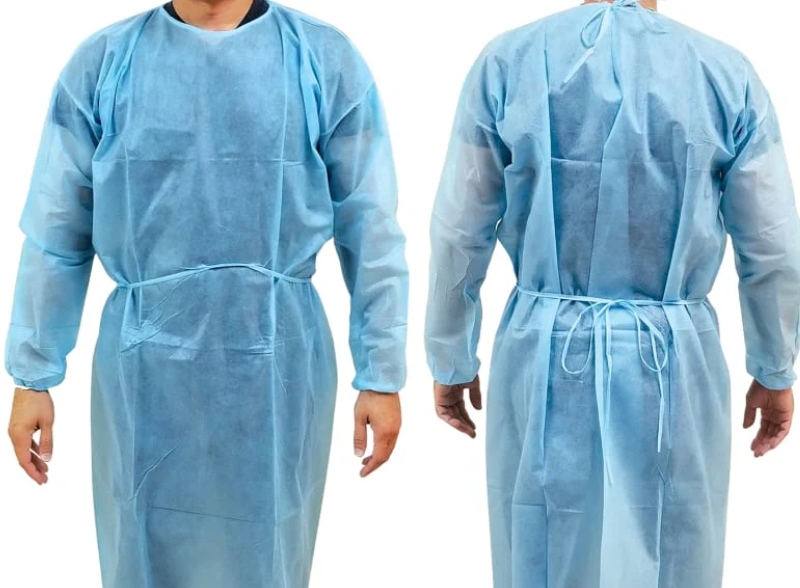
These are the most commonly encountered isolation gowns in clinical settings. They are designed to be used for one episode of patient care or one procedure and then discarded.
- Materials: Typically made from nonwoven fabrics like polypropylene (PP), polyethylene (PE), or spunbond-meltblown-spunbond (SMS) composites. These materials are engineered for specific fluid barrier performance (AAMI levels) but are not designed to withstand industrial laundering.
- Key Feature: Intended for a single use. Their integrity, including barrier performance and fastener functionality, is validated for one wearing cycle only.
These gowns are designed to be donned, used, removed, laundered, disinfected, inspected, and reused multiple times.
- Materials: Constructed from durable woven or knitted fabrics, often polyester or polyester-cotton blends. The fluid resistance is achieved through a durable chemical finish or a laminated membrane (e.g., polyurethane) applied to the fabric.
- Key Feature: Must withstand the rigors of repeated industrial laundering and disinfection cycles (often 50-100 cycles or more) while maintaining their barrier integrity, dimensional stability, and fastener strength.
Critically, both disposable and reusable isolation gowns are rated under the same performance standard: the Association for the Advancement of Medical Instrumentation (AAMI) PB70. This standard classifies barrier protection levels from 1 (minimal risk) to 4 (high risk) based on resistance to liquid penetration. A reusable gown must meet its claimed AAMI level (e.g., Level 3) not just when new, but after a specified number of laundering cycles. This is a fundamental requirement often verified by the manufacturer.
The use of reusable isolation gowns is supported by several compelling arguments, particularly for high-volume users.
- Environmental Sustainability: This is the most prominent driver. Reusable systems significantly reduce the volume of solid waste generated. A single reusable gown replacing dozens or hundreds of disposable ones can lessen landfill burden and reduce the carbon footprint associated with the raw material extraction, manufacturing, and transportation of single-use products.
- Lifecycle Cost Savings: While the initial purchase price of a reusable gown is higher, the total cost of ownership (TCO) over its usable life can be lower. The TCO analysis includes the cost of the gown itself, plus the costs of commercial laundering, inventory management, and replacement of gowns that wear out. For facilities with controlled, high-volume usage, the per-use cost can become favorable.
- Comfort and Perception: Many users report that reusable gowns, often made of woven fabrics, are more breathable, comfortable, and feel more substantial than some disposable nonwoven options. This can improve staff satisfaction and compliance with PPE protocols.
- Supply Chain Resilience: Maintaining an inventory of reusable isolation gowns can buffer against market shortages and price volatility, as seen during the COVID-19 pandemic. It reduces dependency on global disposable PPE supply chains.

Disposable isolation gowns remain the dominant choice for many reasons, rooted in practicality and risk management.
- Convenience and Workflow: The "use and discard" model eliminates the logistical complexities of collection, sorting, transportation, and tracking for laundering. It is simple and supports high-turnover environments like emergency departments.
- Guaranteed Integrity and Sterility (if needed): Each disposable gown is a new, unused product with a guaranteed, validated barrier. For sterile procedures, a single-use, sterile disposable gown ensures no risk of cross-contamination from prior reprocessing failures.
- No Reprocessing Risk: Eliminates the risk of improper laundering (e.g., incorrect detergent, temperature, or cycle) that could degrade the gown's barrier or fail to disinfect it adequately. The user assumes no responsibility for the reprocessing outcome.
- Infection Control in Specific Scenarios: For patients under Contact Precautions for certain pathogens (e.g., *C. difficile*, norovirus), where spore-forming organisms are a concern, many protocols mandate single-use isolation gowns to prevent any potential laundering-related transmission.
- Lower Upfront Cost and Simplified Procurement: Easier to budget for and purchase without establishing a laundry service contract or managing a reusable inventory system.
The safe reuse of isolation gowns is entirely contingent on a robust, validated reprocessing system. This is not ordinary laundry.
- Specialized Laundry Facilities: Reprocessing must be performed by a healthcare-accredited laundry service or an in-house facility that follows strict standards (e.g., HLAC Accreditation, TRSA Hygienically Clean certification).
- Validated Process: The entire wash cycle—detergents, disinfectants, water temperatures, rinse cycles, and drying parameters—must be validated to achieve two simultaneous outcomes:
1. Effective Microbial Decontamination: The process must render the gown free of pathogens.
2. Preservation of Barrier Integrity: The process must not degrade the gown's fluid-resistant finish, seams, or fabric strength. The manufacturer specifies the maximum number of cycles the gown is validated to withstand.
- Inspection and Repair: Each gown must be inspected after laundering for defects: tears, seam failures, compromised closures, or loss of the fluid-repellent finish (e.g., failing a "water bead" test). Damaged gowns must be removed from circulation.
In environments utilizing advanced medical visualization technology, the choice between reusable and disposable isolation gowns involves specific considerations.
- Sterile vs. Non-Sterile Use: For sterile interventional procedures (e.g., certain surgeries using imaging guidance), sterile, single-use gowns are typically mandatory. For non-sterile but splash-prone procedures, such as those involving a bronchoscopy workstation or single-use ureteroscope with irrigation, either a high-level disposable (AAMI Level 3) or a validated reusable gown of the same level could be appropriate, provided the reusable gown is donned in a clean state.
- Contamination Risk: Procedures generating high volumes of potentially infectious fluid may favor disposables for ease of hazardous waste disposal post-use.
- Comfort for Long Procedures: For lengthy endoscopic procedures, the breathability of a well-maintained reusable gown may offer an ergonomic advantage.
Healthcare facilities should conduct a systematic evaluation to determine the best fit:
1. Volume and Usage Patterns: High, predictable usage favors reusables; low or sporadic usage may favor disposables.
2. Environmental Policy: Institutions with strong sustainability goals will weigh the waste reduction benefit heavily.
3. Access to Accredited Laundry: No reusable program is viable without access to a compliant, reliable reprocessing service.
4. Total Cost of Ownership Analysis: A detailed TCO model comparing all costs over a multi-year period is essential.
5. Staff Preference and Compliance: Engage end-users in trials to assess comfort and acceptance.
The question of whether isolation gowns are reusable is answered by acknowledging that both disposable and reusable systems are viable, each with its own set of advantages, challenges, and necessary safeguards. Reusable isolation gowns are a sustainable and potentially cost-effective option, but their safety and efficacy are wholly dependent on a capital-intensive, rigorously validated industrial laundering infrastructure. Disposable isolation gowns offer simplicity, guaranteed integrity, and are often the pragmatic choice for ensuring consistent infection control, particularly in high-risk or sterile environments. There is no universal "best" choice; the optimal decision is context-dependent, requiring a balanced analysis of clinical risk, operational workflow, environmental goals, and economic factors. Just as the field of medical visualization carefully selects between reusable and single-use scopes based on clinical need and cost-benefit, so too must healthcare systems thoughtfully navigate the choice of protective apparel. Ultimately, the goal remains unchanged: to provide a reliable, effective barrier that protects healthcare workers and patients, regardless of the gown's lifecycle.
The number of validated launderings varies by manufacturer and gown construction but typically ranges from 50 to 100 cycles. The manufacturer must provide this specification based on testing that demonstrates the gown maintains its AAMI barrier performance level and physical integrity throughout its claimed lifecycle. Gowns must be removed from service once they reach this maximum cycle count or if they fail inspection.
Yes, when processed correctly. An accredited healthcare laundry uses defined wash cycles with appropriate disinfectants (often bleach-based for *C. difficile*) and thermal or chemical processes proven to eliminate specific pathogens. The key is using a laundry process validated for pathogen elimination, not a home or standard commercial laundry. Some facility policies may still dictate single-use gowns for certain high-consequence pathogens as an extra precaution.
The primary risk is reprocessing failure. If the laundering process is not strictly controlled, validated, and monitored, it could fail to adequately disinfect the gown or could prematurely degrade the fluid-resistant barrier. This could lead to cross-contamination or an unprotected wearer. This risk is mitigated by using only accredited laundry services and rigorously following the gown manufacturer's reprocessing instructions.
This relies on a system of process control and inspection. First, trust in the validated laundry process is paramount. Second, each gown must undergo a visual and tactile inspection after each cycle for holes, torn seams, broken snaps/ties, and loss of the fluid-repellent finish (e.g., water should still bead on the surface). Facilities often use a simple "water bead" test as a routine check. Any gown showing signs of wear or failure must be immediately retired.
While reusables dramatically reduce solid waste, a full lifecycle assessment (LCA) is needed for a complete picture. The environmental impact of reusables includes the energy, water, and chemicals used in repeated laundering, as well as the initial manufacturing impact of the more durable fabric. Most peer-reviewed LCAs conclude that reusable isolation gown systems have a lower overall environmental footprint (e.g., lower greenhouse gas emissions, fossil fuel consumption) compared to disposable systems, provided they are used for their full intended lifecycle and laundered in efficient, large-scale facilities.
[1] https://www.aami.org/docs/default-source/standards-library/is-80001-1-2021.pdf
[2] https://www.cdc.gov/infectioncontrol/guidelines/environmental/index.html#laundry
[3] https://practicegreenhealth.org/topics/green-procurement/reusable-medical-textiles
[4] https://www.fda.gov/medical-devices/personal-protective-equipment-infection-control/isolation-gowns


