
Views: 222 Author: Lake Publish Time: 2026-02-27 Origin: Site


Content Menu
● The Foundation: Standard Precautions and the Role of Gowns
>> What Are Standard Precautions?
>> Gown Use in Standard Precautions
● Transmission-Based Precautions: When Isolation Gowns Are Required
>> Contact Precautions: The Primary Indication for Gowns
>> Enhanced Barrier Precautions: Targeted Gown Use
>> Droplet Precautions: Gown Use with Respiratory Infections
>> Airborne Precautions: Gown Use with Aerosolized Pathogens
>> Ebola and Special High-Consequence Infections
● Patient Transport and Gown Use
>> Prioritizing Gowns During Shortages
● Clinical Scenarios: Applying Gown Requirements
>> Scenario 1: Patient with MRSA in a wound
>> Scenario 2: Patient with influenza and no other infections
>> Scenario 3: Nursing home resident colonized with Candida auris
>> Scenario 4: Patient with chickenpox (varicella)
>> Scenario 5: Routine blood draw on a general medical patient
● The Importance of Proper Donning and Doffing
● Frequently Asked Questions (FAQs)
>> 1. What type of isolation ALWAYS requires wearing a gown?
>> 2. Do I need to wear a gown for Droplet Precautions?
>> 3. What are Enhanced Barrier Precautions and when are gowns needed?
>> 4. What type of gown should be worn for Ebola patients?
>> 5. Can gowns be reused or extended during shortages?
In the complex world of infection prevention and control, healthcare workers rely on a layered system of precautions to protect themselves and their patients from harmful microorganisms. Central to this protective system is the isolation gown—a critical piece of personal protective equipment (PPE) that serves as a barrier against infectious agents. But not all isolation situations require gowns, and understanding exactly when and why gowns are worn is essential for proper infection control practice. This comprehensive guide explores the types of isolation that require gowns, the rationale behind these requirements, and the specific clinical scenarios where gown use is mandatory, drawing on authoritative guidelines from the CDC, WHO, and other leading health organizations.
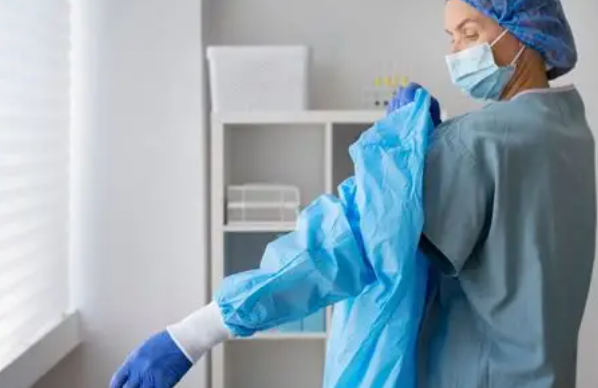
Before examining specific isolation types, it is essential to understand that gown use begins with Standard Precautions—the foundation of infection prevention in all healthcare settings.
Standard Precautions represent the minimum infection prevention practices that apply to all patient care, regardless of suspected or confirmed infection status . They are based on the principle that all blood, body fluids, secretions, excretions (except sweat), non-intact skin, and mucous membranes may contain transmissible infectious agents.
According to established guidelines, healthcare personnel should wear a gown during procedures and patient-care activities when contact with blood, body fluids, secretions, or excretions is anticipated . The purpose is twofold:
- To protect the healthcare worker's skin and clothing from contamination
- To prevent the transfer of microorganisms from the healthcare worker to patients or environmental surfaces
The World Health Organization emphasizes that gowns should be worn for direct patient contact if the patient has uncontained secretions or excretions . Importantly, gowns must be removed and hand hygiene performed before leaving the patient's environment .
Transmission-Based Precautions are the second tier of infection control, used in addition to Standard Precautions for patients known or suspected to be infected or colonized with epidemiologically important pathogens that require specific transmission control measures . Among these, several types specifically mandate gown use.
Contact Precautions are designed to prevent transmission of infectious agents that are spread by direct or indirect contact . This is the isolation type most consistently requiring gown use.
Definition: Contact transmission occurs through direct contact (person-to-person) or indirect contact (contact with contaminated environmental surfaces or equipment).
When Gowns Are Required: Under Contact Precautions, isolation gowns are required for all healthcare worker interactions with the patient . This includes:
- All direct patient contact
- Contact with the patient's immediate environment
- Contact with contaminated equipment or surfaces
Specific Requirements:
- Gowns must be donned prior to entering the patient's room
- Nonsterile gloves are required for all patient contact
- Gowns must be removed before exiting the room
- Hand hygiene is performed immediately after gown removal
Diseases Requiring Contact Precautions (with gown use) :
- Multidrug-resistant organisms (MDROs): MRSA, VRE, ESBL-producing organisms, CRE
- Enteric infections: C. difficile, Rotavirus, Norovirus, Shigella, E. coli 0157:H7
- Cutaneous infections: Cutaneous anthrax, localized cutaneous herpes zoster, herpes simplex (disseminated or severe primary infection)
- Respiratory syncytial virus (RSV), enterovirus, parainfluenza
- Parasites: Scabies, lice
- Hepatitis A (for incontinent patients only)
- Conjunctivitis, impetigo
- Major (non-contained) abscesses, cellulitis, or decubiti
Enhanced Barrier Precautions represent a newer category developed specifically for post-acute care settings to address the challenges of Contact Precautions while preventing spread of novel or targeted MDROs .
Definition: Enhanced Barrier Precautions are designed for patients colonized or infected with certain highly resistant organisms, allowing them more freedom while still providing protection during high-contact activities.
When Gowns Are Required: Unlike Contact Precautions (which require gowns for all interactions), Enhanced Barrier Precautions require gowns only for specific high-contact activities :
- Dressing
- Bathing/showering
- Transferring
- Providing hygiene
- Changing linens
- Changing briefs or assisting with toileting
- Device care or use (central line, urinary catheter, feeding tube, tracheostomy/ventilator)
- Wound care or any skin openings requiring a dressing
Patient Status: Patients on Enhanced Barrier Precautions are not restricted to their rooms and may participate in group activities . This represents a significant quality-of-life improvement while maintaining infection control.
Microorganisms Requiring Enhanced Barrier Precautions :
- Pan-resistant organisms (resistant to all antibiotics)
- Colonization with carbapenem-producing Enterobacter
- Colonization with carbapenem-producing E. coli
- Colonization with carbapenem-producing Klebsiella
- Colonization with Colistin-resistant organisms
- Colonization with drug-resistant Acinetobacter baumannii
- Colonization with Candida auris
Droplet Precautions apply when pathogens are spread through respiratory droplets generated by coughing, sneezing, or talking .
Definition: Droplet transmission involves large droplets (generally >5 microns) that travel short distances (typically 3-6 feet) and require close contact for transmission.
When Gowns Are Required: Gown use in Droplet Precautions is not automatic but depends on the specific pathogen and clinical situation.
Droplet Plus Precautions (Droplet plus Contact): For certain respiratory pathogens, combined precautions are required. Notably:
- For COVID-19, patients should be placed on Droplet Plus Precautions, requiring gowns, gloves, masks, and eye protection for all resident interactions
- RSV requires both Droplet and Contact Precautions, therefore requiring gowns
- Influenza typically requires Droplet Precautions only, but Contact Precautions are also required for some respiratory viruses
Diseases Requiring Droplet Precautions (gown use variable) :
- Influenza (gowns not routinely required unless combined with Contact)
- Group A Streptococcal invasive disease, pneumonia, pharyngitis
- Pertussis (whooping cough)
- Meningitis (bacterial or viral)
- RSV (requires Contact plus Droplet → gowns required)
- Mumps, rubella
- Viral hemorrhagic fevers (Lassa fever, Marburg)
- Diphtheria
- Invasive meningococcal disease including meningitis
- Pneumonic and meningeal plague
- Haemophilus influenzae type B (meningitis)
- Mycoplasma pneumoniae
Airborne Precautions are designed for pathogens that remain infectious over distance and time when suspended in air .
Definition: Airborne transmission involves small particles (aerosols) that can be dispersed widely by air currents and inhaled by individuals who have not had face-to-face contact with the infectious source.
When Gowns Are Required: Gown use in Airborne Precautions depends on whether additional Contact Precautions are required.
Diseases Requiring Airborne Precautions :
- Tuberculosis (pulmonary, laryngeal)
- Measles
- Mumps
- Rubella
- Varicella (chickenpox) — plus Contact Precautions → gowns required
- Disseminated herpes zoster — plus Contact Precautions → gowns required
- Smallpox — plus Contact Precautions → gowns required
- SARS-associated coronavirus — plus Contact Precautions → gowns required
- MERS-CoV — plus Contact Precautions → gowns required
- Avian influenza
- Ebola — special precautions requiring impermeable gowns
Key Point: For airborne infections that are also transmitted by contact (varicella, disseminated zoster, smallpox, SARS, MERS), gowns are required in addition to respiratory protection.
For patients with Ebola, the CDC recommends enhanced PPE including:
- A single-use fluid-resistant or impermeable gown that extends to at least mid-calf or coverall without integrated hood
- Single-use nitrile examination double gloves with extended cuffs
- Single-use fluid-resistant or impermeable boot covers extending to at least mid-calf
- Fit-tested N95 respirator in combination with surgical hood and full face shield or PAPR
When patients on transmission-based precautions require transport outside their room, specific protocols apply:
- For Contact Precautions: Gowns are removed before transport; clean PPE is donned at destination
- For patients requiring gowns, any contaminated or colonized areas should be contained and covered during transport
- Healthcare workers transporting patients should not wear contaminated gowns outside the patient's room
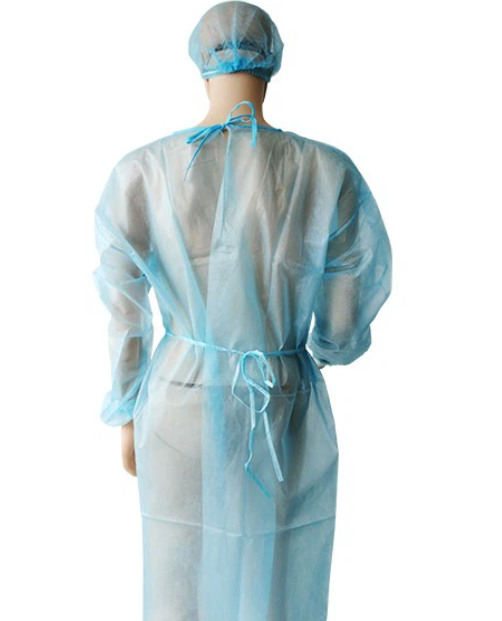
During supply shortages, the CDC recommends prioritizing gowns for :
Higher-risk activities:
- Care activities where splashes and sprays are anticipated (including aerosol-generating procedures)
- High-contact patient care activities that provide opportunities for pathogen transfer to hands and clothing:
- Dressing
- Bathing/showering
- Transferring
- Providing hygiene
- Changing linens
- Changing briefs or assisting with toileting
- Device care or use
- Wound care
Patients with:
- Suspected or confirmed infectious diseases spread by contact transmission when close, prolonged contact anticipated
- Emerging highly resistant organisms (C. auris, carbapenemase-producing organisms, pan-resistant organisms)
Facilities may consider suspending gown use for endemic MDROs (MRSA, VRE, ESBL) during severe shortages .
In crisis situations, extended use (wearing the same gown for multiple patients in the same cohort) may be considered only if:
- Patients are housed in the same location
- Patients are known to be infected with the same infectious disease
- There are no additional co-infectious diagnoses transmitted by contact (e.g., C. difficile, C. auris)
Disposable gowns should never be reused; reusable gowns should not be reused without laundering .
- Isolation type: Contact Precautions
- Gown required? YES, for all room entry and patient contact
- Rationale: MRSA is transmitted by contact; gown prevents contamination of clothing and transfer to other patients
- Isolation type: Droplet Precautions
- Gown required? NO (unless anticipated fluid exposure under Standard Precautions)
- Rationale: Influenza is primarily droplet-transmitted; gowns not routinely required
- Isolation type: Enhanced Barrier Precautions
- Gown required? YES, but only during specific high-contact activities
- Rationale: Resident can participate in activities but needs protection during care activities that risk transmission
- Isolation type: Airborne plus Contact Precautions
- Gown required? YES, for all room entry
- Rationale: Varicella is transmitted by both airborne and contact routes
- Isolation type: Standard Precautions
- Gown required? Based on risk assessment
- Rationale: If splash of blood is anticipated, gown is indicated; otherwise, gloves and hand hygiene may suffice
Regardless of the isolation type, proper gown technique is essential:
Donning:
- Perform hand hygiene
- Don gown, ensuring it fully covers torso from neck to knees, arms to wrists
- Fasten at back of neck and waist
- Don other PPE (mask, eye protection, gloves)
Doffing:
- Remove gloves first
- Remove gown by unfastening ties, pulling away from neck and shoulders, turning inside out
- Fold or roll into a bundle and discard
- Perform hand hygiene immediately
Critical rule: Remove gown and perform hand hygiene before leaving the patient's environment .
Understanding what type of isolation requires a gown is fundamental to proper infection prevention practice. Gowns are most consistently required in Contact Precautions, where they must be worn for all patient interactions due to the nature of contact transmission. Enhanced Barrier Precautions represent a targeted approach, requiring gowns only for specific high-contact activities while allowing patients greater freedom. Droplet and Airborne Precautions have variable gown requirements depending on whether the pathogen also transmits by contact.
The overarching principle is that gowns serve as a critical barrier against the transfer of microorganisms—whether from patient to healthcare worker, healthcare worker to patient, or between patients via contaminated clothing. By matching gown use to the specific transmission risks of each isolation type, healthcare facilities can protect their staff and patients while using resources efficiently.
As infection control practices continue to evolve—with new pathogens, updated guidelines, and innovative PPE technologies—the fundamental question "what type of isolation wears a gown" will remain central to safe, effective healthcare delivery. Healthcare workers who understand these distinctions are better equipped to protect themselves, their colleagues, and the vulnerable patients in their care.
Contact us to get more information!
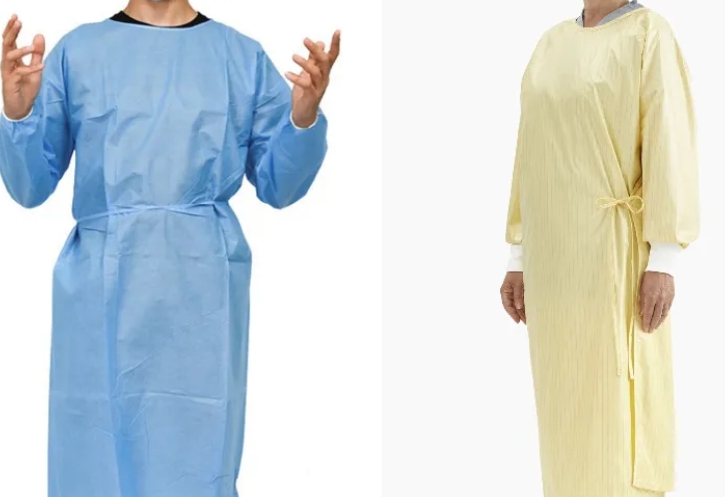
Contact Precautions always require wearing a gown for all healthcare worker interactions with the patient . This is because pathogens spread by contact transmission (direct or indirect contact) can easily contaminate clothing and be transferred to other patients or surfaces. Diseases requiring Contact Precautions include MRSA, VRE, C. difficile, RSV, scabies, and many enteric infections.
It depends on the specific pathogen. Gowns are required for Droplet Precautions only when the pathogen also requires Contact Precautions . For example:
- Influenza (Droplet only) → gowns not routinely required
- RSV (Droplet plus Contact) → gowns required
- COVID-19 (Droplet Plus Precautions) → gowns required for all interactions
Enhanced Barrier Precautions are a newer category designed for post-acute care settings to prevent spread of novel or targeted MDROs while allowing patients more freedom . Gowns are required only during specific high-contact activities, including dressing, bathing/showering, transferring, providing hygiene, changing linens, assisting with toileting, device care, and wound care. Patients may participate in group activities and are not restricted to their rooms.
For Ebola and other viral hemorrhagic fevers, enhanced PPE is required including a single-use fluid-resistant or impermeable gown that extends to at least mid-calf (or coverall without integrated hood), along with double gloves, boot covers, and respiratory protection (N95 or PAPR) . This reflects the high risk of transmission and severity of disease.
During crisis situations, extended use (wearing the same gown for multiple patients in the same cohort) may be considered only if patients are housed together, infected with the same disease, and there are no co-infections transmitted by contact (e.g., C. difficile) . Disposable gowns should never be reused, and reusable gowns should not be reused without laundering . During shortages, gowns should be prioritized for higher-risk activities and patients with emerging highly resistant organisms.
[1] https://www.cdc.gov/niosh/healthcare/protective-clothing/standards.html
[2] https://www.who.int/teams/risk-communication/health-workers-and-administrators/infection-prevention-and-control/guidance
[3] https://pmc.ncbi.nlm.nih.gov/articles/PMC7103705/table/T1/
[4] https://www.fda.gov/medical-devices/personal-protective-equipment-infection-control/medical-gowns
[5] https://pmc.ncbi.nlm.nih.gov/articles/PMC7121970/table/Tab1/
[6] https://www.cdc.gov/niosh/healthcare/hcp/pandemic/conserving-isolation-gowns.html
[7] https://www.who.int/publications/i/item/WHO-UHL-IHS-IPC-2022.1
[8] https://ahs.atlantichealth.org/patients-visitors/education-support/long-term-care-facility-education/infection-prevention-control/health-care-personnel-and-resident-safety/transmission-based-precaution.html
[9] https://dhss.delaware.gov/dph/php/alerts/dhan425/
[10] https://www.elsevier-elibrary.com/contents/fullcontent/82247/epubcontent_v2/OEBPS/xhtml/app0108.xhtml


