
Views: 222 Author: Lake Publish Time: 2026-01-04 Origin: Site


Content Menu
● Introduction to Isolation Gowns
● Primary Materials Used in Disposable Isolation Gowns
>> SMS Fabric
● Key Performance Characteristics and Standards
● Environmental Considerations and Innovations
● Integration with Medical Visualization and OEM Context
● Frequently Asked Questions (FAQ)
>> 1. What is the difference between isolation gowns and surgical gowns?
>> 2. Can disposable isolation gowns be reused or sterilized?
>> 3. How do I choose the correct level of isolation gown?
>> 4. Why are most isolation gowns blue or green?
>> 5. What are the main environmental issues with disposable isolation gowns?
Disposable isolation gowns are a critical component of personal protective equipment (PPE) in healthcare settings, designed to create a barrier between medical professionals and potential contaminants. As a company deeply embedded in the medical visualization and device sector, we understand that protection extends beyond sophisticated scopes and processors to include the fundamental PPE that ensures safe clinical environments. This article delves into the materials, construction, and standards defining disposable isolation gowns, highlighting their essential role in infection control.
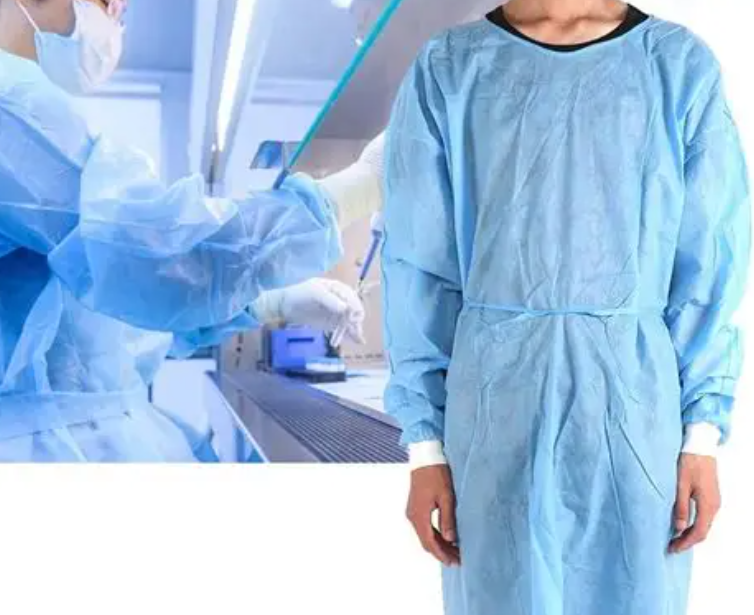
Isolation gowns are single-use garments intended to shield the wearer's torso and arms from exposure to microorganisms, bodily fluids, and particulate matter. They are distinct from surgical gowns, which are used in sterile environments like operating rooms and have more stringent requirements. Isolation gowns are utilized in a wide range of clinical situations, including patient isolation, during procedures with a risk of splash or spray, and in routine patient care. The effectiveness of these gowns hinges on their material composition and design, which must balance protection, comfort, and cost.
The construction of disposable isolation gowns involves various materials, each offering different levels of protection, breathability, and environmental impact. The choice of material depends on the anticipated level of exposure risk.
The majority of disposable isolation gowns are made from non-woven fabrics. Unlike woven textiles, non-wovens are produced by bonding fibers together through mechanical, chemical, or thermal processes, creating a fabric-like sheet. Common fibers include:
- Polypropylene (PP): This is the most prevalent material. Spunbond polypropylene is lightweight, hydrophobic (repels liquids), and provides a good basic barrier against dry particles and light fluid splashes. It is often used in isolation gowns for minimal to low-risk situations. Meltblown polypropylene, which has finer fibers, offers better filtration and is sometimes layered with spunbond to enhance protection.
- Polyester (PET): Often blended with other materials, polyester adds strength and durability to the gown.
- Polyethylene (PE): Used in cheaper, less breathable gowns, often in the form of a film or coating. It offers excellent fluid resistance but poor comfort for extended wear.
For higher risk scenarios, isolation gowns employ composite materials. A typical multi-layer fabric might consist of:
1. Outer Layer (Spunbond PP): Provides durability and initial liquid repellency.
2. Middle Layer (Meltblown PP): Acts as the critical barrier, filtering out microorganisms and preventing fluid penetration.
3. Inner Layer (Spunbond PP): Offers comfort against the skin and may be treated for softness.
Some isolation gowns incorporate plastic films (like polyethylene or polyurethane) laminated to a non-woven substrate. These gowns offer superior fluid and pathogen barrier properties, making them suitable for moderate to high fluid exposure risks. However, they are less breathable, which can lead to heat stress for the wearer.
A specific and highly popular non-woven composite is SMS, which stands for Spunbond-Meltblown-Spunbond. This three-layer fabric is the industry standard for many quality disposable isolation gowns. The spunbond layers provide strength, while the central meltblown layer is the functional barrier. SMS fabric offers an optimal balance of protection, breathability, and cost.
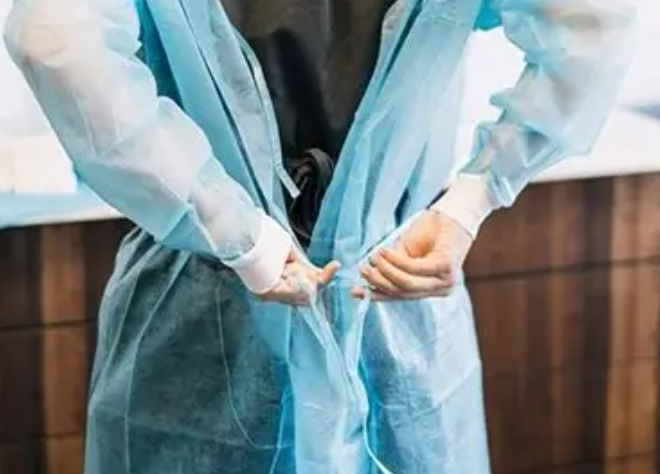
The materials are engineered to meet specific performance standards, which classify isolation gowns based on their protective capabilities.
The American National Standards Institute/American Association of Medical Instrumentation (ANSI/AAMI) PB70 standard is the primary guideline. It establishes four levels of protection based on the gown's ability to resist liquid penetration:
- Level 1 (Minimal Risk): For basic care, standard isolation. Uses simple non-woven materials like single-layer polypropylene. Tested for water repellency only.
- Level 2 (Low Risk): For low fluid exposure situations (e.g., suturing, blood draws). Made from stronger non-wovens like SMS. Must pass tests for water and synthetic blood penetration under minimal pressure.
- Level 3 (Moderate Risk): For moderate fluid exposure (e.g., arterial blood draws, emergency room trauma). Uses reinforced SMS or similar composites. Must resist synthetic blood penetration under higher pressure.
- Level 4 (High Risk): For high fluid exposure situations (e.g., surgery, pathogen resistance). Made from impervious materials like laminated fabrics or reinforced composites. Must resist viral penetration and synthetic blood penetration under even higher pressure.
- Fluid Resistance: The ability to repel water, blood, and other bodily fluids. This is measured by hydrostatic pressure tests.
- Breathability: The rate at which water vapor passes through the material. High breathability increases wearer comfort.
- Tensile Strength: The material's resistance to tearing and puncture.
- Linting: Low-linting materials are preferred in surgical and cleanroom environments to avoid contaminating the area.
The journey from raw polymer to finished isolation gown is highly automated:
1. Web Formation: Polymer pellets (e.g., polypropylene) are melted and extruded through fine spinnerets to form continuous filaments (spunbond) or microfibers (meltblown).
2. Bonding: These fibers are laid onto a moving belt and bonded together thermally, chemically, or mechanically.
3. Lamination/Combining: For composites like SMS, the different layers are combined in-line.
4. Finishing: The fabric may be treated with fluorochemicals to enhance fluid repellency or with antistatic agents.
5. Cutting and Sewing: The fabric rolls are cut into panels and assembled using ultrasonic welding (which seals without creating needle holes) or sewing. Features like tie-backs, cuffs, and thumb loops are added.
6. Sterilization (if required): Some isolation gowns are sterilized using ethylene oxide (EtO) or gamma radiation for use in sterile fields.
7. Packaging and Distribution: Gowns are folded, packaged, and shipped for distribution.
The disposable nature of isolation gowns presents significant environmental challenges. The healthcare sector generates vast amounts of PPE waste. In response, innovations are emerging:
- Biodegradable Materials: Research into gowns made from polylactic acid (PLA) derived from corn starch or other biodegradable polymers is ongoing.
- Recycled Content: Some manufacturers are incorporating recycled plastics into non-woven fabrics.
- Reusable Gowns: While not disposable, the use of launderable, reusable isolation gowns made from tightly woven polyester or cotton blends is a sustainable alternative for certain risk levels.
- Waste-to-Energy Programs: Proper incineration with energy recovery is a common disposal method.
In our field of medical visualization—providing OEM services for endoscopes, bronchoscopy workstations, and image processors—the principles of barrier protection are parallel. Just as the materials in an isolation gown must create an impervious yet functional barrier against contaminants, the sheaths and coatings on our disposable ureteroscopes and flexible laryngoscopes must protect the optical and electronic components from biological fluids while maintaining optimal functionality. The material science behind high-level isolation gowns (Level 3/4) shares similarities with the development of durable, fluid-impervious medical device coatings. As an OEM partner, understanding these material properties allows us to advise clients not only on visualization equipment but also on the complementary PPE ecosystem required for safe procedure rooms.
Disposable isolation gowns are sophisticated products engineered from advanced non-woven materials like polypropylene composites (notably SMS fabric) and laminates. Their composition is meticulously designed to meet AAMI PB70 performance levels, balancing critical barrier protection against fluids and pathogens with necessary wearer comfort. From minimal-risk Level 1 gowns to impervious Level 4 gowns, the material choice dictates their clinical application. As environmental concerns grow, innovation in sustainable materials and recycling will shape the future of this essential PPE. For medical professionals and the device ecosystem that supports them, understanding what isolation gowns are made of is fundamental to ensuring patient and provider safety in every clinical interaction.
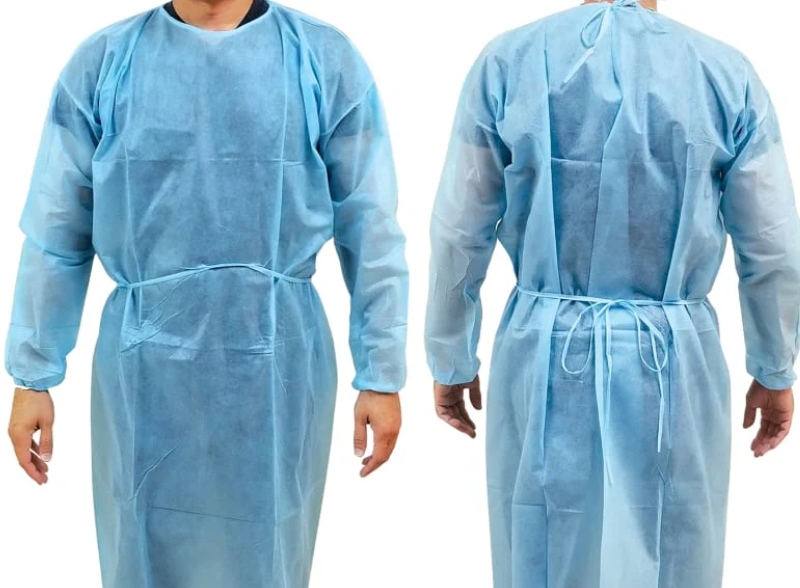
Isolation gowns are designed for use in non-sterile environments to protect against the transfer of microorganisms and body fluids during patient isolation or standard care. They cover the torso and arms but may have varying levels of fluid resistance. Surgical gowns are sterile, regulated as Class II medical devices, and are required to provide a critical barrier in sterile surgical fields, with specific requirements for sterile areas and higher, more consistent levels of liquid barrier protection.
No, disposable isolation gowns are designed for single use only. Attempting to clean, disinfect, or sterilize them can compromise their material integrity, damage the protective barrier (e.g., create micro-tears), and render them ineffective. Reuse increases the risk of contamination and cross-infection.
The level should be chosen based on the anticipated risk of exposure:
- Level 1: Basic care, standard isolation.
- Level 2: Blood draws, suturing, ICUs.
- Level 3: Arterial draws, emergency trauma, pathology.
- Level 4: Major surgery, when pathogen resistance is needed.
Always follow your facility's infection control protocols and risk assessments.
While isolation gowns come in various colors, blue and green are common for practical and psychological reasons. These colors are contrasting to most medical settings and bodily fluids, making contaminants more visible. They are also considered calming colors and reduce eye strain under bright lights, which is equally relevant in procedures using video laryngoscopes or endoscopy monitors.
The primary issues are the volume of non-biodegradable waste sent to landfills and the carbon footprint from production and disposal. Most gowns are made from petroleum-based plastics like polypropylene, which take centuries to decompose. Incineration releases carbon emissions, though it can recover energy. The healthcare industry is actively seeking sustainable alternatives, including biodegradable materials and reusable gown systems.
[1] https://www.fda.gov/medical-devices/personal-protective-equipment-infection-control/isolation-gowns
[2] https://www.cdc.gov/infectioncontrol/guidelines/isolation/index.html
[3] https://www.aami.org/docs/default-source/standards-library/ansi-aami-pb70.pdf
[4] https://www.ncbi.nlm.nih.gov/pmc/articles/PMC7201956/
[5] https://www.health.com/condition/infectious-diseases/coronavirus/what-are-isolation-gowns
[6] https://www.fda.gov/media/136449/download
[7] https://www.ncbi.nlm.nih.gov/books/NBK580587/
[8] https://www.astm.org/f2407-20.html
[9] https://www.epa.gov/sites/default/files/2020-10/documents/ppe_considerations.pdf


