
Views: 222 Author: Lake Publish Time: 2025-12-28 Origin: Site


Content Menu
● Defining the Bronchoscope: The Instrument
● Defining Bronchoscopy: The Procedure
● The Relationship: Instrument Enables Procedure
● Implications of the Distinction
● Evolution of Technology and Technique
● Frequently Asked Questions (FAQ)
>> 1. Can a bronchoscopy be performed without a bronchoscope?
>> 3. If I work in sterile processing, am I cleaning a bronchoscope or a bronchoscopy?
>> 4. How has the shift from fiberoptic to video bronchoscopes changed the procedure?
>> 5. In an OEM context, does a manufacturer produce bronchoscopes or bronchoscopies?
In the specialized field of respiratory medicine, the terms bronchoscope and bronchoscopy are frequently used, often appearing interchangeable to those outside the profession. However, they represent fundamentally distinct concepts: one is a tangible medical device, and the other is a comprehensive diagnostic or therapeutic procedure. Confusing a bronchoscope with bronchoscopy is akin to confusing a scalpel with surgery. This article will elucidate the critical differences and intrinsic connections between the bronchoscope—the instrumental tool—and bronchoscopy—the clinical act it enables. For healthcare professionals, patients, and companies operating in the medical visualization space, clarity on this distinction is essential for precise communication, effective training, and accurate understanding of clinical workflows.

A bronchoscope is a specific, sophisticated piece of medical equipment. It is an endoscope specifically designed for examining the interior of the tracheobronchial tree. At its core, a bronchoscope is a flexible or rigid tube equipped with a light source and an optical system.
Key Components and Types:
- Flexible Bronchoscope: The most common type. It consists of a flexible insertion tube containing fiberoptic bundles or a video chip (in video bronchoscopes), a control body for maneuvering the distal tip, a light guide cable, and a port for suction/biopsy tools. Its flexibility allows it to navigate deep into the subsegmental bronchi.
- Rigid Bronchoscope: A straight, metal tube used primarily for therapeutic interventions, such as removing large foreign objects, placing stents, or controlling massive hemorrhage. It provides a larger working channel and superior airway control but requires general anesthesia and offers less distal reach.
- Video vs. Fiberoptic: Modern bronchoscopes are predominantly video-based, where a miniature camera at the tip transmits a digital image to a monitor. Traditional fiberoptic bronchoscopes use optical fibers to transmit a visual image directly to an eyepiece.
The bronchoscope is a physical device manufactured, cleaned, stored, and handled. It is the vehicle for visualization and intervention within the airways.
Bronchoscopy is the medical procedure or examination performed *using* the bronchoscope. It is the overarching clinical act that encompasses patient preparation, sedation, insertion of the instrument, visual examination, diagnostic sampling, therapeutic intervention, and post-procedure care.
Key Stages of a Bronchoscopy Procedure:
1. Indication & Planning: Determining the reason for the procedure (e.g., persistent cough, lung mass, infection).
2. Patient Preparation: Consent, pre-procedure assessment, fasting, and administering sedation/topical anesthesia.
3. Performing the Examination: The pulmonologist or surgeon inserts the bronchoscope through the nose or mouth, advances it through the vocal cords into the trachea and bronchi, and systematically inspects the airway anatomy.
4. Diagnostic/Therapeutic Intervention: This is where the bronchoscope serves as a conduit. Procedures performed during bronchoscopy may include:
- Bronchoalveolar Lavage (BAL): Washing segments of the lung to retrieve cells.
- Biopsy: Taking tissue samples from the airway wall (endobronchial biopsy) or lung parenchyma (transbronchial biopsy).
- Brushing: Collecting cellular material.
- Foreign Body Removal.
- Stent Placement.
5. Post-Procedure: Monitoring the patient, processing collected samples, interpreting findings, and formulating a treatment plan.
Bronchoscopy is thus a service, a clinical skill, and a patient encounter. It is a verb, an action facilitated by the noun—the bronchoscope.
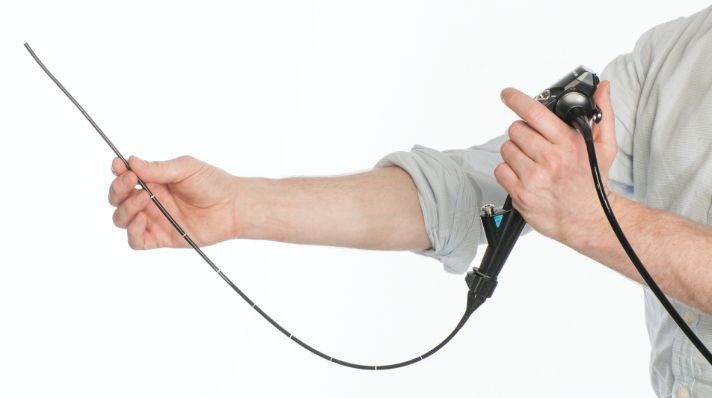
The relationship is symbiotic and hierarchical. The bronchoscope is a necessary but insufficient component of bronchoscopy. You cannot perform a bronchoscopy without a bronchoscope, but the bronchoscope itself is inert without the trained operator and the structured procedural framework of bronchoscopy.
Analogy: Consider driving a car.
- The bronchoscope is the car—the complex machinery with specific components (engine, wheels, steering).
- Bronchoscopy is the journey or the act of driving—involving a driver with a license (the physician), a route plan (the clinical indication), rules of the road (sterile technique, safety protocols), and a destination (a diagnosis or treatment).
The quality of the journey (bronchoscopy) depends on both the capability of the car (bronchoscope) and the skill of the driver (the bronchoscopist).
Understanding this difference has practical implications:
1. For Clinical Training: Trainees learn two parallel skill sets: the technical handling of the bronchoscope (torque, tip deflection, navigation) and the procedural conduct of bronchoscopy (patient management, decision-making, complication management).
2. For Procurement and OEM Services: A company like ours, which provides OEM manufacturing of bronchoscope systems, supplies the critical tool. We focus on the device's optics, ergonomics, durability, and compatibility with accessories. However, we understand that our device is purchased to enable the *procedure* of bronchoscopy. Therefore, design choices are made with the procedural workflow in mind—e.g., ensuring the bronchoscope connects seamlessly to video processors and suction units used in a standard bronchoscopy suite.
3. For Patient Communication: Explaining to a patient that they will "undergo a bronchoscopy" is more accurate and comprehensive than saying "a bronchoscope will be used." The former conveys the full experience, including preparation and recovery, while the latter only describes the instrument.
4. For Research and Reporting: Medical literature must be precise. A study on "improving bronchoscope design" focuses on the device's engineering. A study on "outcomes in diagnostic bronchoscopy" evaluates the entire procedural methodology, including how the bronchoscope was utilized.
The advancement of one directly influences the other. The development of the video bronchoscope (with a distal camera) revolutionized the *procedure* of bronchoscopy by providing a magnified, high-resolution view that could be shared on a monitor, improving teaching and collaboration. Subsequently, procedural techniques like endobronchial ultrasound (EBUS) were developed, which required the creation of a new kind of bronchoscope (the EBUS bronchoscope) with an integrated ultrasound transducer. Here, a procedural need (better lymph node sampling) drove instrument innovation.
In summary, a bronchoscope is definitively not the same as bronchoscopy. The bronchoscope is the sophisticated, flexible or rigid optical instrument—the key hardware. Bronchoscopy is the complete medical procedure that employs the bronchoscope as its central tool to diagnose and treat conditions of the lungs and airways. They exist in a dependent relationship: the procedure is defined by the use of the instrument, and the instrument's purpose is fulfilled only within the context of the procedure.
For anyone involved in respiratory care—from the physician performing the exam to the nurse assisting, the technician reprocessing the scope, or the engineer designing its next iteration—maintaining this distinction is crucial. It fosters clear communication, sharpens clinical focus, and drives purposeful innovation. Ultimately, both exist for the same goal: to illuminate the hidden pathways of the human lung, guiding the way to accurate diagnosis and effective treatment. The bronchoscope is the light; bronchoscopy is the journey of exploration it makes possible.

No. A bronchoscope is the defining tool required to perform a bronchoscopy. The procedure's core action—the direct visual examination of the interior of the airways—is impossible without an instrument capable of delivering light and returning an image. Other imaging tests (like CT scans) are not bronchoscopy.
The choice of bronchoscope directly dictates the type and scope of the bronchoscopy procedure. A flexible bronchoscope is used for most diagnostic bronchoscopy procedures, allowing detailed inspection and sampling deep within the lung with the patient under moderate sedation. A rigid bronchoscope is used for therapeutic bronchoscopy, such as controlling major bleeding, removing large objects, or placing airway stents, and typically requires general anesthesia in an operating room.
You are cleaning and disinfecting the bronchoscope (the device). "Cleaning a bronchoscopy" would be semantically incorrect, as bronchoscopy is the procedure, not a physical object. Your role is critical to the *safety* of the next bronchoscopy procedure, as a contaminated bronchoscope can cause patient infection.
The technological evolution of the bronchoscope from fiberoptic to video has profoundly enhanced the bronchoscopy procedure. Video bronchoscopes provide a superior, magnified image on a monitor, improving diagnostic accuracy for subtle lesions. This allows for more precise biopsies. Furthermore, it enables the entire team to view the procedure, enhancing teaching and collaboration, and allows for recording of findings for documentation and comparison over time.
An OEM manufacturer produces bronchoscopes (the medical devices). They are in the business of designing, assembling, and testing the physical instrument. They may also produce compatible accessories (biopsy forceps, needles) used *during* a bronchoscopy. They do not "produce" the procedure itself, but their equipment enables it. Their development is informed by the requirements and evolving techniques of the bronchoscopy procedure.
[1] https://www.thoracic.org/patients/patient-resources/resources/bronchoscopy.pdf
[2] https://www.lung.org/lung-health-diseases/lung-procedures-and-tests/bronchoscopy
[3] https://www.ncbi.nlm.nih.gov/books/NBK448152/
ooks/NBK448152/


