


Content Menu
● Pre-Procedure Preparation: The Foundation of Safety
>> 1. Patient Assessment and Consent
>> 2. Equipment Setup and Check
>> 3. Patient Preparation and Monitoring
● Step-by-Step Guide to Bronchoscope Insertion and Navigation
>> Step 1: Initial Handling and Grip
>> Step 2: Choosing the Insertion Route
>> Step 3: Navigating the Upper Airway
>> Step 4: Systematic Examination of the Bronchial Tree
● Fundamental Diagnostic and Therapeutic Techniques
>> A. Bronchoalveolar Lavage (BAL)
>> C. Transbronchial Biopsy (TBBx)
● Frequently Asked Questions (FAQ)
>> 1. What is the most challenging part of learning to use a bronchoscope?
>> 2. How do I prevent the bronchoscope from fogging up inside the airway?
>> 3. When should I use a therapeutic vs. a standard diagnostic bronchoscope?
>> 4. What should I do if I encounter significant bleeding during a biopsy?
>> 5. How is using a video bronchoscope different from a fiberoptic one?
>> References
The bronchoscope is a quintessential tool in modern respiratory medicine, a flexible conduit of light and vision that allows physicians to navigate the intricate anatomy of the tracheobronchial tree. Mastering the use of a bronchoscope—whether a traditional fiberoptic model or a contemporary video bronchoscope—is a complex skill that integrates technical dexterity, anatomical knowledge, and clinical judgment. This procedure, known as bronchoscopy, is indispensable for diagnosing conditions like lung cancer, infections, and interstitial lung diseases, as well as performing therapeutic interventions such as stent placement, foreign body removal, and biopsies. For companies like ours, which support the OEM manufacturing of these visualization systems, understanding the procedural nuances informs the design of more ergonomic, intuitive, and effective devices. This guide provides a comprehensive, step-by-step overview of how to use a bronchoscope, from pre-procedure preparation to basic navigation and fundamental techniques.

Successful bronchoscopy begins long before the bronchoscope is inserted. Meticulous planning is paramount for patient safety and procedural efficacy.
A thorough evaluation of the patient's medical history, physical examination, and relevant investigations (chest X-ray, CT scan, coagulation studies, pulmonary function tests) is mandatory. Informed consent must be obtained, detailing the risks (bleeding, infection, pneumothorax, hypoxia) and benefits. Verification of nil-by-mouth status (typically 6-8 hours for solids) is crucial to prevent aspiration.
The bronchoscope system must be assembled and tested.
- System Assembly: Connect the bronchoscope (video or fiberoptic) to the light source/processor and monitor. Ensure all connections are secure.
- White Balance and Focus: Perform a white balance by pointing the bronchoscope tip at a white target and pressing the appropriate button. Adjust the focus for a sharp image.
- Function Test: Check tip angulation (up/down movement via the lever), suction (by immersing the tip in water and activating the valve), and irrigation. Ensure the working channel is clear.
- Ancillary Equipment: Prepare and have within reach: suction canister and tubing, sterile saline for irrigation, local anesthetics (lidocaine), biopsy forceps, brushes, needles, specimen traps, and a bite guard.
- Monitoring: Attach standard monitors: pulse oximetry, electrocardiogram (ECG), and non-invasive blood pressure.
- Sedation and Analgesia: Administer conscious sedation (e.g., midazolam, fentanyl) as per protocol to ensure patient comfort and cooperation, under the supervision of personnel trained in sedation and airway management.
- Topical Anesthesia: Anesthetize the upper airway to suppress the gag reflex. This is typically done using nebulized lidocaine, followed by direct application of lidocaine gel or spray to the oropharynx, vocal cords, and trachea through the bronchoscope.
- Positioning: Position the patient supine with the head slightly elevated (semi-Fowler's position) or flat, depending on operator preference. Place a bite guard over the teeth to protect the bronchoscope.
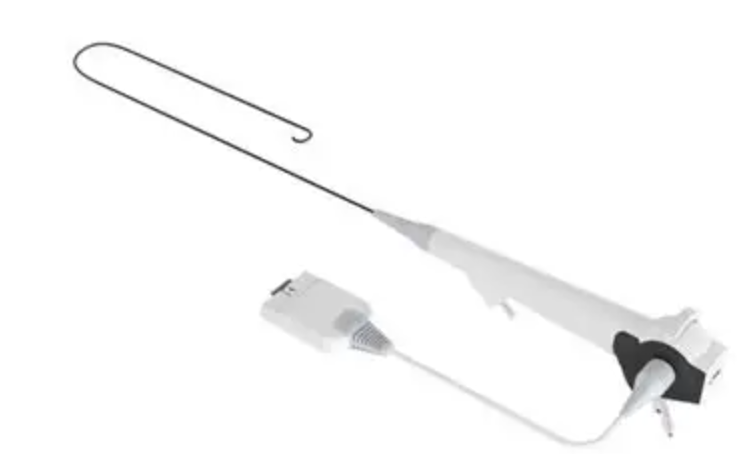
Hold the bronchoscope control body in your dominant hand. Your thumb controls the angulation lever, and your index finger operates the suction valve. Your non-dominant hand will guide the insertion tube, responsible for advancement, withdrawal, and rotation (torque).
The bronchoscope can be introduced via the nose (transnasal) or mouth (transoral).
- Transnasal Route: Often better tolerated by awake patients, provides a stable path, and avoids the bite risk. Requires topical anesthesia of the nasal passage.
- Transoral Route: Provides a larger diameter for easier passage of larger scopes or therapeutic tools. Requires a bite guard.
1. Pass the Glottis: Under direct vision, advance the bronchoscope through the chosen route. Identify key landmarks: the tongue base, epiglottis, arytenoids, and finally, the vocal cords. Wait for the cords to abduct during inspiration, then gently advance the bronchoscope through the glottis into the trachea. This is a critical step requiring gentle precision.
2. Enter the Trachea: Once in the trachea, note the characteristic anterior cartilaginous rings and posterior membranous wall. Instill additional topical anesthetic (1-2 ml of 1-2% lidocaine) through the bronchoscope's working channel to anesthetize the carina and lower airways.
A systematic approach is essential to avoid missing segments. The general sequence is to examine the normal side first, then proceed to the abnormal side as indicated by imaging.
1. Trachea and Carina: Inspect the tracheal lumen and the main carina, noting its sharpness and any widening or abnormality.
2. Right Lung: Advance the bronchoscope into the right main bronchus.
- Inspect the right upper lobe (RUL) orifice. To enter, angle the bronchoscope tip upward (anteriorly) at the level of the right main bronchus.
- Return to the right main bronchus and proceed distally to the bronchus intermedius.
- Examine the right middle lobe (RML) and right lower lobe (RLL) and their segments (superior, medial, lateral, anterior, posterior basilar segments).
3. Left Lung: Withdraw to the carina and enter the left main bronchus.
- Inspect the left upper lobe (LUL) division (upper division and lingula).
- Proceed distally to examine the left lower lobe (LLL) and its segments.
Key Principle: Always advance the bronchoscope only when the lumen is clearly in view. Avoid "blind" advancement, which can cause mucosal trauma or perforation. Use a combination of subtle tip angulation (with the thumb lever) and rotation/torque (with the non-dominant hand) to steer.
Used to obtain cellular and microbiological samples from the alveoli.
1. Wedge the bronchoscope tip snugly into a subsegential bronchus (usually in the right middle lobe or lingula for diffuse disease).
2. Instill sterile saline (typically 20-60 ml aliquots, total 100-300 ml) through the working channel.
3. Immediately apply suction to recover the fluid into a sterile trap. A return of 30-60% is typical.
For visible mucosal lesions or tumors.
1. Pass biopsy forceps through the working channel of the bronchoscope.
2. Under direct vision, position the forceps on the target lesion.
3. Open the forceps, advance slightly, close, and withdraw with a firm tug. Multiple biopsies (4-8) are usually taken.
To sample lung parenchyma, often for diagnosing interstitial lung disease or peripheral lesions (with fluoroscopic guidance).
1. Advance the bronchoscope to the subsegential bronchus leading to the target area.
2. Pass closed biopsy forceps until resistance is felt (pleural surface), then withdraw 1-2 cm.
3. Open the forceps, advance slightly during inspiration, close, and withdraw. Fluoroscopy confirms the forceps position relative to the lesion and chest wall.
For cytology. A brush is passed through the bronchoscope, rubbed against the lesion, withdrawn, and rolled on a slide or rinsed in solution.
- Monitor the patient closely in a recovery area for signs of complications (bleeding, respiratory distress, fever).
- Provide post-procedure instructions regarding nothing by mouth until the gag reflex returns, and warning signs to watch for.
- Initiate the immediate bedside cleaning of the bronchoscope before sending it for full reprocessing.
Using a bronchoscope effectively is an art built upon a foundation of rigorous science and disciplined practice. It requires the seamless integration of cognitive knowledge (anatomy, pathology), technical skill (scope manipulation, tool use), and clinical judgment (patient selection, complication management). From the initial patient assessment and system check to the nuanced navigation of segmental bronchi and the execution of precise biopsies, each step is interdependent. Mastery is not achieved through theoretical study alone but through supervised, hands-on experience that builds muscle memory and procedural confidence.
For the bronchoscopist, the bronchoscope is more than a tool; it is an extension of their senses into a hidden internal landscape. The goal is always to maximize diagnostic yield and therapeutic success while minimizing patient discomfort and risk. As technology advances with improved imaging, robotic assistance, and enhanced navigation, the fundamental principles of careful preparation, systematic examination, and respectful tissue handling remain the timeless cornerstones of safe and effective bronchoscopy. In the hands of a skilled practitioner, the bronchoscope fulfills its role as a powerful window into the lungs, illuminating the path to accurate diagnosis and targeted treatment.

Most trainees find coordinating the movements to be the initial challenge. This involves simultaneously using the dominant hand to control tip angulation and suction, while the non-dominant hand manages advancement, withdrawal, and torque. Developing the hand-eye coordination to steer the bronchoscope based on the monitor image (or eyepiece view) requires significant practice. Navigating through the vocal cords on the first attempt is also a common early hurdle.
Fogging occurs when the cold tip of the bronchoscope enters the warm, humid airway. Prevention and solutions include:
- Letting the bronchoscope acclimate to room temperature before use.
- Applying a commercial anti-fog solution to the distal lens.
- Using the bronchoscope's irrigation channel to spray a small amount of sterile saline onto the lens to clear fog instantly upon entry. This is the most common in-procedure fix.
A therapeutic bronchoscope has a larger working channel (typically 2.8mm or 3.2mm vs. 2.0mm) to accommodate larger tools like stents, big biopsy forceps, or balloon dilators. Choose a therapeutic bronchoscope when planning interventions such as tumor debulking, stent placement, or managing significant hemorrhage. A standard diagnostic bronchoscope is sufficient for inspection, lavage, and standard biopsies.
Remain calm. First, use the bronchoscope to suction clot and blood to visualize the site. Then:
1. Instill iced saline through the working channel.
2. Apply topical vasoconstrictors (e.g., diluted epinephrine 1:10,000 to 1:20,000) directly to the bleeding site.
3. Wedge the bronchoscope tip itself into the subsegential bronchus leading to the site to tamponade the bleeding for several minutes.
4. If bleeding is massive and uncontrolled, isolate the lung by advancing the bronchoscope or an endotracheal tube to protect the contralateral airway and call for thoracic surgery support.
The fundamental manual skills of advancement and torque are identical. The key differences are:
- Ergonomics: With a video bronchoscope, you look at a separate monitor, allowing for better posture. With a fiberoptic bronchoscope, you must hunch over the eyepiece.
- Image Sharing: The video screen allows the entire team (assistants, trainees) to see the procedure in real-time, facilitating teaching and collaboration.
- Image Quality: Video bronchoscopes generally offer superior, magnified, high-resolution images that can be recorded.
- Maintenance: The fiberoptic bundle in a traditional scope can break, causing black spots in the image—an issue absent in video scopes.
[1] https://www.thoracic.org/professionals/clinical-resources/clinical-practice-guidelines.php
[2] https://www.chestnet.org/Guidelines-and-Resources/Guidelines-and-Consensus-Statements/Bronchoscopy
[3] https://erj.ersjournals.com/content/50/3/1700429
[4] https://www.ncbi.nlm.nih.gov/books/NBK448152/
[5] https://bronchoscopy.org/education/bronchoscopy-manual


