


Content Menu
● Introduction: The Critical Interface of Operator and Instrument
● Understanding the Bronchoscope: Anatomy of the Instrument
● The Fundamental Grip: Step-by-Step Technique
● Principles of Manipulation: Beyond the Grip
● Ergonomic Considerations and Preventing Fatigue
● Advanced Techniques and Special Scenarios
● Common Errors in Bronchoscope Handling
● Conclusion: Mastery Through Mindful Practice
● Frequently Asked Questions (FAQ)
>> 1. Should I hold the bronchoscope in my right or left hand?
>> 2. Why is my thumb getting tired during a long bronchoscopy?
>> 3. How do I prevent the bronchoscope from "kicking back" when I release the suction valve?
>> 4. What is the best way to clean my hands between handling the bronchoscope and other instruments?
>> 5. How does holding a video bronchoscope differ from a traditional fiberoptic bronchoscope?
In the intricate field of interventional pulmonology and critical care, the bronchoscope serves as a vital extension of the physician's senses, allowing for direct visualization and therapeutic access to the intricate anatomy of the bronchial tree. However, the sophisticated technology of a modern bronchoscope—whether flexible fiberoptic or video-based—is only as effective as the operator who wields it. Mastering how to hold a bronchoscope is not a trivial matter of simple grip; it is the foundational skill upon which all bronchoscopic procedures are built. Proper handling ensures patient safety, procedural efficiency, diagnostic accuracy, and the longevity of the expensive instrument itself.
For a company deeply involved in the manufacture and OEM supply of medical visualization equipment, including bronchoscope workstations and processors, we recognize that the ergonomics of our devices are intrinsically linked to their clinical utility. This guide delves into the nuanced art and science of holding a bronchoscope, moving beyond basic instruction to explore the principles of ergonomics, control, and manipulation that separate novice from expert. Whether for diagnostic bronchoalveolar lavage, transbronchial biopsy, or foreign body retrieval, the journey begins with the hand that guides the scope.

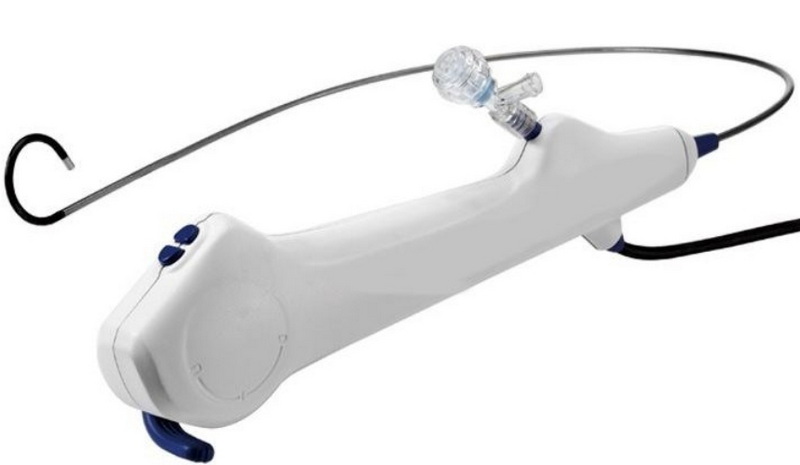
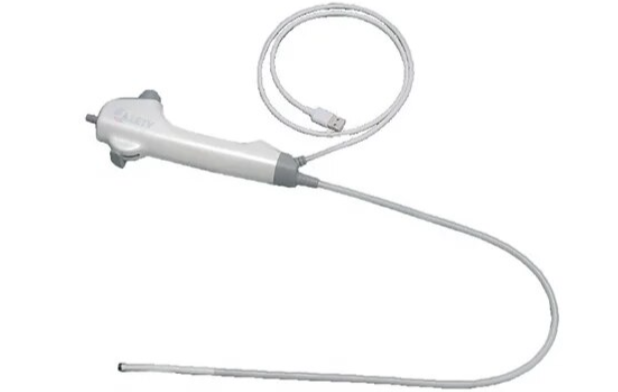
Before one can hold a bronchoscope correctly, one must understand its physical components. A standard flexible bronchoscope consists of several key parts relevant to its handling:
1. The Control Body/Head: This is the largest section held in the operator's hand. It houses the control mechanisms.
2. The Insertion Tube: The long, flexible portion that enters the patient's airway. Its distal tip can be angulated.
3. The Angulation Control Lever/Thumb Lever: A large lever, usually operated by the thumb, that controls the up-and-down movement of the distal tip. Left-right movement is typically achieved by twisting the entire control body.
4. The Suction Valve: A port covered by a button or cap, operated by the index finger, to activate suction.
5. The Working Channel Port: The entry point for tools like biopsy forceps or brushes.
6. The Eyepiece (for fiberoptic scopes) or Video Connector: The point of visual connection.
This anatomy dictates a specific, standardized holding technique designed to integrate control, stability, and access to all functions with one hand.
The standard, one-handed grip for a flexible bronchoscope is designed for maximum dexterity and minimal fatigue. Here is the breakdown:
Step 1: Initial Positioning
Hold the bronchoscope control body in your dominant hand, as if you were holding a video game controller or a sophisticated remote. Let the insertion tube extend from the bottom of the control body, ideally with a gentle, downward-curving coil to prevent kinking.
Step 2: Thumb Placement
Place your thumb on or directly above the angulation control lever. The pad of your thumb should rest comfortably on the lever, allowing for precise, graded movements. Do not hook your thumb underneath the lever, as this limits fine control and can lead to rapid fatigue.
Step 3: Finger Placement
Your index finger should naturally fall over the suction valve. You should be able to depress the valve with the tip or side of your index finger without shifting your grip. The middle, ring, and little fingers curl around the back of the control body, providing stability and a secure hold. For some bronchoscope models, the middle finger may also help stabilize the instrument.
Step 4: Wrist and Forearm Orientation
Keep your wrist in a neutral, straight position. Avoid extreme flexion or extension. Your forearm should be generally parallel to the floor or slightly pronated. This alignment reduces strain on the intrinsic muscles of the hand and the tendons of the forearm during prolonged procedures.
Step 5: The Supporting Hand
The non-dominant hand plays a crucial, active role. It does not just hold the insertion tube; it feeds and steers it. This hand should grip the insertion tube 15-30 cm from the patient's airway entry point (nose or mouth). It uses a "pinch" grip between thumb and fingers to gently advance, withdraw, and torque (rotate) the insertion tube. This hand is responsible for gross navigation, while the dominant hand on the control body manages fine tip angulation and suction.
Holding the bronchoscope correctly enables four fundamental manipulations:
1. Advancement and Withdrawal: Primarily executed by the non-dominant "pinch" hand. Movements should be slow, smooth, and deliberate. Never advance the bronchoscope without a clear visual lumen. "Slide-by" technique (advancing when the airway wall is visible but not the lumen) is a last resort and carries risk of trauma or perforation.
2. Tip Angulation (Deflection): Controlled by the thumb on the lever. The key principle is to use the minimum necessary deflection. Over-angulation creates a sharp bend in the insertion tube, making further advancement difficult and potentially damaging the internal wires of the bronchoscope. Often, combining subtle tip angulation with rotation of the entire scope (torque) is more effective than extreme lever movement.
3. Torque (Rotation): Achieved by the non-dominant hand rotating the insertion tube, which transmits a twisting motion to the distal tip. This is essential for navigating branching airways and bringing targets into view. Expert operators use torque constantly in conjunction with tip deflection.
4. Suction Activation: A controlled, intermittent action by the index finger. Continuous suction can collapse the distal airway, obscuring the view. Brief, 1-2 second bursts are typically sufficient to clear secretions or blood from the lens.
Bronchoscopy can be a lengthy procedure. Poor ergonomics lead to operator fatigue, hand cramps, and reduced precision. Considerations include:
- Monitor Placement: The video monitor (or eyepiece) should be positioned directly in the operator's line of sight to avoid prolonged neck twisting. The relationship should be: Eyes → Monitor → Patient Airway → Hands on Bronchoscope, forming a comfortable, aligned triangle.
- Table Height: The procedure table or bed should be at a height where the operator's elbows can be held at roughly a 90-degree angle without shoulder hunching.
- Instrument Loops: Creating gentle, large loops with the insertion tube on the sterile field prevents sharp bends and reduces the force needed for advancement.
- Posture: Stand or sit with a straight back. Avoid leaning over the patient excessively.
- Two-Handed Grip for Precision: During delicate tasks like transbronchial needle aspiration (TBNA), some operators temporarily use a two-handed grip on the control body for ultra-fine stabilization, with an assistant managing the insertion tube under direct command.
- Handling with Ancillary Tools: When a tool (biopsy forceps, needle) is in the working channel, the bronchoscope becomes heavier and less maneuverable. Anticipate this weight shift. Use the non-dominant hand to support the scope closer to the entry point to prevent "drooping" of the tip.
- Pediatric Bronchoscopy: The smaller airways and smaller bronchoscope diameter demand even more exquisite control. Movements are micro-adjustments. The grip remains the same, but the execution is scaled down in magnitude.
- Therapeutic Procedures (e.g., Foreign Body Removal): Stability is paramount. The grip must be firm and unwavering. The non-dominant hand provides critical counter-traction and control during extraction.
1. The "Death Grip": Squeezing the control body too tightly. This causes rapid hand fatigue, reduces tactile sensitivity, and leads to jerky movements.
2. Over-reliance on the Angulation Lever: Attempting to steer the bronchoscope primarily with the thumb lever instead of using combined torque and subtle deflection.
3. Poor Loop Management: Allowing the insertion tube to form small, tight coils or sharp bends, which increases friction and damages internal components.
4. Ignoring Ergonomics: Operating with a twisted neck or raised shoulders, leading to musculoskeletal strain over time.
5. Advancing Blindly: The cardinal sin of bronchoscopy. The bronchoscope must only be advanced when the lumen is clearly visualized ahead.
Learning how to hold a bronchoscope is the first step in a long journey toward bronchoscopic mastery. The correct grip is not an end in itself, but a means to achieve the ultimate goals: safe, comfortable passage through the airway, precise positioning for diagnosis or therapy, and clear, stable visualization. It marries the mechanical design of the bronchoscope with the biomechanics of the human hand.
For the practicing pulmonologist, intensivist, or thoracic surgeon, this skill must become second nature—an unconscious competence that frees cognitive attention for clinical decision-making. It requires deliberate practice, attention to ergonomics, and an understanding of the instrument's capabilities and limits. As bronchoscope technology evolves, with improved articulation and haptic feedback, the fundamental principles of controlled, deliberate handling will remain the constant bedrock of excellent bronchoscopy. The hand that holds the scope is the crucial link between medical intent and clinical outcome.
You should hold the bronchoscope control body in your dominant hand. This hand manages the precise thumb lever for tip angulation and the index finger for suction—tasks requiring fine motor control. Your non-dominant hand manages the gross movements of advancing, withdrawing, and rotating the insertion tube.
Thumb fatigue is often caused by incorrect thumb placement or over-angulation. Ensure your thumb pad rests *on top of* the lever, not hooked underneath. Avoid maintaining constant, maximum deflection on the lever. Use a combination of subtle lever movements and torque from your other hand to steer. Also, check your overall posture and wrist alignment.
The "kickback" or slight retraction of the scope when suction stops is due to the sudden release of negative pressure in the airway. To minimize this, try to release the suction valve gently rather than abruptly. More importantly, anticipate the movement and use your non-dominant hand to provide gentle counter-pressure or stabilization on the insertion tube at the entry point.
This highlights the importance of the one-handed grip technique. Your non-dominant "pinch" hand, which touches the insertion tube (a contaminated part during the procedure), should be used to handle other non-sterile items or adjust equipment. Your dominant hand, holding the control body (which remains relatively clean), should ideally not touch contaminated surfaces. If it must, use an alcohol swab or change gloves as per protocol.
The fundamental grip is identical. The main difference is visual focus. With a fiberoptic bronchoscope, you look directly into the eyepiece, which can cause you to hunch over. With a video bronchoscope, you look at a separate monitor. This allows for better overall posture, as you can keep your head up and back straight. It also allows your dominant hand to operate with the control body in a more natural, wrist-neutral position relative to your body.


