
Views: 222 Author: Lake Publish Time: 2025-12-20 Origin: Site


Content Menu
● Defining Medical Waste: The Regulatory Framework
● The Fate of Used Surgical Gloves: A Decision Tree
>> Gloves that ARE Regulated Medical Waste (Biohazard Waste)
>> Gloves that are NOT Regulated Medical Waste (General Solid Waste)
● Why the Distinction Matters: Cost, Environment, and Safety
● Best Practices for Glove Disposal in Healthcare Settings
● The Broader Context: Sustainability and the Circular Economy
● Frequently Asked Questions (FAQ)
>> 1. If a glove has a small spot of blood from a needle stick, is it medical waste?
>> 2. Can we recycle used surgical gloves?
>> 3. What about gloves used in an isolation room for a patient on Contact Precautions?
>> 4. Do the same rules apply to exam gloves (non-sterile nitrile or latex)?
>> 5. How can we reduce the cost and volume of our glove waste?
In the intricate ecosystem of a healthcare facility, managing waste is a critical operation with significant implications for public health, environmental sustainability, and operational cost. Among the most ubiquitous items used daily are Gloves Medical professionals rely on, particularly sterile surgical gloves. After their single use in a procedure, a fundamental question arises for clinicians, environmental services staff, and facility managers: Are surgical gloves medical waste? The answer is not a simple yes or no, but rather a nuanced decision based on the gloves' condition and the context of their use. Properly classifying and disposing of used Gloves Medical staff discard is essential for compliance with complex regulations, protecting waste handlers and the community, and optimizing waste management costs. This article delves into the criteria that determine whether surgical gloves should be treated as regulated medical waste (RMW) or general solid waste, exploring the regulations, best practices, and environmental considerations that shape this everyday decision in healthcare settings.

To understand where surgical gloves fit, we must first define "medical waste." It is not a monolithic category but is specifically regulated. In the United States, the Resource Conservation and Recovery Act (RCRA) and the Occupational Safety and Health Administration (OSHA) Bloodborne Pathogens Standard provide the federal framework, while states often have stricter rules. The term "Regulated Medical Waste" (RMW), often synonymous with "biohazardous waste" or "infectious waste," typically includes:
- Liquid or semi-liquid blood and other potentially infectious materials (OPIM).
- Contaminated items that would release blood or OPIM in a liquid or semi-liquid state if compressed.
- Items that are caked with dried blood or OPIM and are capable of releasing these materials during handling.
- Pathological and microbiological wastes.
- Contaminated sharps (needles, scalpels).
The key concept here is contamination with blood or OPIM in a form that can be released. This definition becomes the primary lens through which we evaluate used surgical Gloves Medical personnel have worn.
The disposal path for a pair of used surgical Gloves Medical staff remove depends entirely on their physical state post-use. The decision can be visualized as a simple but critical flowchart.
Surgical Gloves Medical professionals use become regulated medical waste if they meet the regulatory definition of contamination. This includes:
- Gloves visibly saturated or dripping with blood or OPIM. If blood can be poured or squeezed from the glove, it unequivocally belongs in the red biohazard bag or rigid container.
- Gloves contaminated with substantial, caked-on blood or OPIM. Even if dry, if a significant amount of contaminated material is adhered to the glove and could flake off or be aerosolized during handling, it poses an infection risk and must be treated as RMW.
- Gloves used in procedures on patients with specific high-consequence infectious diseases where facility policy mandates treating all waste from that isolation room as biohazardous (e.g., in certain Contact Precautions scenarios for diseases like Ebola or extensively drug-resistant organisms, though policies vary).
In these scenarios, the Gloves Medical waste is placed in an approved, leak-proof biohazard bag (usually red or orange) or a sharps container if also contaminated by a sharp. This waste is then typically incinerated or subjected to another approved sterilization process (like autoclaving) before landfilling.
The vast majority of used surgical Gloves Medical staff generate may not qualify as RMW. This includes:
- Gloves that are unused or torn but uncontaminated. For example, a glove torn during donning before patient contact.
- Gloves used in clean procedures where no contact with blood or OPIM occurred. Examples include gloves worn for patient hygiene, moving a clean patient, or handling clean supplies.
- Gloves with only incidental, minimal spotting. A small dot or streak of blood that is not dripping, pourable, or flaking does not typically meet the threshold for "saturation" or "caking." These can often be disposed of as general waste.
In these cases, the Gloves Medical waste can be placed in the regular black trash bag destined for a municipal solid waste landfill. This distinction is crucial for cost reduction, as the processing and disposal of RMW is exponentially more expensive than general waste.
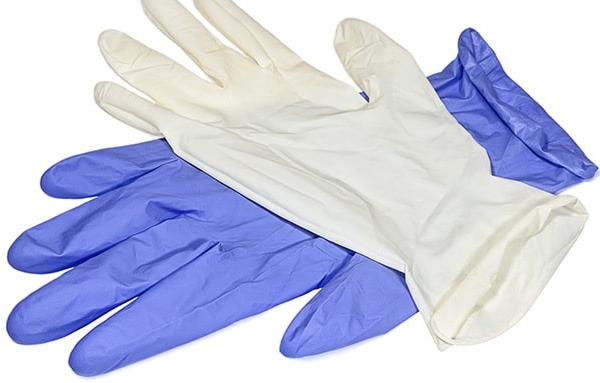
Misclassifying surgical glove waste has serious repercussions.
- Cost Implications: Disposing of RMW can cost 5 to 20 times more per pound than general waste. Throwing uncontaminated or minimally spotted Gloves Medical waste into the red bag is a direct and substantial waste of healthcare financial resources. Conversely, placing truly hazardous gloves in general waste puts sanitation workers and the public at risk and can lead to massive regulatory fines.
- Environmental Impact: Incineration, while effective for pathogen destruction, releases greenhouse gases and, if not properly controlled, air pollutants. Minimizing the volume of waste sent for incineration by correctly segregating Gloves Medical waste at the source is a key component of sustainable healthcare operations.
- Worker Safety: Proper segregation protects environmental services staff, sanitation workers, and waste processing facility employees from unnecessary exposure to infectious materials. Placing only truly hazardous items in biohazard containers increases safety by reducing the volume they must handle and ensuring clear identification of genuine risks.
Given the high stakes, healthcare facilities must implement clear protocols:
1. Education and Training: All staff who use Gloves Medical products—from surgeons to nurses to lab techs—must receive regular training on waste segregation criteria. This should include visual aids and real-world examples.
2. Clear Signage and Color-Coding: Place standardized, color-coded waste containers (red for RMW, black for general) in all patient care areas, procedure rooms, and labs. Use pictograms and simple language on signage.
3. Point-of-Use Decision Making: The person discarding the Gloves Medical item (the wearer) is best positioned to make the classification decision at the moment of disposal. Empower and hold them accountable for this task.
4. "When in Doubt, Throw it Out" Reconsidered: The old adage "when in doubt, throw it out (in the red bag)" is outdated and costly. A better principle is "when in doubt, ask or consult the facility's specific policy." Promoting mindful evaluation is superior to promoting automatic over-classification.
5. Source Reduction: The most effective waste strategy is to not generate it. Using the right type of Gloves Medical task requires (e.g., not using sterile gloves for non-sterile tasks) and ensuring proper donning technique to reduce tears can lower the overall volume of glove waste.
The discussion of Gloves Medical waste disposal is part of a larger conversation about healthcare's environmental footprint. While safety is non-negotiable, there is growing pressure and innovation aimed at reducing the impact of single-use Gloves Medical products.
- Biodegradable Gloves: Some manufacturers offer gloves made from materials designed to break down more quickly in landfill conditions. However, these are unsuitable for surgical or high-risk settings and do not solve the RMW issue for contaminated gloves.
- Recycling Programs: For uncontaminated nitrile gloves from non-clinical settings (like labs or clean manufacturing), specialized take-back and recycling programs are emerging. The gloves are shredded and "downcycled" into products like plastic lumber. This is not a solution for used patient-care Gloves Medical waste due to contamination risks.
- Lifecycle Analysis: Choosing Gloves Medical suppliers that demonstrate responsible sourcing, energy-efficient manufacturing, and minimal packaging contributes to a reduced overall environmental impact, even if the end-of-life disposal remains the same.
The definitive answer lies in the presence and physical nature of contamination with blood or other potentially infectious materials. Used surgical Gloves Medical staff discard that are saturated, dripping, or caked with these substances must be treated as regulated medical waste—a critical measure for infection control. However, gloves that are unused, used in clean procedures, or have only incidental spotting should be disposed of as general solid waste—a necessary practice for fiscal and environmental responsibility.
The proper segregation of Gloves Medical waste is a microcosm of modern healthcare's dual mandate: to provide uncompromising patient and worker safety while exercising stewardship over financial and environmental resources. It requires continuous education, clear protocols, and a culture of accountability at the point of use. As the healthcare industry evolves, this balance between safety and sustainability will continue to drive innovations in materials, waste processing technologies, and best management practices for all consumables, including the humble but vital surgical glove.

Yes, absolutely. In this scenario, the glove is directly contaminated with blood from a percutaneous injury. It should be disposed of in a sharps container along with the offending needle, as it is considered contaminated with blood in a manner that is integrally linked to a sharp. This ensures complete safety for waste handlers.
No, used surgical gloves from patient care should not be placed in standard recycling streams. They are considered contaminated (even if not visibly soiled) and would compromise the safety of recycling workers and the quality of the recycled material. Specialized industrial recycling exists only for large volumes of verified uncontaminated gloves from controlled environments like laboratories.
This depends strictly on facility policy. Some hospitals, out of an abundance of caution, may classify all waste from certain isolation rooms as regulated medical waste. Others may apply the standard "saturation/caking" rule. Staff must be trained on their institution's specific protocol for isolation waste, which will dictate the disposal method for Gloves Medical items in those rooms.
Yes, the same regulatory definitions and principles apply. The type of procedure (surgery vs. exam) is less important than the nature of the contamination. An exam glove used to clean a heavily bleeding wound is medical waste, while a sterile surgical glove used to handle sterile equipment may not be.
Key strategies include: 1) Training to prevent over-classification of minimally soiled gloves as RMW. 2) Right-sizing glove use to avoid using higher-grade (more expensive) Gloves Medical products than a task requires. 3) Source reduction through better donning techniques to reduce tears. 4) Working with suppliers to minimize packaging. The most significant saving comes from correctly diverting non-hazardous glove waste from expensive biohazard streams.
[1] https://www.osha.gov/laws-regs/regulations/standardnumber/1910/1910.1030
[2] https://www.epa.gov/rcra/medical-waste
[3] https://www.cdc.gov/infectioncontrol/guidelines/environmental/index.html
[4] https://practicegreenhealth.org/topics/waste/regulated-medical-waste
[5] https://www.who.int/publications/i/item/WHO-MCW-WASTE-17.05
[6] https://www.fda.gov/medical-devices/personal-protective-equipment-infection-control/medical-gloves
[7] https://www.astm.org/Standards/medical-gloves-standards.html
[8] https://www.ncbi.nlm.nih.gov/pmc/articles/PMC7251372/
[9] https://www.jointcommission.org/standards/standard-faqs/hospital-and-hospital-clinics/infection-prevention-and-control-ic/000001668/


